
1-5-5 Java工具类--多线程
进程与线程
进程:指在系统中正在运行的一个应用程序;程序一旦运行就是进程;进程——资源分配的最小单位。
线程:系统分配处理器时间资源的基本单元,或者说进程之内独立执行的一个单元执行流。线程——程序执行的最小单位。
创建线程的三种方法
1) 继承Thread类,重写run()方法,run()方法代表线程要执行的任务。
2) 实现Runnable接口,重写run()方法,run()方法代表线程要执行的任务。
3) 实现callable接口,重写call()方法,call()作为线程的执行体,具有返回值,并且可以对异常进行声明和抛出;使用start()方法来启动线程
第三种方法介绍
1、 创建Callable接口的实现类,并实现call()方法,该call()方法将作为线程执行体,并且有返回值。
2、 创建Callable实现类的实例,使用FutureTask类来包装Callable对象,该FutureTask对象封装了该Callable对象的call()方法的返回值。
3、 使用FutureTask对象作为Thread对象的target创建并启动新线程。
4、 调用FutureTask对象的get()方法来获得子线程执行结束后的返回值。
实例代码:
1 import java.util.concurrent.Callable;
2
3 public class ThreeThread implements Callable<String> {
4     @Override
5     public String call() throws Exception {
6         String str = "多线程的第三种创建方式";
7         return str;
8     }
9 }
 1 import java.util.concurrent.Callable;
 2 import java.util.concurrent.ExecutionException;
 3 import java.util.concurrent.FutureTask;
 4
 5 public class ThreeThreadTest {
 6     //测试方法
 7     public static void main(String[] args) {
 8         Callable<String> call = new ThreeThread();
 9         FutureTask<String> ft = new FutureTask<>(call);
10         Thread t3 = new Thread(ft);
11
12         //启动线程
13         t3.start();
14
15         try {
16             System.out.println(ft.get());
17         } catch (InterruptedException | ExecutionException e) {
18             e.printStackTrace();
19         }
20     }
21
22 }
线程状态和生命周期

sleep方法的使用
public static void sleep(long millis)
在指定的毫秒数内让正在执行的线程休眠(暂停执行)
参数为休眠时间,单位是毫秒
join方法使用
public final void join()
等待调用该方法的线程结束才能执行
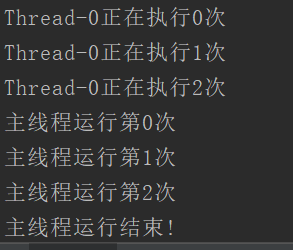
 1 public class JoinDemo {
 2     public static void main(String[] args) {
 3         MyThread mt = new MyThread();
 4         mt.start();
 5         try {
 6             mt.join();
 7         } catch (InterruptedException e) {
 8             e.printStackTrace();
 9         }
10         for (int i = 0; i < 3; i++) {
11             System.out.println("主线程运行第" + i + "次");
12         }
13         System.out.println("主线程运行结束!");
14     }
15 }
16 class MyThread extends Thread{
17     @Override
18     public void run() {
19         for (int i = 0; i < 3; i++) {
20             System.out.println(getName() + "正在执行" + i + "次");
21         }
22     }
23 }
运行结果:
public final void join(long millis)
等待该线程终止的最长时间为millis毫秒
线程优先级
优先级用1-10表示,超过范围会抛出异常
主线程优先级默认为5
优先级常量
MAX_PRIORITY:最高优先级10
MIN_PRIORITY:最低优先级1
NORM_PRIORITY:默认优先级5
相关方法
public int getPriority() 获取线程优先级的方法
public void setPriority(int newPriority) 设置线程优先级的方法
线程间同步与通信
同步:synchronized
通信:wait,notify,notifyAll
 1 public class Queue {
 2
 3     private int n;
 4     boolean flag = false;
 5
 6     public synchronized int get() {
 7         if (!flag) {
 8             try {
 9                 wait();
10             } catch (InterruptedException e) {
11                 e.printStackTrace();
12             }
13         }
14         System.out.println("消费:"+n);
15         flag = false;
16         notifyAll();
17         return n;
18     }
19
20     public synchronized void set(int n) {
21         if(flag) {
22             try {
23                 wait();
24             } catch (InterruptedException e) {
25                 e.printStackTrace();
26             }
27         }
28         System.out.println("生产:"+n);
29         this.n=n;
30         flag = true;//生产完毕,容器里面已经有数据
31         notifyAll();
32     }
33 }
 1 public class Consumer implements Runnable {
 2     Queue queue;
 3     Consumer(Queue queue) {
 4         this.queue = queue;
 5     }
 6
 7     @Override
 8     public void run() {
 9         while (true) {
10             queue.get();
11             try {
12                 Thread.sleep(1000);
13             } catch (InterruptedException e) {
14                 e.printStackTrace();
15             }
16         }
17     }
18 }
 1 public class Producer implements Runnable {
 2     Queue queue;
 3     Producer(Queue queue) {
 4         this.queue = queue;
 5     }
 6
 7     @Override
 8     public void run() {
 9         int i=0;
10         while (true) {
11             queue.set(i++);
12             try {
13                 Thread.sleep(1000);
14             } catch (InterruptedException e) {
15                 e.printStackTrace();
16             }
17         }
18     }
19 }
public class Test {

    public static void main(String[] args) {
        Queue queue=new Queue();
        new Thread(new Producer(queue)).start();
        new Thread(new Consumer(queue)).start();
    }
}

 浙公网安备 33010602011771号