- BigInteger的对象一旦创建,内部的值不会发生改变,如果参与运算,则会产生一个新的BigIneger对象来接收
- 如果BigInteger的值没有超过long的范围,可以用静态方法获取
//静态方法获取BigInteger对象,内部有优化
//细节:1:能表示的范围比较小,只能在long范围内
//2;在内部对常用的数字进行了优化:-16~16,提前把-16~正16的BigInteger的对象创建好,如果多次获取不会重新创建
System.out.println(BigInteger.valueOf(100));
BigInteger bigInteger = BigInteger.valueOf(16);
BigInteger bigInteger1 = BigInteger.valueOf(16);
System.out.println(bigInteger==bigInteger1);//true
- 如果BigInteger的取值范围超过long的取值范围,可以用构造方法获取
//获取一个随即大的整数(前面一个参数为2的几次方,后面的为随机数)
BigInteger b1= new BigInteger(4,new Random());
System.out.println(b1);
//获取一个指定大的整数
//细节:字符串中必须为整数
BigInteger b2= new BigInteger("23");
System.out.println(b2);
//获取指定进制的大整数(前面的为阿拉伯整数,后面的参数为指定进制)
BigInteger b3 = new BigInteger("123",8);
System.out.println(b3);
- BigInteger中常用的方法
//加法
        BigInteger b5= BigInteger.valueOf(10);
        BigInteger b6= BigInteger.valueOf(10);
        BigInteger add = b5.add(b6);
        System.out.println(add);
        //减法
        BigInteger subtract = b5.subtract(b6);
        System.out.println(subtract);
        //乘法
        BigInteger multiply = b5.multiply(b6);
        System.out.println(multiply);
        //除法,返回商
        BigInteger divide = b5.divide(b6);
        System.out.println(divide);
        //除法,返回商和余数,0索引代表商,1索引代表长度,数组长度为2
        BigInteger[] bigIntegers = b5.divideAndRemainder(b6);
        System.out.println(bigIntegers);
        //比较是否相同
        boolean equals = b5.equals(b6);
        System.out.println(equals);
        //次幂
        BigInteger pow = b5.pow(2);
        System.out.println(pow);
        //返回较大值,较小值
        BigInteger max = b5.max(b6);
        BigInteger min = b5.min(b6);
        //转化为int类型,超出范围则数据有误
        int i = b5.intValue();
        System.out.println(i);
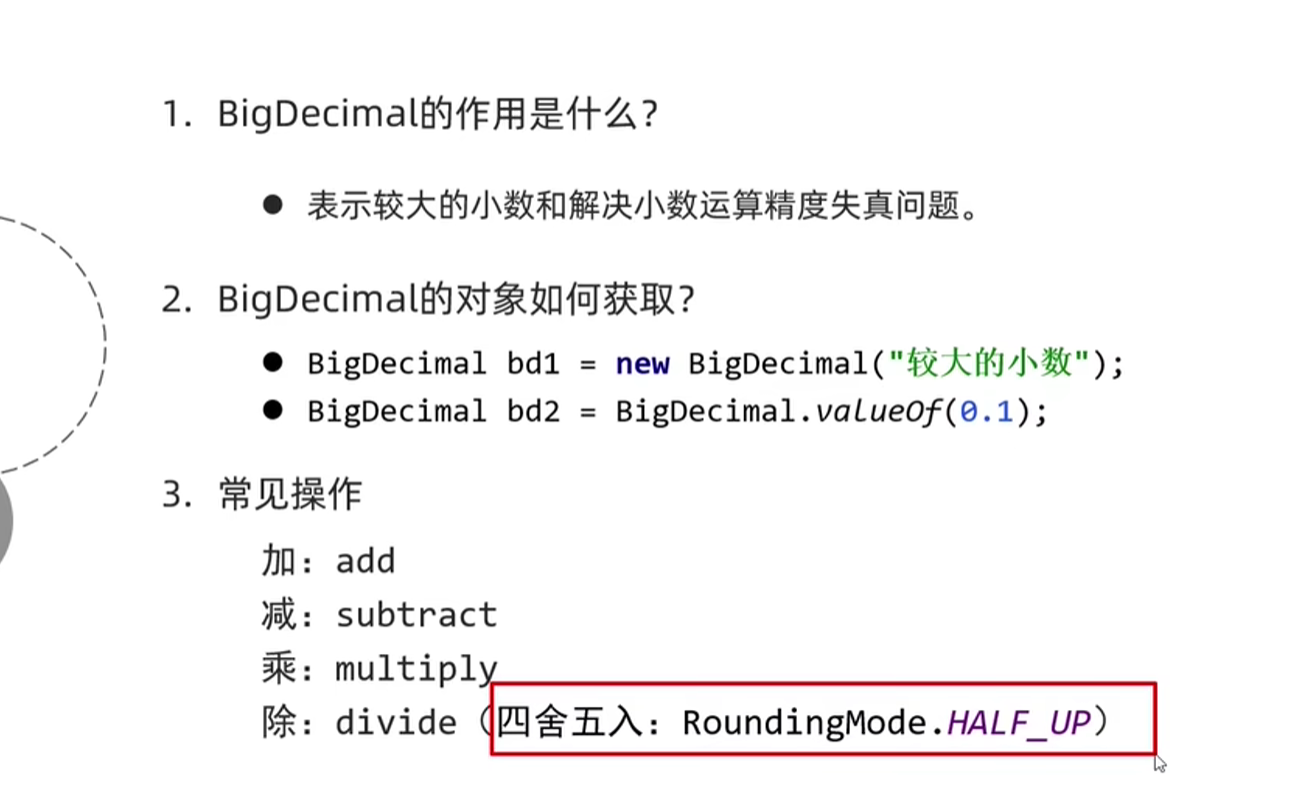
- BigDecimal的对象一旦创建,内部的值不会发生改变,如果参与运算,则会产生一个新的BigDecimal的对象来接收
//通过传递double类型的小数来创建对象
        //细节:可能会不精确,不建议使用
        BigDecimal B = new BigDecimal(0.1);
        System.out.println(B);
        //通过传递字符串类型的小数创建对象,精度不会丢失
        BigDecimal bigDecimal=new BigDecimal("0.1");
        System.out.println(bigDecimal);
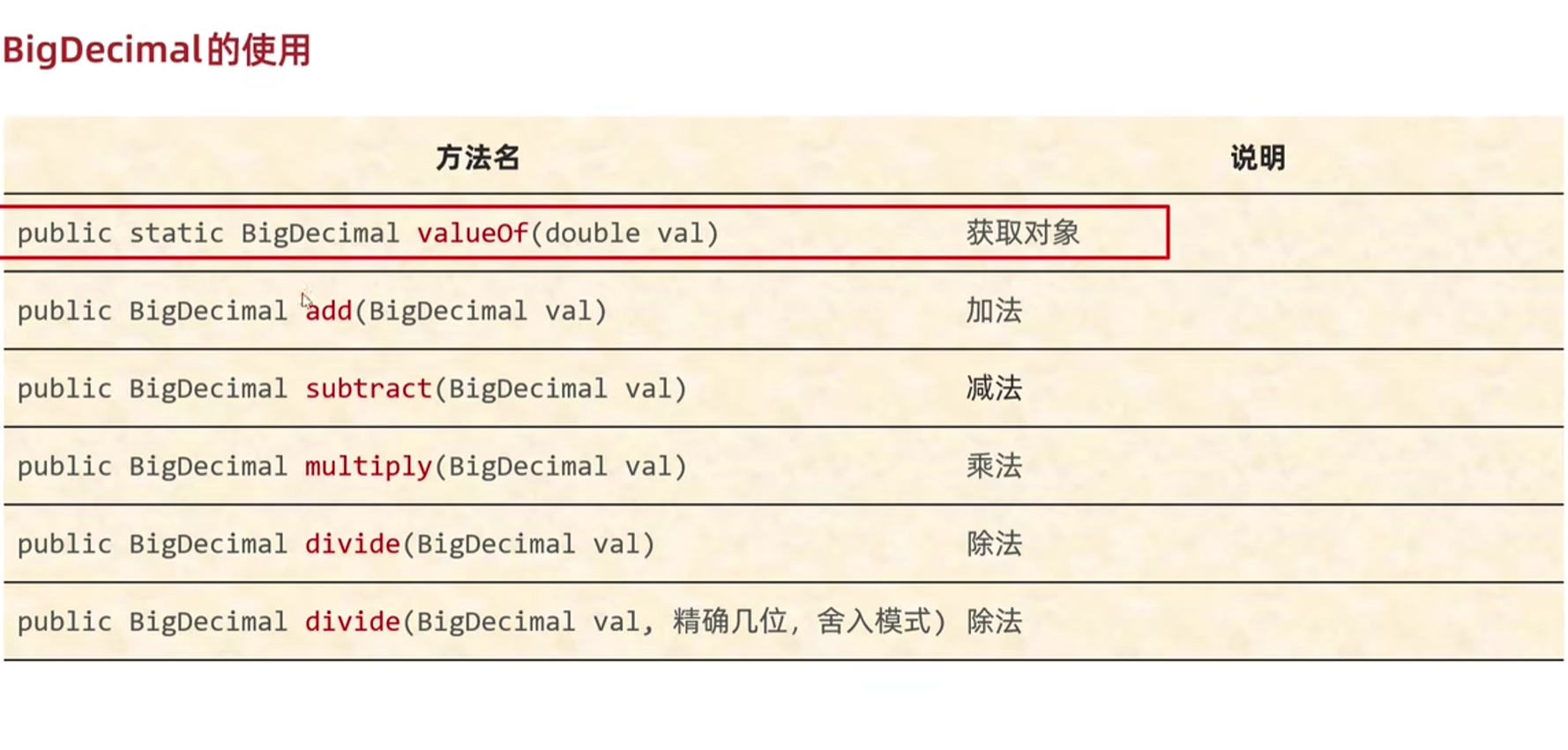
- BigDecimal静态方法
//通过静态方法获取对象
BigDecimal bigDecimal1 = BigDecimal.valueOf(10);
System.out.println(bigDecimal1);
- BigDecimal的细节:如果表示的数不大,没有超过double的取值范围,建议使用静态方法,如果传递的是0~10之间的整数,那么方法会返回已经创建好的对象,不会重新new
![]()
![]()




 浙公网安备 33010602011771号