
顺序栈
#include <stdio.h>
#include <stdlib.h>
#include <malloc.h>
#define MAXSIZE 50
typedef struct stack_Inilt
{
int *base;
int *top;
int length;
} stack;
void initStack(stack *s)
{
s->base = (int *)malloc(sizeof(int) * MAXSIZE);
if (!s->base)
exit(0);
s->top = s->base;
s->length = MAXSIZE;
}
int stackEmpty(stack *s)
{
if (s->base == s->top)
return 1;
else
return 0;
}
int stackLength(stack *s)
{
return s->top - s->base;
}
int clearStack(stack *s)
{
if (s->base)
{
s->top = s->base;
return 1;
}
}
int destroyStack(stack *s)
{
if (s->base)
{
free(s->base);
s->length = 0;
s->base = s->top = NULL;
}
if (s->base == NULL)
{
return 1;
}
}
void push(stack *s, int e)
{
if (s->top - s->base == s->length && s->length != 0)
{
printf("stack is full\n");
return;
}
else
{
*(s->top) = e;
s->top++;
}
}
int pop(stack *s, int *e)
{
if (s->top - s->base == 0)
{
printf("stack is empty\n");
return 0;
}
else
{
*e = *(--s->top);
}
return *e;
}
void printStack(stack *s)
{
int *p;
p = s->base;
if (s->top - s->base == 0)
{
printf("stack is null\n");
return;
}
else
{
while (p != s->top)
{
printf("%d->", *p);
p++;
}
printf("\n");
}
}
int main()
{
stack s;
initStack(&s);
int e;
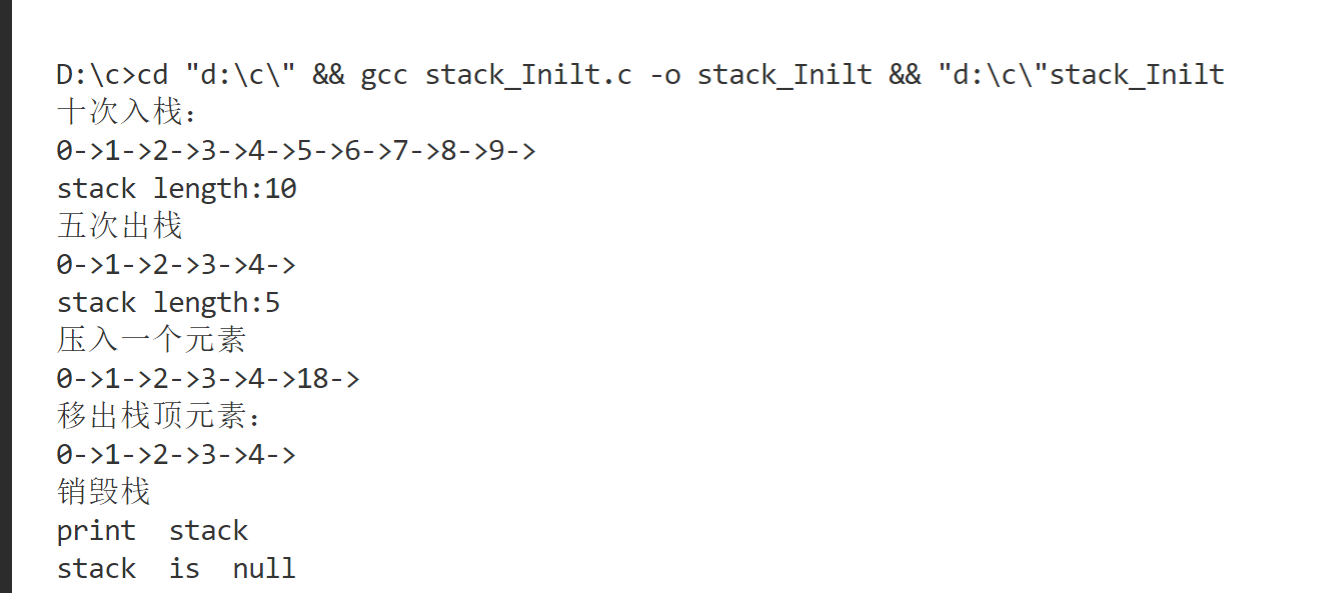
printf("十次入栈:\n");
for (int i = 0; i < 10; i++)
{
push(&s, i);
}
printStack(&s);
printf("stack length:%d\n", stackLength(&s));
printf("五次出栈\n");
for (int i = 0; i < 5; i++)
{
pop(&s, &e);
}
printStack(&s);
printf("stack length:%d\n", stackLength(&s));
printf("压入一个元素\n");
push(&s, 18);
printStack(&s);
printf("移出栈顶元素:\n");
pop(&s, &e);
printStack(&s);
printf("销毁栈\n");
destroyStack(&s);
initStack(&s);
printf("print stack\n");
printStack(&s);
return 0;
}

 浙公网安备 33010602011771号