
重学c++(三)
一、二进制文件操作
例子:
#include<string>
#include<fstream>
#include<istream>

using namespace std;

static const int bufferLen = 2048;
bool CopyFile(const string &src, const string & dst)
{
    ifstream in(src.c_str(), ios::in | ios::binary);
    ofstream out(dst.c_str(), ios::out | ios::binary);

    if (!in | !out) {
        return false;
    }
    char temp[bufferLen];
    while (!in.eof()) {
        in.read(temp, bufferLen);
        streamsize count = in.gcount();
        out.write(temp, bufferLen);
    }
    in.close();
    out.close();
}
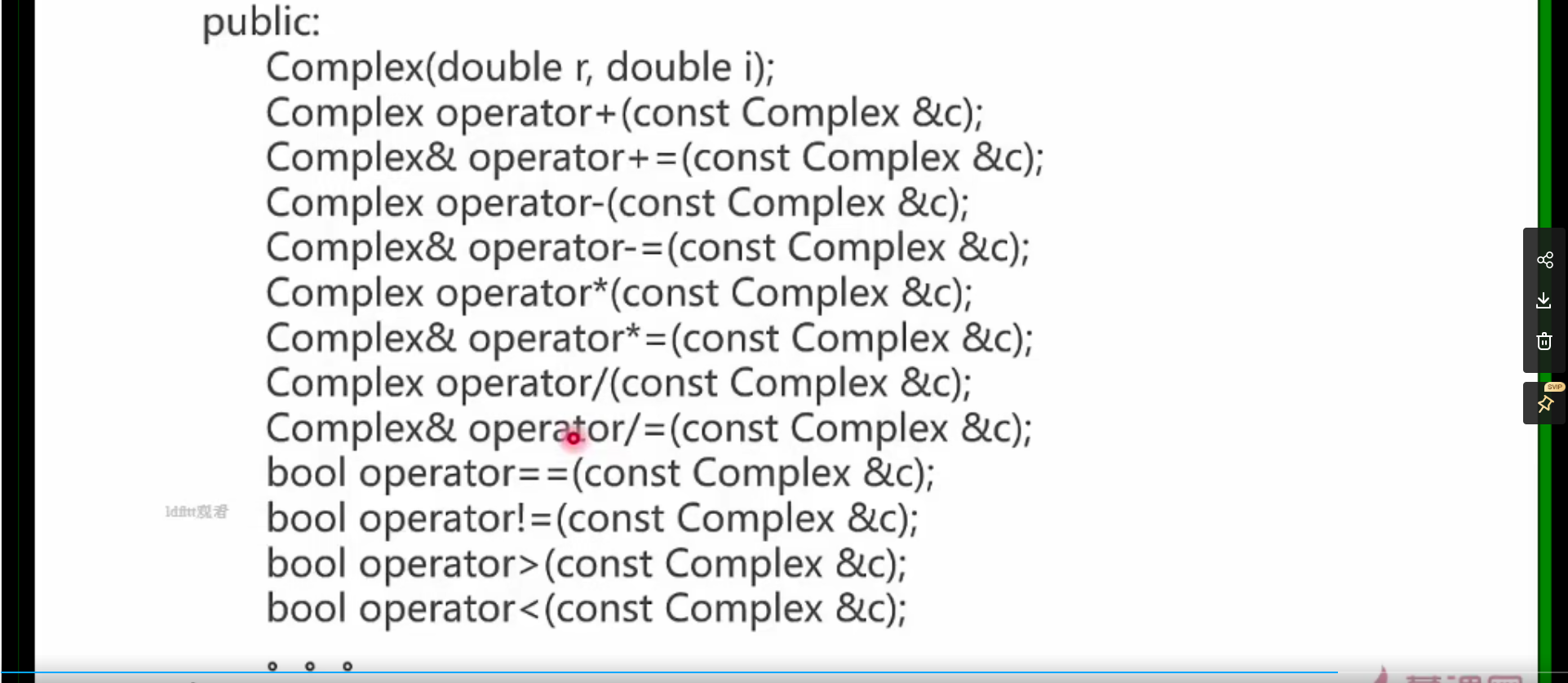
二、其他运算符重载
三、头文件重复问题
1、使用宏防止同一个文件被多次包含
#ifndef _SOMETHONG_H_
#define _SOMETHONG_H_
...
#endif
优:移植性好;缺:无法防止宏名重复,难以排错
2、使用编译器来防止同一个文件被多次包含
#pragma once
优:防止宏名重复;缺:移植性不好
总结:只考虑windows系统选2,否则1
四、深拷贝、浅拷贝;move语义
1、深拷贝:重新分配堆内存,拷贝指针指向内容(浪费空间但不会导致多次释放)
浅拷贝:只拷贝指针地址,c++默认拷贝构造和赋值运算符重载都是浅拷贝(节省空间,但容易引发多次释放)
2、解决深拷贝浅拷贝方法之一:move语义
类:
class String
{
public:
    String(const char* str = NULL);                    //普通拷贝构造函数
    String(const String& other);                      //拷贝构造函数
    String(String&& other);                            //移动构造函数
    ~String(void);                                     //析构函数
    String& operator=(const String& other);            //赋值函数
    String& operator=(String&& rhs)noexcept;          //移动赋值运算符(不抛出异常)

    friend ostream& operator<< (ostream& os, const String& c);//cout输出

private:
    char* m_data;//用于保存字符串
};
类函数定义:
//普通拷贝构造函数
String::String(const char* str)
{
    if (str == nullptr)
    {
        m_data = new char[1];
        if (m_data != nullptr)
            *m_data = '\0';
        else
            exit(-1);
    }
    else
    {
        int len = strlen(str);//_CRT_SECURE_NO_WRNNINGS
        m_data = new char[len+1];//结尾的\0
        if (m_data != nullptr)
        {
            strcpy(m_data, str);
        }
        else exit(-1);
     }
}

//拷贝构造函数
String::String(const String& other)
{
    int len = strlen(other.m_data);//_CRT_SECURE_NO_WRNNINGS
    m_data = new char[len + 1];//结尾的\0
    if (m_data != nullptr)
    {
        strcpy(m_data, other.m_data);
    }
    else exit(-1);
}

//移动构造函数
String::String(String&& other)
{
    if (other.m_data != nullptr)
    {
        m_data = other.m_data;
        other.m_data = nullptr;
    }

}

//赋值函数
String& String::operator=(const String& other)
{
    if (this == &other)
    {
        return *this;
    }
    //释放原有内容
    delete[] m_data;
    //重新分配资源并赋值
    int len = strlen(other.m_data);//_CRT_SECURE_NO_WRNNINGS
    m_data = new char[len+1];
    if (m_data != nullptr)
    {
        strcpy(m_data, other.m_data);
    }
    else exit(-1);
}

//移动赋值运算符
String& String::operator=(String&& rhs)
{
    if (this != &rhs) {
        delete[]m_data;
        m_data = rhs.m_data;
        rhs.m_data = nullptr;
    }
    return *this;
}


ostream& operator<< (ostream& os, const String& c)
{
    os << c.m_data << endl;
    return os;
}
主函数
int main() {
    String s1("Hello");            //构造函数
    cout << s1 << endl;
    String s2(s1);                //拷贝构造函数
    String s2A(std::move(s1));    //移动构造函数
    String s3;
    s3 = s2;                    //赋值函数
    String s3A;
    s3A = std::move(s2A);        //移动赋值运算符
}
注意:delete[]用法

 浙公网安备 33010602011771号