
4. 链表
1. 哈希表

2. 有序表

代码示例
import java.util.Comparator;
import java.util.HashMap;
import java.util.HashSet;
import java.util.TreeMap;
import java.util.TreeSet;

public class Test {

    public static class Node {
        public int value;
        public Node next;

        public Node(int val) {
            value = val;
        }
    }

    public static class NodeComparator implements Comparator<Node> {
        @Override
        public int compare(Node o1, Node o2) {
            return o1.value - o2.value;
        }
    }

    public static void main(String[] args) {
        Node nodeA = null;
        Node nodeB = null;
        Node nodeC = null;

        // hashSet1的key是基础类型 -> int类型
        HashSet<Integer> hashSet1 = new HashSet<>();
        hashSet1.add(3);
        System.out.println(hashSet1.contains(3));
        hashSet1.remove(3);
        System.out.println(hashSet1.contains(3));
        System.out.println("========1=========");

        // hashSet2的key是非基础类型 -> Node类型
        nodeA = new Node(1);
        nodeB = new Node(1);
        HashSet<Node> hashSet2 = new HashSet<>();
        hashSet2.add(nodeA);
        System.out.println(hashSet2.contains(nodeA));
        System.out.println(hashSet2.contains(nodeB));
        hashSet2.remove(nodeA);
        System.out.println(hashSet2.contains(nodeA));
        System.out.println("========2=========");

        // hashMap1的key是基础类型 -> String类型
        HashMap<String, Integer> hashMap1 = new HashMap<>();
        String str1 = "key";
        String str2 = "key";
        hashMap1.put(str1, 1);
        System.out.println(hashMap1.containsKey(str1));
        System.out.println(hashMap1.containsKey(str2));
        System.out.println(hashMap1.get(str1));
        System.out.println(hashMap1.get(str2));

        hashMap1.put(str2, 2);
        System.out.println(hashMap1.containsKey(str1));
        System.out.println(hashMap1.containsKey(str2));
        System.out.println(hashMap1.get(str1));
        System.out.println(hashMap1.get(str2));

        hashMap1.remove(str1);
        System.out.println(hashMap1.containsKey(str1));
        System.out.println(hashMap1.containsKey(str2));
        System.out.println("========3=========");

        // hashMap2的key是非基础类型 -> Node类型
        nodeA = new Node(1);
        nodeB = new Node(1);
        HashMap<Node, String> hashMap2 = new HashMap<>();
        hashMap2.put(nodeA, "A节点");
        System.out.println(hashMap2.containsKey(nodeA));
        System.out.println(hashMap2.containsKey(nodeB));
        System.out.println(hashMap2.get(nodeA));
        System.out.println(hashMap2.get(nodeB));
        hashMap2.put(nodeB, "B节点");
        System.out.println(hashMap2.containsKey(nodeA));
        System.out.println(hashMap2.containsKey(nodeB));
        System.out.println(hashMap2.get(nodeA));
        System.out.println(hashMap2.get(nodeB));
        System.out.println("========4=========");

        // treeSet的key是非基础类型 -> Node类型
        nodeA = new Node(5);
        nodeB = new Node(3);
        nodeC = new Node(7);

        TreeSet<Node> treeSet = new TreeSet<>();
        // 以下的代码会报错,因为没有提供Node类型的比较器
        try {
            treeSet.add(nodeA);
            treeSet.add(nodeB);
            treeSet.add(nodeC);
        } catch (Exception e) {
            System.out.println("错误信息:" + e.getMessage());
        }

        treeSet = new TreeSet<>(new NodeComparator());
        // 以下的代码没问题,因为提供了Node类型的比较器
        try {
            treeSet.add(nodeA);
            treeSet.add(nodeB);
            treeSet.add(nodeC);
            System.out.println("这次节点都加入了");
        } catch (Exception e) {
            System.out.println(e.getMessage());
        }
        System.out.println("========5=========");

        // 展示有序表常用操作
        TreeMap<Integer, String> treeMap1 = new TreeMap<>();
        treeMap1.put(7, "我是7");
        treeMap1.put(5, "我是5");
        treeMap1.put(4, "我是4");
        treeMap1.put(3, "我是3");
        treeMap1.put(9, "我是9");
        treeMap1.put(2, "我是2");
        System.out.println(treeMap1.containsKey(5));
        System.out.println(treeMap1.get(5));
        System.out.println(treeMap1.firstKey() + ", 我最小");
        System.out.println(treeMap1.lastKey() + ", 我最大");
        System.out.println(treeMap1.floorKey(8) + ", 在表中所有<=8的数中,我离8最近");
        System.out.println(treeMap1.ceilingKey(8) + ", 在表中所有>=8的数中,我离8最近");
        System.out.println(treeMap1.floorKey(7) + ", 在表中所有<=7的数中,我离7最近");
        System.out.println(treeMap1.ceilingKey(7) + ", 在表中所有>=7的数中,我离7最近");
        treeMap1.remove(5);
        System.out.println(treeMap1.get(5) + ", 删了就没有了哦");
        System.out.println("========6=========");
    }
}

3. 链表


代码示例
import java.util.TreeMap;

public class Test{

    // 单向链表
    public static class Node{
        public int value;
        public Node next;

        // 构造函数
        public Node(int data){
            this.value = data;
        }

    }

    // 双向链表
    public static class DoubleNode{
        public int value;
        public DoubleNode last;
        public DoubleNode next;

        public DoubleNode(int data){
            this.value = data;
        }
    }

    // 反转单链表
    public static Node reverseList(Node head){
        Node pre = null;
        Node nex = null;
        while(head != null){
            nex = head.next;
            head.next = pre;
            pre = head;
            head = nex;
        }
        return pre;
    }

    // 反转双链表
    // 函数重载
    public static DoubleNode reverseList(DoubleNode head){
        DoubleNode pre = null;
        DoubleNode nex = null;
        while(head != null){
            nex = head.next;
            head.next = pre;
            head.last = nex;
            pre = head;
            head = nex;
        }
        return pre;
    }

    // 输出单链表
    public static void printLinkedList(Node head){
        System.out.print("单链表的输出结果是:");
        while (head != null) {
            System.out.print(head.value + " ");
            head = head.next;
        }
        System.out.println();
    }

    // 输出双链表
    public static void printDoubleLinkedList(DoubleNode head){
        System.out.print("双链表的输出结果是:");
        DoubleNode end = null;
        while (head != null){
            System.out.print(head.value + " ");
            end = head;
            head = head.next;
        }
        System.out.println();
        System.out.print("双链表的输出结果是:");
        while (end != null){
            System.out.print(end.value + " ");
            end = end.last;
        }
        System.out.println();
    }

    // 主函数
    public static void main(String[] args) {
        // 插入链表数据
        Node head1 = new Node(1);
        head1.next = new Node(2);
        head1.next.next = new Node(3);
        printLinkedList(head1);
        head1 = reverseList(head1);
        printLinkedList(head1);

        System.out.println();

        DoubleNode head2 = new DoubleNode(2);
        head2.next = new DoubleNode(3);
        head2.next.last = head2;
        head2.next.next = new DoubleNode(4);
        head2.next.next.last = head2.next;
        head2.next.next.next = new DoubleNode(5);
        head2.next.next.next.last = head2.next.next;
        printDoubleLinkedList(head2);
        printDoubleLinkedList(reverseList(head2));
    }
}

代码示例
import java.util.TreeMap;

public class Test{

    // 单向链表
    public static class Node{
        public int value;
        public Node next;

        // 构造函数
        public Node(int data){
            this.value = data;
        }
    }

    public static void samePart(Node node1, Node node2)
    {
        System.out.print("两个单链表相同的值为:");
        while (node1 != null && node2 != null){
            if(node1.value < node2.value) node1 = node1.next;
            else if(node1.value > node2.value) node2 = node2.next;
            else {
                System.out.print(node1.value + " ");
                node1 = node1.next;
                node2 = node2.next;
            }
        }
    }

    public static void printLinkedList(Node head){
        System.out.print("单链表输出的结果是:");
        while (head != null){
            System.out.print(head.value + " ");
            head = head.next;
        }
        System.out.println();
    }

    // 主函数
    public static void main(String[] args) {
        // 插入链表数据
        Node node1 = new Node(2);
        node1.next = new Node(3);
        node1.next.next = new Node(5);
        node1.next.next.next = new Node(6);

        Node node2 = new Node(1);
        node2.next = new Node(2);
        node2.next.next = new Node(5);
        node2.next.next.next = new Node(7);
        node2.next.next.next.next = new Node(8);

        printLinkedList(node1);
        printLinkedList(node2);

        // 打印公共部分
        samePart(node1, node2);
    }
}


O(1)空间复杂度的实现方法图解如图所示:

代码示例
import java.util.Stack;
import java.util.TreeMap;

public class Test{

    // 单向链表
    public static class Node{
        public int value;
        public Node next;

        // 构造函数
        public Node(int data){
            this.value = data;
        }
    }

    // o(N)的空间复杂度函数
    public static boolean isPalindrome1(Node head){
        Stack<Node> stack = new Stack<>();
        // 使用临时变量
        Node cur = head;
        while(cur != null){
            stack.push(cur);
            cur = cur.next;
        }
        while (head != null){
            if(head.value != stack.pop().value) {
                return false;
            }
            head = head.next;
        }
        return true;
    }

    // o(N/2)的空间复杂度函数
    public static boolean isPalindrome2(Node head) {
        if(head == null || head.next == null)
            return true;
        // 快慢指针找到中点位置
        Node right = head.next; // 用来记录中点位置
        Node cur = head;
        while (cur.next != null && cur.next.next != null){
            right = right.next;
            cur = cur.next.next;
        }
        Stack<Node> stack = new Stack<>();
        while (right != null){
            stack.push(right);
            right = right.next;
        }
        while (!stack.isEmpty()){
            if(head.value != stack.pop().value)
                return false;
            head = head.next;
        }
        return true;
    }

    // O(1)的空间复杂度函数
    public static boolean isPalindrome3(Node head) {
        if(head == null || head.next == null)
            return true;
        Node n1 = head;
        Node n2 = head;
        while(n2.next != null && n2.next.next != null){
            n1 = n1.next;
            n2 = n2.next.next;
        }
        n2 = n1.next;
        n1.next = null;
        Node n3 = null;
        // 列表的倒序
        while (n2 != null) {
            n3 = n2.next; // 记录下一个节点的位置
            n2.next = n1;
            n1 = n2;
            n2 = n3;
        }
        n3 = n1; // last node
        n2 = head; // first node
        boolean res = true;
        while (n1 != null && n2 != null){
            if(n1.value != n2.value){
                res = false;
                break;
            }
            n1 = n1.next;
            n2 = n2.next;
        }
        // 还原链表
        n1 = n3.next;
        n3.next = null;
        while (n1 != null){
            n2 = n1.next;
            n1.next = n3;
            n3 = n1;
            n1 = n2;
        }
        return res;
    }

    // 输出链表
    public static void printLinkedList(Node head){
        System.out.print("单链表输出的结果是:");
        while (head != null){
            System.out.print(head.value + " ");
            head = head.next;
        }
        System.out.println();
    }

    // 主函数
    public static void main(String[] args) {
        // 插入链表数据
        Node head = null;
        printLinkedList(head);
        System.out.print(isPalindrome1(head) + " | ");
        System.out.print(isPalindrome2(head) + " | ");
        System.out.println(isPalindrome3(head) + " | ");
        printLinkedList(head);
        System.out.println("=========================");

        head = new Node(1);
        printLinkedList(head);
        System.out.print(isPalindrome1(head) + " | ");
        System.out.print(isPalindrome2(head) + " | ");
        System.out.println(isPalindrome3(head) + " | ");
        printLinkedList(head);
        System.out.println("=========================");

        head = new Node(1);
        head.next = new Node(2);
        printLinkedList(head);
        System.out.print(isPalindrome1(head) + " | ");
        System.out.print(isPalindrome2(head) + " | ");
        System.out.println(isPalindrome3(head) + " | ");
        printLinkedList(head);
        System.out.println("=========================");

        head = new Node(1);
        head.next = new Node(1);
        printLinkedList(head);
        System.out.print(isPalindrome1(head) + " | ");
        System.out.print(isPalindrome2(head) + " | ");
        System.out.println(isPalindrome3(head) + " | ");
        printLinkedList(head);
        System.out.println("=========================");

        head = new Node(1);
        head.next = new Node(2);
        head.next.next = new Node(3);
        printLinkedList(head);
        System.out.print(isPalindrome1(head) + " | ");
        System.out.print(isPalindrome2(head) + " | ");
        System.out.println(isPalindrome3(head) + " | ");
        printLinkedList(head);
        System.out.println("=========================");

        head = new Node(1);
        head.next = new Node(2);
        head.next.next = new Node(1);
        printLinkedList(head);
        System.out.print(isPalindrome1(head) + " | ");
        System.out.print(isPalindrome2(head) + " | ");
        System.out.println(isPalindrome3(head) + " | ");
        printLinkedList(head);
        System.out.println("=========================");

        head = new Node(1);
        head.next = new Node(2);
        head.next.next = new Node(3);
        head.next.next.next = new Node(1);
        printLinkedList(head);
        System.out.print(isPalindrome1(head) + " | ");
        System.out.print(isPalindrome2(head) + " | ");
        System.out.println(isPalindrome3(head) + " | ");
        printLinkedList(head);
        System.out.println("=========================");

        head = new Node(1);
        head.next = new Node(2);
        head.next.next = new Node(2);
        head.next.next.next = new Node(1);
        printLinkedList(head);
        System.out.print(isPalindrome1(head) + " | ");
        System.out.print(isPalindrome2(head) + " | ");
        System.out.println(isPalindrome3(head) + " | ");
        printLinkedList(head);
        System.out.println("=========================");

        head = new Node(1);
        head.next = new Node(2);
        head.next.next = new Node(3);
        head.next.next.next = new Node(2);
        head.next.next.next.next = new Node(1);
        printLinkedList(head);
        System.out.print(isPalindrome1(head) + " | ");
        System.out.print(isPalindrome2(head) + " | ");
        System.out.println(isPalindrome3(head) + " | ");
        printLinkedList(head);
        System.out.println("=========================");
    }
}

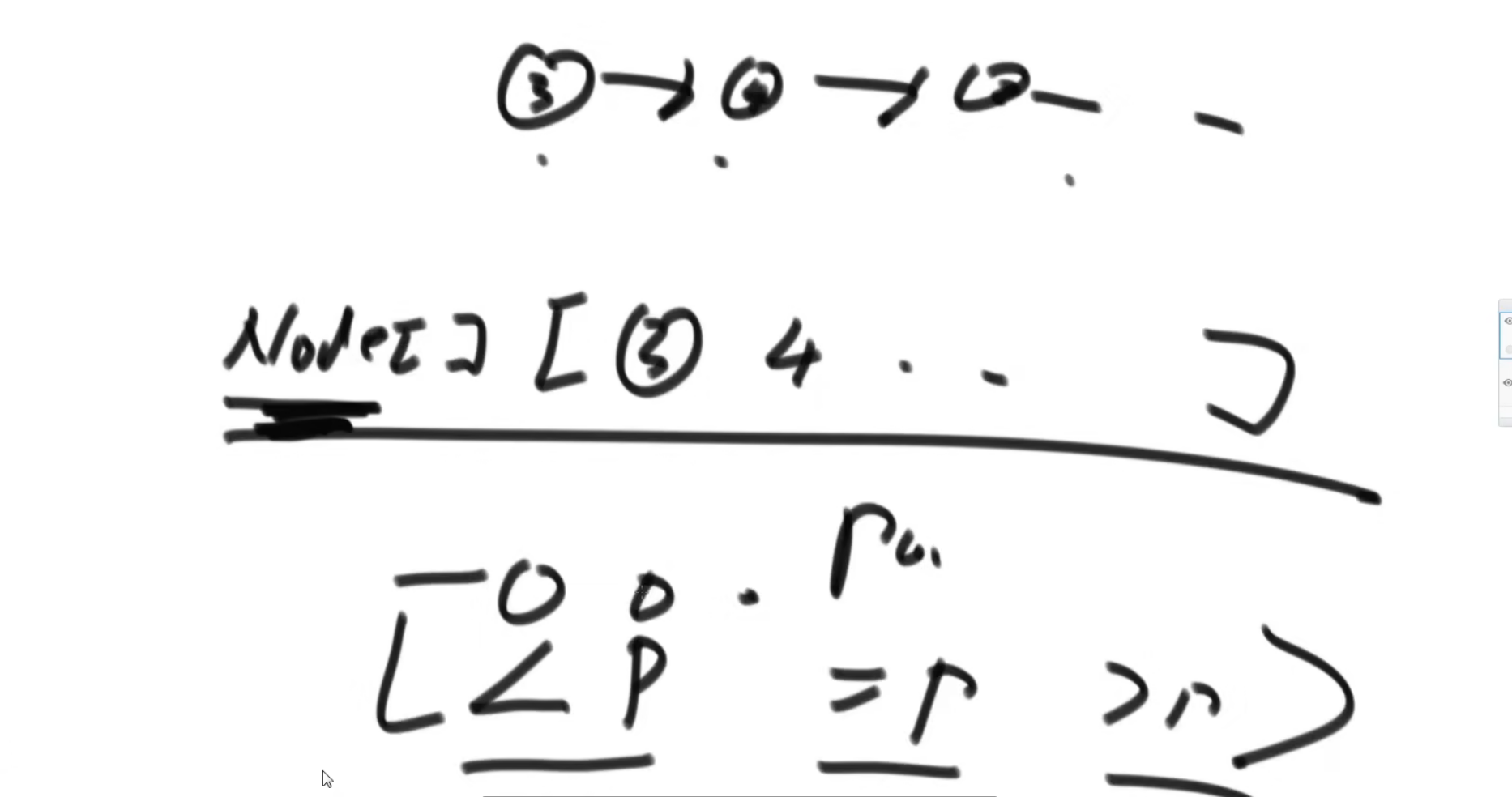
代码示例
import java.awt.*;
import java.util.Stack;
import java.util.TreeMap;

public class Test{

    // 单向链表
    public static class Node{
        public int value;
        public Node next;

        // 构造函数
        public Node(int data){
            this.value = data;
        }
    }

    /**
     *      1. 数组中排序,排序后连接成链表
     */
    public static Node listPartition1(Node head, int pivot){
        // 处理边界情况
        if(head == null) return head;

        // 计算数组大小
        Node cur = head;
        int i = 0;
        while (cur != null){
            i++;
            cur = cur.next;
        }

        // 创建并存储数组
        Node[] nodeArr = new Node[i];
        i = 0;
        cur = head;
        for (i = 0; i < nodeArr.length; i++) {
            nodeArr[i] = cur;
            cur = cur.next;
        }

        // 数组partition
        arrPartition(nodeArr, pivot);

        // 数组链接
        for (i = 1; i < nodeArr.length; i++) {
            nodeArr[i-1].next = nodeArr[i];
        }
        nodeArr[i-1].next = null;
        return nodeArr[0];
    }

    public static void arrPartition(Node[] nodeArr, int pivot){
        int small = -1;
        int big = nodeArr.length;
        int index = 0;
        while (index != big){
            if(nodeArr[index].value < pivot){
                swap(nodeArr, ++small, index++);
            }else if(nodeArr[index].value > pivot){
                swap(nodeArr, index, --big);
            }else
                index++;
        }
    }

    public static void swap(Node[] nodeArr, int i, int j){
        Node node = nodeArr[i];
        nodeArr[i] = nodeArr[j];
        nodeArr[j] = node;
    }

    /**
     *      2. 六个变量
     */
    public static Node listPartition2(Node head, int pivot){
        Node sH = null;
        Node sT = null;
        Node eH = null;
        Node eT = null;
        Node bH = null;
        Node bT = null;
        Node next = null;

        while (head != null){
            next = head.next;
            head.next = null;
            if(head.value < pivot){
                if(sH == null){
                    sH = head;
                    sT = head;
                }else{
                    sT.next = head;
                    sT = head;
                }
            }
            else if(head.value > pivot){
                if(bH == null){
                    bH = head;
                    bT = head;
                }else{
                    bT.next = head;
                    bT = head;
                }
            }
            else{
                if(eH == null){
                    eH = head;
                    eT = head;
                }else{
                    eT.next = head;
                    eT = head;
                }
            }
            head = next;
        }
        // 链接几个区域
        // 小于和等于区域
        if(sT != null){
            sT.next = eH;
            eT = eT == null ? sT : eT;
        }
        if(eT != null){
            eT.next = bH;
        }
        return sH != null ? sH : eH != null ?  eH : bH;
    }

    // 输出链表
    public static void printLinkedList(Node head){
        System.out.print("单链表输出的结果是:");
        while (head != null){
            System.out.print(head.value + " ");
            head = head.next;
        }
        System.out.println();
    }

    // 主函数
    public static void main(String[] args) {
        Node head1 = new Node(7);
        head1.next = new Node(9);
        head1.next.next = new Node(1);
        head1.next.next.next = new Node(8);
        head1.next.next.next.next = new Node(5);
        head1.next.next.next.next.next = new Node(2);
        head1.next.next.next.next.next.next = new Node(5);
        printLinkedList(head1);
        head1 = listPartition1(head1, 5);
//        head1 = listPartition2(head1, 5);
        printLinkedList(head1);
    }
}
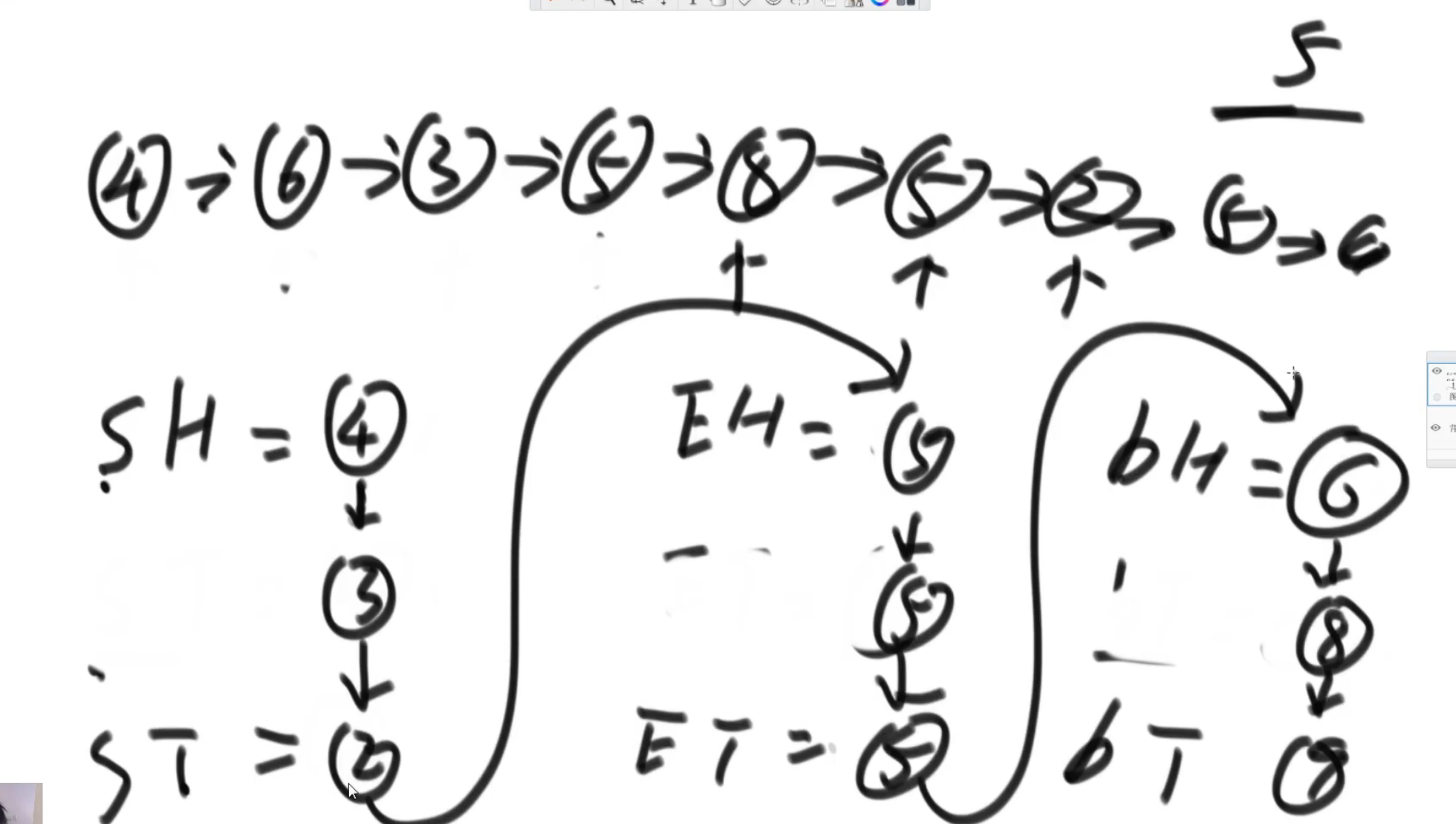
代码示例
import java.awt.*;
import java.util.HashMap;
import java.util.Stack;
import java.util.TreeMap;

public class Test{

    // 单向链表
    public static class Node{
        public int value;
        public Node next;
        public Node rand;

        // 构造函数
        public Node(int data){
            this.value = data;
        }
    }

    // 复制链表方式1 —— 哈希表
    public static Node copyListWithRand1(Node head){
        HashMap<Node, Node> map = new HashMap<>();
        Node cur = head;
        while (cur != null){
            map.put(cur, new Node(cur.value));
            cur = cur.next;
        }
        cur = head;
        while (cur != null){
            map.get(cur).next = map.get(cur.next);
            map.get(cur).rand = map.get(cur.rand);
            cur = cur.next;
        }
        return map.get(head);
    }

    // 复制链表方式2 —— 复制链表
    public static Node copyListWithRand2(Node head){
        if(head == null) return head;
        Node cur = head;
        Node next = null;
        // 复制链表
        while(cur != null){
            next = cur.next;
            cur.next = new Node(cur.value);
            cur.next.next = next;
            cur = next;
        }

        // 寻找 random 节点
        cur = head;
        Node curCopy = null;
        while (cur != null){
            next = cur.next.next;
            curCopy = cur.next;
            curCopy.rand = cur.rand != null ? cur.rand.next : null;
            cur = next;
        }

        Node res = head.next; // 链表的头结点
        cur = head;
        while (cur != null){
            next = cur.next.next;
            curCopy = cur.next;
            cur.next = next;
            curCopy.next = next != null ? next.next : null;
            cur = next;
        }
        return res;
    }

    // 输出链表
    public static void printRandLinkedList(Node head) {
        Node cur = head;
        System.out.println("order:");
        while (cur != null){
            System.out.print(cur.value + " ");
            cur = cur.next;
        }
        System.out.println();
        cur = head;
        System.out.println("rand:");
        while (cur != null){
            System.out.print(cur.rand == null ? "- " : cur.rand.value + " ");
            cur = cur.next;
        }
        System.out.println();
    }

    // 主函数
    public static void main(String[] args) {
        Node head = null;
        Node res1 = null;
        Node res2 = null;
        printRandLinkedList(head);
        res1 = copyListWithRand1(head);
        printRandLinkedList(res1);
        res2 = copyListWithRand2(head);
        printRandLinkedList(res2);
        printRandLinkedList(head);
        System.out.println("=================================");

        head = new Node(1);
        head.next = new Node(2);
        head.next.next = new Node(3);
        head.next.next.next = new Node(4);
        head.next.next.next.next = new Node(5);
        head.next.next.next.next.next = new Node(6);

        head.rand = head.next.next.next.next.next; // 1 -> 6
        head.next.rand = head.next.next.next.next.next; // 2 -> 6
        head.next.next.rand = head.next.next.next.next; // 3 -> 5
        head.next.next.next.rand = head.next.next; // 4 -> 3
        head.next.next.next.next.rand = null; // 5 -> null
        head.next.next.next.next.next.rand = head.next.next.next; // 6 -> 4

        printRandLinkedList(head);
        res1 = copyListWithRand1(head);
        printRandLinkedList(res1);
        res2 = copyListWithRand2(head);
        printRandLinkedList(res2);
        printRandLinkedList(head);
        System.out.println("=========================");
    }
}
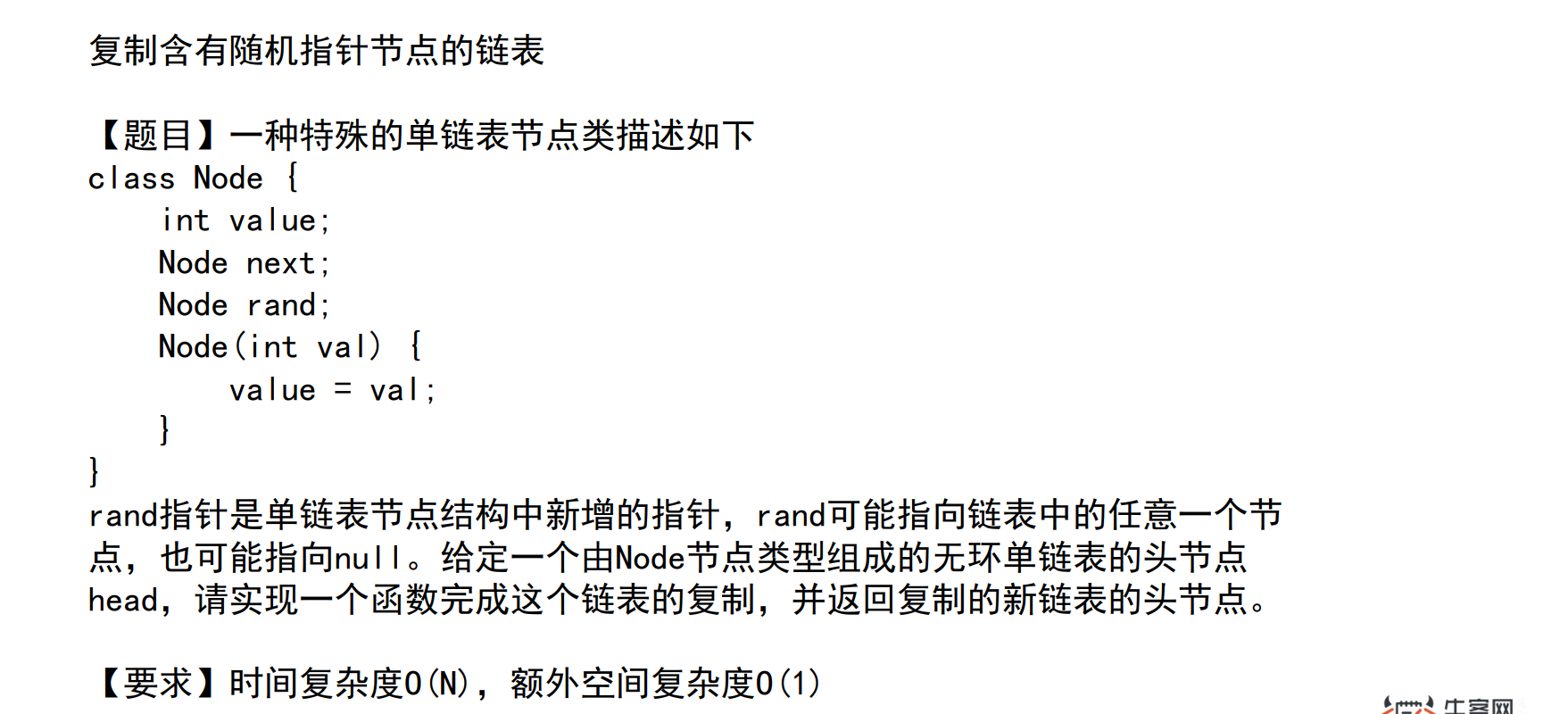
(0)问题解析
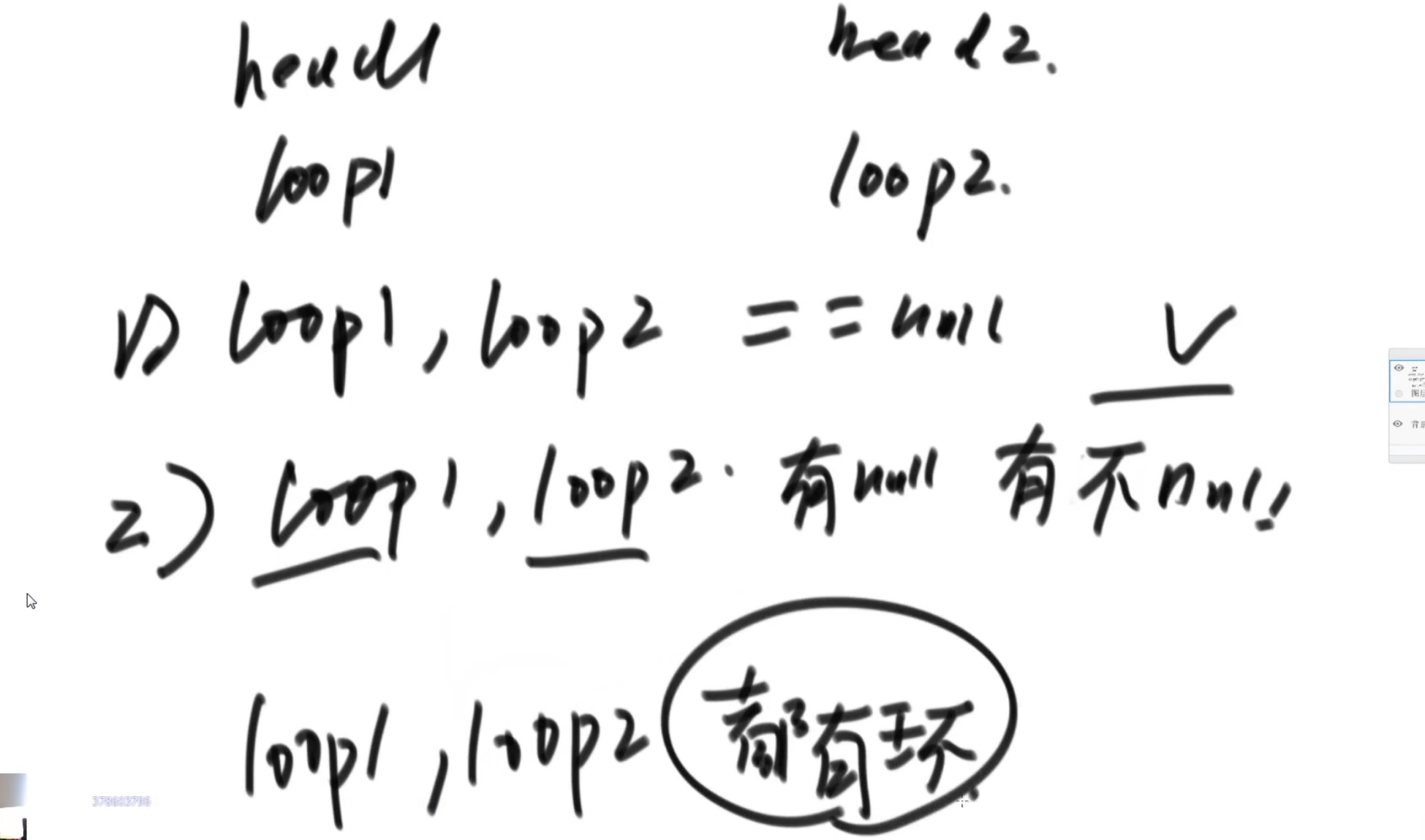
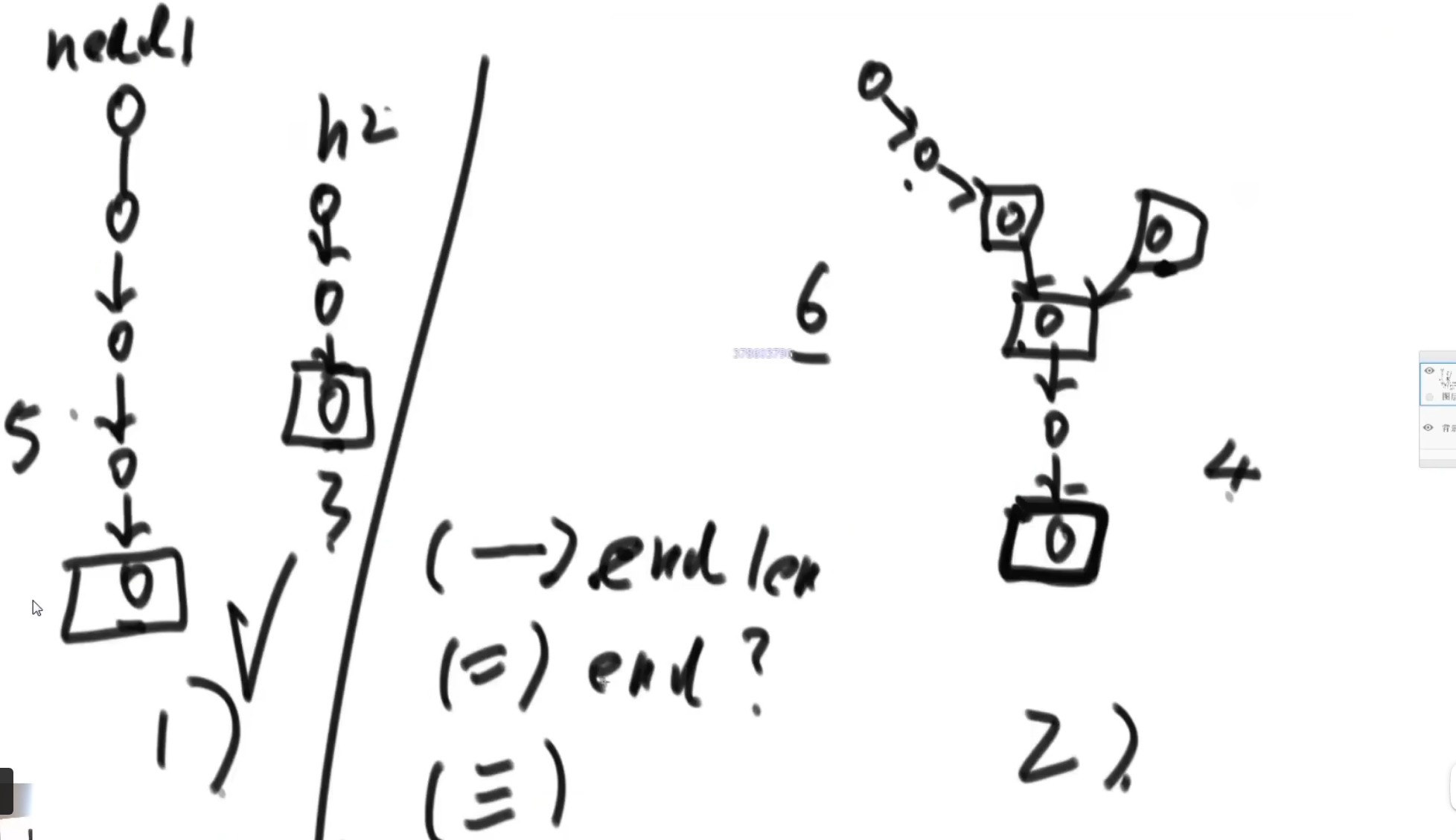
(1)无环链表相交问题
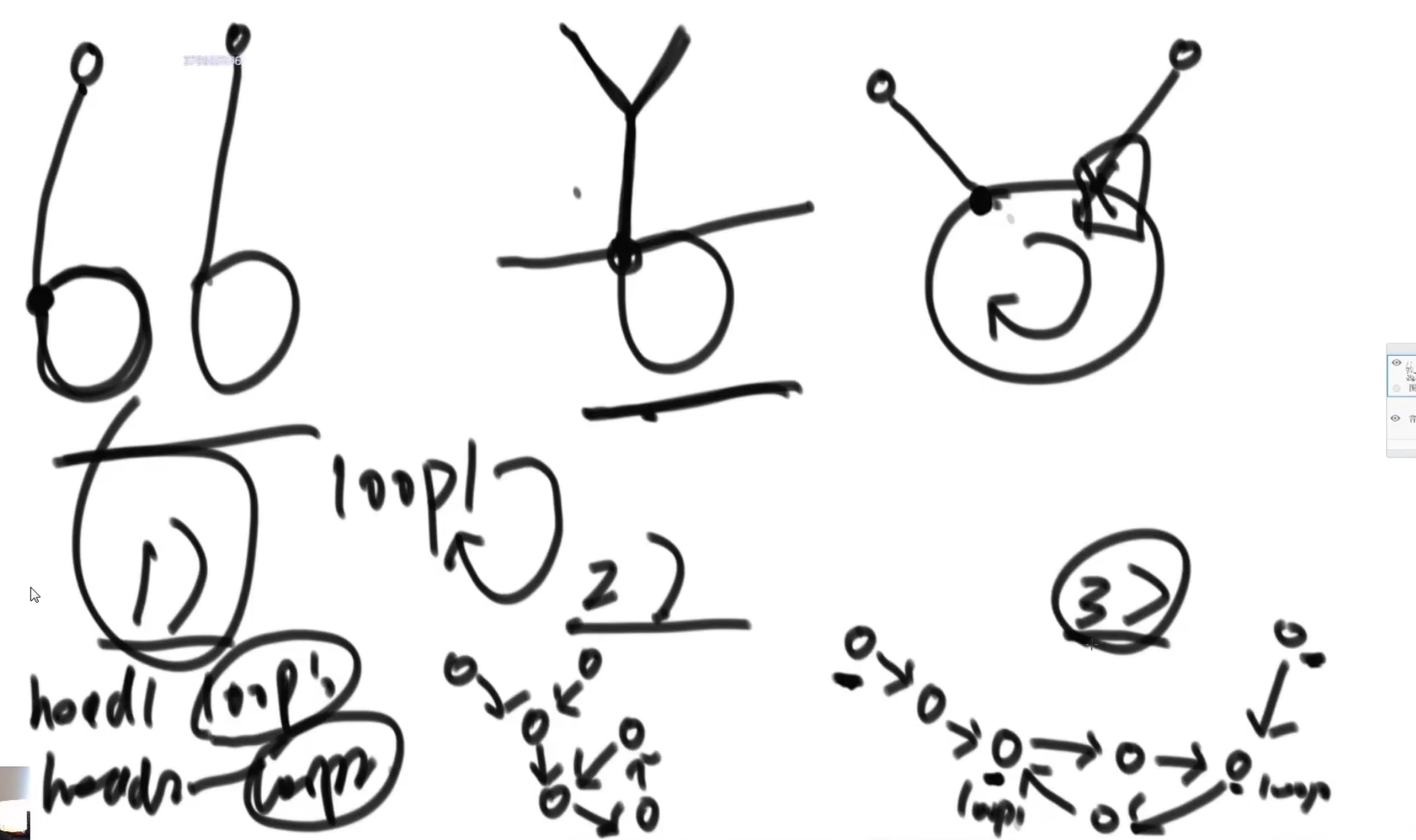
(2)有环链表相交问题
代码示例
import java.awt.*;
import java.util.HashMap;
import java.util.Stack;
import java.util.TreeMap;

public class Test{

    // 单向链表
    public static class Node{
        public int value;
        public Node next;

        // 构造函数
        public Node(int data){
            this.value = data;
        }
    }

    // 判断是否有入环节点
    public static Node getLoopNode(Node head){
        if(head == null || head.next == null || head.next.next == null) // 不构成环
            return null;
        Node n1 = head.next;
        Node n2 = head.next.next;
        while (n1 != n2){
            if(n2.next == null || n2.next.next == null) // 走到末尾
                return null;
            n2 = n2.next.next;
            n1 = n1.next;
        } // 找到相同位置
        n2 = head; // 将快指针恢复到原点位置
        while (n1 != n2){
            n1 = n1.next;
            n2 = n2.next;
        }
        return n1;
    }

    // 无环链表的相交节点
    public static Node noLoop(Node head1, Node head2){
        if(head1 == null || head2 == null)
            return null;
        Node cur1 = head1;
        Node cur2 = head2;
        int n = 0;
        while (cur1.next != null){
            n++;
            cur1 = cur1.next;
        }
        while (cur2.next != null){
            n--;
            cur2 = cur2.next;
        }
        if(cur1 != cur2){ // 如果末尾节点不相同,则直接判定无相同节点
            return null;
        }
        cur1 = n > 0 ? head1 : head2; // 判断谁是长链表
        cur2 = cur1 == head1 ? head2 : head1;
        n = Math.abs(n);
        while (n != 0){
            n--;
            cur1 = cur1.next;
        }
        while (cur1 != cur2){ // 寻找长链表
            cur1 = cur1.next;
            cur2 = cur2.next;
        }
        return cur1;
    }

    // 有环列表的相交节点
    public static Node bothLoop(Node head1, Node loop1, Node head2, Node loop2){
        Node cur1 = null;
        Node cur2 = null;
        if(loop1 == loop2){  // 这种情况和无环链表相交相同,代码类似
            cur1 = head1;
            cur2 = head2;
            int n = 0;
            while (cur1 != loop1){
                n++;
                cur1 = cur1.next;
            }
            while (cur2 != loop2){
                n--;
                cur2 = cur2.next;
            }
            cur1 = n > 0 ? head1 : head2;
            cur2 = cur1 == head1 ? head2 : head1;
            n = Math.abs(n);
            while (n != 0){
                n--;
                cur1 = cur1.next; // 长链表走相同步
            }
            while (cur1 != cur2){ // 找到相交节点
                cur1 = cur1.next;
                cur2 = cur2.next;
            }
            return cur1;
        }
        else{
            // 不相交,或者相交节点不在相同的入环节点
            cur1 = loop1.next;
            while (cur1 != loop1){
                if(cur1 == loop2)
                    return loop1;
                cur1 = cur1.next;
            }
            return null;
        }
    }

    // 有环链表主函数调用
    public static Node getIntersectNode(Node head1, Node head2){
        if(head1 == null || head2 == null)
            return null;
        Node loop1 = getLoopNode(head1); // 判断是否有环
        Node loop2 = getLoopNode(head2); // 判断是否有环
        if(loop1 == null && loop2 == null) // 如果均无环,则调用无环链表的相同节点函数
            return noLoop(head1, head2);
        if(loop1 != null && loop2 != null) // 如果均有环,则调用有环链表的相同节点函数
            return bothLoop(head1, loop1, head2, loop2);
        return null; // 不存在
    }

    // 主函数
    public static void main(String[] args) {
        // 1->2->3->4->5->6->7->null
        Node head1 = new Node(1);
        head1.next = new Node(2);
        head1.next.next = new Node(3);
        head1.next.next.next = new Node(4);
        head1.next.next.next.next = new Node(5);
        head1.next.next.next.next.next = new Node(6);
        head1.next.next.next.next.next.next = new Node(7);

        // 0->9->8->6->7->null
        Node head2 = new Node(0);
        head2.next = new Node(9);
        head2.next.next = new Node(8);
        head2.next.next.next = head1.next.next.next.next.next; // 8->6
        System.out.println(getIntersectNode(head1, head2).value);

        // 1->2->3->4->5->6->7->4...
        head1 = new Node(1);
        head1.next = new Node(2);
        head1.next.next = new Node(3);
        head1.next.next.next = new Node(4);
        head1.next.next.next.next = new Node(5);
        head1.next.next.next.next.next = new Node(6);
        head1.next.next.next.next.next.next = new Node(7);
        head1.next.next.next.next.next.next = head1.next.next.next; // 7->4

        // 0->9->8->2...
        head2 = new Node(0);
        head2.next = new Node(9);
        head2.next.next = new Node(8);
        head2.next.next.next = head1.next; // 8->2
        System.out.println(getIntersectNode(head1, head2).value);

        // 0->9->8->6->4->5->6..
        head2 = new Node(0);
        head2.next = new Node(9);
        head2.next.next = new Node(8);
        head2.next.next.next = head1.next.next.next.next.next; // 8->6
        System.out.println(getIntersectNode(head1, head2).value);
    }
}

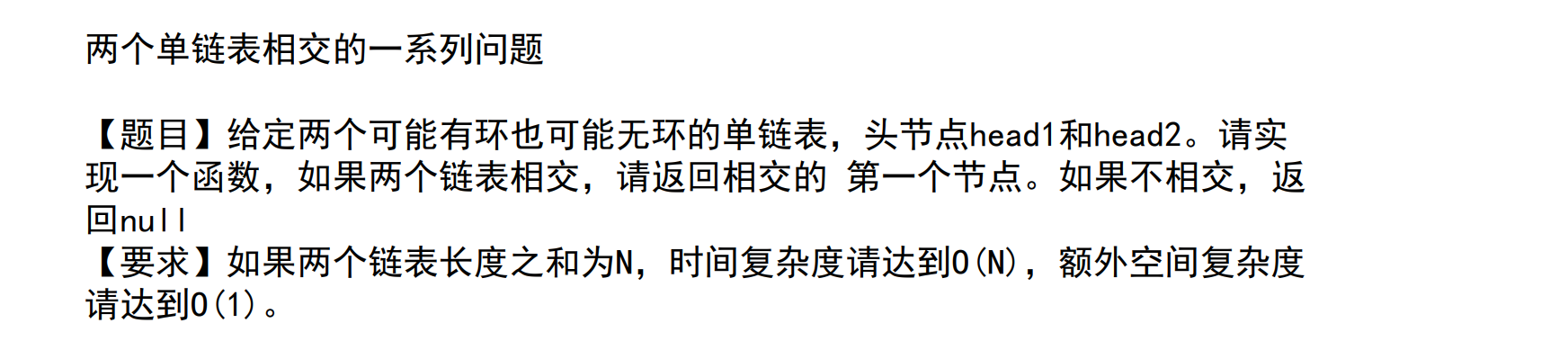
 浙公网安备 33010602011771号