
实验6
 1 #include <stdio.h>
 2 #define N 5
 3 int binarySearch(int *x, int n, int item); // 函数声明
 4 int main()
 5 {
 6 int a[N] = {2, 7, 19, 45, 66};
 7 int i, index, key;
 8 printf("数组a中的数据:\n");
 9 for (i = 0; i < N; i++)
10 printf("%d ", a[i]);
11 printf("\n");
12 printf("输入待查找的数据项: ");
13 scanf("%d", &key);
14 // 调用函数binarySearch()在数组a中查找指定数据项key,并返回查找结果给index
15 // 补足代码①
16 index=binarySearch(a,5,key);
17 // ×××
18 if (index >= 0)
19 printf("%d在数组中,下标为%d\n", key, index);
20 else
21 printf("%d不在数组中\n", key);
22 return 0;
23 }
24 // 函数功能描述:
25 // 使用二分查找算法在从地址x开始的连续n个数据项中,查找特定数据项item
26 // 如果找到,返回其下标; 如果没找到,返回-1
27 int binarySearch(int *x, int n, int item)
28     {
29 int low, high, mid;
30 low = 0;
31 high = n - 1;
32 while (low <= high)
33 {
34 mid = (low + high) / 2;
35 if (item == *(x + mid))
36 /*补足代码②*/return (mid);
37 else if (item < *(x + mid))
38 /*补足代码③*/high=mid-1;
39 else
40 /*补足代码④*/low=mid+1;
41 }
42 return -1;
43 }
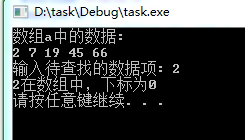
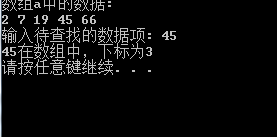
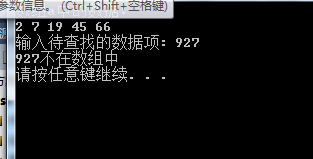
#include <string.h>
#include <stdio.h>
#include <stdlib.h>
void fun(char *a)
{
  /*****ERROR1********/
int i=0;
char *p = a;
/****ERROR2***/
while (*p && *p == '*')
{
a[i] = *p;
i++;
p++;
}
while (*p)
{
/******ERROR3*******/
if (*p != '*')
{
a[i] = *p;
i++;
}
p++;
}
/******ERROR4*******/
a[i] = '\0';
}
int main()
{
char s[81];

printf("Enter a string :\n");
gets(s);
/***ERROR5******/
fun(&s[0]);
printf("The string after deleted:\n");
puts(s);
return 0;
}
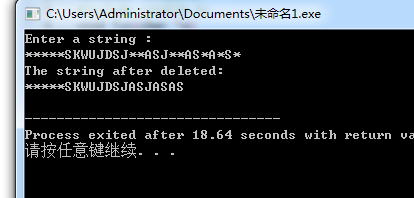
/*
设输入的字符串中只包含字母和*号。
编写函数,实现:除了字符串前导和尾部的*号之外,将串中其他*号全部删除。
例如,若字符串中的内容为****A*BC*DEF*G*******
删除后,字符串中的内容则应当是****ABCDEFG******
在编写函数时,不得使用C语言提供的字符串函数。
*/
#include <stdio.h>
#include <stdlib.h>
#include <string.h>
void fun(char *a)
{
/**ERROR******/
int i=0;
char *t = a, *f = a;
char *q = a;
while (*t)
t++;
t--;
while (*t == '*')
t--;
while (*f == '*')
f++;

/***ERROR***/
while (q < f)
{
a[i] = *q;
q++;
i++;
}
while (q < t)
{
/***ERROR**/
if (*q != '*')
{
a[i] = *q;
i++;
}
q++;
}
while (*q)
{
a[i] = *q;
i++;
q++;
}
/**ERROR**/
a[i] = '\0';
}
int main()
{
char s[81];
printf("Entre a string:\n");
gets(s);
/**ERROR**/
fun(s);
printf("The sting after deleted:\n");
puts(s);
return 0;
}

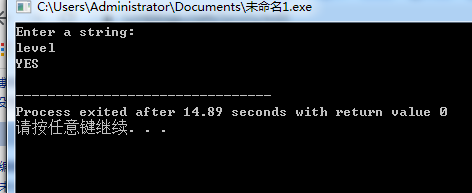
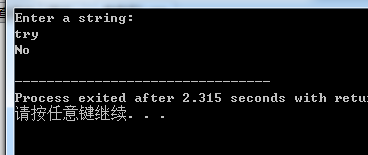
#include <stdio.h>
#include <string.h>
#define N 80
int isPalindrome(char *s); // 函数声明
int main()
{
char str[N];
int flag;
printf("Enter a string:\n");
gets(str);
flag = isPalindrome(str); // 函数调用
if (flag)
printf("YES\n");
else
printf("No\n");
return 0;
}
// 函数定义
// 功能:判断指针s指向的字符串是否是回文串,如果是,返回1;否则,返回0。
int isPalindrome(char *s)
{
// 补足函数实现
// ×××
int i,j,a;
i=strlen(s);
for(j=0;j<i/2;j++){
    if(*(s+i-1-j)!=*(s+j)) return 0;
    else a=1;
}
return a;
}
#include <stdio.h>
#define N 80
int count(char *str, char *substr); // 函数声明
int main()
{
char str[N], substr[N];
int n;
gets(str); // 输入母串
gets(substr); // 输入子串
n = count(str, substr); // 函数调用
printf("%d\n", n);
return 0;
}
int count(char *str, char *substr)
{
int i, j, k;
int num = 0;
for(i=0; /*待补足①*/i<80; ++i)
for(/*待补足②*/j=i, k=0; substr[k] == str[j]; k++, j++)
if(substr[/*待补足③*/k+1] == '\0')
{
num++;
break;
}

return(num);
}


通过这次实验,我对指针与调用函数有了更深的了解,了解了对字符串函数类型题目的解决方法

 浙公网安备 33010602011771号