
STL值map
1.map函数的概念与构造

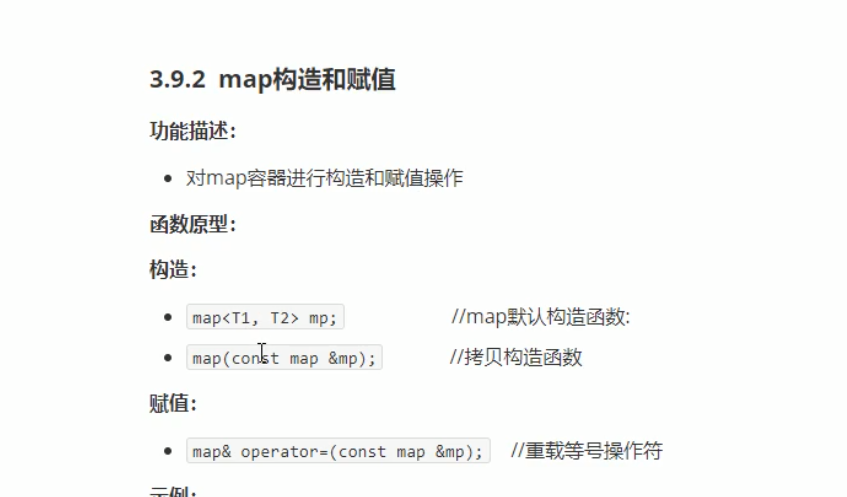
#include<iostream>
using namespace std;
#include<map>

void printmap(map<int, int>p)
{
    for (map<int, int>::iterator it = p.begin(); it != p.end(); it++)
    {
        cout << "键值为:" << (*it).first << "实值:" << it->second << endl;
    }
}

int main(void)
{
    //map函数的插入,无论如何插入,map总会按照键值得顺序排列
    map<int, int>p;
    p.insert(pair<int, int>(3, 30));
    p.insert(pair<int, int>(2, 20));
    p.insert(pair<int, int>(6, 60));
    p.insert(pair<int, int>(1, 10));

    printmap(p);


    //map拷贝函数
    map<int, int>p2(p);
    printmap(p2);

    //map赋值
    map<int, int>p3;
    p3 = p2;
    printmap(p3);

    return 0;

}
2.map的大小与交换
3.map的插入与删除
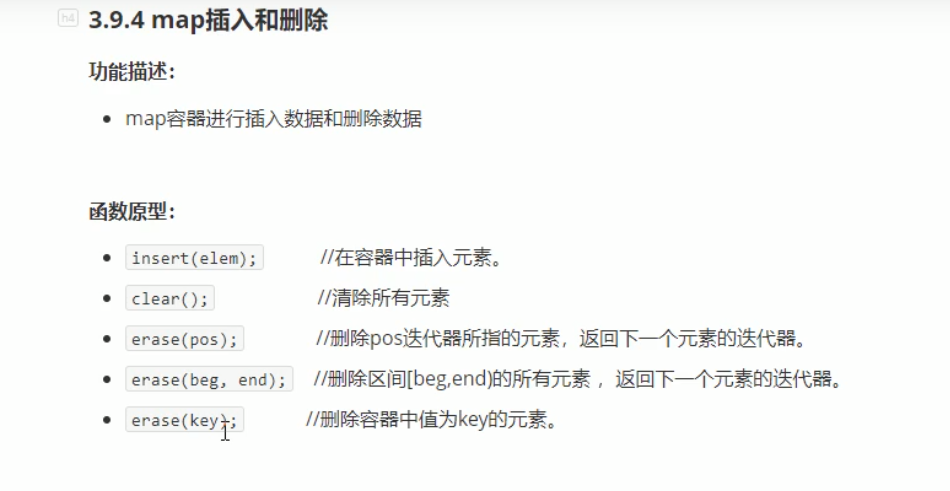
#include<iostream>
using namespace std;
#include<map>

void printmap(map<int, int>mp)
{
    for (map<int, int>::iterator it = mp.begin(); it != mp.end(); it++)
    {
        cout << it->second << " ";
    }
    cout << endl;
}

int main(void)
{
    map<int, int> mp;

    //map的插入
    //第一种
    mp.insert(pair<int, int>(1, 10));

    //第二种
    mp.insert(make_pair(2, 20));

    //第三种
    mp.insert(map<int, int>::value_type(3, 30));

    //第四种
    //[]不建议使用,但可以利用key访问到value

    mp[4] = 40;
    cout << mp[4] << endl;

    printmap(mp);

    //删除
    mp.erase(mp.begin());
    printmap(mp);

    //按照key来删除
    mp.erase(4);
    printmap(mp);

    //清空
    //mp.erase(mp.begin(), mp.end());
    mp.clear();
    printmap(mp);
}
4.map的统计与查找
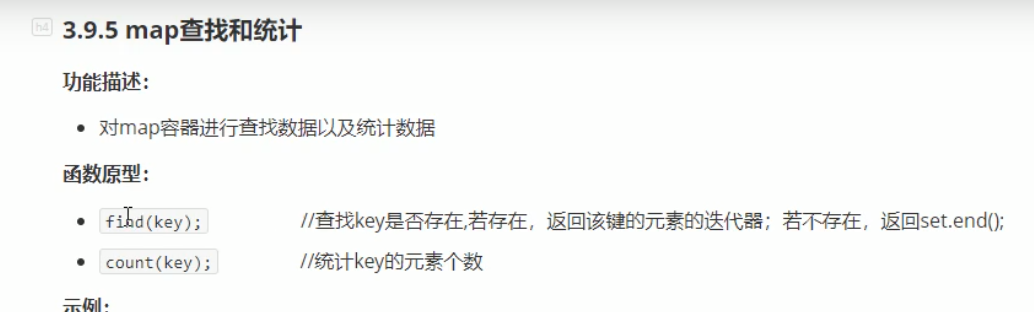
#include<iostream>
using namespace std;
#include<map>
//map的统计与查找
void printmap(map<int, int>mp)
{
    for (map<int, int>::iterator it = mp.begin(); it != mp.end(); it++)
    {
        cout << it->second << " ";
    }
    cout << endl;
}

int main(void)
{
    map<int, int> mp;
    //查找

    mp.insert(make_pair(1, 10));
    mp.insert(make_pair(2, 20));
    mp.insert(make_pair(3, 30));
    mp.insert(make_pair(4, 40));

    map<int, int>::iterator pos = mp.find(3);//find查找返回的是一个迭代器,所以用迭代器接受

    //如果没有查到那么返回end()

    if (pos != mp.end())
    {
        cout << "找到了钙元素" << pos->second << endl;
    }
    else
    {
        cout << "未找到该元素" << endl;
    }

    //统计
    //map不允许重复插入key元素,count统计而言,要么是0要么是1
    //multimap的统计可能大于1
    int num = mp.count(3);
    cout << num << endl;

    return 0;
}
计算机小白记录学习过程,喜欢就点个推荐和关注吧O(∩_∩)O哈哈~

 浙公网安备 33010602011771号