实验5
#include <stdio.h>
#define N 5
#define M 80
typedef struct
{
char name[M]; // 书名
char author[M]; // 作者
}Book;
int main()
{
Book x[N] = { {"一九八四", "乔治.奥威尔"},
              {"美丽新世界", "赫胥黎"},
              {"昨日的世界", "斯蒂芬.茨威格"},
              {"万历十五年", "黄仁宇"},
              {"一只特立独行的猪", "王小波"}
};
int i;
FILE *fp;
// 以写的方式打开文本文件data1.txt
fp = fopen("data1.txt", "w");
// 如果打开文件失败,输出提示信息并返回
if(fp == NULL)
{
printf("fail to open file\n");
return 1;
}
// 将结构体数组x中的图书信息写到fp指向的文件data1.txt
// 同时也输出到屏幕上
for(i=0; i<N; ++i)
{
fprintf(fp, "%-20s %-20s\n", x[i].name, x[i].author);
printf("%-20s %-20s\n", x[i].name, x[i].author);
}
fclose(fp);
return 0;
}
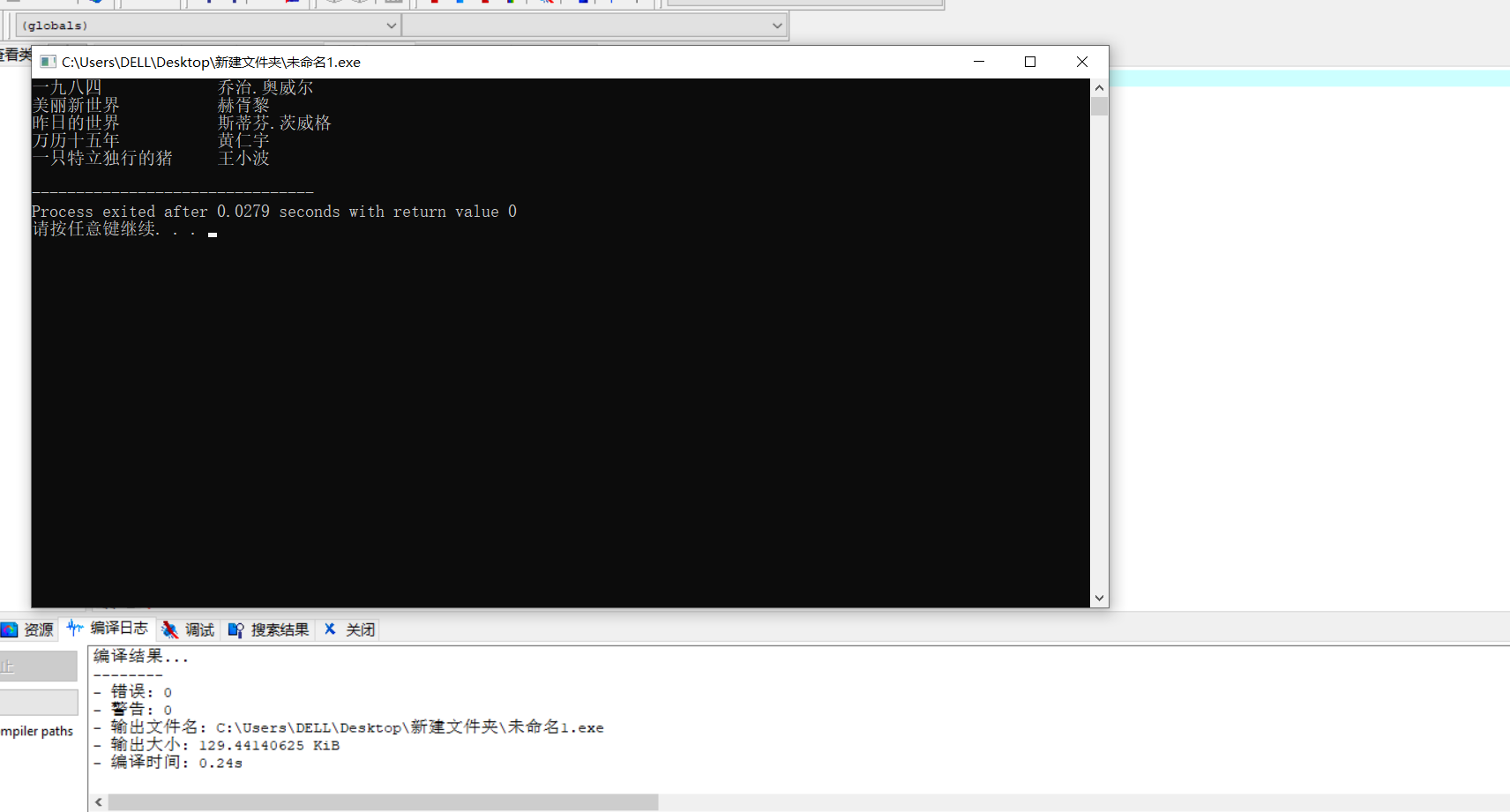
X[i].name不用加地址符,本身就是地址
#include <stdio.h>
#define N 5
#define M 80
typedef struct
{
char name[M];
char author[M];
}Book;
int main()
{
Book x[N];
int i;
FILE *fp;
// 以读的方式打开二进制文件data2.dat
fp = fopen("data2.dat", "rb");
// 如果打开文件失败,输出提示信息并返回
if(fp == NULL)
{
printf("fail to open file\n");
return 1;
}
// 从fp指向的文件中读取数据块到x对应的地址单元
// 数据块大小为sizeof(Book)×N
fread(x, sizeof(Book), N, fp);
// 在屏幕上输出结构体数组x中保存的数据
for(i=0; i<N; ++i)

printf("%-20s%-20s\n", x[i].name, x[i].author);
fclose(fp);
return 0;
}
生成data.dat用word可见
#include <stdio.h>
#define N 5
#define M 80
typedef struct
{
char name[M];
char author[M];
}Book;
int main()
{
Book x[N];
int i;
FILE *fp;
// 以读的方式打开二进制文件data2.dat
fp = fopen("data2.dat", "rb");
// 如果打开文件失败,输出提示信息并返回
if(fp == NULL)
{
printf("fail to open file\n");
return 1;
}
// 从fp指向的文件中读取数据块到x对应的地址单元
// 数据块大小为sizeof(Book)×N
fread(x, sizeof(Book), N, fp);
// 在屏幕上输出结构体数组x中保存的数据
for(i=0; i<N; ++i)

printf("%-20s%-20s\n", x[i].name, x[i].author);
fclose(fp);
return 0;
}
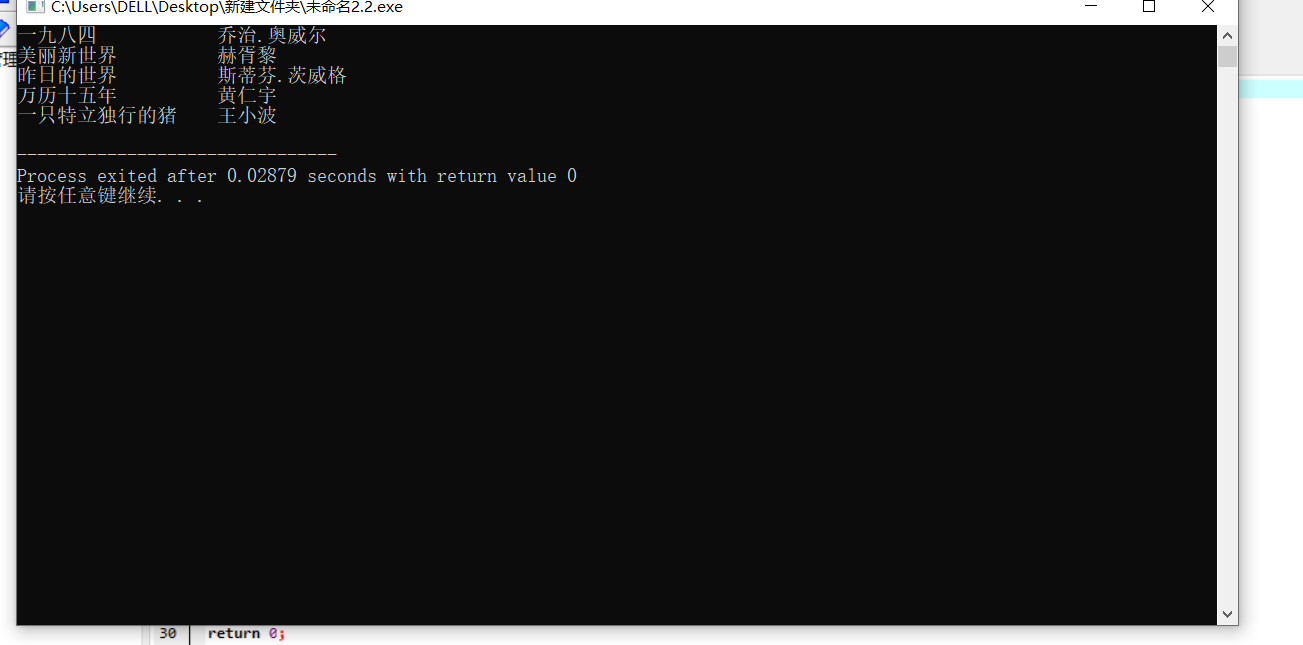
#include <stdio.h>
int main()
{
FILE *fin, *fout;
char ch;
// 以只读、文本方式打开文件data3_1.txt
fin = fopen("data3_1.txt", "r");
// 如果打开失败,输出提示信息并返回
if(fin == NULL)
{
printf("fail to open data3_1.txt\n");
return 1;
}
// 以写、文本方式打开文件data3_2.txt
fout = fopen("data3_2.txt", "w");
// 如果打开失败,输出提示信息并返回
if(fout == NULL)
{
printf("fail to open data3_2.txt\n");
return 1;
}
// 当fin指向的文件data1_txt没有结束时
while( !feof(fin) )
{
// 从fin指向的文件data1_txt读取单个字符
ch = fgetc(fin);
// 如果ch是小写字母,转换成大写
if(ch >= 'a' && ch <= 'z')
ch -= 32;
// 将字符变量ch中的字符写入fout指向的文件data3_2.txt
fputc(ch, fout);
}
fclose(fin);
fclose(fout);
return 0;
}
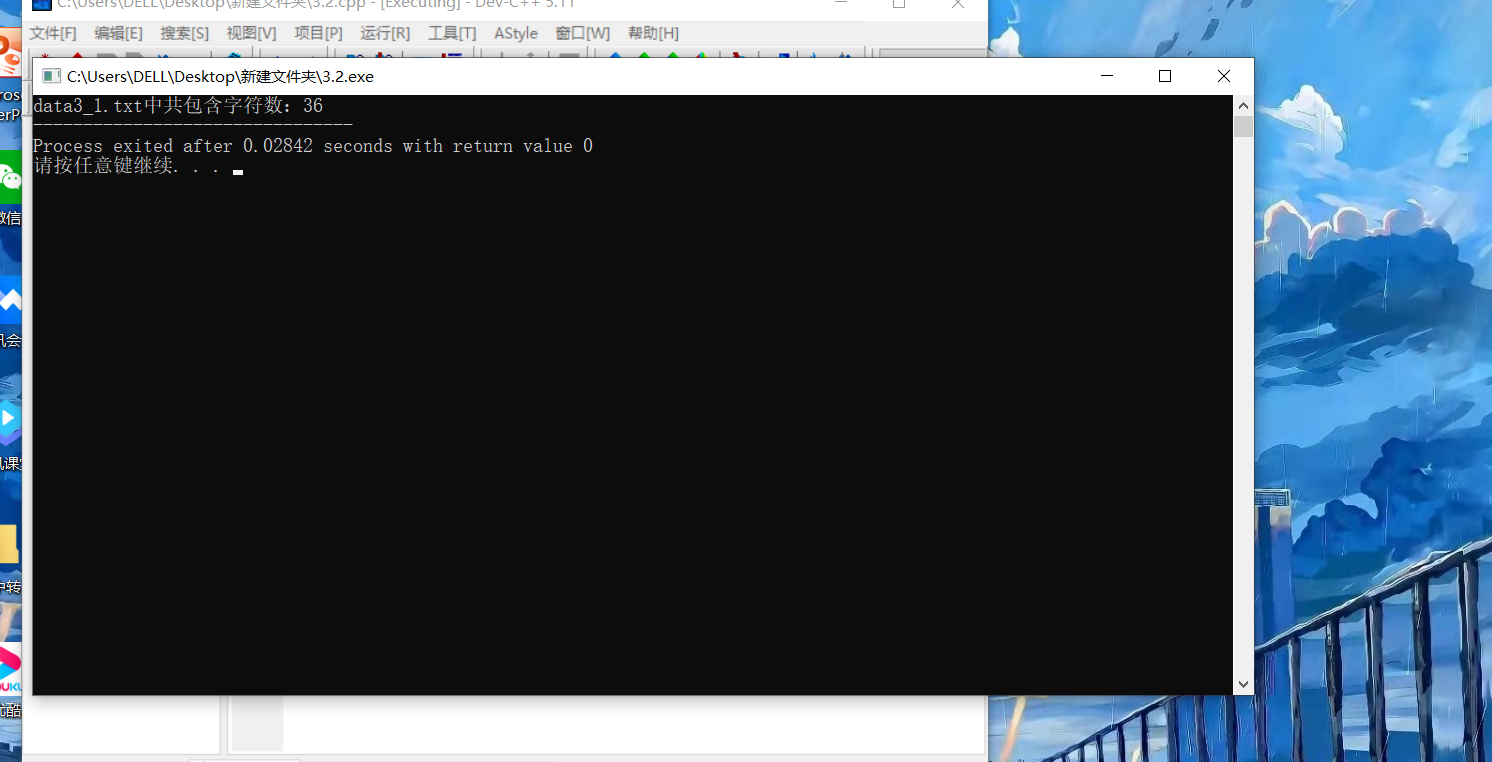
#include <stdio.h>
#include <string.h>
#include <stdlib.h>

#define N 10

typedef struct
{
    long int id;
    char name[20];
    float objective;  /*客观题得分*/
    float subjective; /*操作题得分*/
    float sum;
    char level[10];
} STU;

// 函数声明
void input(STU s[], int n);
void output(STU s[], int n);
void process(STU s[], int n);

int main()
{
    STU stu[N];

    printf("从文件读入%d个考生信息: 准考证号,姓名,客观题得分(<=40),操作题得分(<=60)\n", N);
    input(stu, N);

    printf("\n对考生信息进行处理: 计算总分,确定等级\n");
    process(stu, N);

    printf("\n打印考生完整信息, 并保存到文件中");
    output(stu, N);

    return 0;
}

// 从文本文件examinee.txt读入考生信息:准考证号,姓名,客观题得分,操作题得分
void input(STU s[], int n)
{
    int i;
    FILE *fin;

    fin = fopen("examinee.txt", "r");
    if (fin == NULL)
    {
        printf("fail to open file\n");
        exit(0);
    }

    while (!feof(fin))
    {
        for (i = 0; i < n; i++)
            fscanf(fin, "%ld %s %f %f", &s[i].id, s[i].name, &s[i].objective, &s[i].subjective);
    }

    fclose(fin);
}

//输出考生完整信息: 准考证号,姓名,客观题得分,操作题得分,总分,等级
// 不仅输出到屏幕上,还写到文本文件result.txt中
void output(STU s[], int n)
{
    FILE *fout;
    int i;

    // 输出到屏幕
    printf("\n");
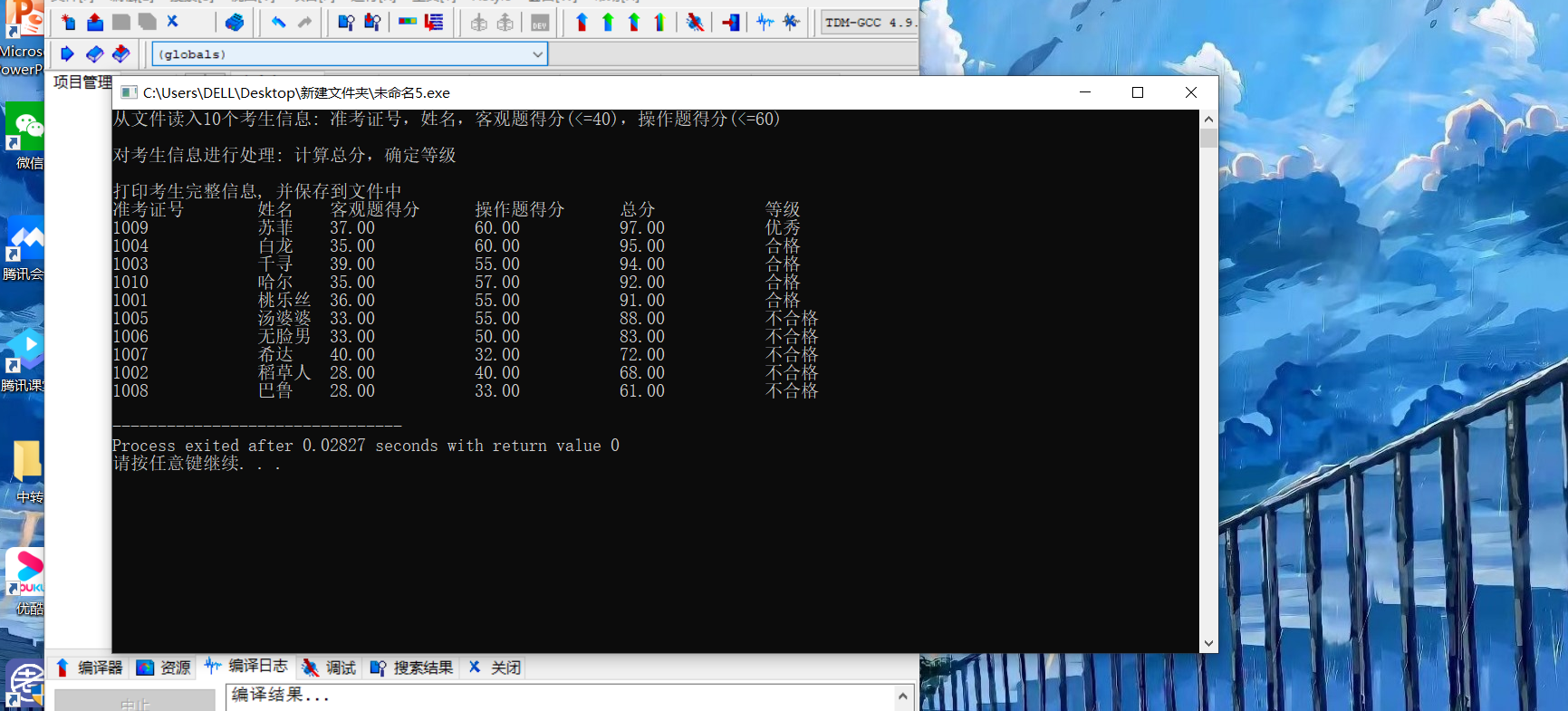
    printf("准考证号\t姓名\t客观题得分\t操作题得分\t总分\t\t等级\n");
    for (i = 0; i < n; i++)
        printf("%ld\t\t%s\t%.2f\t\t%.2f\t\t%.2f\t\t%s\n", s[i].id, s[i].name, s[i].objective, s[i].subjective, s[i].sum, s[i].level);

    // 保存到文件
    fout = fopen("result.txt", "w");
    if (!fout)
    {
        printf("fail to open or create result.txt\n");
        exit(0);
    }

    fprintf(fout, "准考证号\t\t姓名\t客观题得分\t操作题得分\t总分\t\t等级\n");

    for (i = 0; i < n; i++)
        fprintf(fout, "%ld\t\t%s\t%.2f\t\t%.2f\t\t%.2f\t\t%s\n", s[i].id, s[i].name, s[i].objective, s[i].subjective, s[i].sum, s[i].level);

    fclose(fout);
}

// 对考生信息进行处理:计算总分,排序,确定等级
void process(STU s[], int n)
{
   int i,j;
    STU t[10];
    for (i = 0; i < n; i++)
    {
        s[i].sum = s[i].subjective + s[i].objective;
    }
    for (j = 1; j < n * n / 2; j++)
    {
        for (i = 0; i < n - 1; i++)
        {
            if (s[i].sum < s[i+1].sum)
            {
                t[i] = s[i];
                s[i] = s[i + 1];
                s[i + 1] = t[i];
            }

        }
    }
    i = 0;
    while (i < n)
    {
        if (i == 0)
            strcpy(s[i].level, "优秀");
        else if (i >= 1 && i <= 4)
            strcpy(s[i].level, "合格");
        else
            strcpy(s[i].level, "不合格");
        i++;
    }
}
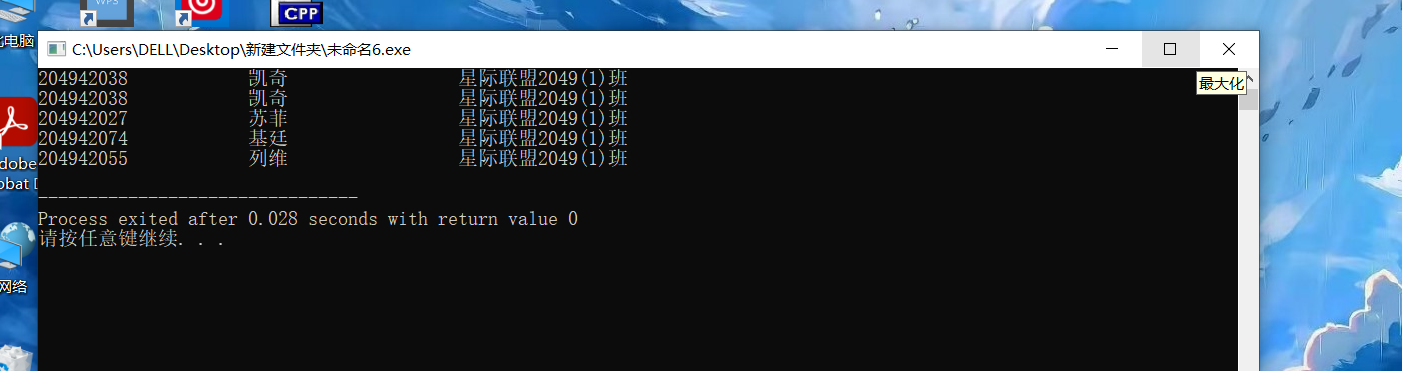
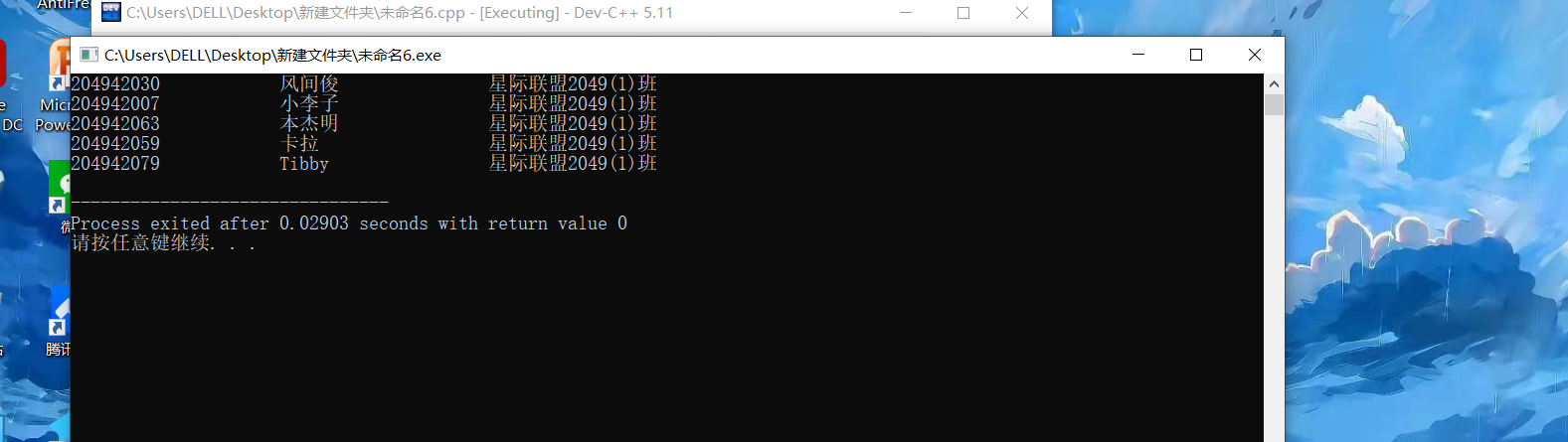
#include<stdio.h>
#include<stdlib.h>
#include<time.h>
#define N 5
#define M 80
typedef struct
{
    char id[20];
    char name[20];
    char classm[20];
}lucky;
int main()
{
    int i, j;
    lucky s[M];
    FILE* fin;
    FILE* fout;
    srand(time(0));
    fin = fopen("list.txt", "r");
    if (fin == NULL)
    {
        printf("fail to open file\n");
        return 1;
    }
    for (i = 0; i < M; i++)
    {
        fscanf(fin, "%s %s %s\n", s[i].id, s[i].name, s[i].classm);
    }

    fout = fopen("lucky.txt", "w");
    if (fout == NULL)
    {
        printf("fail to open file\n");
        return 1;
    }
    for (i = 0; i < N; i++)
    {
        j = rand()%(80)+1;
        printf("%-20s %-20s %-20s\n", s[j].id, s[j].name, s[j].classm);
        fprintf(fout, "%-20s %-20s %-20s\n", s[j].id, s[j].name, s[i].classm);
    }
    fclose(fin);
    fclose(fout);
    return 0;

}

 浙公网安备 33010602011771号