
数据结构与算法系列—队列
队列的特点
先进先出
顺序队列
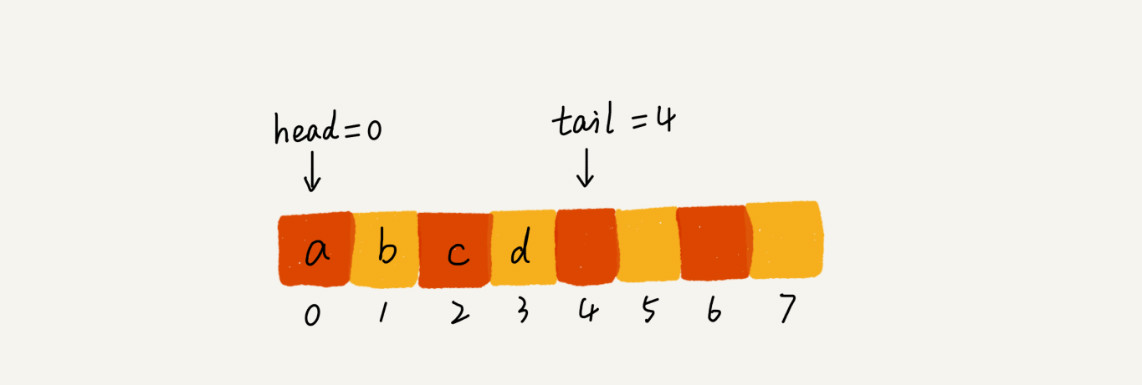
代码实现
package com.datastructure.queue;

import java.util.Objects;

/**
 * 数组实现顺序队列
 *
 * @Auther: dlm
 * @Date: 2020/4/7 19:03
 */
public class ArrayQueue<T> {

    private static final int DEFAULT_CAPACITY = 1 << 3;

    private int capacity; //队列大小

    private T[] data; //存储数据

    private int head; //队头下标

    private int tail; //队尾下标

    public ArrayQueue(int capacity){
        this.capacity = capacity;
        this.data = (T[])new Objects[capacity];
    }

    public ArrayQueue(){
        this(DEFAULT_CAPACITY);
    }

    //入队
    public boolean enqueue(T value){
        //队满
        if(tail == capacity)
            return false;
        //将元素放到队尾,之后tail向后移动一位
        data[tail++] = value;
        return true;
    }

    //出队
    public T dequeue(){
        //队空
        if(head == tail)
            return null;
        //队头元素出队,之后head向后移动一位
        T value = data[head++];
        return value;
    }
}
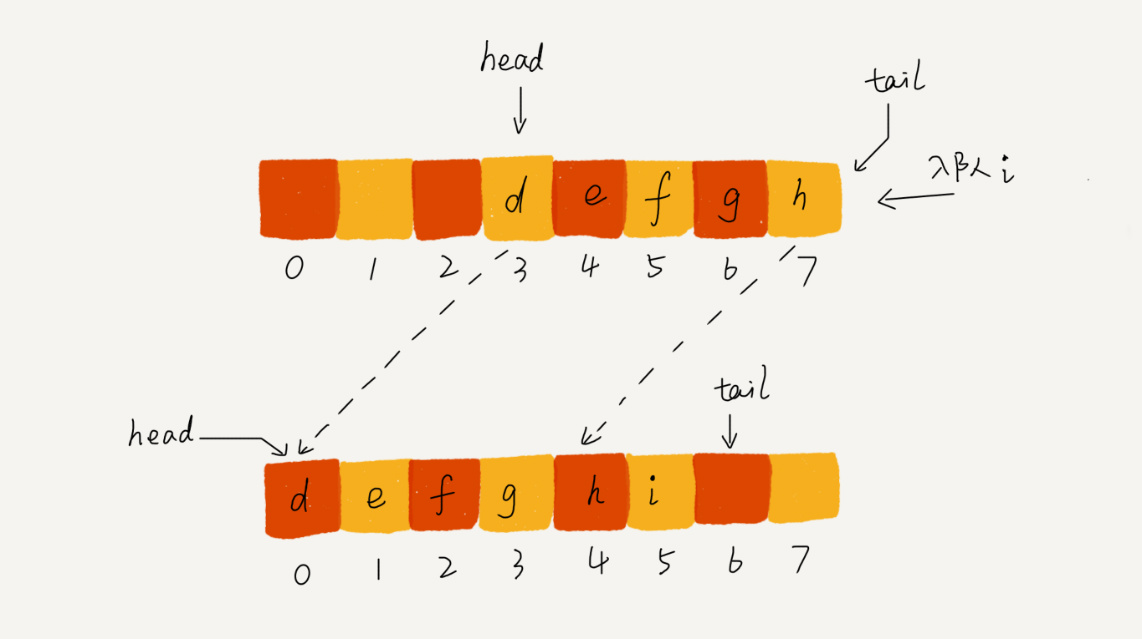
上面的代码中,其实还有一个问题,那就是不断的入队和出队会出现 tail = capacity 。
这时即使队列中还有空间,那么元素也不能入队了。这样会造成空间的浪费。
因此为了解决这个问题,当 tail = capacity 且 head != 0 时,
当再次发生入队操作时,先将所有元素整体向右移动。如下图:
入队代码优化
    //入队优化
    public boolean enqueue_enhance(T value){

        if(tail == capacity){
            if(head == 0)   // tail == capacity && head == 0 表示队满
                return false;

            //整体移动元素
            for(int i = head;i < tail;i++){
                data[i - head] = data[i];
            }

            //重置 head 和 tail
            tail = tail - head;
            head = 0;
        }

        //将元素放到队尾,之后tail向后移动一位
        data[tail++] = value;
        return true;
    }
链式队列
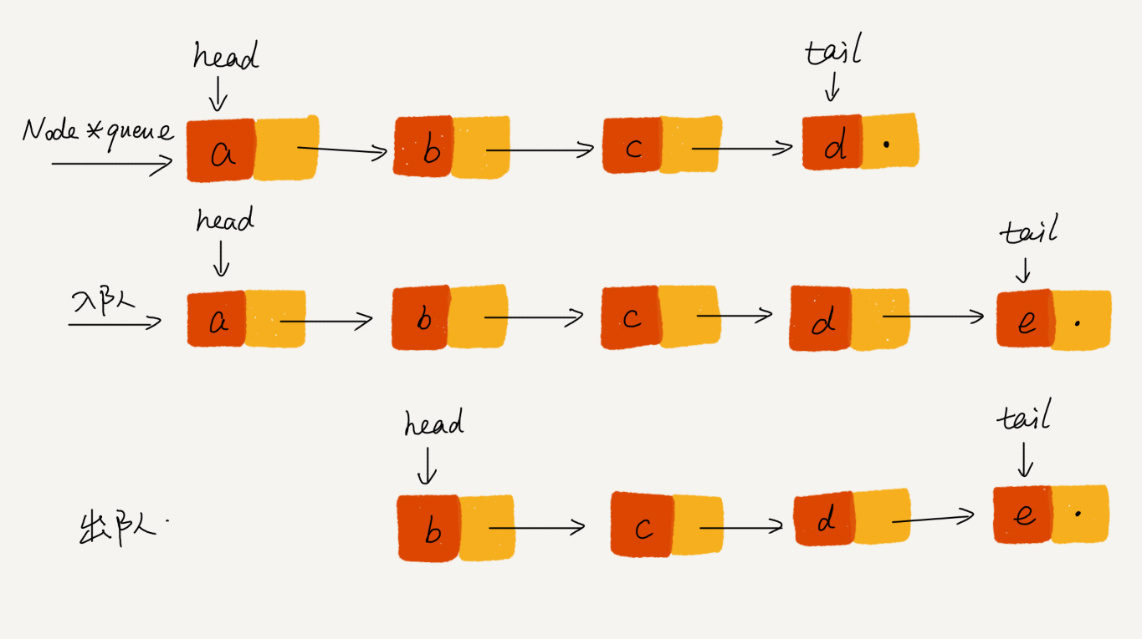
代码实现
package com.datastructure.queue;

/**
 * 链表实现链式队列
 *
 * @Auther: dlm
 * @Date: 2020/4/7 19:44
 */
public class LinkedListQueue<T> {

    private Node head;  //队头指针

    private Node tail;  //队尾指针

    //入队
    public boolean enqueue(T value){
        Node newNode = new Node(value,null);
        if(tail == null){   //队空
            tail = newNode;
            head = newNode;
        }else {
            tail.next = newNode;
            tail = tail.next;
        }
        return true;
    }

    //出队
    public T dequeue(){
        //队空
        if(head == null)
            return null;

        T value = (T)head.data;
        head = head.next;
        if(head == null){
            tail = null;
        }
        return value;
    }

    public class Node<T>{

        private T data;

        private Node next;

        public Node(T data,Node next){
            this.data = data;
            this.next = next;
        }

        public T getData(){
            return this.data;
        }

    }
}
循环队列
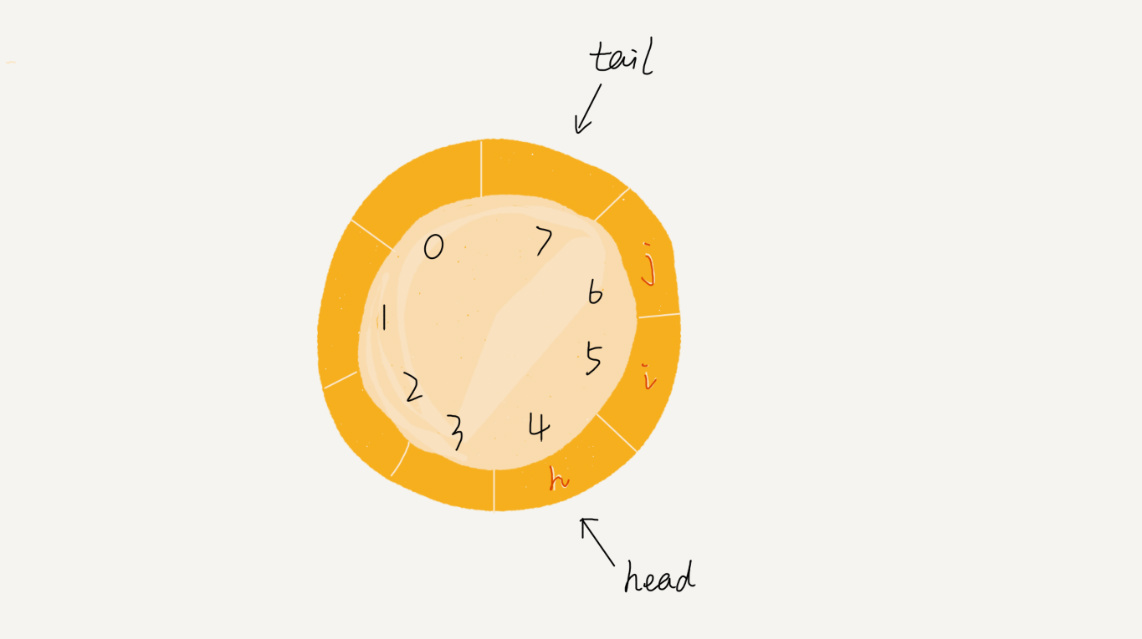
前面顺序队列中有移动数据的操作,这在无形之中肯定会增加时间复杂度。
循环队列就可以解决这个问题。
队空:head == tail
队满:(tail + 1) % capacity = head
代码实现
package com.datastructure.queue;

/**
 * 循环队列
 *
 * @Auther: dlm
 * @Date: 2020/4/7 20:54
 */
public class CircularQueue<T>{
    //默认容量
    private static final int DEFAULT_CAPACITY = 1 << 3;
    //自定义容量
    private int capacity;
    //存储数据
    private T[] data;
    //队头下标
    private int head;
    //队尾下标
    private int tail;

    public CircularQueue(int capacity){
        this.capacity = capacity;
        this.data = (T[])new Object[capacity];
        this.head = 0;
        this.tail = 0;
    }

    public CircularQueue(){
        this(DEFAULT_CAPACITY);
    }

    //入队
    public boolean enqueue(T value){
        //队满
        if((tail + 1) % capacity == head )
            return false;

        data[tail] = value;
        tail = (tail + 1) % capacity;
        return true;
    }

    //出队
    public T dequeue(){
        //队空
        if(head == tail)
            return null;

        T value = data[head];
        head = (head + 1) % capacity;
        return value;
    }

}
阻塞队列和并发队列
阻塞队列和并发队列都是队列的高级结构,其底层都是队列这种数据结构。
阻塞队列:阻塞队列其实就是在队列基础上增加了阻塞操作。简单来说,就是在队列为空的时候,从队头取数据会被阻塞。因为此时还没有数据可取,
直到队列中有了数据才能返回;如果队列已经满了,那么插入数据的操作就会被阻塞,直到队列中有空闲位置后再插入数据,然后再返回。
并发队列:并发队列是线程安全的队列。最简单的实现方式就是在入队和出队时加上锁。
欢迎关注个人公众号,可直接扫描以下二维码或微信搜索“阿毛聊技术”。


 浙公网安备 33010602011771号