
NIO底层实现
背景
当前,Java工程师需要开发网络应用程序,Netty几乎是首选,下面简单列一下Netty的使用场景:
-
构建高性能、低延迟的java中间件,如MQ,RPC框架等。
-
基于其它应用层协议的基础通信框架,如开发IM程序相关的WebSocket等。
-
其它领域:游戏等。
而Netty底层是基于NIO开发的,NIO是java 1.4版本开始提供的非阻塞通信API。和之前的BIO相比,能够实现IO多路复用,实现单线程同时处理多个连接请求和IO。一个典型的NIO程序如下:
public class Main {


    public static void main(String[] args) throws IOException {

        ServerSocketChannel serverSocketChannel = ServerSocketChannel.open();
        serverSocketChannel.socket().bind(new InetSocketAddress(9000));
        serverSocketChannel.configureBlocking(false);
        //注册selector事件
        Selector selector = Selector.open();
        serverSocketChannel.register(selector, SelectionKey.OP_ACCEPT);

        System.out.println("服务器启动...");

        while (true) {

            //阻塞等待事件发生
            selector.select();

            //获取selector中注册的全部事件的SelectionKey实例
            Set<SelectionKey> selectionKeys = selector.selectedKeys();
            Iterator<SelectionKey> iterator = selectionKeys.iterator();

            while (iterator.hasNext()) {

                SelectionKey selectionKey = iterator.next();

                if (selectionKey.isAcceptable()) {

                    ServerSocketChannel server = (ServerSocketChannel) selectionKey.channel();
                    SocketChannel client = server.accept();
                    client.configureBlocking(false);
                    //注册读事件,需要向客户端发数据可注册写事件
                    client.register(selector, SelectionKey.OP_READ);
                    System.out.println("客户端连接成功");

                } else if (selectionKey.isReadable()) {

                    SocketChannel client = (SocketChannel) selectionKey.channel();
                    ByteBuffer buffer = ByteBuffer.allocate(128);
                    int len = client.read(buffer);
                    if (len > 0) {
                        System.out.println("收到客户端消息:" + new String(buffer.array(), StandardCharsets.UTF_8));
                    } else if (len == -1) {
                        System.out.println("客户端断开连接");
                        client.close();
                    }
                }

                //从事件集合中移除本次已处理的key,防止下次重复处理
                iterator.remove();
            }

        }
    }


}
其中实现IO多路复用的关键代码是以下三句:
//创建selector
Selector selector = Selector.open();

//注册监听
serverSocketChannel.register(selector, SelectionKey.OP_ACCEPT);

//阻塞等待事件发生
selector.select();
通过将所有的连接事件和IO事件注册到操作系统,操作系统收到相应事件后,进行回调,告知上层发生相应事件,实现了单线程非阻塞地处理多个连接请求。下面对底层实现做简要分析。
Linux系统函数
linux系统提供了三个系统函数,分别是:
//创建一个epoll文件描述符
int epoll_create(int size);

//向epoll中添加、删除或者修改事件
int epoll_ctl(int epfd, int op, int fd, struct epoll_event *event);

//等待事件发生,其中timeout表示该方法需阻塞的时长:若置为-1,则无限阻塞,直到有事件发生;若置为0,则立即返回,不管有没有事件发生;若置为大于0的值,则至多阻塞timeout时长后返回
int epoll_wait(int epfd, struct epoll_event *events,
                      int maxevents, int timeout);
执行Selector.open()时会触发epoll_create函数;
而注册事件serverSocketChannel.register(selector, SelectionKey.OP_ACCEPT)发生时,NIO会将该事件存到一个array或者map;
最后执行selector.select()时,会将上述array或者map中未注册的或者有修改的事件使用epoll_ctl函数进行注册,最后调用epoll_wait方法监听事件的发生。
关于epoll的原理,参见:epoll原理 epoll原理2
IO多路复用的理解:
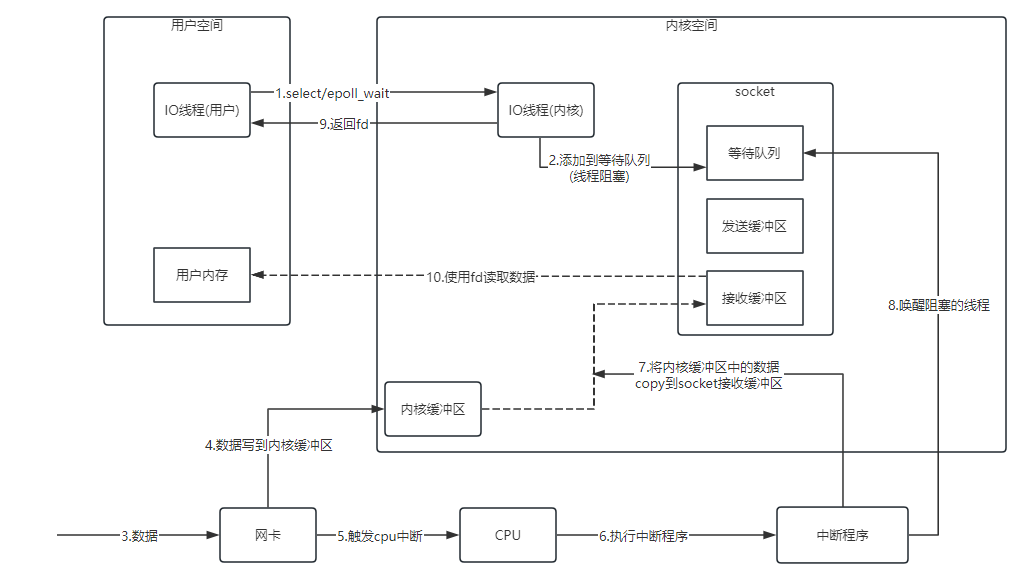
其中第七部,需要解析包体,根据端口号找到对应的socket

 浙公网安备 33010602011771号