

腾讯课堂——基础数据类型(set集合)
认识集合
由一个或多个确定的元素所构成的整体叫做集合。
集合中的元素有三个特征:
1.确定性(集合中的元素必须是确定的)
2.互异性(集合中的元素互不相同。例如:集合A={1,a},则a不能等于1)
3.无序性(集合中的元素没有先后之分),如集合{3,4,5}和{3,5,4}算作同一个集合。
*集合概念存在的目的是将不同的值存放到一起,不同的集合间用来做关系运算,无需纠结于集合中某个值
集合的定义
s = {1,2,3,1}

#定义可变集合
>>> set_test=set('hello')
>>> set_test
{'l', 'o', 'e', 'h'}
#改为不可变集合frozenset
>>> f_set_test=frozenset(set_test)
>>> f_set_test
frozenset({'l', 'e', 'h', 'o'})
集合的常用操作及关系运算
元素的增加
单个元素的增加 : add(),add的作用类似列表中的append
对序列的增加 : update(),而update类似extend方法,update方法可以支持同时传入多个参数:
>>> a={1,2}
>>> a.update([3,4],[1,2,7])
>>> a
{1, 2, 3, 4, 7}
>>> a.update("hello")
>>> a
{1, 2, 3, 4, 7, 'h', 'e', 'l', 'o'}
>>> a.add("hello")
>>> a
{1, 2, 3, 4, 'hello', 7, 'h', 'e', 'l', 'o'}
元素的删除
集合删除单个元素有两种方法:
元素不在原集合中时:
set.discard(x)不会抛出异常
set.remove(x)会抛出KeyError错误
>>> a={1,2,3,4}
>>> a.discard(1)
>>> a
{2, 3, 4}
>>> a.discard(1)
>>> a
{2, 3, 4}
>>> a.remove(1)
Traceback (most recent call last):
  File "<input>", line 1, in <module>
KeyError: 1
pop():由于集合是无序的,pop返回的结果不能确定,且当集合为空时调用pop会抛出KeyError错误,
clear():清空集合
>>> a={3,"a",2.1,1}
>>> a.pop()
1
>>> a.pop()
3
>>> a.clear()
>>> a
set()
>>> a.pop()
Traceback (most recent call last):
  File "<input>", line 1, in <module>
KeyError: 'pop from an empty set'
集合操作
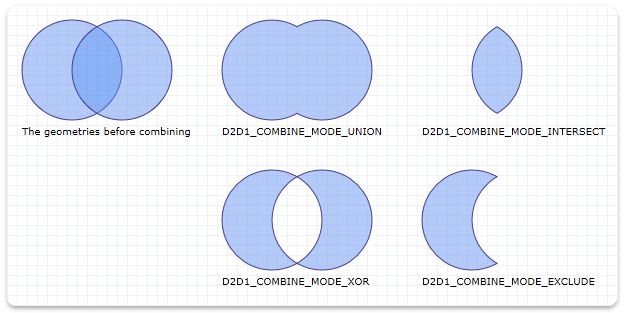
|,|=:合集
a = {1,2,3}
b = {2,3,4,5}
print(a.union(b))
print(a|b)
&.&=:交集
a = {1,2,3}
b = {2,3,4,5}
print(a.intersection(b))
print(a&b)
-,-=:差集
a = {1,2,3}
b = {2,3,4,5}
print(a.difference(b))
print(a-b)
^,^=:对称差集
a = {1,2,3}
b = {2,3,4,5}
print(a.symmetric_difference(b))
print(a^b)
包含关系
in,not in:判断某元素是否在集合内
==,!=:判断两个集合是否相等
两个集合之间一般有三种关系,相交、包含、不相交。在Python中分别用下面的方法判断:
- set.isdisjoint(s):判断两个集合是不是不相交
- set.issuperset(s):判断集合是不是包含其他集合,等同于a>=b
- set.issubset(s):判断集合是不是被其他集合包含,等同于a<=b
集合的工厂函数


class set(object): """ set() -> new empty set object set(iterable) -> new set objectBuild an unordered collection of unique elements.
"""
def add(self, *args, **kwargs): # real signature unknown
"""
Add an element to a set.This has no effect if the element is already present.
"""
passdef clear(self, *args, **kwargs): # real signature unknown
""" Remove all elements from this set. """
passdef copy(self, *args, **kwargs): # real signature unknown
""" Return a shallow copy of a set. """
passdef difference(self, *args, **kwargs): # real signature unknown
"""
相当于s1-s2Return the difference of two or more sets as a new set.
(i.e. all elements that are in this set but not the others.)
"""
passdef difference_update(self, *args, **kwargs): # real signature unknown
""" Remove all elements of another set from this set. """
passdef discard(self, *args, **kwargs): # real signature unknown
"""
与remove功能相同,删除元素不存在时不会抛出异常Remove an element from a set if it is a member.
If the element is not a member, do nothing.
"""
passdef intersection(self, *args, **kwargs): # real signature unknown
"""
相当于s1&s2Return the intersection of two sets as a new set.
(i.e. all elements that are in both sets.)
"""
passdef intersection_update(self, *args, **kwargs): # real signature unknown
""" Update a set with the intersection of itself and another. """
passdef isdisjoint(self, *args, **kwargs): # real signature unknown
""" Return True if two sets have a null intersection. """
passdef issubset(self, *args, **kwargs): # real signature unknown
"""
相当于s1<=s2Report whether another set contains this set. """
passdef issuperset(self, *args, **kwargs): # real signature unknown
"""
相当于s1>=s2Report whether this set contains another set. """
passdef pop(self, *args, **kwargs): # real signature unknown
"""
Remove and return an arbitrary set element.
Raises KeyError if the set is empty.
"""
passdef remove(self, *args, **kwargs): # real signature unknown
"""
Remove an element from a set; it must be a member.If the element is not a member, raise a KeyError.
"""
passdef symmetric_difference(self, *args, **kwargs): # real signature unknown
"""
相当于s1^s2Return the symmetric difference of two sets as a new set.
(i.e. all elements that are in exactly one of the sets.)
"""
passdef symmetric_difference_update(self, *args, **kwargs): # real signature unknown
""" Update a set with the symmetric difference of itself and another. """
passdef union(self, *args, **kwargs): # real signature unknown
"""
相当于s1|s2Return the union of sets as a new set.
(i.e. all elements that are in either set.)
"""
passdef update(self, *args, **kwargs): # real signature unknown
""" Update a set with the union of itself and others. """
passdef and(self, *args, **kwargs): # real signature unknown
""" Return self&value. """
passdef contains(self, y): # real signature unknown; restored from doc
""" x.contains(y) <==> y in x. """
passdef eq(self, *args, **kwargs): # real signature unknown
""" Return self==value. """
passdef getattribute(self, *args, **kwargs): # real signature unknown
""" Return getattr(self, name). """
passdef ge(self, *args, **kwargs): # real signature unknown
""" Return self>=value. """
passdef gt(self, *args, **kwargs): # real signature unknown
""" Return self>value. """
passdef iand(self, *args, **kwargs): # real signature unknown
""" Return self&=value. """
passdef init(self, seq=()): # known special case of set.init
"""
set() -> new empty set object
set(iterable) -> new set objectBuild an unordered collection of unique elements.
# (copied from class doc)
"""
passdef ior(self, *args, **kwargs): # real signature unknown
""" Return self|=value. """
passdef isub(self, *args, **kwargs): # real signature unknown
""" Return self-=value. """
passdef iter(self, *args, **kwargs): # real signature unknown
""" Implement iter(self). """
passdef ixor(self, *args, **kwargs): # real signature unknown
""" Return self^=value. """
passdef len(self, *args, **kwargs): # real signature unknown
""" Return len(self). """
passdef le(self, *args, **kwargs): # real signature unknown
""" Return self<=value. """
passdef lt(self, *args, **kwargs): # real signature unknown
""" Return self<value. """
pass@staticmethod # known case of new
def new(*args, **kwargs): # real signature unknown
""" Create and return a new object. See help(type) for accurate signature. """
passdef ne(self, *args, **kwargs): # real signature unknown
""" Return self!=value. """
passdef or(self, *args, **kwargs): # real signature unknown
""" Return self|value. """
passdef rand(self, *args, **kwargs): # real signature unknown
""" Return value&self. """
passdef reduce(self, *args, **kwargs): # real signature unknown
""" Return state information for pickling. """
passdef repr(self, *args, **kwargs): # real signature unknown
""" Return repr(self). """
passdef ror(self, *args, **kwargs): # real signature unknown
""" Return value|self. """
passdef rsub(self, *args, **kwargs): # real signature unknown
""" Return value-self. """
passdef rxor(self, *args, **kwargs): # real signature unknown
""" Return value^self. """
passdef sizeof(self): # real signature unknown; restored from doc
""" S.sizeof() -> size of S in memory, in bytes """
passdef sub(self, *args, **kwargs): # real signature unknown
""" Return self-value. """
passdef xor(self, *args, **kwargs): # real signature unknown
""" Return self^value. """
passhash = None
课程回顾:
腾讯课堂第一课——流程控制 :https://www.cnblogs.com/l-hf/p/11528934.html
腾讯课堂第二课——循 环 :https://www.cnblogs.com/l-hf/p/11528937.html
腾讯课堂第三课——数字和字符串 : https://www.cnblogs.com/l-hf/p/11528845.html
腾讯课堂第四课——列 表 : https://www.cnblogs.com/l-hf/p/11528858.html
腾讯课堂第四课——字 典 :https://www.cnblogs.com/l-hf/p/11528867.html
腾讯课堂第五课——元 祖 :https://www.cnblogs.com/l-hf/p/11528864.htmll
更多相关内容,详见:
Python全栈开发入门经典:https://ke.qq.com/course/157698#tuin=839b573b
Python全栈开发进阶实战:https://ke.qq.com/course/158006#tuin=839b573b

 浙公网安备 33010602011771号