
策略模式
理论
策略模式:它定义了算法家族,分别封装起来,让它们之间可以相互替换,此模式让算法的变化,不会影响到使用算法的客户。
策略模式是一种定义一系列算法的方法,从概念上来看,所有这些算法都是完成相同的工作,只是实现不同,它可以以相同的方式调用所有的算法,减少了各种算法类与使用算法类之间的耦合。
策略模式简化了单元测试,因为每个算法都有自己的类,可以通过自己的接口单独测试。
实例
做一个商场收银软件,营业员根据客户所购买的单价和数量,向客户收费
UML类图
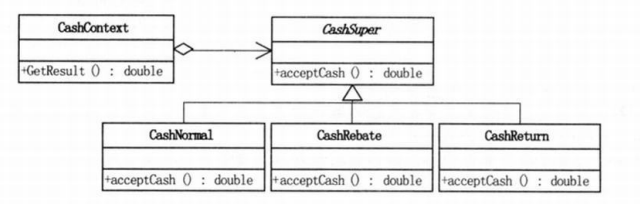
实现代码
#include <iostream>
using namespace std;

//收费的抽象类
class CashSuper {
public:
	virtual double acceptCash(double price) = 0;
};

//算法1 正常收费类
class CashNormal :public CashSuper
{
public:
	double acceptCash(double price)
	{
		return price;
	}
};

//算法2 打折收费类
class CashRebate :public CashSuper
{
public:
	CashRebate(double ratio)
	{
		priceRatio = ratio;
	}

	double acceptCash(double price)
	{
		return price * priceRatio;
	}

private:
	double priceRatio = 1.0;
};

//算法3 返利收费类
class CashReturn :public CashSuper
{
public:
	CashReturn(double Condition, double Return)
	{
		priceCondition = Condition;
		priceReturn = Return;
	}

	double acceptCash(double price)
	{
		int num = (int)(price / priceCondition);
		return price - num * priceReturn;
	}

private:
	double priceCondition = 0.0;
	double priceReturn = 0.0;
};

class CashContext {
public:
	CashSuper* strategy = NULL;

	CashContext(CashSuper* cashSuper)
	{
		strategy = cashSuper;
	}

	double GetResult(double price)
	{
		return strategy->acceptCash(price);
	}

	~CashContext()
	{
		if (strategy != NULL)
		{
			delete strategy;
			strategy = NULL;
		}
	}
};

//客户端
void test()
{
	//商品单价
	double UnitPrice;
	//数量
	double Quantity;
	//活动选择
	int choice;

	cout << "商品的单价: " << endl;
	cin >> UnitPrice;
	cout << "商品的数量: " << endl;
	cin >> Quantity;
	cout << "商品的收费标准: " << endl;
	cout << "1. 正常收费 " << endl << "2. 打八折" << endl << "3. 满300减100" << endl;
	cin >> choice;

	CashContext* Context = NULL;

	switch (choice)
	{
	case(1):
		Context = new CashContext(new CashNormal);
		break;
	case(2):
		Context = new CashContext(new CashRebate(0.8));
		break;
	case(3):
		Context = new CashContext(new CashReturn(300, 100));
		break;
	}

	double result = 0.0;
	result = Context->GetResult(UnitPrice * Quantity);
	cout << "商品的总价格:" << result << endl;

	delete Context;
}

int main()
{
	test();

	system("pause");
	return 0;
}
缺点:判断过程放在了客户端,暴露了太多的细节
改进:策略模式结合简单工厂模式
#include <iostream>
using namespace std;

//收费的抽象类
class CashSuper {
public:
	virtual double acceptCash(double price) = 0;
};

//算法1 正常收费类
class CashNormal :public CashSuper
{
public:
	double acceptCash(double price)
	{
		return price;
	}
};

//算法2 打折收费类
class CashRebate :public CashSuper
{
public:
	CashRebate(double ratio)
	{
		priceRatio = ratio;
	}

	double acceptCash(double price)
	{
		return price * priceRatio;
	}

private:
	double priceRatio = 1.0;
};

//算法3 返利收费类
class CashReturn :public CashSuper
{
public:
	CashReturn(double Condition, double Return)
	{
		priceCondition = Condition;
		priceReturn = Return;
	}

	double acceptCash(double price)
	{
		int num = (int)(price / priceCondition);
		return price - num * priceReturn;
	}

private:
	double priceCondition = 0.0;
	double priceReturn = 0.0;
};

class CashContext {
public:
	CashSuper* strategy = NULL;

	CashContext(int choice)
	{
		switch (choice)
		{
		case(1):
			//正常收费
			strategy = new CashNormal;
			break;
		case(2):
			//打八折
			strategy = new CashRebate(0.8);
			break;
		case(3):
			//满300减100
			strategy = new CashReturn(300, 100);
			break;
		default:
			break;
		}
	}

	double GetResult(double price)
	{
		return strategy->acceptCash(price);
	}

	~CashContext()
	{
		if (strategy != NULL)
		{
			delete strategy;
			strategy = NULL;
		}
	}
};

//客户端
void test()
{
	//商品单价
	double UnitPrice;
	//数量
	double Quantity;
	//活动选择
	int choice;

	cout << "商品的单价: " << endl;
	cin >> UnitPrice;
	cout << "商品的数量: " << endl;
	cin >> Quantity;
	cout << "商品的收费标准: " << endl;
	cout << "1. 正常收费 " << endl << "2. 打八折" << endl << "3. 满300减100" << endl;
	cin >> choice;

	double result;
	CashContext context(choice);
	result = context.GetResult(UnitPrice * Quantity);
	cout << "商品的总价格:" << result << endl;
}

int main()
{
	test();

	system("pause");
	return 0;
}
简单工厂+策略模式,客户端只需要知道 CashContext 类

 浙公网安备 33010602011771号