

netty源代码分析笔记--新连接接入
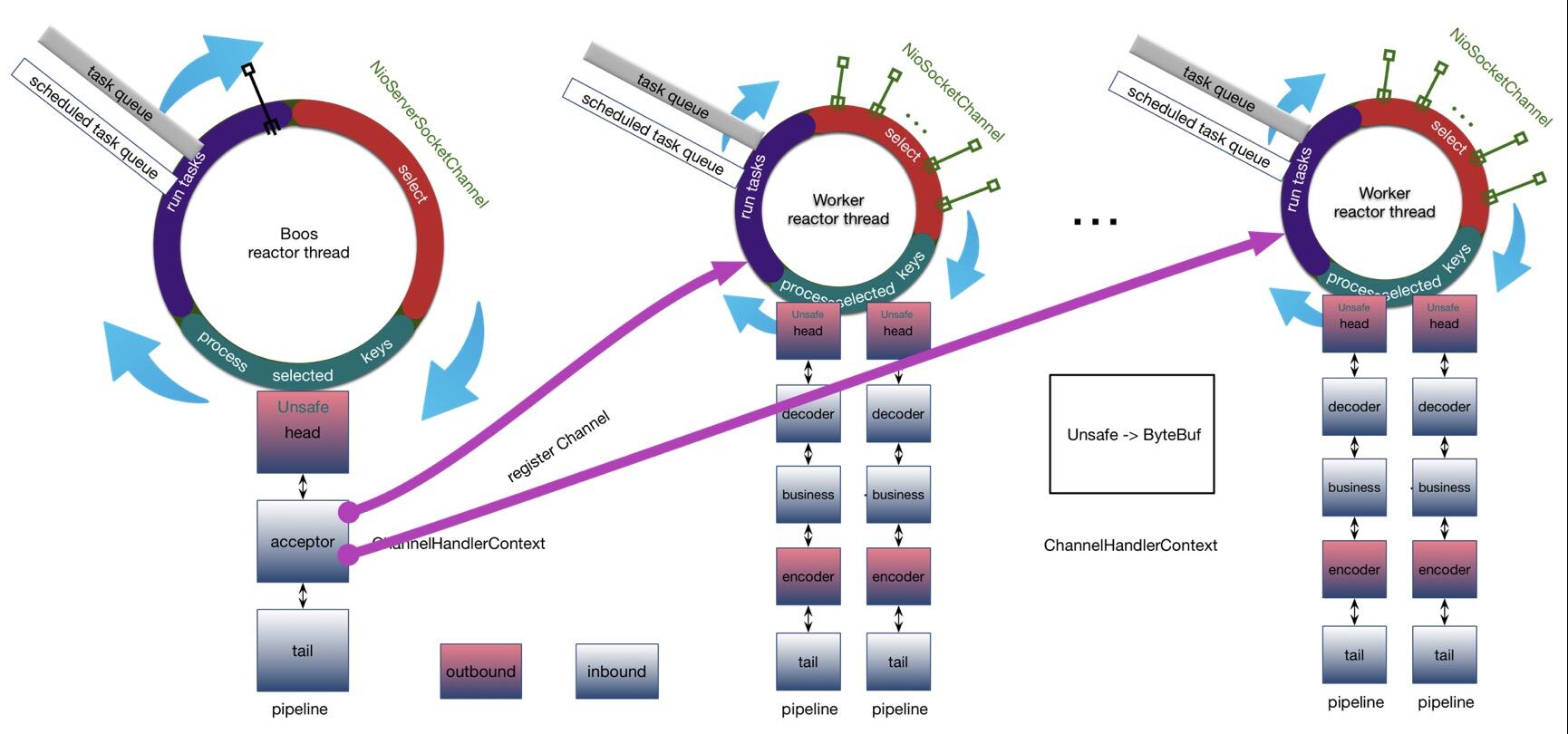
检测新连接
新连接检测从NioEventLoop的run()方法的第二阶段开始,处理io事件
processSelectedKey(SelectionKey k, AbstractNioChannel ch) 入口
->NioMessageUnsafe.read()
->doReadMessages(readBuf) while循环
->javaChannel().accept() 创建新连接对象
private void processSelectedKey(SelectionKey k, AbstractNioChannel ch) {
    final AbstractNioChannel.NioUnsafe unsafe = ch.unsafe();
    if (!k.isValid()) {
        final EventLoop eventLoop;
        try {
            eventLoop = ch.eventLoop();
        }
    }

    try {
        int readyOps = k.readyOps();
        // We first need to call finishConnect() before try to trigger a read(...) or write(...) as otherwise
        // the NIO JDK channel implementation may throw a NotYetConnectedException.
        if ((readyOps & SelectionKey.OP_CONNECT) != 0) {
            // remove OP_CONNECT as otherwise Selector.select(..) will always return without blocking
            // See https://github.com/netty/netty/issues/924
            int ops = k.interestOps();
            ops &= ~SelectionKey.OP_CONNECT;
            k.interestOps(ops);

            unsafe.finishConnect();
        }

        // Process OP_WRITE first as we may be able to write some queued buffers and so free memory.
        if ((readyOps & SelectionKey.OP_WRITE) != 0) {
            // Call forceFlush which will also take care of clear the OP_WRITE once there is nothing left to write
            ch.unsafe().forceFlush();
        }

        // Also check for readOps of 0 to workaround possible JDK bug which may otherwise lead
        // to a spin loop
        if ((readyOps & (SelectionKey.OP_READ | SelectionKey.OP_ACCEPT)) != 0 || readyOps == 0) {
            //此处调用NioMessageUnsafe的read()
            unsafe.read();
            if (!ch.isOpen()) {
                // Connection already closed - no need to handle write.
                return;
            }
        }
    } catch (CancelledKeyException ignored) {
        unsafe.close(unsafe.voidPromise());
    }
}

public void read() {
    assert eventLoop().inEventLoop();
    final ChannelConfig config = config();
    final ChannelPipeline pipeline = pipeline();
    final RecvByteBufAllocator.Handle allocHandle = unsafe().recvBufAllocHandle();
    allocHandle.reset(config);

    boolean closed = false;
    Throwable exception = null;
    try {
        try {
            do {
                int localRead = doReadMessages(readBuf);
                if (localRead == 0) {
                    break;
                }
                if (localRead < 0) {
                    closed = true;
                    break;
                }

                allocHandle.incMessagesRead(localRead);
            } while (allocHandle.continueReading());
            //此处的while最多accept 16条连接
        } catch (Throwable t) {
            exception = t;
        }

        int size = readBuf.size();
        for (int i = 0; i < size; i ++) {
            readPending = false;
            pipeline.fireChannelRead(readBuf.get(i));
        }
        readBuf.clear();
        allocHandle.readComplete();
        pipeline.fireChannelReadComplete();

        if (exception != null) {
            closed = closeOnReadError(exception);

            pipeline.fireExceptionCaught(exception);
        }

        if (closed) {
            inputShutdown = true;
            if (isOpen()) {
                close(voidPromise());
            }
        }
    }
}

protected int doReadMessages(List<Object> buf) throws Exception {
    //ServerSocketChannel.accept() 方法监听新进来的连接。当 accept()方法返回的时候,它返回一个包含新进来的连接的 SocketChannel
    //doReadMessages这个方法的名字起的有歧义,其实就是doAcceptChannel
    //javaChannel()为服务端启动过程中创建的jdk的channel
    SocketChannel ch = javaChannel().accept();
    if (ch != null) {
        /**
        this 为服务端channel,即NioServerSocketChannel
        ch 为jdk创建的客户端channel
        NioSocketChannel 为netty包装的客户端channel
        */
        buf.add(new NioSocketChannel(this, ch));
        //获取到一个channel就返回
        return 1;
    }

    return 0;
}
创建NioSocketChannel
NioSocketChannel(Channel parent, SocketChannel socket) 入口
public NioSocketChannel(Channel parent, SocketChannel socket) {
    //调用父类方法
    super(parent, socket);
    config = new NioSocketChannelConfig(this, socket.socket());
}

protected AbstractNioChannel(Channel parent, SelectableChannel ch, int readInterestOp) {
    super(parent);
    this.ch = ch;
    //readInterestOp为SelectionKey.OP_READ
    this.readInterestOp = readInterestOp;
    try {
        ch.configureBlocking(false);
    } catch (IOException e) {
    }
}

protected AbstractChannel(Channel parent) {
    //这个parent是创建此客户端channel的服务端channel
    this.parent = parent;
    //创建id unsafe pipeline
    id = newId();
    unsafe = newUnsafe();
    pipeline = newChannelPipeline();
}
Channel的分类
新连接NioEventLoop分配和selector注册
服务端channel在初始化时,添加过一个特殊的handler ServerBootstrapAcceptor
for (int i = 0; i < size; i ++) {
readPending = false;
pipeline.fireChannelRead(readBuf.get(i));
}
前面的 pipeline.fireChannelRead(NioSocketChannel); 最终通过head->unsafe->ServerBootstrapAcceptor的调用链,调用到这里的 ServerBootstrapAcceptor 的channelRead方法
ServerBootstrapAcceptor中:添加childHandler,设置options和attrs,选择NioEventLoop并注册selector
private static class ServerBootstrapAcceptor extends ChannelInboundHandlerAdapter {
    private final EventLoopGroup childGroup;
    private final ChannelHandler childHandler;
    private final Entry<ChannelOption<?>, Object>[] childOptions;
    private final Entry<AttributeKey<?>, Object>[] childAttrs;

    ServerBootstrapAcceptor(
            EventLoopGroup childGroup, ChannelHandler childHandler,
            Entry<ChannelOption<?>, Object>[] childOptions, Entry<AttributeKey<?>, Object>[] childAttrs) {
        this.childGroup = childGroup;
        this.childHandler = childHandler;
        this.childOptions = childOptions;
        this.childAttrs = childAttrs;
    }

    public void channelRead(ChannelHandlerContext ctx, Object msg) {
        final Channel child = (Channel) msg;

        child.pipeline().addLast(childHandler);

        for (Entry<ChannelOption<?>, Object> e: childOptions) {
            try {
                if (!child.config().setOption((ChannelOption<Object>) e.getKey(), e.getValue())) {
                    logger.warn("Unknown channel option: " + e);
                }
            } catch (Throwable t) {
                logger.warn("Failed to set a channel option: " + child, t);
            }
        }

        for (Entry<AttributeKey<?>, Object> e: childAttrs) {
            child.attr((AttributeKey<Object>) e.getKey()).set(e.getValue());
        }

        try {
            childGroup.register(child).addListener(new ChannelFutureListener() {
                @Override
                public void operationComplete(ChannelFuture future) throws Exception {
                    if (!future.isSuccess()) {
                        forceClose(child, future.cause());
                    }
                }
            });
        } catch (Throwable t) {
            forceClose(child, t);
        }
    }
}
注册读事件
register0() 方法的时候,向selector注册的事件代码是0,而 readInterestOp对应的事件代码是 SelectionKey.OP_READ,参考前文中创建 NioSocketChannel 的过程,稍加推理,这里其实就是将 SelectionKey.OP_READ事件注册到selector中去,表示这条通道已经可以开始处理read事件了@Override
protected void doBeginRead() throws Exception {
// Channel.read() or ChannelHandlerContext.read() was called
final SelectionKey selectionKey = this.selectionKey;
if (!selectionKey.isValid()) {
return;
}
readPending = true;
final int interestOps = selectionKey.interestOps();
if ((interestOps & readInterestOp) == 0) {
selectionKey.interestOps(interestOps | readInterestOp);
}
}
总结:
1、服务端创建NioServerSocketChannel后,会绑定到bossThread中,然后该channel,监听accept事件,有新的连接后创建一个新的客户端channel
2、通过封装jdk底层的channel创建 NioSocketChannel以及一系列的netty核心组件
3、将该条连接通过chooser,选择一条worker reactor线程绑定上去
4、注册读事件,开始新连接的读写
参考:
https://www.jianshu.com/p/0242b1d4dd21

 浙公网安备 33010602011771号