在Linux系统编程中,线程控制是一个核心且容易混淆的领域。本文将带你从底层原理出发,深入理解Linux线程的独特设计,并通过丰富的代码示例和实战经验,掌握线程创建、管理以及C++11多线程编程的精髓。无论你是C++开发者,还是对Go、Java、Python、JavaScript中的并发模型有所了解,都能从中获得启发。
Linux线程的本质:轻量级进程(LWP)
与其他操作系统不同,Linux并没有真正的线程概念。它通过复用进程的数据结构和管理算法,用进程来模拟线程。这意味着,在Linux内核视角下,只有轻量级进程(LWP),而没有独立的线程调用接口。内核提供的系统调用是面向轻量级进程的,而非线程。
那么,我们日常编程中使用的pthread线程库从何而来?答案是:pthread库封装了轻量级进程的系统调用接口,为用户提供了统一的线程API。每个Linux发行版都自带pthread库,编写多线程代码时必须链接该库(编译时加 -pthread 选项)。
关键理解:
- 内核级实体是LWP,用户级接口是pthread_t
- 用户级线程与内核LWP形成1:1映射关系
- pthread_create 不是系统调用,而是库函数

⚠️ 常见误区:很多开发者认为Linux线程与其他系统(如Windows)的线程完全一致。实际上,Linux线程的创建、调度和资源管理都基于进程机制,这也解释了为什么单个线程崩溃会导致整个进程退出——因为内核层面它们共享同一个进程上下文。
线程控制实战:创建、等待与异常处理
1. 线程创建与ID
每个线程都有自己独立的ID。下面是一个快速使用pthread_create的示例:
#include <iostream>
  #include <pthread.h>
    #include <unistd.h>
      using namespace std;
      void* threadRoutine(void *args)
      {
      const char* str=(const char*)args;
      cout<<str<<endl;
      int cnt=5;
      while(cnt--)
      {
      cout<<"thread id :"<< pthread_self() <<endl;
      sleep(1);
      }
      }
      int main()
      {
      pthread_t tid;
      cout<<tid<<endl;
      pthread_create(&tid,nullptr,*threadRoutine,(void*)"thread 1");
      cout<<tid<<endl;
      pthread_join(tid,nullptr);
      return 0;
      }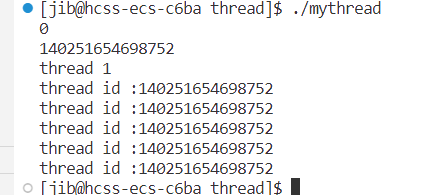
从输出可以看到,主线程需要最后退出,并通过pthread_join等待子线程结束。线程等待默认是阻塞的,这类似于Java中的Thread.join()或Go中的sync.WaitGroup。
2. 异常处理:为什么没有try-catch?
在单线程编程中,异常可以局部捕获和处理。但在多线程环境下,如果单个线程发生异常(如段错误),整个进程都会崩溃。这是因为线程共享进程的地址空间和信号处理机制。这与Python或JavaScript的异步模型有本质区别——那些语言中的“线程”实际上是协程或事件循环,拥有独立的异常处理上下文。
int g_val=100;
void* threadRoutine(void* args)
{
const char* str=(const char*)args;
int cnt=5;
while(cnt--)
{
printf("%s pid: %d, g_val: %d, &g_val: 0x%p \n",str,getpid(),g_val,&g_val);
sleep(1);
g_val++;
}
//pthread_exit(100)
//exit(100); //不能用exit,直接把整个进程退出了
return (void*)100;//退出线程
}
int main()
{
pthread_t tid;
pthread_create(&tid,nullptr,*threadRoutine,(void*)"thread 1");
int cnt=5;
while(cnt--)
{
printf("main thread %d, g_val: %d, &g_val: 0x%p , create a new thread: %p \n",getpid(),g_val,&g_val, tid);
sleep(1);
g_val++;
}
sleep(2);
void* set;
pthread_join(tid,&set);
cout<<"new thread quit success"<<(long long int)set<<endl;
return 0;
}
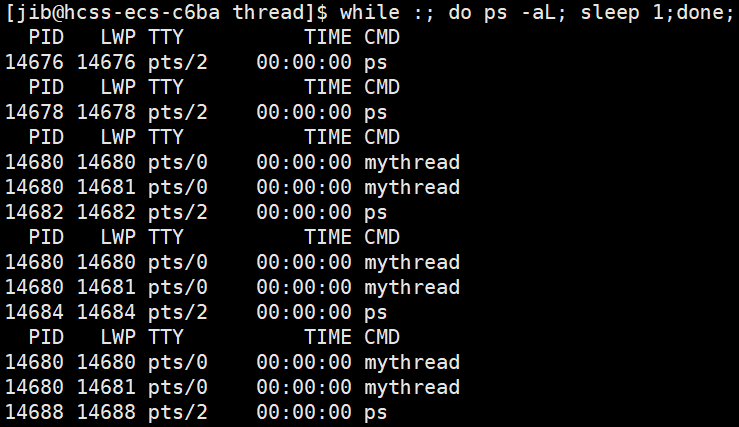
ps -aL查看所有线程
while :; do ps -aL; sleep 1;done;监控
3. 两种线程ID的理解
通过ps -eLf命令查看,你会发现两个mythread的进程PID相同,但LWP不同。这揭示了Linux线程的二元身份:
- 内核视角:LWP(轻量级进程ID) —— 用于内核调度
- 用户视角:pthread_t —— 线程库维护的标识
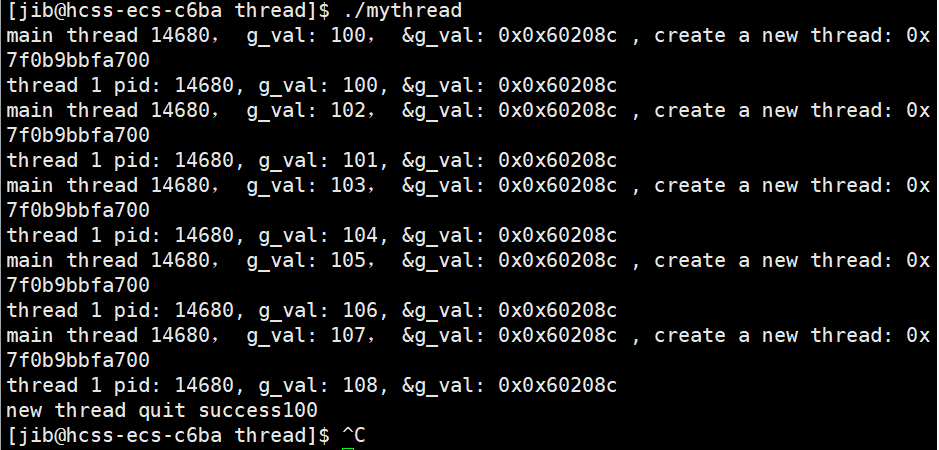
当两个线程共享全局变量并同时调用相同函数时,数据冲突就发生了。这是后续需要解决的同步问题。理解LWP与pthread_t的关系,是掌握Linux线程控制的第一步。
线程计算1-100:实战代码与数据冲突
来看一个经典的计算1-100的线程示例,它直观展示了多线程编程中的共享数据问题:
class Reques
t
{
public:
Request(int begin,int end,const string& threadname)
:_begin(begin),
_end(end),
_threadname(threadname)
{}
public:
int _begin;
int _end;
string _threadname;
};
class Reponse
{
public:
Reponse(int result,int exitcode)
:_result(result),
_exitcode(exitcode)
{}
public:
int _result;  //计算结果
int _exitcode;//计算结果是否可靠
};
void* sumRoutine(void* args)  // 线程的参数和返回值,不仅仅可以传递一般参数,还可以传递自定义对象
{
Request* rq=static_cast<Request*>(args); //(Request*)args;
  Reponse* rsp=new Reponse(0,0);
  if(rq->_begin>rq->_end)
  {
  rsp->_exitcode=-1;
  }
  else{
  for(int i=rq->_begin;i<=rq->_end;i++)
    {
    rsp->_result+=i;
    }
    }
    delete rq;
    return rsp;
    }
    int main()
    {
    pthread_t tid;
    Request *rq=new Request(1,100,"thread 1");
    pthread_create(&tid,nullptr,*sumRoutine,rq);
    void* set;
    pthread_join(tid,&set);
    Reponse *rsp=static_cast<Reponse*>(set);
      cout<<"rsp -> _result: "<<rsp->_result<<"rsp ->_exitcode: "<<rsp->_exitcode <<endl;
        delete rsp;
        return 0;
        }
最佳实践:
- 使用互斥锁(mutex)保护共享资源
- 考虑使用原子操作(C++11的std::atomic)
- 将线程任务设计为无共享状态(类似Go的channel理念)
这个例子与Java的synchronized块、Python的threading.Lock、JavaScript的Atomics对象要解决的问题完全一致。不同语言只是语法糖不同,底层原理相通。
[AFFILIATE_SLOT_1]线程库的内部机制:动态库与线程属性管理
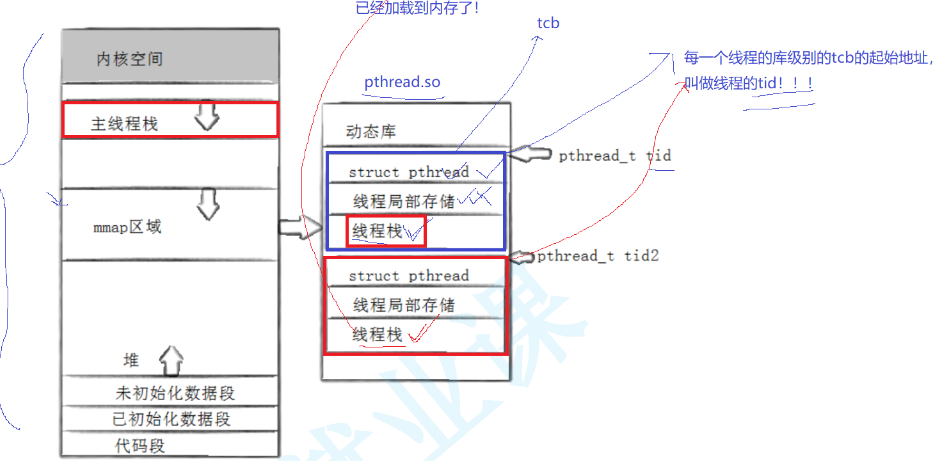
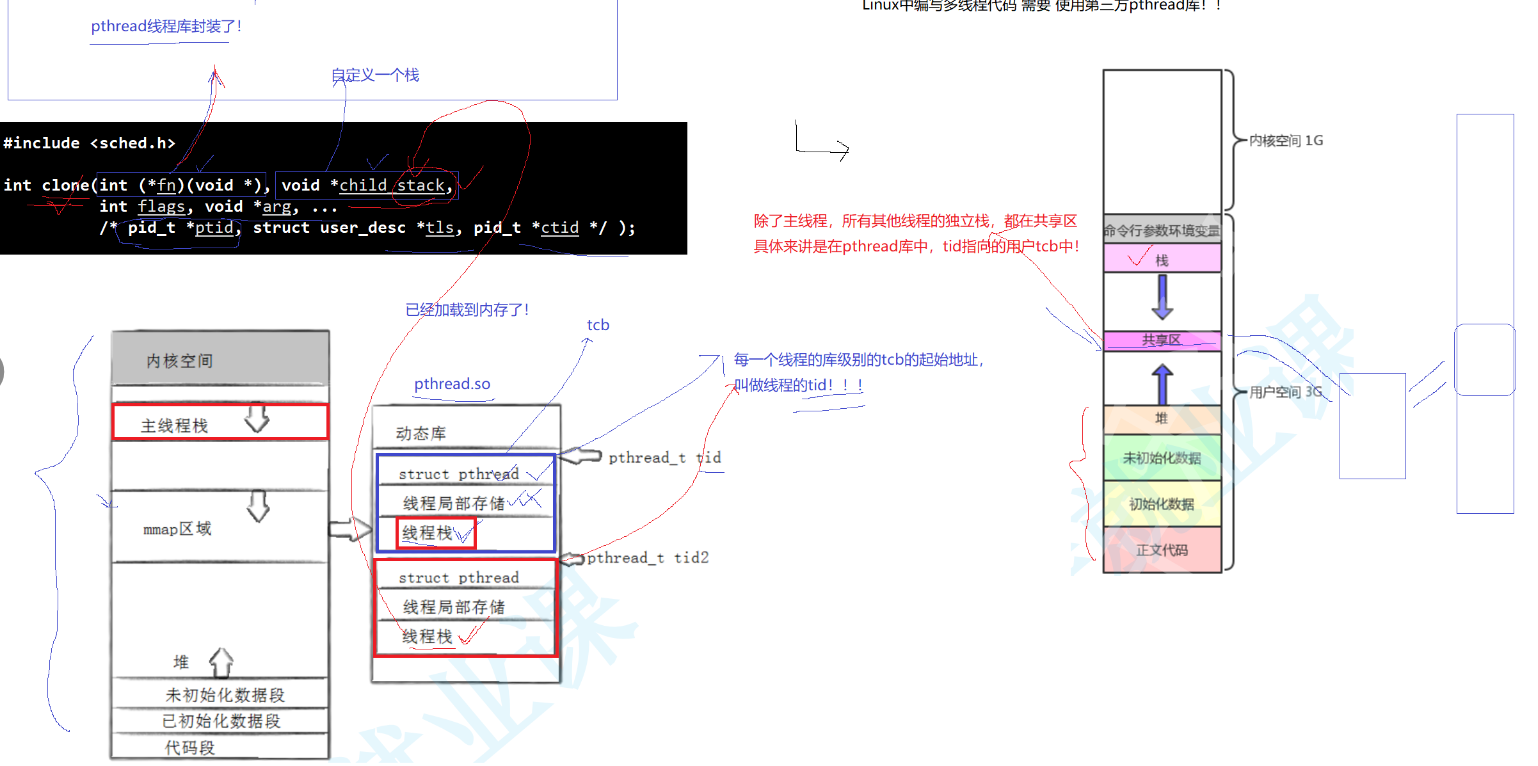
线程的概念是由pthread库维护的。库内部通过clone()回调函数将执行流绑定到进程PCB,并共享父进程资源。线程库需要维护多个线程的属性集合,遵循“先描述再组织”的原则。
线程库必须加载到内存中,它被映射到进程的共享区,本质上是一个动态库(.so文件)。这意味着:
- 线程创建、销毁、同步操作都是库函数调用
- 线程属性(栈大小、调度策略等)由库管理
- 库函数内部最终调用轻量级进程系统调用
✅ 常见问题解决:
- 链接错误:忘记加
-pthread选项,会导致undefined reference错误 - 内存泄漏:线程退出后未join或detach,会导致资源无法回收
- 性能问题:过多线程导致上下文切换开销,建议使用线程池
C++11多线程:现代C++的并发利器
C++11标准引入了对多线程的原生支持,封装了pthread库的底层细节,提供了更安全、更易用的接口。与Go的goroutine、Java的java.util.concurrent、Python的concurrent.futures相比,C++11的线程模型更接近底层,但使用起来依然简洁。
void threadrun()
{
while(true)
{
cout << "I am a new thead for C++" << endl;
sleep(1);
}
}
int main()
{
thread t1(threadrun);
t1.join();
return 0;
}
C++11多线程核心特性:
std::thread—— 线程创建与管理std::mutex/std::lock_guard—— 互斥锁std::atomic—— 原子操作,无锁编程std::async/std::future—— 异步任务与结果获取
对比其他语言:
- 与Python的
threading模块相比,C++11更注重性能控制 - 与JavaScript的Web Workers相比,C++11线程共享内存,需要显式同步
- 与Go的goroutine相比,C++11线程更重,但控制粒度更细
总结
本文从Linux线程的底层原理出发,深入剖析了轻量级进程(LWP)与用户线程的关系,并通过实战代码展示了线程创建、等待、异常处理以及数据冲突等核心问题。最后,我们对比了C++11多线程与其他语言并发模型的特点。掌握这些知识,你就能在C++、Java、Python、Go、JavaScript等语言的多线程/并发编程中游刃有余。


 浙公网安备 33010602011771号