在构建健壮可靠的系统时,错误处理是每个开发者必须掌握的核心技能。Rust语言以其独特的所有权系统和类型安全著称,在错误处理方面也提供了强大而优雅的机制。与传统的异常处理不同,Rust将错误视为值,通过类型系统强制开发者显式处理可能的失败情况。这种设计哲学不仅提高了代码的可靠性,还能在编译期捕获许多潜在的错误。本文将深入探讨Rust中的错误处理机制,帮助你写出更加健壮、可维护的代码。
Panic:不可恢复错误的最后防线
当程序遇到无法继续执行的严重错误时,panic是Rust提供的最直接的处理方式。它会立即终止当前线程的执行,展开调用栈并清理资源,最终退出程序。虽然panic听起来很可怕,但在某些情况下它是合理的选择:
- 原型开发阶段,用于标记未实现的功能
- 处理绝对不应该发生的逻辑错误
- 测试中显式标记失败条件
在机器学习或深度学习项目中,如果模型加载失败或关键配置文件缺失,使用panic可能是合适的,因为这通常意味着程序无法继续执行有意义的计算。然而,在生产代码中,过度依赖panic会导致糟糕的用户体验。
让我们看一个简单的panic示例:
// 18.1节 panic
fn give_princess(gift: &str) {
    // 公主讨厌蛇,所以如果公主表示厌恶的话我们要停止!
    if gift == "snake" {panic!("AAAaaaaaa!!!!!");}
    println!("I love {}s!!!!!!", gift);
}
fn main() {
    give_princess("teddy bear");
    give_princess("snake");
    println!("Hello Rust");
}
// rustc main.rs
// ./main
运行这段代码会产生以下输出:
PS F:\rustproject\rustbyexample\chapter18\example18_1> rustc main.rs
PS F:\rustproject\rustbyexample\chapter18\example18_1> ./main
I love teddy bears!!!!!!
thread 'main' (14300) panicked at main.rs:5:25:
AAAaaaaaa!!!!!
note: run with `RUST_BACKTRACE=1` environment variable to display a backtrace
PS F:\rustproject\rustbyexample\chapter18\example18_1>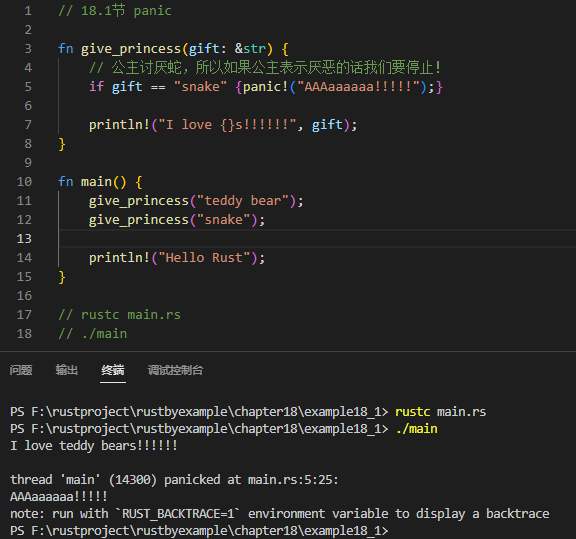
Option类型:优雅处理“可能不存在”的值
在AI和数据处理领域,经常遇到值可能不存在的情况。Rust的Option<T>枚举类型完美解决了这个问题。它有两个变体:Some(T)表示有值,None表示无值。这种设计强制开发者显式处理缺失值的情况,避免了空指针异常这类常见错误。
Option提供了多种处理方法:
- unwrap():直接获取值,如果是None则panic
- expect():与unwrap类似,但可以自定义错误信息
- match表达式:显式处理Some和None两种情况
下面是一个处理礼物(可能不存在)的示例:
// 18.2节 Option 和 unwrap
// 平民(commoner)们见多识广,收到什么礼物都能应对。
// 所有礼物都显式地使用 `match` 来处理。
fn give_commoner(gift: Option<&str>) {
    // 指出每种情况下的做法。
    match gift {
        Some("snake") => println!("Yuck! I'm throwing that snake in a fire."),
        Some(inner) => println!("{}? How nice.", inner),
        None => println!("No gift? Oh well."),
    }
}
// 养在深闺人未识的公主见到蛇就会 `panic`(恐慌)。
// 这里所有的礼物都使用 `unwrap` 隐式地处理。
fn give_princess(gift: Option<&str>) {
    // `unwrap` 在接收到 `None` 时将返回 `panic`。
    let inside = gift.unwrap();
    if inside == "snake" {panic!("AAAaaaaaa");}
    println!("I love {}s!!!!!!", inside);
}
fn main() {
    let food = Some("chicken");
    let snake = Some("snake");
    let void = None;
    give_commoner(food);
    give_commoner(snake);
    give_commoner(void);
    let bird = Some("robin");
    let nothing = None;
    give_princess(bird);
    give_princess(nothing);
    println!("Hello Rust");
}
// rustc main.rs
// ./main
运行结果:
PS F:\rustproject\rustbyexample\chapter18\example18_2> rustc main.rs
PS F:\rustproject\rustbyexample\chapter18\example18_2> ./main
chicken? How nice.
Yuck! I'm throwing that snake in a fire.
No gift? Oh well.
I love robins!!!!!!
thread 'main' (3156) panicked at main.rs:18:23:
called `Option::unwrap()` on a `None` value
note: run with `RUST_BACKTRACE=1` environment variable to display a backtrace
PS F:\rustproject\rustbyexample\chapter18\example18_2>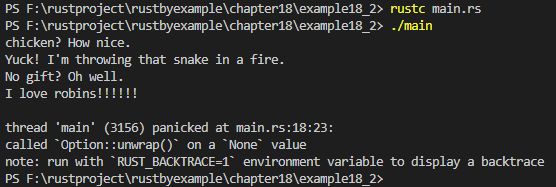
Option的高级用法:组合算子与?运算符
当需要连续处理多个可能为None的值时,Rust提供了强大的工具来简化代码。组合算子(Combinators)如map和and_then允许你以函数式风格处理Option值。
map方法可以将Option中的值进行转换:
// 18.2.2节 组合算子:map
//将多个 ? 链接在一起,以使代码更具可读性。
#![allow(dead_code)]
#[derive(Debug)]
enum Food {
    Apple,
    Carrot,
    Potato,
}
#[derive(Debug)] struct Peeled(Food);
#[derive(Debug)] struct Chopped(Food);
#[derive(Debug)] struct Cooked(Food);
// 削皮。如果没有食物,就返回 `None`。否则返回削好皮的食物。
fn peel(food: Option) -> Option {
    match food {
        Some(food) => Some(Peeled(food)),
        None => None,
    }
}
// 切食物。如果没有食物,就返回 `None`。否则返回切好的食物。
fn chop(peeled: Option) -> Option {
    match peeled {
        Some(Peeled(food)) => Some(Chopped(food)),
        None => None,
    }
}
// 烹饪食物。这里,我们使用 `map()` 来替代 `match` 以处理各种情况。
fn cook(chopped: Option) -> Option {
    chopped.map(|Chopped(food)| Cooked(food))
}
// 这个函数会完成削皮切块烹饪一条龙。我们把 `map()` 串起来,以简化代码。
fn process(food: Option) -> Option {
    food.map(|f| Peeled(f))
    .map(|Peeled(f) | Chopped(f))
    .map(|Chopped(f) | Cooked(f))
}
// 在尝试吃食物之前确认食物是否存在是非常重要的!
fn eat(food: Option) {
    match food {
        Some(food) => println!("Mmm. I love {:?}", food),
        None => println!("Oh no! It wasn't edible."),
    }
}
fn main() {
    let apple = Some(Food::Apple);
    let carrot = Some(Food::Carrot);
    let potato = None;
    let cooked_apple = cook(chop(peel(apple)));
    let cooked_carrot = cook(chop(peel(carrot)));
    // 现在让我们试试看起来更简单的 `process()`。
    let cooked_potato = process(potato);
    eat(cooked_apple);
    eat(cooked_carrot);
    eat(cooked_potato);
    println!("Hello Rust");
}
// rustc main.rs
// ./main
输出:
PS F:\rustproject\rustbyexample\chapter18\example18_5> rustc main.rs
PS F:\rustproject\rustbyexample\chapter18\example18_5> ./main
Mmm. I love Cooked(Apple)
Mmm. I love Cooked(Carrot)
Oh no! It wasn't edible.
Hello Rust
PS F:\rustproject\rustbyexample\chapter18\example18_5>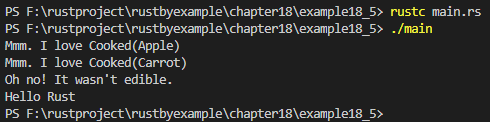
?运算符是Rust错误处理的精华之一。它可以在遇到None时提前返回,大大简化了错误传播的代码:
// 18.2.1节 使用 ? 解开 Option
fn next_birthday(current_age: Option) -> Option {
    // 如果 `current_age` 是 `None`,这将返回 `None`。
    // 如果 `current_age` 是 `Some`,内部的 `u8` 将赋值给 `next_age`。
    let next_age: u8 = current_age?;
    Some(format!("Next year I will be {}", next_age))
}
fn main() {
    let result = next_birthday(Some(18u8));
    println!("result = {:?}", result);
    let result = next_birthday(None);
    println!("result = {:?}", result);
    println!("Hello Rust");
}
// rustc main.rs
// ./main
运行:
PS F:\rustproject\rustbyexample\chapter18\example18_3> rustc main.rs
PS F:\rustproject\rustbyexample\chapter18\example18_3> ./main
result = Some("Next year I will be 18")
result = None
Hello Rust
PS F:\rustproject\rustbyexample\chapter18\example18_3>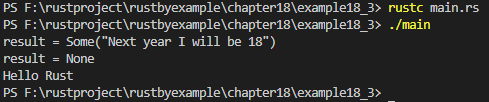
在自然语言处理任务中,比如处理可能为空的文本字段时,这些工具特别有用。[AFFILIATE_SLOT_1]
✅ Result类型:处理可能失败的操作
当操作可能失败而不仅仅是值可能不存在时,Result<T, E>类型登场了。这是Rust错误处理的核心,广泛应用于文件I/O、网络请求、数据解析等场景。Result有两个变体:Ok(T)表示成功并包含结果值,Err(E)表示失败并包含错误信息。
在神经网络训练或数据预处理中,经常需要解析各种格式的数据,这时Result就派上用场了:
// 18.3节 结果Result
fn multiply(first_number_str: &str, second_number_str: &str) -> i32 {
    // 我们试着用 `unwrap()` 把数字放出来。它会咬我们一口吗?
    let first_number = first_number_str.parse::().unwrap();
    let second_number = second_number_str.parse::().unwrap();
    first_number * second_number
}
fn main() {
    let twenty = multiply("10", "2");
    println!("double is {}", twenty);
    let tt = multiply("t", "2");
    println!("double is {}", tt);
    println!("Hello Rust");
}
// rustc main.rs
// ./main
输出:
PS F:\rustproject\rustbyexample\chapter18\example18_7> rustc main.rs
PS F:\rustproject\rustbyexample\chapter18\example18_7> ./main
double is 20
thread 'main' (15096) panicked at main.rs:5:56:
called `Result::unwrap()` on an `Err` value: ParseIntError { kind: InvalidDigit }
note: run with `RUST_BACKTRACE=1` environment variable to display a backtrace
PS F:\rustproject\rustbyexample\chapter18\example18_7>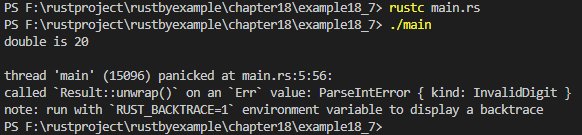
Result也支持map等组合算子,以及?运算符:
// 18.3.1节 Result的map
//Option 的 map、and_then、以及很多其他组合算子为 Result 实现
use std::num::ParseIntError;
// 就像 `Option` 那样,我们可以使用 `map()` 之类的组合算子。
// 除去写法外,这个函数与上面那个完全一致,它的作用是:
// 如果值是合法的,计算其乘积,否则返回错误。
fn multiply(first_number_str: &str, second_number_str: &str) -> Result {
    first_number_str.parse::().and_then(|first_number| {
        second_number_str.parse::().map(|second_number| first_number * second_number)
    })
}
fn print(result: Result) {
    match result {
        Ok(n) => println!("n is {}", n),
        Err(e) => println!("Error: {}", e),
    }
}
fn main() {
    // 这种情形下仍然会给出正确的答案。
    let twenty = multiply("10", "2");
    print(twenty);
    // 这种情况下就会提供一条更有用的错误信息
    let tt = multiply("t", "2");
    print(tt);
    println!("Hello Rust");
}
// rustc main.rs
// ./main
运行:
PS F:\rustproject\rustbyexample\chapter18\example18_9> rustc main.rs
PS F:\rustproject\rustbyexample\chapter18\example18_9> ./main
n is 20
Error: invalid digit found in string
Hello Rust
PS F:\rustproject\rustbyexample\chapter18\example18_9>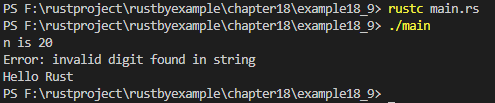
错误处理的最佳实践与模式
在实际的AI和机器学习项目中,错误处理需要遵循一些最佳实践:
- 使用类型别名简化复杂Result:当函数返回相同的错误类型时,可以定义类型别名提高可读性
- 自定义错误类型:对于复杂的应用程序,定义自己的错误类型可以更好地传达错误信息
- 错误转换:使用
map_err将低级错误转换为更有意义的领域错误 - 适当的错误传播:在库代码中,应该将错误返回给调用者处理,而不是直接panic
定义Result别名的示例:
// 18.3.2节 给Result取别名
use std::num::ParseIntError;
// 为带有错误类型 `ParseIntError` 的 `Result` 定义一个泛型别名。
type AliasedResult = Result;
// 使用上面定义过的别名来表示上一节中的 `Result` 类型。
fn multiply(first_number_str: &str, second_number_str: &str) -> AliasedResult {
    first_number_str.parse::().and_then(|first_number| {
        second_number_str.parse::().map(|second_number| first_number * second_number)
    })
}
// 在这里使用别名又让我们节省了一些代码量。
fn print(result: AliasedResult) {
    match result {
        Ok(n) => println!("n is {}", n),
        Err(e) => println!("Error: {}", e),
    }
}
fn main() {
    // 这种情形下仍然会给出正确的答案。
    let twenty = multiply("10", "2");
    print(twenty);
    // 这种情况下就会提供一条更有用的错误信息
    let tt = multiply("t", "2");
    print(tt);
    println!("Hello Rust");
}
// rustc main.rs
// ./main
运行:
PS F:\rustproject\rustbyexample\chapter18\example18_10> rustc main.rs
PS F:\rustproject\rustbyexample\chapter18\example18_10> ./main
n is 20
Error: invalid digit found in string
Hello Rust
PS F:\rustproject\rustbyexample\chapter18\example18_10>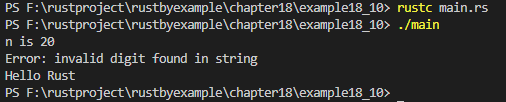
在深度学习框架中,自定义错误类型可以帮助区分是数据错误、模型错误还是硬件错误。
实战:构建健壮的AI数据处理管道
让我们将这些知识应用到实际的AI场景中。假设我们要构建一个数据预处理管道,需要从多个来源读取数据、解析、验证并转换为模型可用的格式。
使用?运算符简化错误处理:
// 18.3.4节 引用?
use std::num::ParseIntError;
fn multiply(first_number_str: &str, second_number_str: &str) -> Result {
    let first_number = first_number_str.parse::()?;
    let second_number = second_number_str.parse::()?;
    Ok(first_number * second_number)
}
fn print(result: Result) {
    match result {
        Ok(n) => println!("n is {}", n),
        Err(e) => println!("Error: {}", e),
    }
}
fn main() {
    // 这种情形下仍然会给出正确的答案。
    let twenty = multiply("13", "2");
    print(twenty);
    // 这种情况下就会提供一条更有用的错误信息
    let tt = multiply("t", "5");
    print(tt);
    println!("Hello Rust");
}
// rustc main.rs
// ./main
输出:
PS F:\rustproject\rustbyexample\chapter18\example18_12> rustc main.rs
PS F:\rustproject\rustbyexample\chapter18\example18_12> ./main
n is 26
Error: invalid digit found in string
Hello Rust
PS F:\rustproject\rustbyexample\chapter18\example18_12>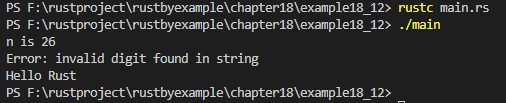
这种模式在机器学习工作流中特别有用,因为数据预处理通常涉及多个可能失败的步骤。通过合理的错误处理,我们可以:
- 在早期发现数据质量问题
- 提供有意义的错误信息帮助调试
- 优雅地处理部分失败的情况
- 保证训练过程的可靠性
[AFFILIATE_SLOT_2]
专业提示:在大型AI项目中,考虑使用thiserror或anyhow等第三方库来进一步简化错误处理。这些库提供了更强大的错误类型定义和传播机制,特别适合复杂的应用程序。
总结与进阶建议
Rust的错误处理系统是其可靠性的基石。通过将错误编码为类型系统的值,Rust强制开发者在编译期考虑和处理可能的失败情况。从简单的panic到强大的Result和Option,再到便捷的?运算符,Rust提供了一整套工具来构建健壮的错误处理逻辑。
关键要点回顾:
- panic用于不可恢复的错误,在生产代码中应谨慎使用
- Option处理值可能不存在的情况,避免空指针问题
- Result处理可能失败的操作,是错误处理的主力
- ?运算符简化错误传播,让代码更清晰
- 组合算子提供函数式处理方式,提高代码表达力
在AI和机器学习领域,良好的错误处理意味着更稳定的训练过程、更可靠的推理服务,以及更快的调试周期。掌握Rust的错误处理机制,你将能够构建出既高效又可靠的系统。


 浙公网安备 33010602011771号