

前言
创作文章,不仅要有知识点的总结,还要有一些算法题思路的记录。我觉得这样很好,毕竟,高中时期就没能做出来过一个像样的错题本。
当然,错题本还是要温故知新。
1、移除链表元素
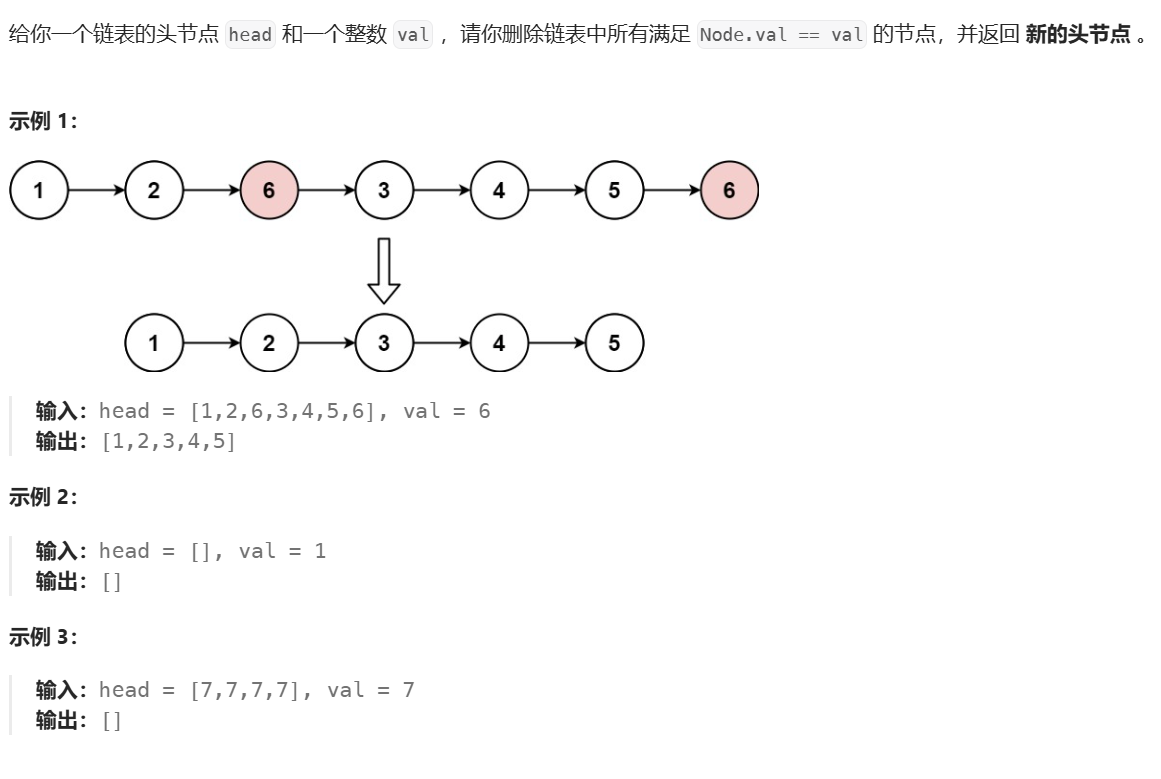
思路很简单,就是创建新链表,遍历原链表,不包含要删数据的原链表节点,尾插到新链表中。
但是,有以下注意的几点:
- 最开始,我们定义新链表的头、尾节点均为
NULL,所以需要分类讨论头节点是否为NULL。(或者可以使用哨兵位) - 插入完成,最后应切断新链表与原链表的关系。
- 由于创建新链表,额外申请常数个空间,所以空间复杂度
O(1)。
代码演示:
typedef struct ListNode ListNode;
struct ListNode* removeElements(struct ListNode* head, int val) {
//创建新链表
ListNode *newHead, *newTail;
newHead = newTail = NULL;
//遍历原链表
ListNode* pcur = head;
while (pcur)//为空就会出循环
{
//找非val值
if (pcur->val != val)
{
//确定新链表的头节点,和newTail的起点
if (newHead == NULL)
{
newHead = newTail = pcur;
}else{
//放数,找下一个
newTail->next = pcur;
newTail = newTail->next;
}
}
pcur = pcur->next;//一定要记得,先写上执行操作,防止死循环
}
//切断与原链表的联系
if (newTail)
{
newTail->next = NULL;
}
return newHead;
}
2、反转链表
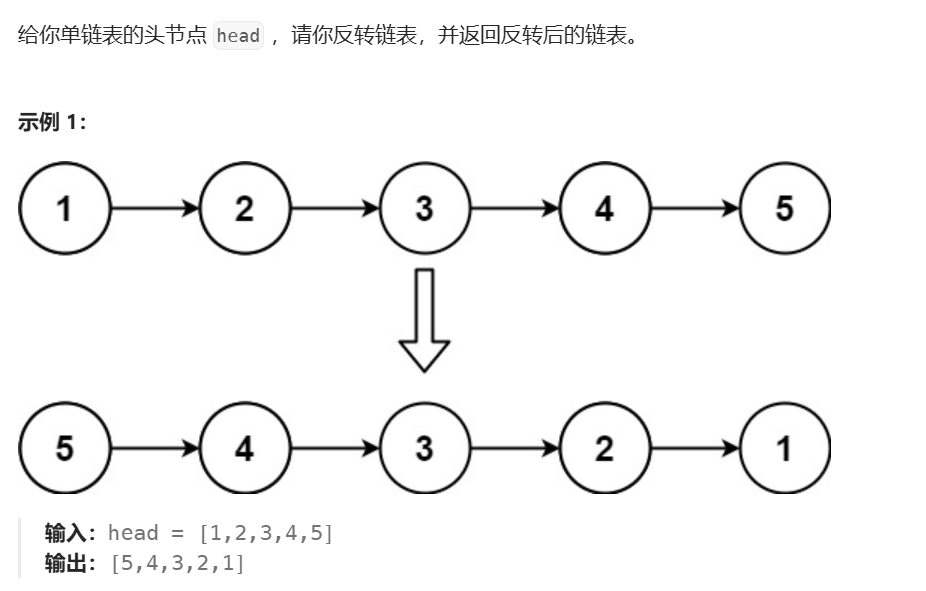
思路:
- 定义三个指针:
n1:指向NULLn2:指向原链表头节点n3:指向n2的下一个节点
- 将
n2指向n1 - 然后
n2赋值给n1,相当于头插了一个n2上的节点 n3赋值给n2,相当于n2向前一个元素位置(此时n3的辅助作用凸显)。n3也向前- 此时,
n1就是要返回的节点
图示: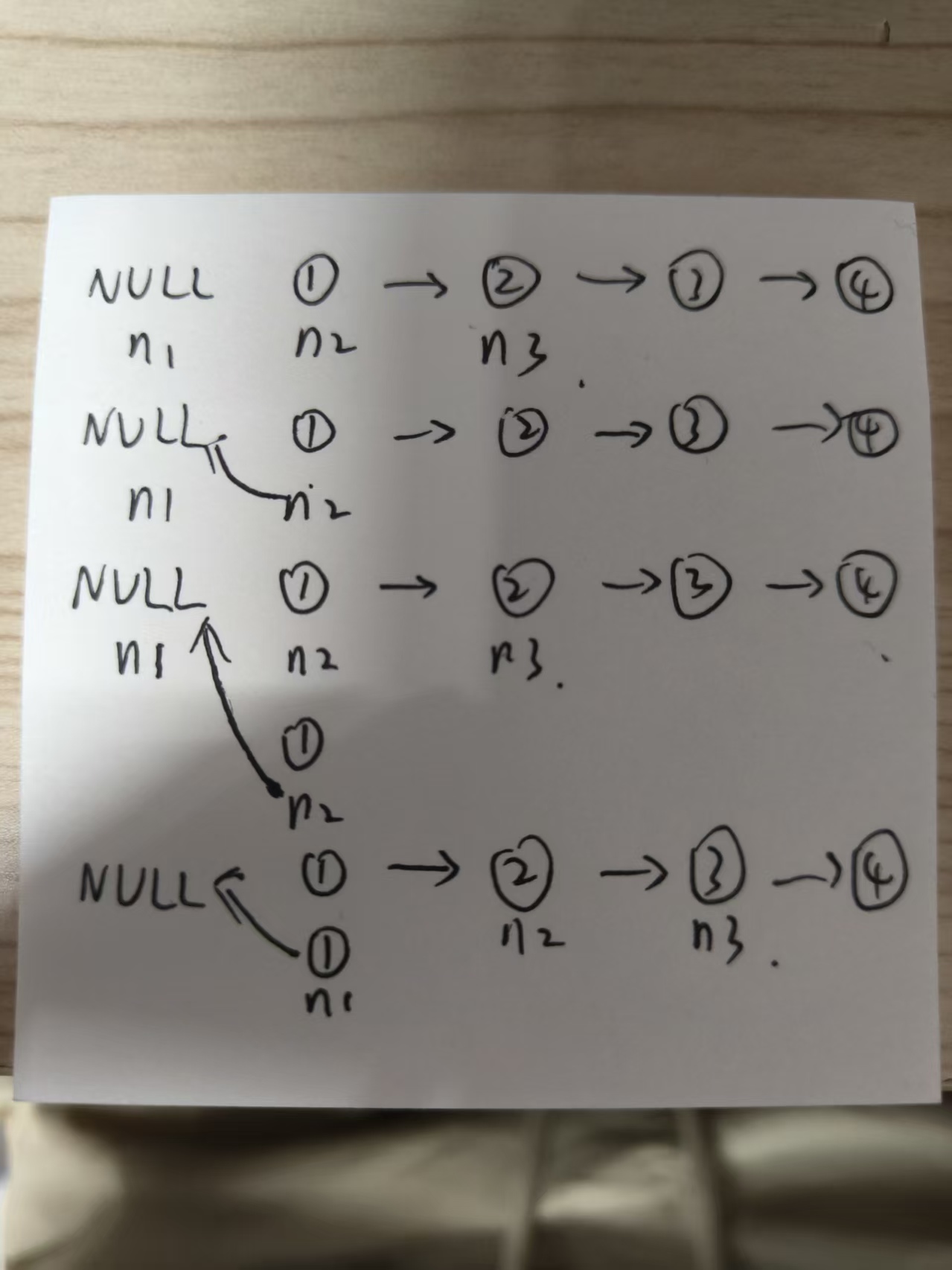
代码演示:
typedef struct ListNode ListNode;
struct ListNode* reverseList(struct ListNode* head) {
//为空,直接返回
if (head == NULL)
return head;
ListNode* n1 = NULL;
ListNode* n2 = head;
ListNode* n3 = head->next;
while (n2)
{
n2->next = n1;//比如, 2 指向 1
n1 = n2;//更新头指针
n2 = n3;// n2 前进
if (n3)// n3 的前进,需要判断
{
n3 = n3->next;
}
}
return n1;
}
3、链表的中间节点
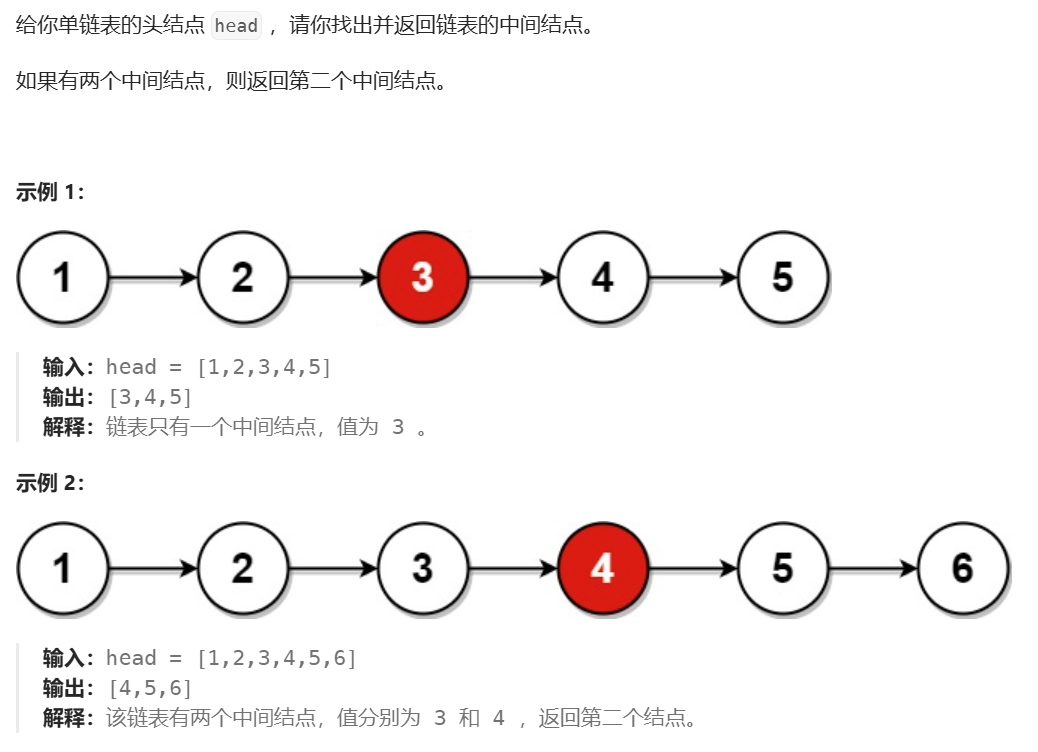
核心思路,就是快慢指针,慢指针走一步,快指针走两步(可能步数更多)。
当链表中,节点个数为奇数,则当慢指针走到中间节点时,快指针走到了NULL。
当链表中,节点个数为偶数,则当慢指针走到第二个中间节点时,快指针走到了最后一个节点。如果此时快指针为fast,则fast->next == NULL。
而为了避免对空指针进行解引用这一情况发生,我们在写循环的判断条件时,要注意先后顺序(操作符短路)。
代码演示:
typedef struct ListNode ListNode;
struct ListNode* middleNode(struct ListNode* head) {
//快慢指针
ListNode* slow = head;
ListNode* fast = head;
while (fast != NULL && fast->next != NULL)
{
slow = slow->next;
fast = fast->next->next;
}
return slow;
}
4、合并两个有序链表
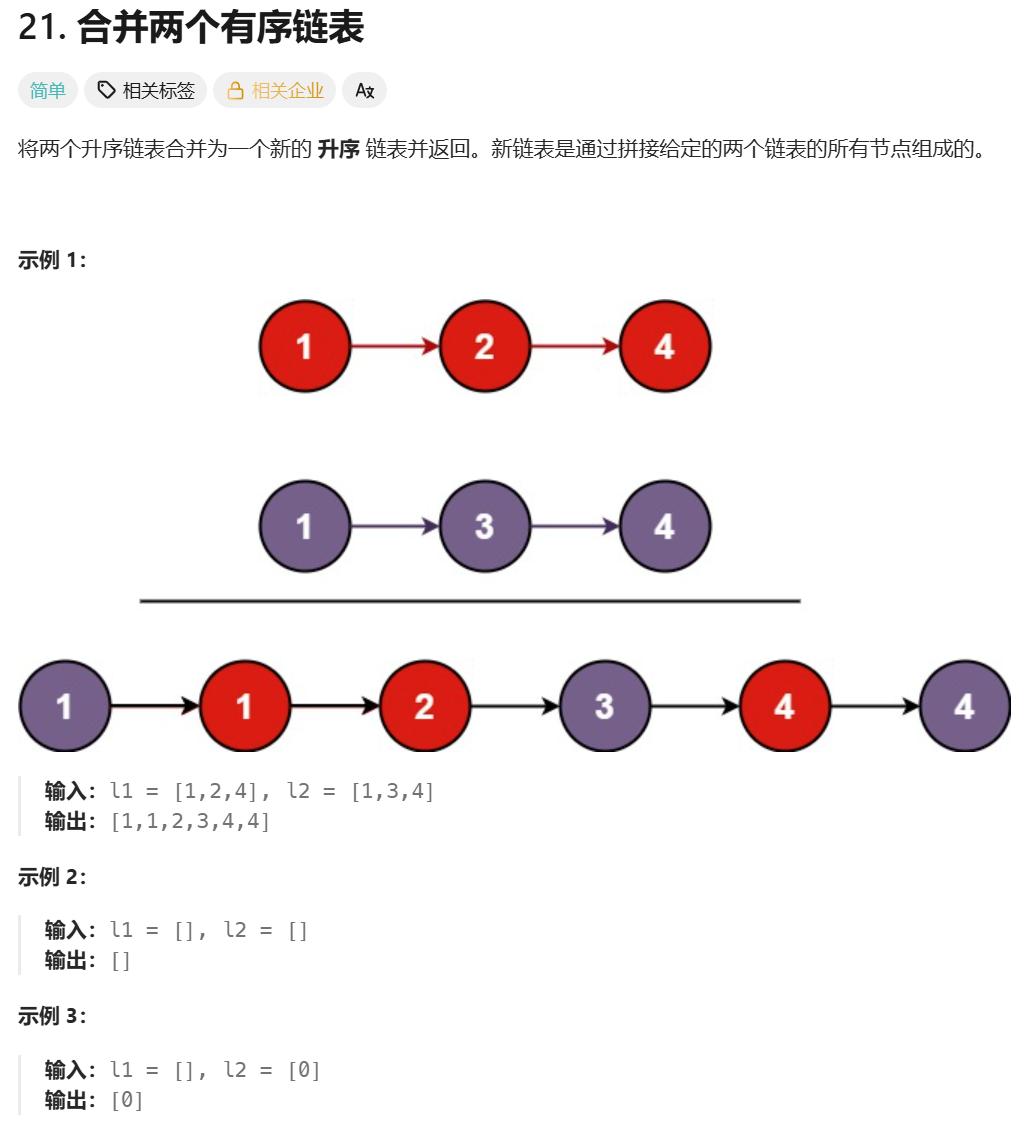
我们很容易想到,创建新链表,遍历原链表,比较,将较小数尾插入新链表。
但是,这样一来,我们就必须在遍历时,检查新链表是否为空,有点麻烦。有没有更好的办法?
这时,哨兵位就派上了用场。
思路:
- 定义一个空节点,也就是哨兵位。新链表的头、尾节点都从这开始。如果不想额外确定是否存在空链表的情况,可以让新链表头节点的
next指针指向NULL - 分别遍历两个链表,比较数据大小,将较小数尾插入新节点。
- 遍历循环结束后,分别检查原链表是否还有节点剩余。如果有,直接尾插,无需循环。
代码演示:
typedef struct ListNode ListNode;
struct ListNode* mergeTwoLists(struct ListNode* list1, struct ListNode* list2) {
//if (list1 == NULL)
//    return list2;
//if (list2 == NULL)
//    return list1;
//哨兵位
ListNode *newHead, *newTail;
newHead = newTail = (ListNode*)malloc(sizeof(ListNode));
newHead->next = NULL;
//遍历
ListNode* l1 = list1;
ListNode* l2 = list2;
while (l1 && l2)
{
if (l1->val < l2->val)
  {
  newTail->next = l1;
  newTail = newTail->next;
  l1 = l1->next;
  }else{
  newTail->next = l2;
  newTail = newTail->next;
  l2 = l2->next;
  }
  }
  //尾插剩余节点
  if (l1)
  {
  newTail->next = l1;
  }
  if (l2)
  {
  newTail->next = l2;
  }
  ListNode* ret = newHead->next;
  free(newHead);
  newHead = NULL;
  return ret;
  }
5、链表分割
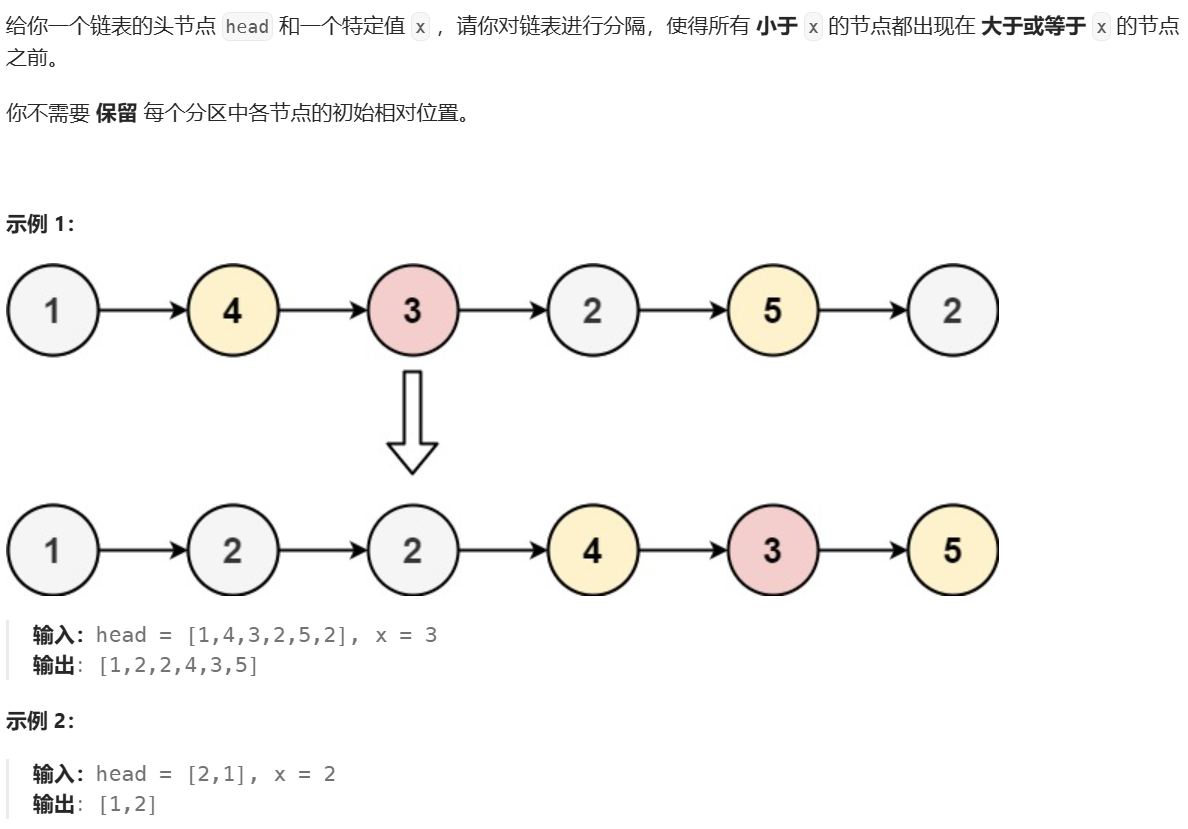
核心思路,就是哨兵位。定义两个哨兵位,按要求依次放入。
注意两点:
- 最后两个由哨兵位开始生成的两个新链表,应注意它们连接的位置
- 断开新链表与原链表的联系
代码演示:
struct ListNode {
int val;
struct ListNode *next;
};
typedef struct ListNode ListNode;
struct ListNode* partition(struct ListNode* head, int x) {
//原链表为空
if (head == NULL)
return NULL;
//哨兵位
ListNode* lessHead, *lessTail;
lessHead = lessTail = (ListNode*)malloc(sizeof(ListNode));
//lessHead->next = NULL;
ListNode* greatHead, *greatTail;
greatHead = greatTail = (ListNode*)malloc(sizeof(ListNode));
//greatHead->next = NULL;
//遍历
ListNode* pcur = head;
while (pcur)
{
if (pcur->val < x)
{
lessTail->next = pcur;
lessTail = lessTail->next;
}else{
greatTail->next = pcur;
greatTail = greatTail->next;
}
pcur = pcur->next;
}
//连接
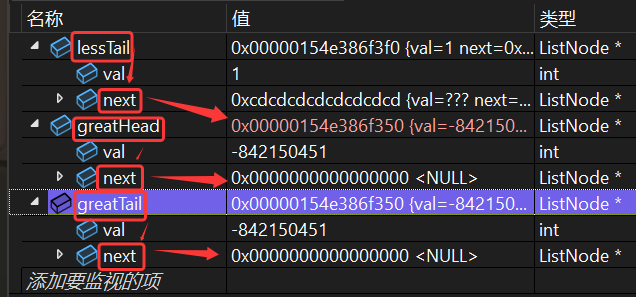
//此时,由于一开始,我们没有为哨兵位的next成员进行初始化(NULL),使得greatHead->next与greatTail->next,都是随机值
//如果链表中的节点,保存的数据,都小于指定的x,那么greatTail就不会改变,greatHead->next和greatTail->next依旧都是随机值
//而先连接,后置NULL,并不会改变lessTail->next,导致出错
//正确的做法,是在连接之前,执行“ greatTail->next = NULL ”。
//lessTail->next = greatHead->next;
//greatTail->next = NULL;//切断与原链表联系
greatTail->next = NULL;//切断与原链表联系
lessTail->next = greatHead->next;
//最好养成释放malloc的习惯
ListNode* ret = lessHead->next;
free(lessHead);
lessHead = NULL;
free(greatHead);
greatHead = NULL;
return ret;
}
你肯定注意到了我在代码中间写的一大堆字。
所以,到底是先连接,再切断(与原链表的联系)?还是先切断,再连接?
答案是:先切断,后连接。
可以配合代码中的注释,以及下面两张图,进行理解。
6、链表的回文结构
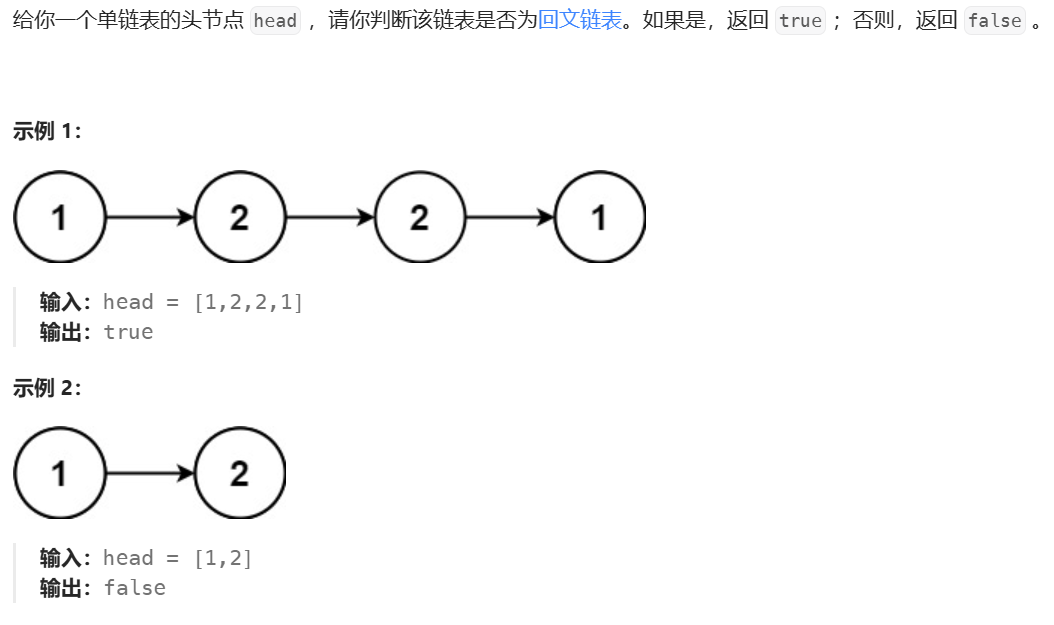
首先,我们要理解,什么是回文结构?
我们知道,回文诗句,顺着读,和倒着读,都能读顺。
类似的,数据的回文结构,就是从左往右,与从右往左,读取的每一位上的数,对应相同。比如:12321、aabcbaa……
其实这一种结构,更像是一种“ 镜像 ”的结构。
那么,思路就有了:
- 利用快慢指针,找到中间节点
- 将中间节点及以后的节点,进行反转
- 反转链表,与原链表的“ 一半 ”,遍历比较
图示: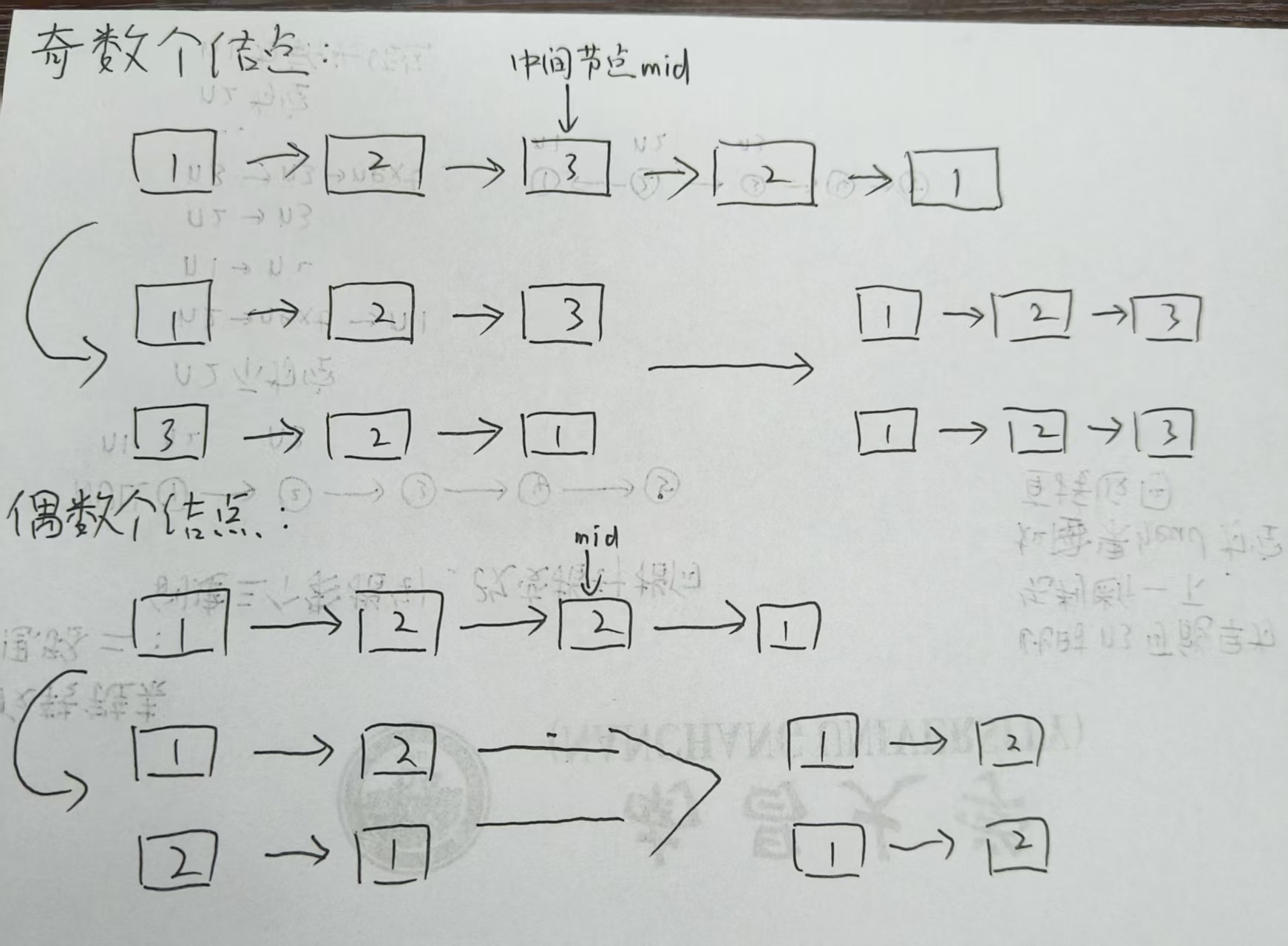
代码演示:
struct ListNode {
int val;
struct ListNode *next;
};
typedef struct ListNode ListNode;
//找中间节点
ListNode* FindMid(ListNode* head)
{
ListNode* slow, *fast;
slow = fast = head;
while (fast && fast->next)
{
fast = fast->next->next;
slow = slow->next;
}
return slow;
}
//链表反转
ListNode* ListSpin(ListNode* head)
{
ListNode *n1, *n2, *n3;
n1 = NULL;
n2 = head;
n3 = head->next;
while (n2)
{
n2->next = n1;
n1 = n2;
n2 = n3;
if (n3)
n3 = n3->next;
}
return n1;
}
bool isPalindrome(struct ListNode* head) {
//判断空链表
if (head == NULL)
return false;
//快慢指针找中间节点
ListNode* mid = FindMid(head);
//反转
ListNode* right = ListSpin(mid);
//遍历比较
ListNode* n1 = head;
ListNode* n2 = right;
while (n2)
{
if (n1->val != n2->val)
return false;
n1 = n1->next;
n2 = n2->next;
}
return true;
}
7、相交链表
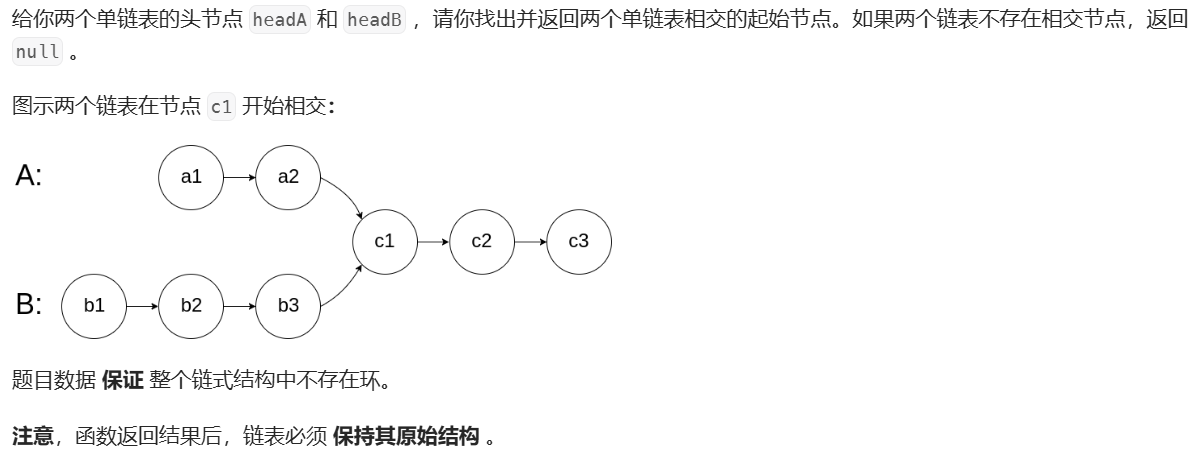
思路:
- 对齐:
- 求出两链表的长度
- 计算差值
- 区分长、短链表( 利用
if语句 ) - 然后使长链表对齐短链表
- 遍历,找到相交节点
代码实现:
struct ListNode {
int val;
struct ListNode *next;
};
typedef struct ListNode ListNode;
int Count(ListNode* head)
{
int count = 0;
ListNode* pcur = head;
while (pcur)
{
++count;
pcur = pcur->next;
}
return count;
}
struct ListNode *getIntersectionNode(struct ListNode *headA, struct ListNode *headB) {
//求长度
int CountA = Count(headA);
int CountB = Count(headB);
//求差值
int gap = abs(CountA - CountB);//LengthA - LengthA是什么玩意儿
//定长短
ListNode* Long = headA;
ListNode* Short = headB;
if (CountA < CountB)
{
Long = headB;
Short = headA;
}
//对齐
while (gap--)//先使用,后++
{
Long = Long->next;
}
//遍历
while (Long && Short)
{
if (Long == Short)
return Long;
Long = Long->next;
Short = Short->next;
}
return NULL;
}
8、随机链表的复制
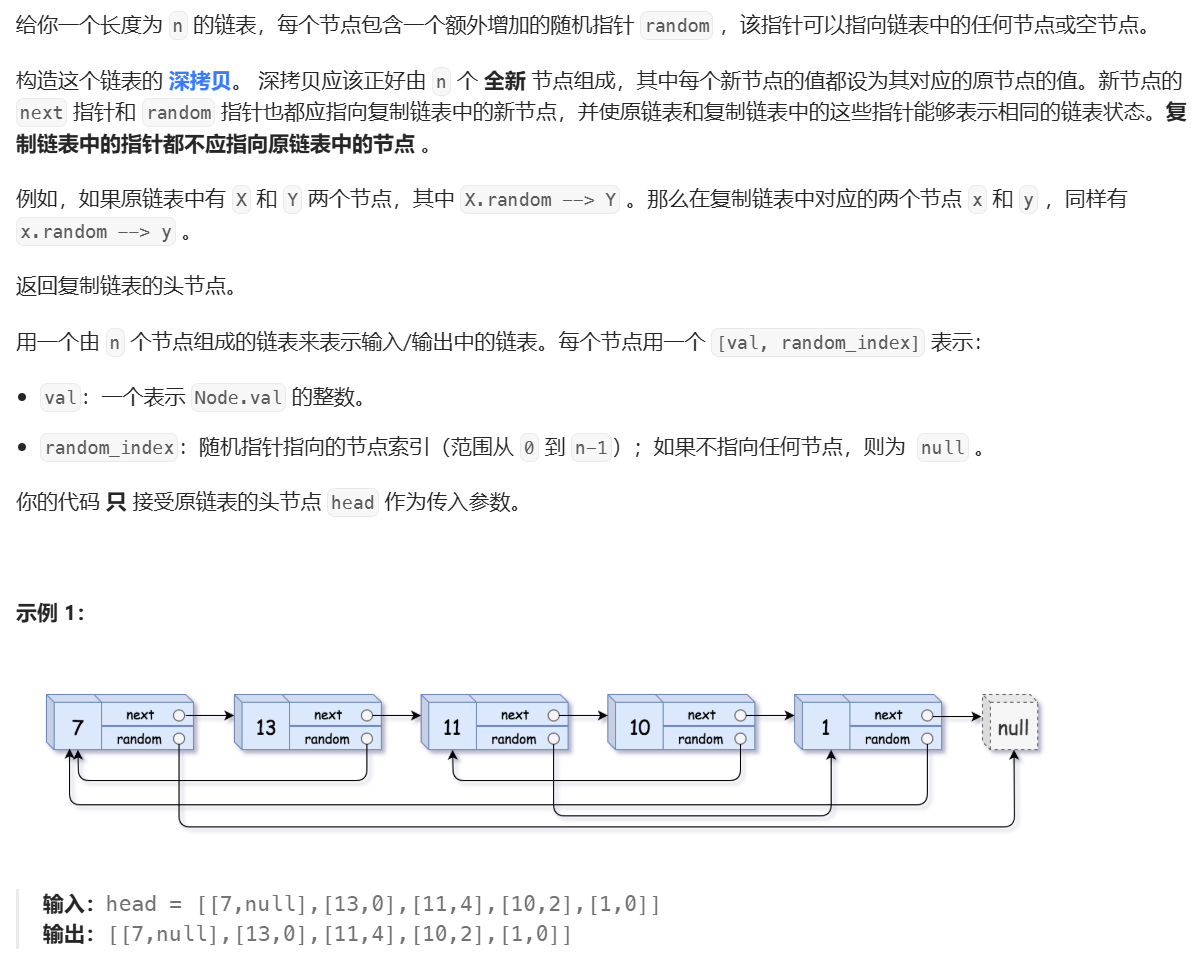
题目中说复制链表中的指针,都不应指向原链表中的节点。也就是说,我们不能直接将原链表的节点,给创建的新链表尾插。
有一个比较巧妙的思路:
- 依次尾插。从原链表的头节点开始,在前一个节点与后一个节点之间,插入与前一个节点存放相同数据的节点。
- 设置插入节点的
random。每个插入节点的random,指向的就是其对应前一个节点的random指向的节点,的next指向的节点。 - 切断连接出新链表。
图示: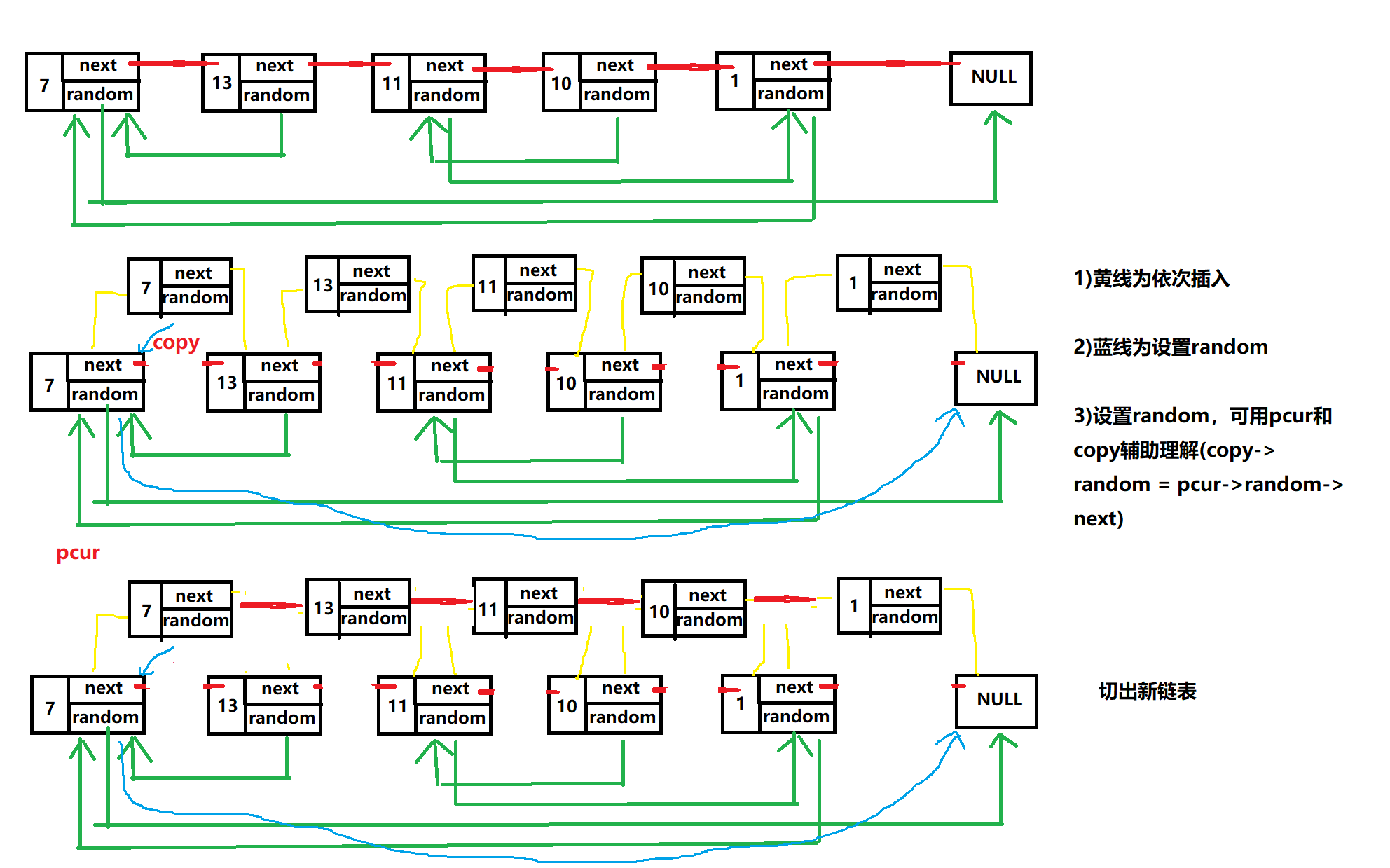
代码演示:
struct Node {
int val;
struct Node *next;
struct Node *random;
};
typedef struct Node Node;
Node* BuyNode(int x)
{
Node* newnode = (Node*)malloc(sizeof(Node));
newnode->next = newnode->random = NULL;
newnode->val = x;
return newnode;
}
//依次尾插函数
void CopyPush(Node* head)
{
Node* pcur = head;//用于遍历
//Node* next = head->next;//用于保存pcur下一个指针
while (pcur)
{
Node* next1 = pcur->next;//pcur下一个指针,每次都要保存
Node* newnode = BuyNode(pcur->val);//创建新链表
//类尾插
pcur->next = newnode;
newnode->next = next1;
pcur = next1;
}
}
//设置random函数
void SetRandom(Node* head)
{
Node* pcur = head;
while (pcur)
{
Node* copy = pcur->next;//语句x
if (pcur->random)//只有当random指向的不为NULL,才需要设置
{
copy->random = pcur->random->next;
}
pcur = copy->next;//如果语句x放到了这条语句的下面,当pcur走到NULL,会出现对空指针解引用的情况
}
}
struct Node* copyRandomList(struct Node* head) {
if (head == NULL)
return head;
//依次尾插
CopyPush(head);
//设置random
SetRandom(head);
//切出新链表
Node* pcur = head;
Node *newHead, *newTail;
newHead = newTail = head->next;
while (newTail->next)
{
pcur = newTail->next;
newTail->next = pcur->next;
newTail = newTail->next;
}
return newHead;
}

 浙公网安备 33010602011771号