面向对象三大特性-多态详解
![]()
package com.oop;

import com.oop.demo06.Person;
import com.oop.demo06.Student;

public class Application {

    public static void main(String[] args) {

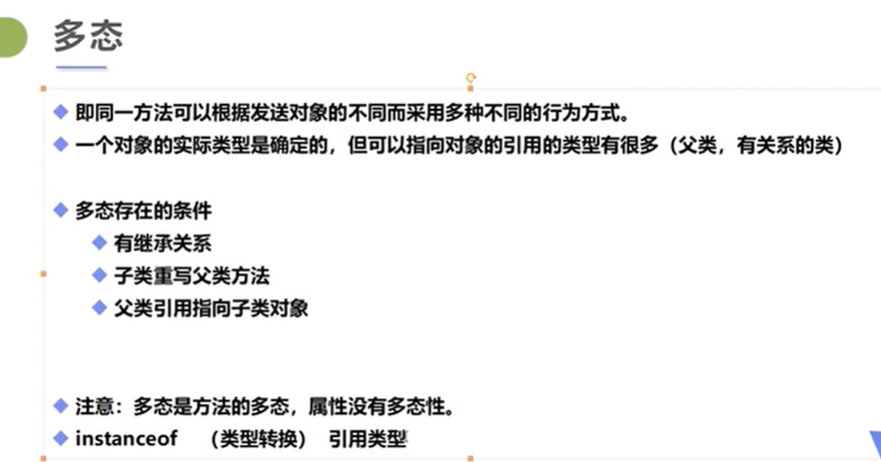
        //一个对象的实际类型是确定的
        //new Student();
        //new Person();

        //可以指向的引用类型就不确定了:父类引用指向子类对象

        //Student 能调用的方法都是自己的或者继承父类的!
        Student s1 = new Student();
        //Person 父类型,可以指向子类,但不能调用子类独有的方法
        Person s2 = new Student();
        Object s3 = new Student();
        //String s4 = new Student();这样不行,有父子关系才可以转换

        //s2.run();//子类重写了父类的方法,执行子类的方法
        //s1.run();

        //对象能执行哪些方法,主要看对象左边的类型,和右边关系不大!
        ((Student)s2).eat();
        s1.eat();
    }
}
package com.oop.demo06;

public class Person {

    public void run(){
        System.out.println("run");
    }
}

/*
多态注意事项:
1. 多态是方法的多态,属性没有多态
2. 父类和子类有联系   类型转换异常!ClassCastException!
3. 存在条件:继承关系,方法需要重写,父类引用指向子类对象! Father  f1 = new Son();
(方法需要重写:当父类和子类有一样的方法,需要对子类进行重写,调用时看右边,执行子类,不然调用的时候,不知道执行谁的,)

以下三个不能重写,更无法实现多态
    1.static 方法,属于类,它不属于实例
    2.final 常量
    3.private方法

 */
package com.oop.demo06;

public class Student extends Person{

    @Override
    public void run() {
        System.out.println("son");
    }

    public void eat(){
        System.out.println("eat");
    }
}
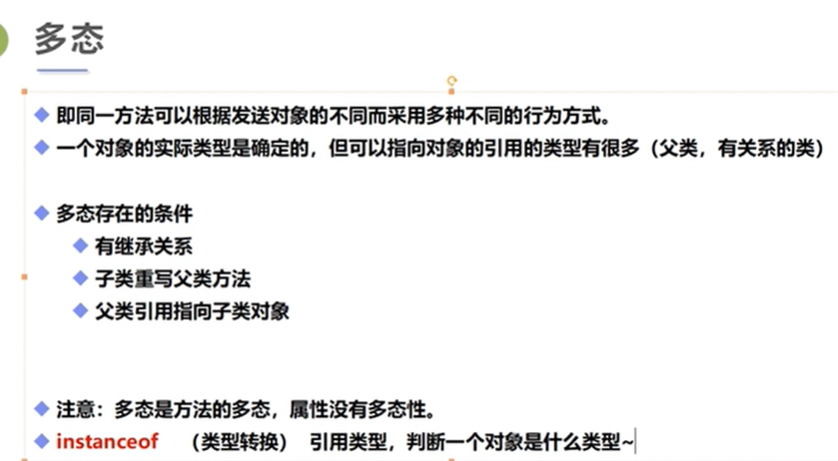
instanceof和类型转换
![]()
一
package com.oop;

import com.oop.demo06.Person;
import com.oop.demo06.Student;
import com.oop.demo06.Teacher;

public class Application {

    public static void main(String[] args) {

        //Object>String
        //Object>Person>Teacher
        //Object>Person>Student
        Object object = new Student();

        //System.out.println(X instanceof Y);//能不能编译通过!如果X和Y存在父子关系,就通过,如果不存在就不通过。

        System.out.println(object instanceof Student);//true
        System.out.println(object instanceof Person);//true
        System.out.println(object instanceof Object);//true
        System.out.println(object instanceof Teacher);//false Teacher是Person下的另一条线,和Student无关
        System.out.println(object instanceof String);//false

        System.out.println("=============================");
        Person person = new Student();
        System.out.println(person instanceof Student);//true
        System.out.println(person instanceof Person);//true
        System.out.println(person instanceof Object);//true
        System.out.println(person instanceof Teacher);//false
        //System.out.println(person instanceof String);//编译报错!


        System.out.println("=============================");
        Student student = new Student();
        System.out.println(student instanceof Student);//true
        System.out.println(student instanceof Person);//true
        System.out.println(student instanceof Object);//true
        //System.out.println(student instanceof Teacher);//编译报错!
        //System.out.println(student instanceof String);//编译报错!
    }
}
二
package com.oop;

import com.oop.demo06.Person;
import com.oop.demo06.Student;
import com.oop.demo06.Teacher;

public class Application {

    public static void main(String[] args) {
        //类型之间的转换:基本类型的转换  高低64
        //             父             子

        //高                    低
        Person obj = new Student();

        //obj 将这个对象转换为Student类型,我们就可以使用Student类型的方法了
        Student student = (Student) obj;
        student.go();

        //((Student) obj).go();//写成一句话
        //子类转换为父类,可能丢失自己本来的一些方法!
        Person person = student;

    }
}

/*
1. 父类引用指向子类对象
2. 把子类转换为父类,向上转型
3.把父类转换为子类,向下转型:强制转换
4.方便方法的调用,减少重复的代码,简洁

封装、继承、多态!   抽象类,接口
 */
package com.oop.demo06;

public class Person {

    public void run(){
        System.out.println("run");
    }
}
package com.oop.demo06;

public class Student extends Person{

    public void go(){
        System.out.println("go");
    }

}
![]()

 浙公网安备 33010602011771号