
多线层相关
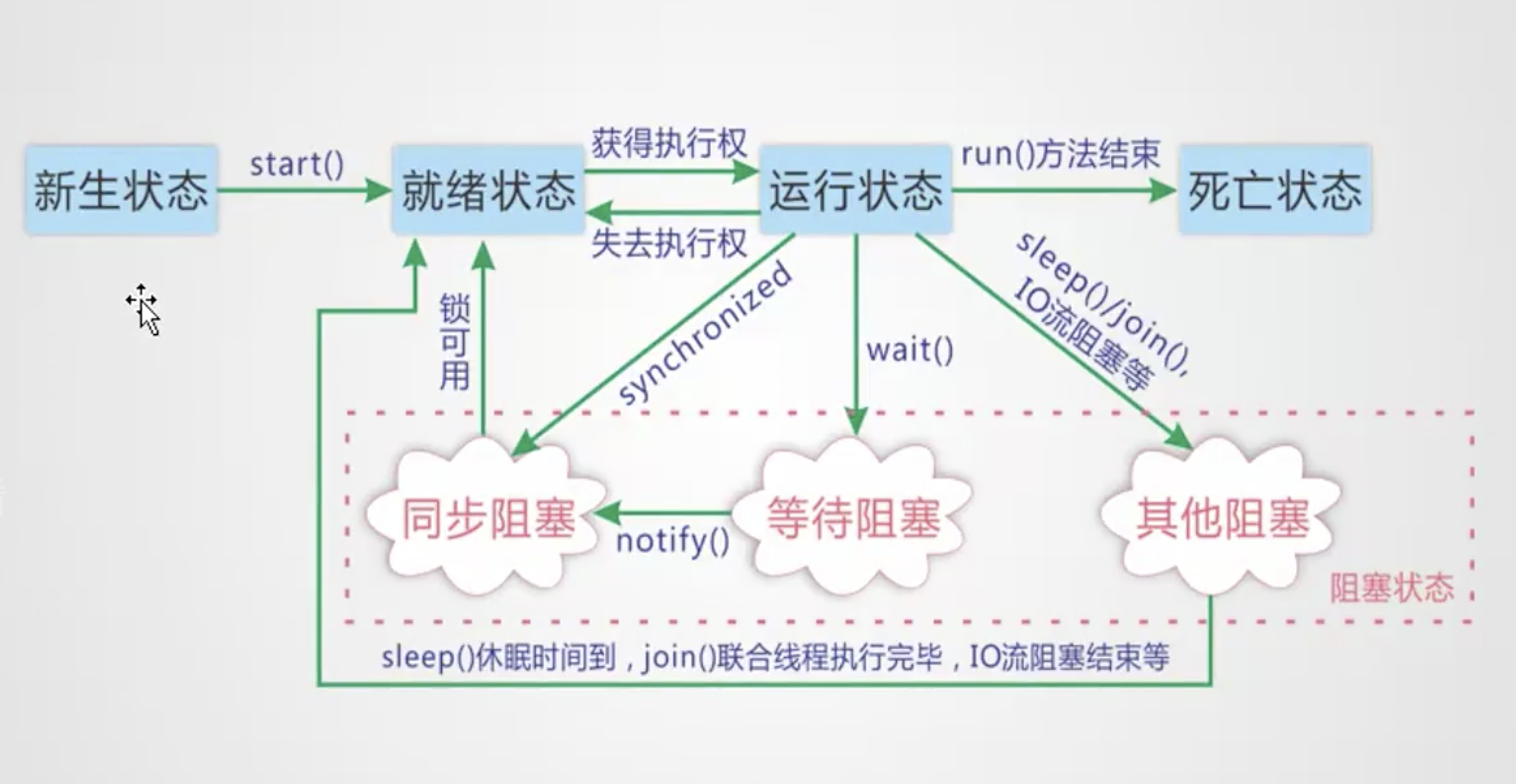
创建线程的方式:
1: 继承Thread


package com.sxt.thread;
/**
 * 创建线程方式一:
 * 1、创建:继承Thread+重写run
 * 2、启动: 创建子类对象 + start
 * @author
 *
 */
public class StartThread extends Thread{
    /**
     * 线程入口点
     */
    @Override
    public void run() {
        for(int i=0;i<20;i++) {
            System.out.println("一边听歌");
        }
    }
    public static void main(String[] args) {
        //创建子类对象
        StartThread st =new StartThread();
        //启动
        st.start(); //不保证立即运行 cpu调用
        //st.run(); //普通方法调用
        for(int i=0;i<20;i++) {
            System.out.println("一边coding");
        }
    }

}
2: 实现Runnable接口
package com.sxt.thread;
/**
 * 创建线程方式二:
 * 1、创建:实现Runnable+重写run
 * 2、启动: 创建实现类对象 +Thread对象+ start
 *
 * 推荐: 避免单继承的局限性,优先使用接口
 * 方便共享资源
 * @author
 *
 */
public class StartRun implements Runnable{
    /**
     * 线程入口点
     */
    @Override
    public void run() {
        for(int i=0;i<20;i++) {
            System.out.println("一边听歌");
        }
    }
    public static void main(String[] args) {
        /*//创建实现类对象
        StartRun sr =new StartRun();
        //创建代理类对象
        Thread t =new Thread(sr);
        //启动
        t.start(); //不保证立即运行 cpu调用
*/
        new Thread(new StartRun()).start();

        //st.run(); //普通方法调用
        for(int i=0;i<20;i++) {
            System.out.println("一边coding");
        }
    }

}
3:实现Callable接口(线程安全)
package com.sxt.thread;

import java.util.concurrent.Callable;
import java.util.concurrent.ExecutionException;
import java.util.concurrent.ExecutorService;
import java.util.concurrent.Executors;
import java.util.concurrent.Future;
/**
 * 了解创建线程的方式三:
 *
 * @author
 *
 */
public class CDownloader implements Callable<Boolean>{
    private String url; //远程路径
    private String name;  //存储名字

    public CDownloader(String url, String name) {
        this.url = url;
        this.name = name;
    }

    @Override
    public Boolean call() throws Exception {
        WebDownloader wd =new WebDownloader();
        wd.download(url, name);
        System.out.println(name);
        return true;
    }

    public static void main(String[] args) throws InterruptedException, ExecutionException {
        CDownloader cd1 =new CDownloader("http://upload.news.cecb2b.com/2014/0511/1399775432250.jpg","phone.jpg");
        CDownloader cd2 =new CDownloader("http://p1.pstatp.com/large/403c00037462ae2eee13","spl.jpg");
        CDownloader cd3 =new CDownloader("http://5b0988e595225.cdn.sohucs.com/images/20170830/d8b57e0dce0d4fa29bd5ef014be663d5.jpeg","success.jpg");

        //创建执行服务:
        ExecutorService  ser=Executors.newFixedThreadPool(3);
        //提交执行:
        Future<Boolean> result1 =ser.submit(cd1) ;
        Future<Boolean> result2 =ser.submit(cd2) ;
        Future<Boolean> result3 =ser.submit(cd3) ;
        //获取结果:
        boolean r1 =result1.get();
        boolean r2 =result1.get();
        boolean r3 =result1.get();
        System.out.println(r3);
        //关闭服务:
        ser.shutdownNow();

    }
}
lamda表达式
        new Thread(()->{
            //run方法

        }).start();
线程控制方法:
sleep
暂停: 当前线程被阻塞,任务回到待添加状态;
如果调用了sleep方法之后,没有其他等待执行的线程,这个时候当前线程不会马上恢复执行
yield
礼让: 让当前正在执行的线程暂停,不是阻塞线程,而是将线程从运行状态转为就绪状态,让CPU调度器重新调用.
如果调用了yield方法之后,没有其他等待执行的线程,这个时候当前线程就会马上恢复执行
join
插队: 阻塞指定线程等到另一个线程完成以后再继续执行
设置优先级:
package com.test.thread;

public class PriorityTest {

    public static void main(String[] args) {

        MyPriority myPriority = new MyPriority();

        Thread t1 = new Thread(myPriority, "线程一");
        Thread t2 = new Thread(myPriority, "线程二");
        Thread t3 = new Thread(myPriority, "线程三");
        Thread t4 = new Thread(myPriority, "线程四");
        Thread t5 = new Thread(myPriority, "线程五");
        Thread t6 = new Thread(myPriority, "线程六");

        //设置优先级在启动前
        t1.setPriority(Thread.MAX_PRIORITY);
        t2.setPriority(Thread.MIN_PRIORITY);
        t3.setPriority(Thread.NORM_PRIORITY);
        t4.setPriority(8);
        t5.setPriority(7);
        t6.setPriority(1);

        t1.start();
        t2.start();
        t3.start();
        t4.start();
        t5.start();
        t6.start();

        /**
        线程一===>10
        线程三===>5
        线程二===>1
        线程四===>8
        线程五===>7
        线程六===>1

         */
    }

}

class MyPriority implements Runnable {

    @Override
    public void run() {
        // TODO Auto-generated method stub
        System.out.println(Thread.currentThread().getName() + "===>" + Thread.currentThread().getPriority());
    }
}
守护线程:
setDatmon(false),默认为false
守护线程是为用户线程服务的,jvm停止不用等待守护线程执行完毕
默认:jvm等待用户线程执行完毕才会停止
isAlive: 线程是否还活着
setName: 设置名称(代理角色的名称,如果是真实角色的名称,向真实角色对象设置name属性)
getName:
Thread.currentThread():
线程安全:
如果只是对数据进行读取,不需要考虑线程安全;如果是读取后需要改动数据,则需要考虑线程安全问题
并发:
同一个对象被多个线程同时操作
synchronized:
synchronized方法: 锁this
synchronized块: 锁具体对象,一般就是要修改的对象
package com.test.thread;

public class CinemaTest02 {

    public static void main(String[] args) {

        Cinema2 c2 = new Cinema2(3, "官网");
        Customer2 ct1 = new Customer2(c2, "张三", 2);
        Customer2 ct2 = new Customer2(c2, "李四", 1);

        ct1.start();
        ct2.start();
    }

}

class Customer2 extends Thread {
    int seats;


    public Customer2 (Runnable target, String nameString, int seats) {
        super(target, nameString);
        this.seats = seats;
    }
}


class Cinema2 implements Runnable {

    int available;
    String nameString;


    public Cinema2(int available, String nameString) {
        this.available = available;
        this.nameString = nameString;
    }


    @Override
    public void run() {

        Customer2 ct = (Customer2)Thread.currentThread();

        boolean flag = getTickets(ct.seats);

        if (flag) {
            System.out.println("购票成功" + "===>" + "剩余票数" + available);
        }else {
            System.err.println("出票失败");
        }
    }


    public synchronized boolean getTickets(int tiketsNum) {

        if (available - tiketsNum >= 0) {
            available -= tiketsNum;
            return true;
        }else {
            return false;
        }
    }


}
模拟售票:
package com.test.thread;

public class BuyTicketTest {

    public static void main(String[] args) {

        //同一份资源
        SaleTickets sale = new SaleTickets();

        //被多个线程同时调用
        new Thread(sale, "张三").start();
        new Thread(sale, "李四").start();
        new Thread(sale, "王五").start();

    }

}


class SaleTickets implements Runnable {

    private int ticketsNumber = 5;
    private boolean flag = true;

    @Override
    public void run() {

        while (flag) {
            try {
                Thread.sleep(100);
            } catch (InterruptedException e) {
                // TODO Auto-generated catch block
                e.printStackTrace();
            }
            sale();

        }

    }

    /*
     * synchronized块,锁住具体对象
     */
    public void sale() {

        //如果没有票了,线程不进行等待,提高效率
        if (ticketsNumber <= 0) {
            flag = false;
            return;
        }

        //flag,ticketsNumber都需要进行修改,锁住this
        synchronized (this) {
            if (ticketsNumber <= 0) {
                flag = false;
                return;
            }

            System.out.println("当前剩余票数--->" + ticketsNumber-- + "---->" + Thread.currentThread().getName());

        }

    }

    /**
     * synchronized 方法, 锁住this
     * 线程安全  同步
     */
    public synchronized void sale2() {
        if(ticketsNumber<=0) {
            flag = false;
            return ;
        }
        //模拟延时
        try {
            Thread.sleep(200);
        } catch (InterruptedException e) {
            e.printStackTrace();
        }
        System.out.println("当前剩余票数--->" + ticketsNumber-- + "---->" + Thread.currentThread().getName());
    }


}
容器:
package com.sxt.syn;

import java.util.ArrayList;
import java.util.List;

/**
 * 线程安全:操作容器
 *
 * @author
 *
 */
public class SynBlockTest02 {
    public static void main(String[] args) throws InterruptedException {
        List<String> list = new ArrayList<String>();
        for(int i=0;i<10000;i++) {
            new Thread(()->{
                //同步块
                synchronized(list) {
                    list.add(Thread.currentThread().getName());
                }
            }) .start();
        }
        Thread.sleep(10000);
        System.out.println(list.size());
    }
}
CopyOnWriteArrayList 并发容器:
package com.sxt.syn;

import java.util.ArrayList;
import java.util.concurrent.CopyOnWriteArrayList;
import java.util.List;

/**
 * 线程安全:操作并发容器
 *
 * @author
 *
 */
public class SynContainer {
    public static void main(String[] args) throws InterruptedException {
        CopyOnWriteArrayList<String> list = new CopyOnWriteArrayList<String>();
        for(int i=0;i<10000;i++) {
            new Thread(()->{
                list.add(Thread.currentThread().getName());
            }) .start();
        }
        Thread.sleep(10000);
        System.out.println(list.size());
    }
}
synchronized块模拟影院售票:
package com.test.thread;

import java.util.ArrayList;
import java.util.List;

public class CinemaTest {

    public static void main(String[] args) {

        List<Integer> list1 = new ArrayList<Integer>();
        list1.add(1);
        list1.add(2);
        list1.add(3);
        list1.add(4);
        list1.add(5);
        list1.add(6);
        list1.add(7);


        List<Integer> list2 = new ArrayList<Integer>();
        list2.add(1);
        list2.add(2);
        list2.add(3);


        List<Integer> list3 = new ArrayList<Integer>();

        list3.add(1);
        list3.add(6);
        list3.add(7);


        Cinema cinema = new Cinema(list1, "百老汇");

        Customer c1Customer = new Customer(list2, cinema);
        Customer c2Customer = new Customer(list3, cinema);

        new Thread(c1Customer).start();
        new Thread(c2Customer).start();
    }

}


class Customer implements Runnable {
    List<Integer> seats;
    Cinema cinema;
    public Customer(List<Integer> seats, Cinema cinema) {

        this.seats = seats;
        this.cinema = cinema;
    }

    public Customer() {

    }


    @Override
    public void run() {

        synchronized (cinema) {
            boolean flag = cinema.getTickets(seats);

            if (flag) {
                System.out.println("欢迎光临" + cinema.name + "===>" + "购票成功" + "===>" + "购票位置为" + seats + "===>" + "剩余票数" + cinema.available);
            }else {
                System.out.println("购票失败");

            }

        }

    }


}


class Cinema {
    List<Integer> available;
    String name;
    public Cinema(List<Integer> available, String name) {

        this.available = available;
        this.name = name;
    }

    public boolean getTickets(List<Integer> ticktesNums) {

        List<Integer> copyList = new ArrayList<Integer>();
        copyList.addAll(available);
        copyList.removeAll(ticktesNums);
        System.out.println("ticktesNums: " + ticktesNums);

        System.out.println("copyList剩座位" + copyList);

        if (available.size() == ticktesNums.size() + copyList.size() ) {
            available = copyList;
            return true;
        }else {

            return false;
        }
    }

}
synchronized方法模拟影院售票:
package com.test.thread;

public class CinemaTest02 {

    public static void main(String[] args) {

        Cinema2 c2 = new Cinema2(3, "官网");
        Customer2 ct1 = new Customer2(c2, "张三", 2);
        Customer2 ct2 = new Customer2(c2, "李四", 1);

        ct1.start();
        ct2.start();
    }

}

class Customer2 extends Thread {
    int seats;


    public Customer2 (Runnable target, String nameString, int seats) {
        super(target, nameString);
        this.seats = seats;
    }
}


class Cinema2 implements Runnable {

    int available;
    String nameString;


    public Cinema2(int available, String nameString) {
        this.available = available;
        this.nameString = nameString;
    }


    @Override
    public void run() {

        Customer2 ct = (Customer2)Thread.currentThread();

        boolean flag = getTickets(ct.seats);

        if (flag) {
            System.out.println("购票成功" + "===>" + "剩余票数" + available);
        }else {
            System.err.println("出票失败");
        }
    }


    public synchronized boolean getTickets(int tiketsNum) {

        if (available - tiketsNum >= 0) {
            available -= tiketsNum;
            return true;
        }else {
            return false;
        }
    }


}
Timer
package com.sxt.others;

import java.util.Calendar;
import java.util.GregorianCalendar;
import java.util.Timer;
import java.util.TimerTask;

/**
 * 任务调度: Timer 和TimerTask类
 *
 * @author
 *
 */
public class TimerTest01 {

    public static void main(String[] args) {
        Timer timer = new Timer();
        //执行安排
        //timer.schedule(new MyTask(), 1000);  //执行任务一次
        //timer.schedule(new MyTask(), 1000,200); //执行多次
        Calendar cal = new GregorianCalendar(2099999,12,31,21,53,54);
        timer.schedule(new MyTask(), cal.getTime(),200); //指定时间
    }

}
//任务类
class  MyTask extends TimerTask{

    @Override
    public void run() {
        for(int i=0;i<10;i++) {
            System.out.println("放空大脑休息一会");
        }
        System.out.println("------end-------");
    }

}
Volatile
volatile保证线程间变量的可见性,简单地说就是当线程A对变量X进行了修改,在线程A后面执行的其他线程能看到变量X的变动,更详细的说是要符合以下两个规则:
1: 线程对变量进行修改之后,要立刻回写到主内存
2: 线程对变量读取的时候,要从主内存中读,而不是缓存
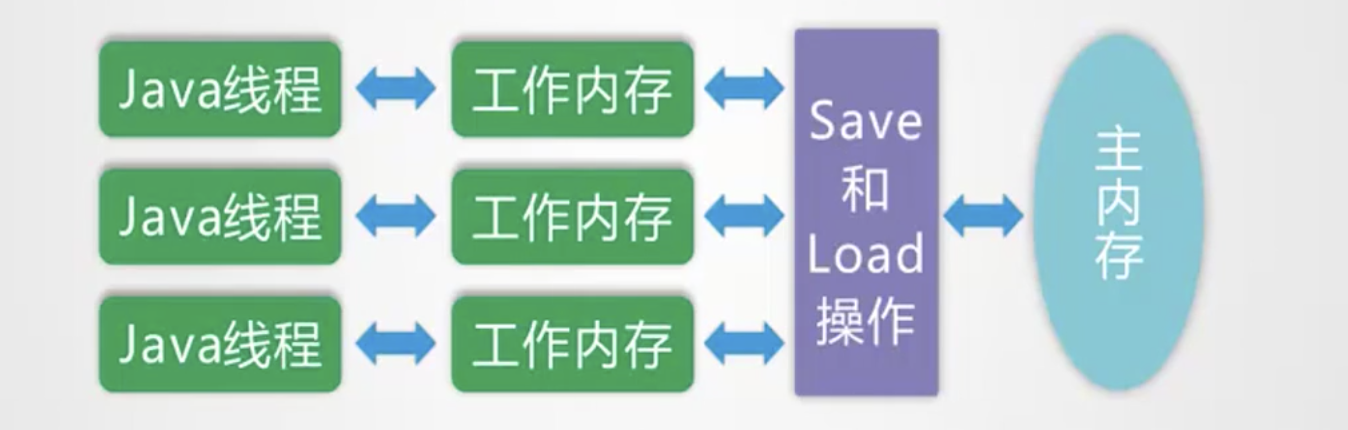
各线程的工作内存间彼此独立,互不可见,在线程启动的时候,虚拟机为每个内存分配一块工作内存,不仅包含了线程内部定义的局部变量,也包含了线程所需要使用的(非线程内构造的对象)的副本,即为了提高执行效率
volatile是不错的机制,但volatile不能保证原子性
现在机器性能比较强大,很少出现线程忙不过的情况,所以volatile在开发中较少使用
package com.sxt.others;
/**
 * volatile用于保证数据的同步,也就是可见性
 *
 * @author
 *
 */
public class VolatileTest {
    private volatile static int num = 0;
    public static void main(String[] args) throws InterruptedException {
        new Thread(()->{
            while(num==0) { //此处不要编写代码
                // 不加volatile,此处死循环
            }
        }) .start();

        Thread.sleep(1000);
        num = 1;
    }

}
DCL单例模式:
package com.sxt.others;
/**
 * DCL单例模式: 懒汉式套路基础上加入并发控制,保证在多线程环境下,对外存在一个对象
 * 1、构造器私有化 -->避免外部new构造器
 * 2、提供私有的静态属性 -->存储对象的地址
 * 3、提供公共的静态方法 --> 获取属性
 *
 *
 *
 */
public class DoubleCheckedLocking {
    //2、提供私有的静态属性
    //没有volatile其他线程可能访问一个没有初始化的对象
    private static volatile DoubleCheckedLocking instance;
    //1、构造器私有化
    private DoubleCheckedLocking() {
    }
    //3、提供公共的静态方法 --> 获取属性
    public static DoubleCheckedLocking getInstance() {
        //再次检测
        if(null!=instance) { //避免不必要的同步 ,已经存在对象
            return instance;
        }
        synchronized(DoubleCheckedLocking.class) {
            if(null == instance) {
                instance = new DoubleCheckedLocking();
                //1、开辟空间 //2、初始化对象信息 //3、返回对象的地址给引用
            }
        }
        return instance;
    }
    public static DoubleCheckedLocking getInstance1(long time) {
            if(null == instance) {
                try {
                    Thread.sleep(time);
                } catch (InterruptedException e) {
                    e.printStackTrace();
                }
                instance = new DoubleCheckedLocking();
                //1、开辟空间 //2、初始化对象信息 //3、返回对象的地址给引用
            }
        return instance;
    }
    public static void main(String[] args) {
        Thread t = new Thread(()->{
            System.out.println(DoubleCheckedLocking.getInstance());
        }) ;
        t.start();
        System.out.println(DoubleCheckedLocking.getInstance());
    }

}
ThreadLocal:
package com.sxt.others;
/**
 * ThreadLocal:每个线程自身的存储本地、局部区域
 *  get/set/initialValue
 * @author 裴新 QQ:3401997271
 *
 */
public class ThreadLocalTest01 {
    //private static ThreadLocal<Integer> threadLocal = new ThreadLocal<> ();
    //更改初始化值
    /*private static ThreadLocal<Integer> threadLocal = new ThreadLocal<> () {
        protected Integer initialValue() {
            return 200;
        };
    };*/
    private static ThreadLocal<Integer> threadLocal = ThreadLocal.withInitial(()-> 200);
    public static void main(String[] args) {
        //获取值
        System.out.println(Thread.currentThread().getName()+"-->"+threadLocal.get());//main-->200
        //设置值
        threadLocal.set(99);
        System.out.println(Thread.currentThread().getName()+"-->"+threadLocal.get());//main-->99


        new Thread(new MyRun()).start();
        new Thread(new MyRun()).start();
    }
    public static  class MyRun implements Runnable{
        public void run() {
            threadLocal.set((int)(Math.random()*99));//Thread-1-->28; Thread-0-->65

            System.out.println(Thread.currentThread().getName()+"-->"+threadLocal.get());
        }
    }

}
package com.sxt.others;
/**
 * ThreadLocal:每个线程自身的数据,更改不会影响其他线程
 *     Thread-0得到了-->1
    Thread-0还剩下-->0
    Thread-1得到了-->1
    Thread-2得到了-->1
    Thread-1还剩下-->0
    Thread-3得到了-->1
    Thread-4得到了-->1
    Thread-2还剩下-->0
    Thread-4还剩下-->0
    Thread-3还剩下-->0

 *
 */
public class ThreadLocalTest02 {
    private static ThreadLocal<Integer> threadLocal = ThreadLocal.withInitial(()-> 1);
    public static void main(String[] args) {
        for(int i=0;i<5;i++) {
            new Thread(new MyRun()).start();
        }
    }
    public static  class MyRun implements Runnable{
        public void run() {
            Integer left =threadLocal.get();
            System.out.println(Thread.currentThread().getName()+"得到了-->"+left);
            threadLocal.set(left -1);
            System.out.println(Thread.currentThread().getName()+"还剩下-->"+threadLocal.get());
        }
    }

}
package com.sxt.others;
/**
 * ThreadLocal:分析上下文 环境  起点
 * 1、构造器: 哪里调用 就属于哪里 找线程体
 * 2、run方法:本线程自身的
 *
 *
 */
public class ThreadLocalTest03 {
    private static ThreadLocal<Integer> threadLocal = ThreadLocal.withInitial(()-> 1);
    public static void main(String[] args) {
        new Thread(new MyRun()).start();
        new Thread(new MyRun()).start();
    }
    public static  class MyRun implements Runnable{
        public MyRun() {
            threadLocal.set(-100);
            System.out.println(Thread.currentThread().getName()+"-->"+threadLocal.get());
        }
        public void run() {
            System.out.println(Thread.currentThread().getName()+"-->"+threadLocal.get());
            //new Thread(new MyRunxxx()).start();
        }
    }

}


/*
 *     main-->-100
    main-->-100
    Thread-0-->1
    Thread-1-->1
 * */
package com.sxt.others;
/**
 * InheritableThreadLocal:继承上下文 环境的数据 ,拷贝一份给子线程
 *
 *     main-->2
    Thread-0-->2
    Thread-0-->200
 *
 */
public class ThreadLocalTest04 {
    private static ThreadLocal<Integer> threadLocal = new InheritableThreadLocal<>();
    public static void main(String[] args) {
        threadLocal.set(2);
        System.out.println(Thread.currentThread().getName()+"-->"+threadLocal.get());

        //线程由main线程开辟
        new Thread(()->{
            System.out.println(Thread.currentThread().getName()+"-->"+threadLocal.get());
            threadLocal.set(200);
            System.out.println(Thread.currentThread().getName()+"-->"+threadLocal.get());
        }) .start();

    }


}
posted on 2019-08-16 09:51 JieFangZhe 阅读(187) 评论(0) 收藏 举报


 浙公网安备 33010602011771号