
【狂神说Java】线程同步机制
多个线程操作同一个资源
处理多线程问题,多个线程访问同一个对象,并且某些线程还想修改这个对象。这时候我们就要线程同步。线程同步其实是一种等待机制,多个需要同时访问此对象的线程进入这个对象的等待池形成队列,等待前面的线程使用完毕,下一个线程再使用。
队列和锁
- 由于同一进程的多个线程共享同一块存储空间,在带来方便的同时,也带来了访问冲突问题,为了保证数据在方法中被访问时的正确性,在访问时加入锁机制【synchronized】
- 当一个线程获得对象耳朵排他锁,独占资源,其他线程必须等待,使用完毕后释放锁即可,存在以下问题:
- 一个线程持有锁会导致其他所有需要此锁的线程挂起
- 在多线程竞争下,加锁,释放锁会导致比较多的上下文切换和调度延时,CPU压力上升,引发性能问题
- 如果一个优先级高的线程等待一个优先级低的线程释放锁,会导致优先级倒置,引发性能问题
不安全的例子
- 银行取钱
public class SafeDrawing {
    public static void main(String[] args) {
        Account account = new Account(200,"1123");
        Drawing a = new Drawing(account,100,0,"aaa");
        Drawing b = new Drawing(account,200,0,"bbb");

        a.start();
        b.start();
    }
}

class Account{

    public Account(int money, String id) {
        this.money = money;
        this.id = id;
    }

    // 银行账户
    int money;// 余额
    String id;// 账号

}

class Drawing extends Thread{
    Account account; // 账户
    int drawingMoney; //取钱
    int nowMoney; // 手上的钱

    public Drawing(Account id,int drawingMoney,int nowMoney,String name){
        super(name);
        this.account = id;
        this.drawingMoney = drawingMoney;
        this.nowMoney = nowMoney;
    }

    @Override
    public void run() {
        // 判断有没有钱
        if (account.money < drawingMoney){
            System.out.println("钱不够");
            return;
        }
        // 加延时,先不更新数据
        try {
            Thread.sleep(100);
        } catch (InterruptedException e) {
            e.printStackTrace();
        }
        // 账户上的钱
        account.money -= drawingMoney;
        // 你手里的钱
        nowMoney += drawingMoney;

        System.out.println(account.id+ "账户余额为:"+ account.money);
        System.out.println(this.getName() + "手里的钱为:"+ nowMoney);
    }
}
- 10000个线程同时跑添加list,结果如下:
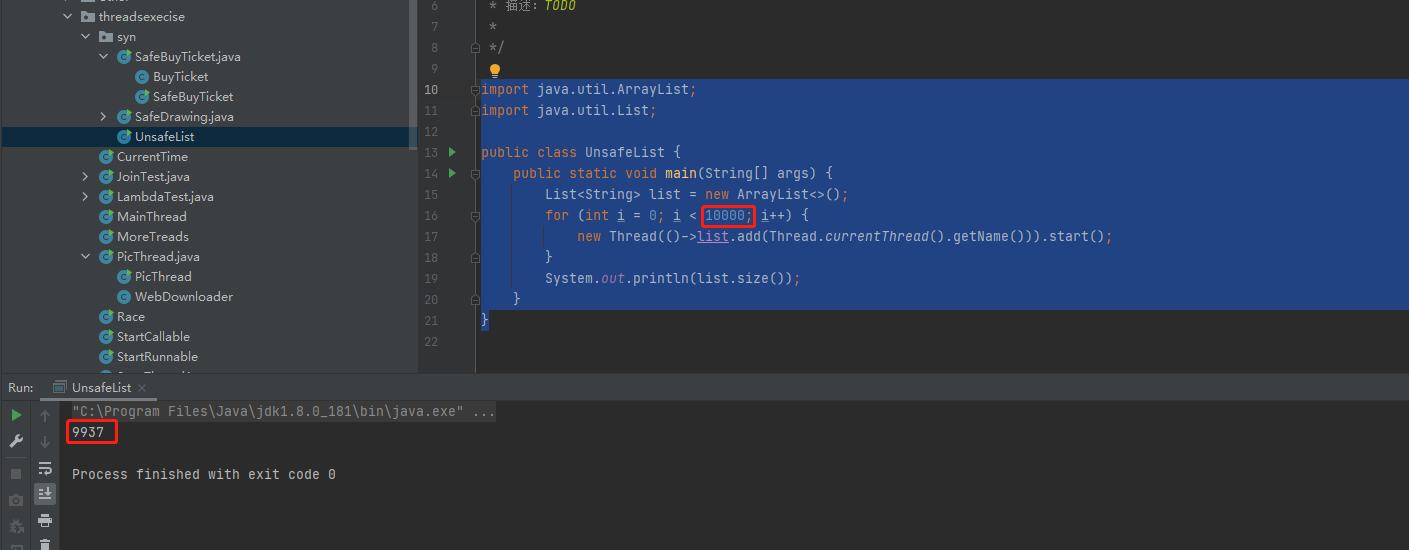
代码:
import java.util.ArrayList;
import java.util.List;

public class UnsafeList {
    public static void main(String[] args) {
        List<String> list = new ArrayList<>();
        for (int i = 0; i < 10000; i++) {
            new Thread(()->list.add(Thread.currentThread().getName())).start();
        }
        System.out.println(list.size());
    }
}

 浙公网安备 33010602011771号