

标签平滑实战 mnist手写字体识别
全部代码如下


# https://blog.csdn.net/qq_42325947/article/details/108318673
# mnist
import torch
import torchvision
import torch.nn as nn
import torch.nn.functional as F
from torch import optim
from matplotlib import pyplot as plt


def plot_curve(data):
    fig = plt.figure()
    plt.plot(range(len(data)), data, color='blue')
    plt.legend(['value'], loc='upper right')
    plt.xlabel('step')
    plt.ylabel('value')
    plt.show()


def plot_image(img, label, name):
    fig = plt.figure()
    for i in range(6):
        plt.subplot(2, 3, i + 1)
        plt.tight_layout()
        plt.imshow(img[i][0] * 0.3081 + 0.1307, cmap='gray', interpolation='none')
        plt.title("{}: {}".format(name, label[i].item()))
        plt.xticks([])
        plt.yticks([])
    plt.show()

# 加载数据集
batch_size = 512

train_loader = torch.utils.data.DataLoader(
    torchvision.datasets.MNIST('mnist_data', train=True, download=True,
                               transform=torchvision.transforms.Compose(
                                   [
                                       torchvision.transforms.ToTensor(),
                                       torchvision.transforms.Normalize((0.1307,), (0.3081,))
                                       # 这里的两个数字分别是数据集的均值是0.1307,标准差是0.3081
                                   ]
                               )
                               ),
    batch_size=batch_size, shuffle=True
)

test_loader = torch.utils.data.DataLoader(
    torchvision.datasets.MNIST('mnist_data/', train=False, download=True,  # 是验证集所以train=False
                               transform=torchvision.transforms.Compose(
                                   [
                                       torchvision.transforms.ToTensor(),
                                       torchvision.transforms.Normalize((0.1307,), (0.3081,))
                                   ]
                               )
                               ),
    batch_size=batch_size, shuffle=False  # 是验证集所以无需打乱,shuffle=False
)

# 创建网络模型
class Net(nn.Module):
    def __init__(self):
        super(Net, self).__init__()

        #wx+b
        self.fc1 = nn.Linear(28*28,256)#256是自己根据经验随机设定的
        self.fc2 = nn.Linear(256,64)
        self.fc3 = nn.Linear(64,10)#注意这里的10是最后识别的类别数(最后一层的输出往往是识别的类别数)

    def forward(self, x):
        #x : [ b 1 28 28]有batch_size张图片,通道是1维灰度图像 图片大小是28*28

        #h1=relu(wx+b)
        x = F.relu(self.fc1(x))#使用relu非线性激活函数包裹
        x = F.relu(self.fc2(x))
        #x = F.softmax(self.fc3(x))#由于是多类别识别,所以使用softmax函数
        x = F.relu(self.fc3(x))
        #x = self.fc3(x)
        return x

# 训练
net = Net()
optimizer = optim.SGD(net.parameters(),lr=0.1,momentum=0.9)
train_loss = []


for epoch in range(5):
    for batch_idx,(x,y) in enumerate(train_loader):#enumerate表示在数据前面加上序号组成元组,默认序号从0开始

        # x :[512 1 28 28]   y : [512]

        #由于这里的x维度为[512 1 28 28],但是在网络中第一层就是一个全连接层,维度只能是[b,feature(784)],所以要把x打平
        #将前面多维度的tensor展平成一维

        # 卷积或者池化之后的tensor的维度为(batchsize,channels,x,y),其中x.size(0)
        # 指batchsize的值,最后通过x.view(x.size(0), -1)
        # 将tensor的结构转换为了(batchsize, channels * x * y),即将(channels,x,y)拉直,然后就可以和fc层连接了

        x = x.view(x.size(0),28*28)
        #输出之后的维度变为[512,10]
        out=net(x)
        #使用交叉熵损失
        # loss = F.cross_entropy(out,y)


        # *************************************************************************************************************
        # 使用LabelSmoothing
        LS = LabelSmoothing(smoothing=0.1)
        loss = LS(out, y)
        # *************************************************************************************************************


        #清零梯度——计算梯度——更新梯度

        #要进行梯度的清零
        optimizer.zero_grad()

        loss.backward()
        #功能是: w` = w-lr*grad
        optimizer.step()

        train_loss.append(loss.item())#将loss保存在trainloss中,而loss.item()表示将tensor 的类型转换为数值类型

        #打印loss
        if batch_idx % 10 == 0:
            print(epoch,batch_idx,loss.item())

# 验证
plot_curve(train_loss)

total_correct = 0
for x, y in test_loader:
    x = x.view(x.size(0),28*28)
    out = net(x)
    #out :[512,10]
    pred = out.argmax(dim = 1)
    correct = pred.eq(y).sum().float().item()#当前批次识别对的个数
    total_correct+= correct

total_number = len(test_loader.dataset)
acc = total_correct / total_number
print('test acc',acc)


x,y = next(iter(test_loader))
out = net(x.view(x.size(0),28*28))
pred = out.argmax(dim=1)
plot_image(x,pred,'test')
这个main.py要调用我前面文章(https://www.cnblogs.com/jie-74/p/15686416.html)提到的LabelSmoothing类
import torch
import torch.nn as nn
import torch.nn.functional as F
from torch.autograd import Variable

# Wangleiofficial
# https://github.com/pytorch/pytorch/issues/7455#issuecomment-720100742
class LabelSmoothingLoss(torch.nn.Module):
    def __init__(self, smoothing: float = 0.1,
                 reduction="mean", weight=None):
        super(LabelSmoothingLoss, self).__init__()
        self.smoothing   = smoothing
        self.reduction = reduction
        self.weight    = weight

    def reduce_loss(self, loss):
        return loss.mean() if self.reduction == 'mean' else loss.sum() \
         if self.reduction == 'sum' else loss

    def linear_combination(self, x, y):
        return self.smoothing * x + (1 - self.smoothing) * y

    def forward(self, preds, target):
        assert 0 <= self.smoothing < 1

        if self.weight is not None:
            self.weight = self.weight.to(preds.device)

        n = preds.size(-1)
        log_preds = F.log_softmax(preds, dim=-1)
        loss = self.reduce_loss(-log_preds.sum(dim=-1))
        nll = F.nll_loss(
            log_preds, target, reduction=self.reduction, weight=self.weight
        )
        return self.linear_combination(loss / n, nll)


# NVIDIA
# https://github.com/NVIDIA/DeepLearningExamples/blob/8d8b21a933fff3defb692e0527fca15532da5dc6/PyTorch/Classification/ConvNets/image_classification/smoothing.py#L18
class LabelSmoothing(nn.Module):
    """NLL loss with label smoothing.
    """
    def __init__(self, smoothing=0.0): # 平滑因子
        """Constructor for the LabelSmoothing module.
        :param smoothing: label smoothing factor
        """
        super(LabelSmoothing, self).__init__()
        self.confidence = 1.0 - smoothing
        self.smoothing = smoothing

    def forward(self, x, target):
        logprobs = torch.nn.functional.log_softmax(x, dim=-1) # x: (batch size * class数量),即log(p(k))
        nll_loss = -logprobs.gather(dim=-1, index=target.unsqueeze(1)) # target: (batch size) 数字标签
        # 相当于取出logprobs中的真实标签的那个位置的logit的负值
        nll_loss = nll_loss.squeeze(1) # (batch size * 1)再squeeze成batch size,即log(p(k))δk,y,δk,y表示除了k=y时该值为1,其余为0
        smooth_loss = -logprobs.mean(dim=-1) # 在class维度取均值,就是对每个样本x的所有类的logprobs取了平均值。
        # smooth_loss = -log(p(k))u(k) = -log(p(k))∗ 1/k

        loss = self.confidence * nll_loss + self.smoothing * smooth_loss # (batch size)
        # loss = (1−ϵ)log(p(k))δk,y + ϵlog(p(k))u(k)
        return loss.mean() # −∑ k=1~K [(1−ϵ)log(p(k))δk,y+ϵlog(p(k))u(k)]


if __name__=="__main__":
    # Wangleiofficial
    crit = LabelSmoothingLoss(smoothing=0.3, reduction="mean")
    predict = torch.FloatTensor([[0, 0.2, 0.7, 0.1, 0],
                                 [0, 0.9, 0.2, 0.2, 1],
                                 [1, 0.2, 0.7, 0.9, 1]])

    v = crit(Variable(predict),
             Variable(torch.LongTensor([2, 1, 0])))
    print(v)

    # NVIDIA
    crit = LabelSmoothing(smoothing=0.3)
    predict = torch.FloatTensor([[0, 0.2, 0.7, 0.1, 0],
                                 [0, 0.9, 0.2, 0.2, 1],
                                 [1, 0.2, 0.7, 0.9, 1]])
    v = crit(Variable(predict),
             Variable(torch.LongTensor([2, 1, 0])))
    print(v)

# tensor(1.3883)
# tensor(1.3883)
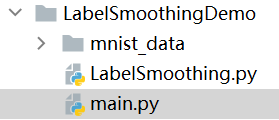
两个文件放在同一文件夹下即可,单独运行main.py是手写数字识别,单独运行LabelSmoothing.py是一个小demo
参考自 pytorch实现mnist识别实战
https://blog.csdn.net/qq_42325947/article/details/108318673
有评论提到

果断百度,确实如评论所说
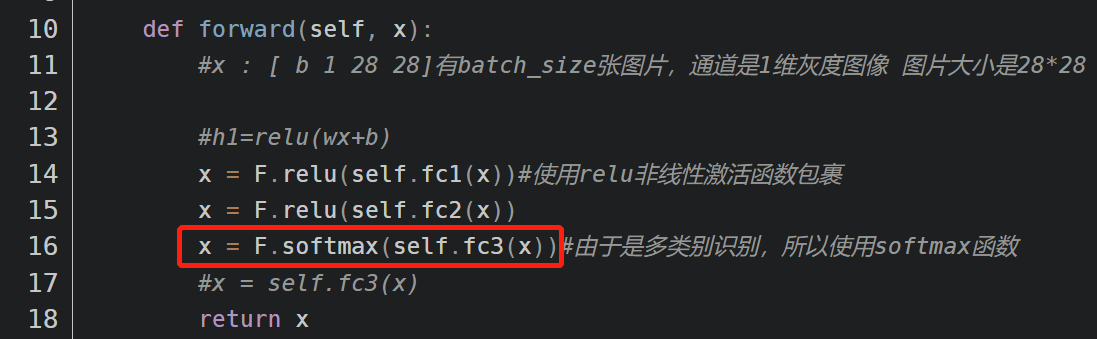
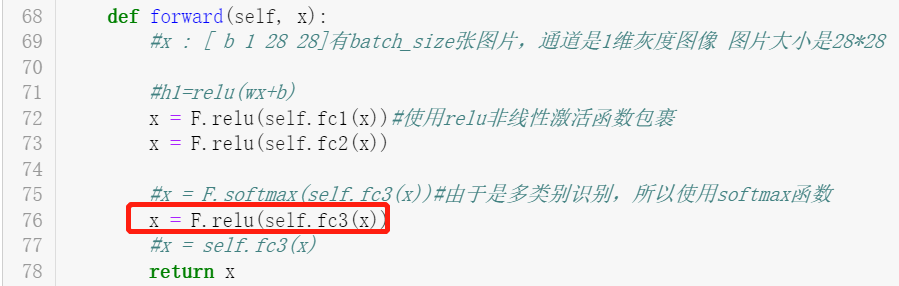
可以把上图红框注释,如下图所示换成x = F.relu(self.fc3(x))
不过我们今天的重点不是用普通的loss,是用Label Smoothing
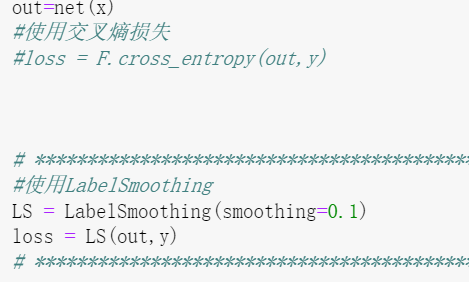
调用我们前一篇文章使用的LabelSmoothing类
最后得到使用LabelSmoothing的前后准确率,左图使用LS前0.974,右图后0.982
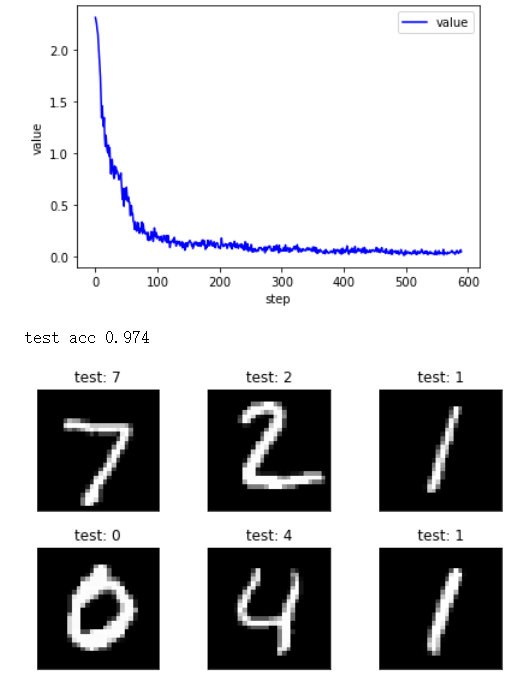
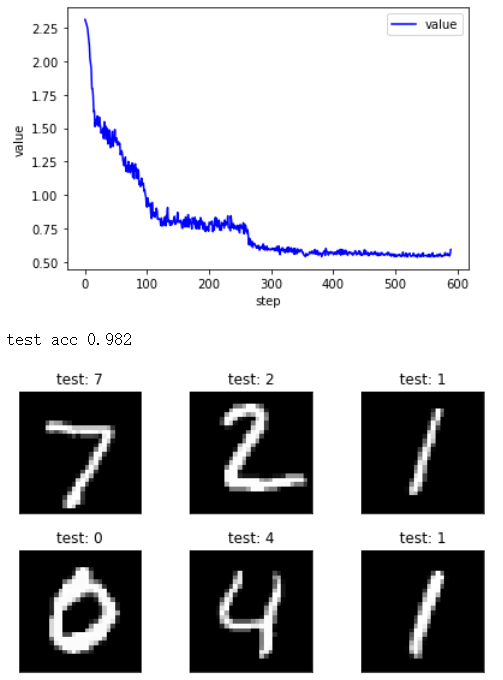
先了解LabelSmoothing,可以跳转到https://www.cnblogs.com/jie-74/p/15686416.html

摸鱼失败

 浙公网安备 33010602011771号