
单项不循环链表
单向不循环链表
#include <stddef.h>
#include <stdlib.h>
#include <stdio.h>
#include <stdbool.h>

typedef int DataType_t;

// 构造链表的结点,链表中所有结点的数据类型是相同的
typedef struct LinkedList
{
    DataType_t data;        // 节点的数据域
    struct LinkedList *next; // 节点的指针域
} LiList_t;

// 创建一个空链表,空链表应该有一个头节点,对链表进行初始化
LiList_t *LiList_Creat(void)
{
    // 1. 创建一个头结点,为头节点申请内存
    LiList_t *Head = (LiList_t *)calloc(1, sizeof(LiList_t));
    if (NULL == Head)
    {
        perror("Calloc memory for Head is failed");
        return NULL;
    }
    // 2. 对头节点进行初始化,头节点是不存储有效内容的
    Head->next = NULL;
    // 3. 把头结点的地址返回即可
    return Head;
}

// 创建链表的新的节点并对链表进行初始化
LiList_t *LiList_NewNode(DataType_t data)
{
    // 1. 创建一个新结点,为新节点申请内存
    LiList_t *New = (LiList_t *)calloc(1, sizeof(LiList_t));
    if (NULL == New)
    {
        perror("Calloc memory for NewNode is failed");
        return NULL;
    }
    // 2. 对新节点进行初始化
    New->data = data;
    New->next = NULL;
    return New;
}

// 将新的节点插入到链表首节点//头插
bool LiList_HeadInsert(LiList_t *Head, DataType_t data)
{
    // 1. 创建新节点并对新节点进行初始化
    LiList_t *New = LiList_NewNode(data);
    if (NULL == New)
    {
        perror("can not insert new node\n");
        return false;
    }
    // 2. 将新节点插入到链表头部
    New->next = Head->next;
    Head->next = New;
    return true;
}

// 将新的节点插入到链表尾节点//尾插
bool LiList_tailInsert(LiList_t *Head, DataType_t data)
{
    // 1. 创建新节点并对新节点进行初始化
    LiList_t *New = LiList_NewNode(data);
    if (NULL == New)
    {
        perror("can not insert new node\n");
        return false;
    }
    // 2. 找到链表的尾节点
    LiList_t *Phead = Head;
    while (Phead->next)
    {
        Phead = Phead->next;
    }
    // 3. 将新节点插入到链表尾部
    Phead->next = New;
    return true;
}

// 将新的节点插入到链表指定节点//指定插
bool LiList_DestInsert(LiList_t *Head, DataType_t dest, DataType_t data)
{
    // 1. 创建新节点并对新节点进行初始化
    LiList_t *New = LiList_NewNode(data);
    if (NULL == New)
    {
        perror("can not insert new node\n");
        return false;
    }
    // 2. 找到指定节点的前一个节点
    LiList_t *Phead = Head;
    while (Phead->next != NULL && Phead->next->data != dest)
    {
        Phead = Phead->next;
    }
    if (Phead->next == NULL)
    {
        printf("data is not found\n");
        return false;
    }
    // 3. 将新节点插入到指定节点之后
    New->next = Phead->next;
    Phead->next = New;
    return true;
}

// 遍历
void LiList_Print(LiList_t *Head)
{
    // 对链表的头节点的地址进行备份
    LiList_t *Phead = Head;
    while (Phead->next)
    {
        // 把头节点的直接后继作为新的节点
        Phead = Phead->next;
        // 输出当前节点的直接后继的数据域
        printf("data = %d\n", Phead->data);
    }
}

// 删除首节点
bool LiList_HeadDel(LiList_t *Head)
{
    if (Head == NULL || Head->next == NULL)
    {
        perror("The LiList is empty");
        return false;
    }
    LiList_t *DelNode = Head->next;
    Head->next = DelNode->next;
    free(DelNode);
    return true;
}

// 删除尾节点
bool LiList_tailDel(LiList_t *Head)
{
    if (Head == NULL || Head->next == NULL)
    {
        perror("The LiList is empty");
        return false;
    }
    if (Head->next->next == NULL)
    {
        free(Head->next);
        Head->next = NULL;
        return true;
    }
    LiList_t *Phead = Head;
    while (Phead->next->next != NULL)
    {
        Phead = Phead->next;
    }
    free(Phead->next);
    Phead->next = NULL;
    return true;
}

// 删除指定节点
bool LiList_DestDel(LiList_t *Head, DataType_t dest)
{
    if (Head == NULL || Head->next == NULL)
    {
        perror("The LiList is empty");
        return false;
    }
    LiList_t *Phead = Head;
    while (Phead->next != NULL && Phead->next->data != dest)
    {
        Phead = Phead->next;
    }
    if (Phead->next == NULL)
    {
        printf("data is not found\n");
        return false;
    }
    LiList_t *DelNode = Phead->next;
    Phead->next = DelNode->next;
    free(DelNode);
    return true;
}

int main(int argc, char const *argv[])
{
    LiList_t *Head = LiList_Creat();
    LiList_tailInsert(Head, 1);
    LiList_tailInsert(Head, 2);
    LiList_tailInsert(Head, 3);
    LiList_tailInsert(Head, 4);

    // LiList_HeadInsert(Head, 5);
    // LiList_TailInsert(Head, 5);
    // LiList_DestInsert(Head, 4, 5);
    // LiList_HeadDel(Head);
    // LiList_TailDel(Head);
    // LiList_DestDel(Head, 3);
    LiList_Print(Head);

    return 0;
}
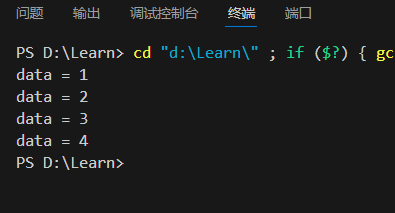
运行结果

 浙公网安备 33010602011771号