
02-构造函数和原型
一、利用构造函数创建对象
    <script>
        //1.new Object()
        var obj1 = new Object()

        //2.对象字面量
        var obj2 = {}

        //3.利用构造函数
        function Star(name, age) {
            this.name = name
            this.age = age
        }
    </script>
二、静态成员和实例成员
    <script>
        function Star(name, age) {
            this.name = name
            this.age = age
            this.song = () => {
                console.log('唱歌');
            }
        }
        var hzp = new Star('hzp', 19)

        //实例成员只能通过实例化对象来访问 实例成员就是构造函数内部通过this添加的成员
        console.log(hzp.name);

        //不可以通过构造函数来访问实例成员
        //console.log(Star.name);
        hzp.song()

        //2.静态成员 在构造函数 本身 上添加的成员 sex就是静态成员
        Star.sex = '男'
        console.log(Star.sex);
    </script>
运行结果:hzp 唱歌 男
三、构造函数原型prototype
    <!-- 构造函数通过原型分配的函数是所有对象所共享的 -->
    <!-- 原型是一个对象 也称prototype为原型对象
        作用:共享方法
    -->
    <script>
        function Star(name, age) {
            this.name = name
            this.age = age
        }
        Star.prototype.sing = function() {
            console.log(this.name + '会唱歌');
        }
        var zs = new Star('张三')
        var ls = new Star('李四')
        zs.sing()
        ls.sing()
        console.log(zs.sing === ls.sing);
        console.dir(Star);
        console.log(zs); //对象身上系统自己添加一个 __proto__指向我们构造函数的原型对象
        //__proto__对象原型和原型对象prototype是等价的
        //console.log(zs.__proto__ === Star.prototype);
        //很多情况下 需要手动的利用constructor这个属性指回原来的构造函数
        Star.prototype = {
            constructor: Star,
            sing: () => {
                console.log('sing');
            },
            movie: () => {
                console.log('movie');
            }
        }
        console.log(Star.prototype.constructor);
        console.log(zs.__proto__.constructor);
        //2.一般情况下 我们的公共属性定义到构造函数里面 公共的方法我们放到原型对象身上
    </script>
运行结果
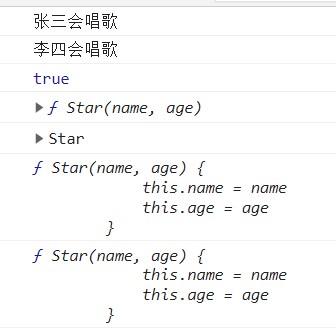
四、构造函数、实例和原型对象三者之间关系
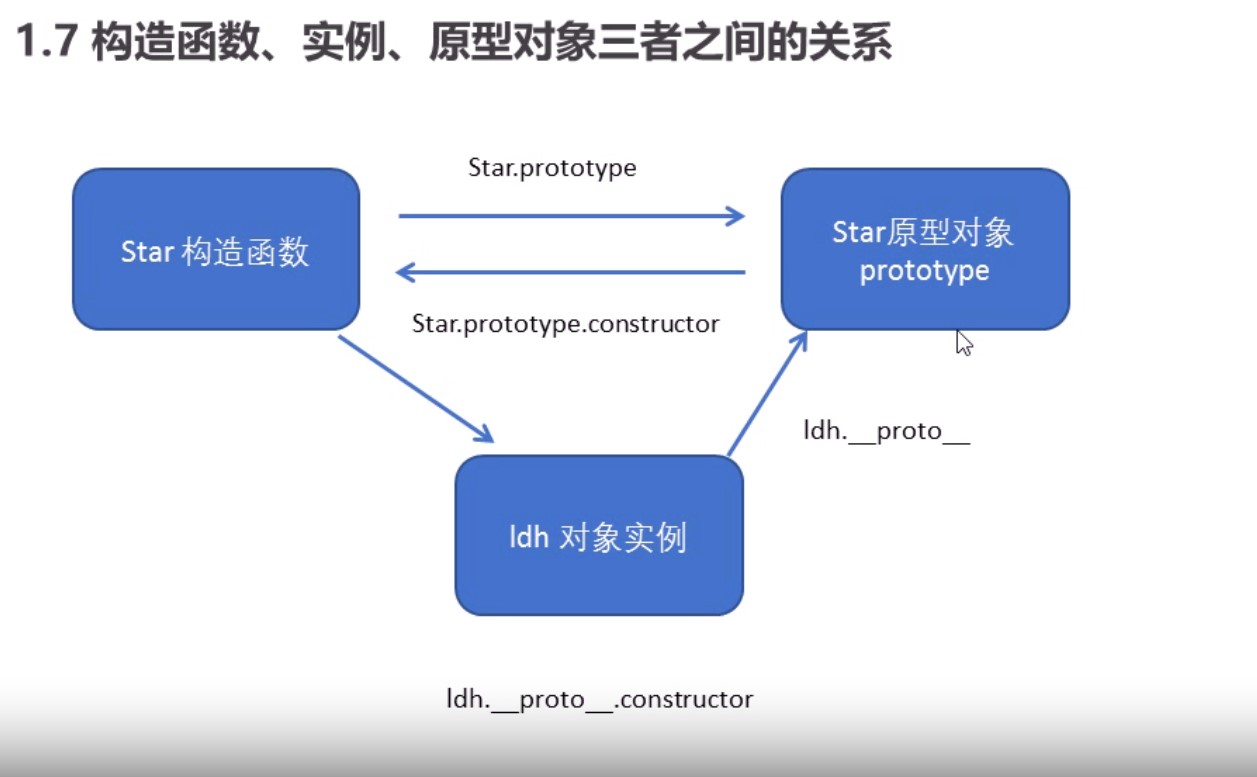
<!--
      Star构造函数通过Star.prototype执行Star原型对象
      Star原型对象通过Star.prototype.constructor指回Star构造函数
      Star构造函数 new出对象实例 对象实例 对象.__proto__.constructor(对象.__proto__也就是原型对象)指回构造函数
      对象实例里有个ldh.__proto__指向原型对象
    -->
三者之间关系图解:
五、原型链
    <script>
        function Star(name, age) {
            this.name = name
            this.age = age
        }
        Star.prototype.sing = function() {
            console.log('我会唱歌');
        }
        var hzp = new Star('胡振鹏')

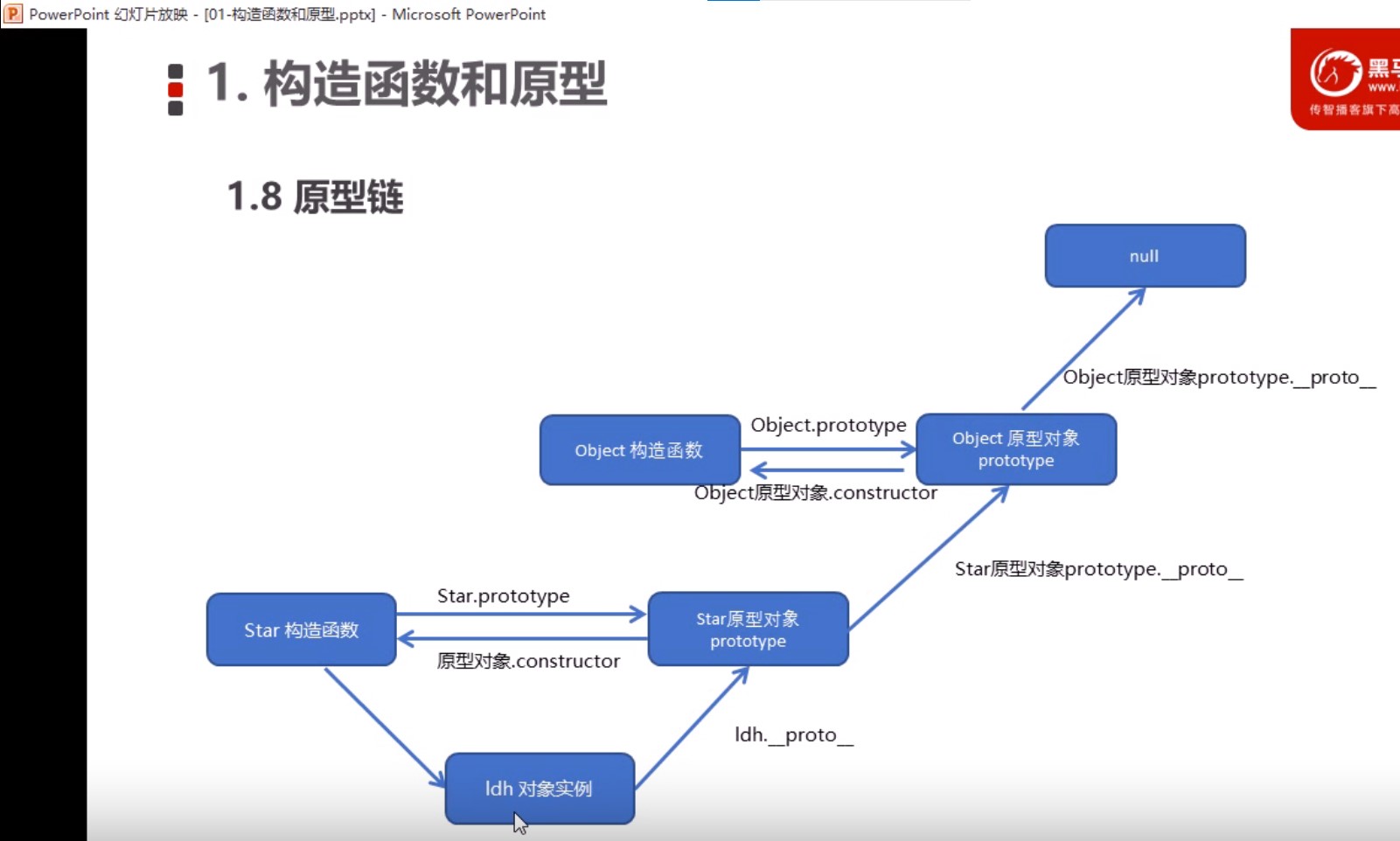
        //1.只要是对象就有__proto__原型,指向原型对象
        console.log(Star.prototype.__proto__ === Object.prototype);

        //2.Star原型对象里面的__proto__原型指向的是Object.prototype
        console.log(Object.prototype.__proto__); //为null
    </script>
运行结果:true null
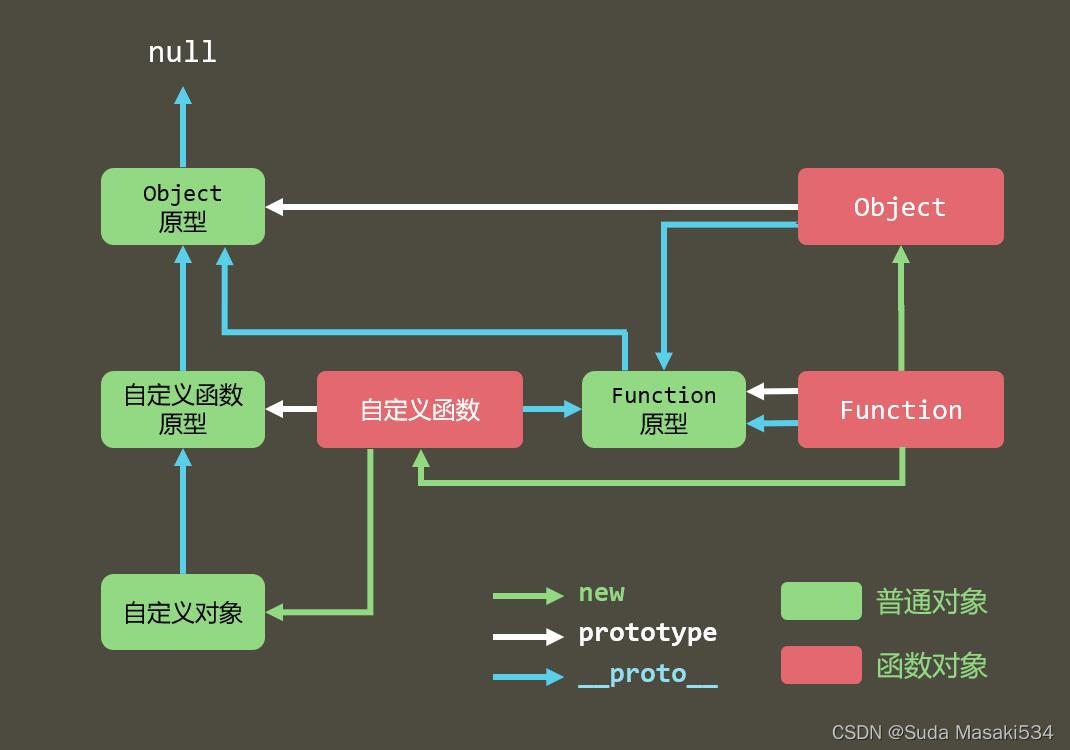
原型链图解:
六、原型对象中this指向
    <script>
        function Star(name, age) {
            this.name = name
            this.age = age
        }
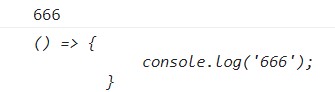
        Star.prototype.sing = () => {
            console.log('666');
        }
        var hzp = new Star();
        //1.在构造函数中,里面this指向的是对象实例ldh
        hzp.sing()
        console.log(hzp.sing);
        //2.原型对象函数里面的this指向的是实例对象
    </script>
运行结果:
七、扩展内置对象方法
    <script>
        //原型对象的应用 扩展内置对象方法
        console.log(Array.prototype);
        Array.prototype.sum = function() {
            var sum = 0
            for (var i = 0; i < this.length; i++) {
                sum += this[i]
            }
            //console.log(this);
            return sum;
        }
        console.log(Array.prototype);
        var arr = [2, 5, 6]
        console.log(arr.sum());
    </script>
运行结果:

八、call方法
    <script>
        function fn(x, y) {
            console.log(this);
            console.log(x + y);
        }
        var o = {
                name: 'andy'
            }
            //1.call可以调用函数
            //2.call()可以改变这个函数的this指向 此时这个函数的this指向就为o
        fn.call(o, 1, 12)
    </script>
运行结果:对象o 13
九、借用父构造函数继承属性
    <script>
        //借用父构造函数继承属性
        //1.父构造函数
        function Father(name, age) {
            this.name = name
            this.age = age
        }

        Father.prototype.money = function() {
            console.log('money');
        }

        //2.子构造函数
        function Son(name, age) {
            Father.call(this, name, age)
        }

        Son.prototype = new Father();
        Son.prototype.constructor = Son
        Son.prototype.exam = function() {
            console.log('考试');
        }

        var son = new Son('hzp', 19)
        console.log(son);
        console.log(Father.prototype);
        console.log(Son.prototype.exam);
    </script>
运行结果:
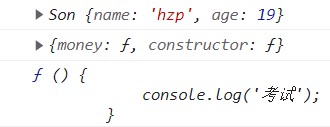
十、原型练习
    <script>
        function A() {}

        function B(a) {
            this.a = a;
        }

        function C(a) {
            if (a) {
                this.a = a;
            }
        }
        A.prototype.a = 1;
        B.prototype.a = 1;
        C.prototype.a = 1;

        console.log(new A().a); //{} 1
        console.log(new B().a); // {a:undefined} undefined
        console.log(new C(2).a); // {a:2} 2
    </script>
运行结果:1 undefined 2
     <script>
        var Star = function() {}
        Object.prototype.a = function() {
            console.log('a');
        }
        Function.prototype.b = function() {
            console.log('b');
        }
        var f = new Star();
        console.log(Star.prototype);
        //console.log(f.__proto__);
        //console.log(f.__proto__ === Star.prototype); //true
        //console.log(Object.prototype === Star.prototype.__proto__);
        console.log(Object.__proto__ === Function.__proto__);
        console.log(f.a, f.b, Star.a, Star.b);
        //f(){
        //  console.log('a');
        //}
        //undefined
        // f(){
        // console.log('a');
        //}
        // f(){
        // console.log('b');
        //}
    </script>
运行结果:
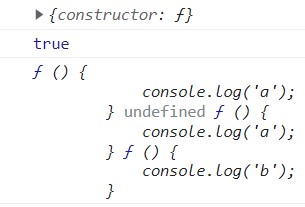
    <script>
        function User() {}
        User.prototype.sayHello = function() {}

        var u1 = new User();
        var u2 = new User();

        // u1:{}  u1.__proto__ => User.prototype => Object.prototype => null
        // u2:{}  u1.__proto__ => User.prototype => Object.prototype => null

        //console.log(u1.sayHello === u2.sayHello); // true
        //console.log(User.prototype.constructor); // User(){}
        //console.log(User.prototype === Function.prototype); // false
        // User.__proto__ => Function.prototype
        //console.log(User.__proto__ === Function.prototype); // true
        // Function.__proto__ => Function.prototype
        //console.log(User.__proto__ === Function.__proto__); // true

        // console.log(u1.__proto__ === u2.__proto__); // true
        console.log(u1.__proto__ === User.__proto__); // false
        // Function.__proto__ => Function.prototype
        // Object.__proto__ => Function.prototype
        console.log(Function.__proto__ === Object.__proto__); // true
        // Function.prototype.__proto__=> Object.prototype
        // Object.prototype.__proto__ => null
        console.log(Function.prototype.__proto__ === Object.prototype.__proto__); // false
        console.log(Function.prototype.__proto__ === Object.prototype); // true
        console.log(Object.prototype.__proto__);
    </script>

 浙公网安备 33010602011771号