
用Socket传输生成验证码
第一步:使用webService生成两个工具包

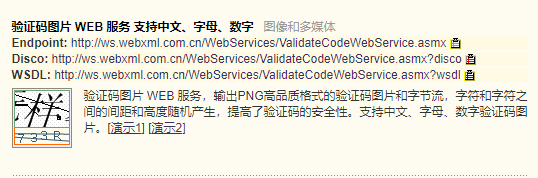
生成工具包:
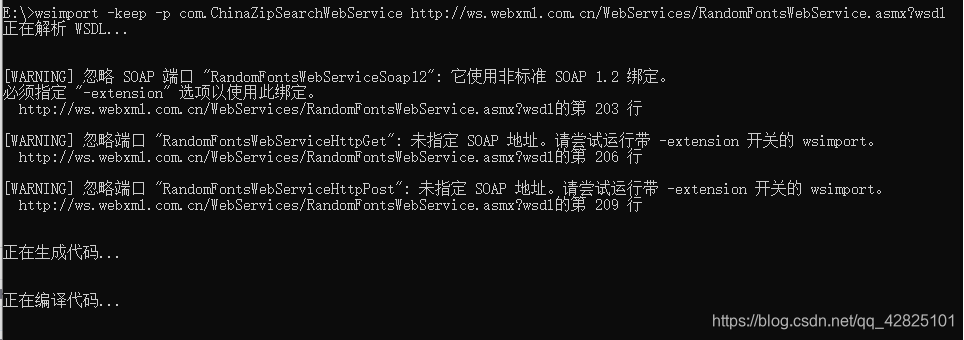
将生成的两个包放到项目中去。然后封装随机字符的类和生成验证码字节的类。
随机类:
public class FontsFactory {

    private static RandomFontsWebServiceSoap soap = new RandomFontsWebService().getRandomFontsWebServiceSoap();

    /**
     *随机生成charLength个字符
     * @param charLength
     * @return String
     */
    public static String getChars(Integer charLength){
        return soap.getCharFonts(charLength).getStr();
    }

    /**
     *随机生成chineseLength个汉字
     * @param chineseLength
     * @return String
     */
    public static String getChinese(Integer chineseLength){
        return soap.getChineseFonts(chineseLength).getStr();
    }


}
生成验证码字节类:
public class ValidateCodeFactory {

    private static ValidateCodeWebServiceSoap soap = new ValidateCodeWebService().getValidateCodeWebServiceSoap();

    /**
     * 生成字母数字验证码
     * @param chars
     * @return byte[]
     */
    public static byte[] getCharsVCode(String chars){
        return soap.enValidateByte(chars);
    }

    /**
     * 生成汉字验证码
     * @param chinese
     * @return byte[]
     */
    public static byte[] getChineseVCode(String chinese){
        return soap.cnValidateByte(chinese);
    }

}
Socket服务类:
public class SocketImpl {

    private ServerSocket serverSocket;
    private Socket socket;
    public SocketImpl(Integer port){

        try {
            serverSocket = new ServerSocket(port);
            System.out.println("服务已启动......");
        } catch (IOException e) {
            System.err.println("IO错误");
        }

    }

    public void start(){

        try {
            while (true){
                socket = serverSocket.accept();
                SocketThread socketThread = new SocketThread(socket);
                new Thread(socketThread).start();
            }

        } catch (IOException e) {
            System.err.println("IO错误");
        }

    }

}
解析请求、回复类:
class SocketThread extends Thread{
    Socket socket;

    public SocketThread(Socket socket){
        this.socket = socket;
    }

    @Override
    public void run() {
        OutputStream outputStream = null;
        OutputStreamWriter outputStreamWriter = null;
        InputStreamReader inputStreamReader = null;
        try {
            //获得输出流
            outputStream = socket.getOutputStream();
            outputStreamWriter = new OutputStreamWriter(outputStream);
            //获得输入流
            inputStreamReader = new InputStreamReader(socket.getInputStream());

            StringBuffer stringBuffer = new StringBuffer();
            char[] chars = new char[1024];
            int len = inputStreamReader.read(chars);
            //获取请求信息
            stringBuffer.append(new String(chars,0,len));

            //解析请求资源
            String path = stringBuffer.substring(stringBuffer.indexOf("/") + 1, stringBuffer.indexOf(" HTTP/1.1")) ;
            Map map = null ;
            //有参数就解析参数
            if (path.indexOf("?")!=-1){
                map = new HashMap();
                String param = path.substring(path.indexOf("?") + 1);
                path = stringBuffer.substring(stringBuffer.indexOf("/") + 1, stringBuffer.indexOf("?"));
                String[] split = param.split("&");

                for (String s : split) {
                    String[] split1 = s.split("=");
                    map.put(split1[0], URLDecoder.decode(split1[1],"utf-8"));
                }
            }


            //判断请求的资源
            if ("codeImage".equals(path)){
                if (map != null){//有参返回的二维码
                    outputStream.write(Result.getCodeImage((String) map.get("content")));
                }else//默认返回二维码
                    outputStream.write(Result.getCodeImage("http://hxb19990523.top:8080/HTML/index.html"));
            }else if ("vCode".equals(path)){
                if (map != null){//有参返回
                    //判断验证码类型
                    boolean flag = "cn".equals(map.get("type"))?true:false;
                    //没有设置验证码长度默认为4
                    Integer length = map.get("len")!=null?  Integer.parseInt(map.get("len").toString()) : 4;
                    if (flag) {
                        //汉字验证码
                        outputStream.write(ValidateCodeFactory.getChineseVCode(FontsFactory.getChinese(length)));
                    } else {
                        //字母、数字验证码
                        outputStream.write(ValidateCodeFactory.getCharsVCode(FontsFactory.getChars(length)));
                    }
                }else {//默认返回
                    int i = new Random().nextInt(2);
                    if (i==0)outputStream.write(ValidateCodeFactory.getCharsVCode(FontsFactory.getChars(4)));
                    else outputStream.write(ValidateCodeFactory.getChineseVCode(FontsFactory.getChinese(4)));

                }
            }


        } catch (Exception e) {
            e.printStackTrace();
        } finally {
            try {
                outputStreamWriter.close();
                outputStream.close();
                inputStreamReader.close();
            } catch (IOException e) {
                System.err.println("IO错误");
            }
        }
    }
}
测试类:
public class MainTest {

    public static void main(String[] args) {

        new SocketImpl(80).start();

    }
}有参返回验证码(http://localhost/vCode?type=en、http://localhost/vCode?len=5、http://localhost/vCode?type=cn&len=5):
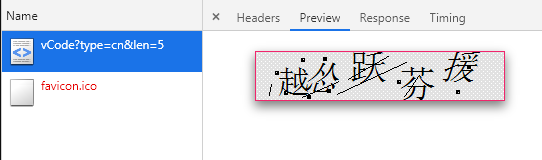
无参返回验证码(http://localhost/vCode):

OVER~

 浙公网安备 33010602011771号