
基于AQS实现的ReentrantLock
基于AQS实现的ReentrantLock
这里的源码用的Java8版本
lock方法
当ReentrantLock类的实例对象尝试获取锁的时候,调用lock方法,
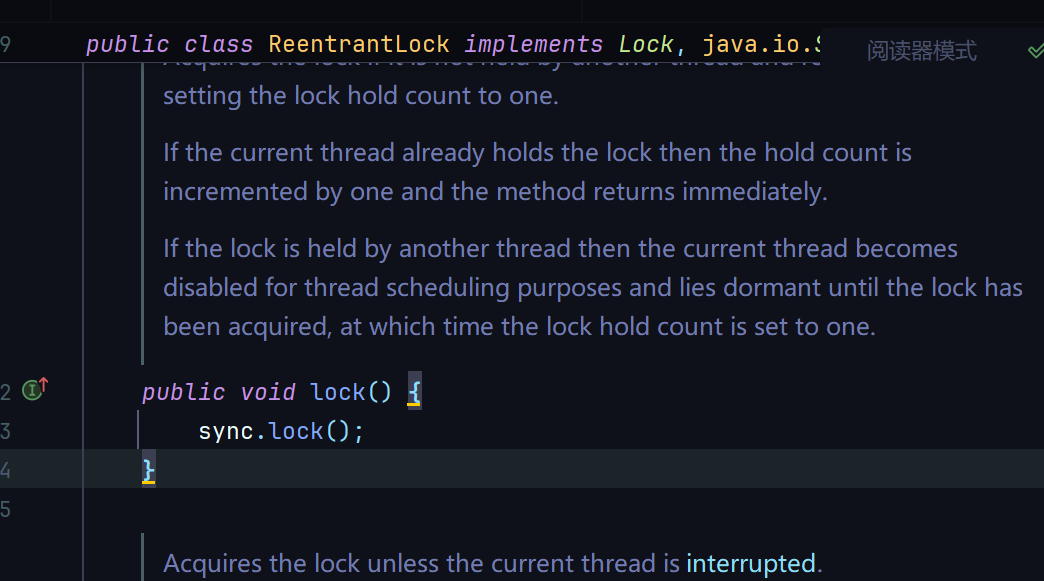
会进入sync的lock方法,其中Sync是ReentrantLock的一个内部类,ReentrantLock构造方法会默认使用非公平锁NonfairSync,这个类是继承于Sync的
        final void lock() {
            if (!initialTryLock())
                acquire(1);
        }
// 其中Sync的initialTryLock是抽象方法,需要看非公平锁实现方法
[!TIP]
在这里是第一次尝试获取锁
由于ReentrantLock是个可重入锁,判断里有重入的判断
final boolean initialTryLock() {
            Thread current = Thread.currentThread();
			// 获取当前线程的对象
            if (compareAndSetState(0, 1)) { // first attempt is unguarded
			// 用CAS比较state状态是否为0(无人持有锁),如果是,就转为1(获取到锁)
                setExclusiveOwnerThread(current);
			// 将当前进程设置为拥有锁的线程
                return true;
            } else if (getExclusiveOwnerThread() == current) {
			// 当前线程为拥有锁的线程(重复获取),重入
                int c = getState() + 1;
                if (c < 0) // overflow
			// 负数,state是个int类型数据,超出可能导致溢出变为负数
                    throw new Error("Maximum lock count exceeded");
                setState(c);
			// 设置新的state
                return true;
            } else
			// 已有线程占锁,返回为false
                return false;
        }
然后开始调用acquire方法,传入1
    public final void acquire(int arg) {
        if (!tryAcquire(arg) &&
            acquireQueued(addWaiter(Node.EXCLUSIVE), arg))
            selfInterrupt();
    }
调用tryAcquire()方法,其中tryAcquire()方法是一个只有抛出异常的方法,需要重写,我们看非公平锁的写法
[!TIP]
这是第二次获取锁
        protected final boolean tryAcquire(int acquires) {
            if (getState() == 0 && !hasQueuedPredecessors() &&
                compareAndSetState(0, acquires)) {
                setExclusiveOwnerThread(Thread.currentThread());
                return true;
            }
            return false;
        }
这里,如果state是0,即没有线程占用锁的情况下getState() == 0这个为真!hasQueuedPredecessors()执行这个方法,这个方法会检查是否已经出现了等待队列
    public final boolean hasQueuedPredecessors() {
        Thread first = null; Node h, s;
        if ((h = head) != null && ((s = h.next) == null ||
                                   (first = s.waiter) == null ||
                                   s.prev == null))
            first = getFirstQueuedThread(); // retry via getFirstQueuedThread
        return first != null && first != Thread.currentThread();
    }
当未出现 同步队列/阻塞队列 ,或者当前线程是队列的第一个时,执行compareAndSetState(0, acquires),第二次尝试获取锁,如果成功,返回真
否则返回假,执行acquireQueued(addWaiter(Node.EXCLUSIVE), arg))
    private Node addWaiter(Node mode) {
        Node node = new Node(Thread.currentThread(), mode);
        // Try the fast path of enq; backup to full enq on failure
        Node pred = tail;
        if (pred != null) {
            node.prev = pred;
            if (compareAndSetTail(pred, node)) {
			// 尝试加入队尾
                pred.next = node;
                return node;
            }
        }
        enq(node);
        return node;
    }
Node是双向队列:阻塞队列一个节点,是为了保证原子化所以包装起来的
如果tail尾指针指向的节点不为空,则设置新生成的为尾指针指向的
否则(阻塞队列为空),调用enq函数
    private Node enq(final Node node) {
        for (;;) {
            Node t = tail;
            if (t == null) { // Must initialize
                if (compareAndSetHead(new Node()))
			// 使用CAS,防止多线程同时创建头节点,所以本质上还是需要抢入队顺序
                    tail = head;
			// 初始化头节点,并将尾指针指向头节点
            } else {
                node.prev = t;
                if (compareAndSetTail(t, node)) {
			// 判断t是否为尾节点,如果有线程更快的改掉尾节点,那么修改失败,
			// 重新进入for循环
                    t.next = node;
                    return t;
			// 修改成功
                }
            }
        }
    }
[!TIP]
这是第三次尝试获取锁
    final boolean acquireQueued(final Node node, int arg) {
        boolean failed = true;
        try {
            boolean interrupted = false;
            for (;;) {
                final Node p = node.predecessor();
			// 获取node的前一个节点,如果前一个节点是头节点(当前节点是第一个)
			// 执行tryAcquire(arg),执行第三次尝试获取锁
                if (p == head && tryAcquire(arg)) {
			// 获取锁成功,出队
                    setHead(node);// 将node设为头节点
                    p.next = null; // help GC
                    failed = false;
                    return interrupted;
                }
                if (shouldParkAfterFailedAcquire(p, node) &&
                    parkAndCheckInterrupt())
                    interrupted = true;
            }
        } finally {
            if (failed)
                cancelAcquire(node);
        }
    }
如果第三次尝试获取锁失败了,会调用shouldParkAfterFailedAcquire()方法,将node的前一个节点传入(node一直都是加入的节点)
    private static boolean shouldParkAfterFailedAcquire(Node pred, Node node) {
        int ws = pred.waitStatus;
        if (ws == Node.SIGNAL)
		// 确认前面的节点处于SIGNAL状态,即确认前面的节点会叫醒自己
            /*
             * This node has already set status asking a release
             * to signal it, so it can safely park.
             */
            return true;
        if (ws > 0) {
            /*
             * Predecessor was cancelled. Skip over predecessors and
             * indicate retry.
             */
            do {
                node.prev = pred = pred.prev;
            } while (pred.waitStatus > 0);
			// Node里面仅有一个大于零的状态,即1取消状态,也就是说当前任务被取消了
			// 持续循环值找到不再取消的节点
            pred.next = node;
        } else {
		// 将前一个节点用CAS转为Node.SIGNAL状态-1,返回为false
            /*
             * waitStatus must be 0 or PROPAGATE.  Indicate that we
             * need a signal, but don't park yet.  Caller will need to
             * retry to make sure it cannot acquire before parking.
             */
            compareAndSetWaitStatus(pred, ws, Node.SIGNAL);
        }
        return false;
    }
这里插一嘴,Node节点有一些状态,来体现其的任务状态,如前面传入的就是独占队列,
addWaiter(Node.EXCLUSIVE)static final class Node { /** Marker to indicate a node is waiting in shared mode */ static final Node SHARED = new Node(); // 共享队列 /** Marker to indicate a node is waiting in exclusive mode */ static final Node EXCLUSIVE = null; // 独占队列 /** waitStatus value to indicate thread has cancelled */// 取消 static final int CANCELLED = 1; // 已被取消 /** waitStatus value to indicate successor's thread needs unparking */ static final int SIGNAL = -1; // 表示next节点已经park,需要被唤醒 /** waitStatus value to indicate thread is waiting on condition */ static final int CONDITION = -2; /** * waitStatus value to indicate the next acquireShared should * unconditionally propagate */ // 共享状态 static final int PROPAGATE = -3;
if (shouldParkAfterFailedAcquire(p, node) &&
                    parkAndCheckInterrupt())
                    interrupted = true;
如果前一个节点的waitState是0,会被CAS转为-1,然后返回false,进而不会执行parkAndCheckInterrupt(),继续for的无限循环,这里有可能出现第四次尝试
如果前一个节点的waitState是-1,该函数返回一个true,也就可以继续执行parkAndCheckInterrupt()
    private final boolean parkAndCheckInterrupt() {
        LockSupport.park(this);
        return Thread.interrupted();
    }
当前线程进入park状态
至此我们完成了这个的lock过程
unlock方法
unlock()也是公平锁以及非公平锁都有的方法,同样继承了Sync
    public void unlock() {
        sync.release(1);
    }
Sync的release方法
    public final boolean release(int arg) {
        if (tryRelease(arg)) {
            Node h = head;
            if (h != null && h.waitStatus != 0)
                unparkSuccessor(h);
            return true;
        }
        return false;
    }
首先尝试tryRelease方法
        protected final boolean tryRelease(int releases) {
            int c = getState() - releases;
            if (Thread.currentThread() != getExclusiveOwnerThread())
                throw new IllegalMonitorStateException();
            boolean free = false;
            if (c == 0) {
                free = true;
                setExclusiveOwnerThread(null);
            }
            setState(c);
            return free;
        }
如果成功醒过来,该线程依然处于一种park的位置上,即parkAndCheckInterrupt这个方法上,这个方法返回是否被中断ReentrantLock这个锁仅获取中断信息,而不会做出任何操作
final boolean acquireQueued(final Node node, int arg) {
        boolean failed = true;
        try {
            boolean interrupted = false;
            for (;;) {
                final Node p = node.predecessor();
                if (p == head && tryAcquire(arg)) {
                    setHead(node);
                    p.next = null; // help GC
                    failed = false;
                    return interrupted;
                }
                if (shouldParkAfterFailedAcquire(p, node) &&
                    parkAndCheckInterrupt())
                    interrupted = true;
            }
        } finally {
            if (failed)
                cancelAcquire(node);
        }
    }
苏醒过来之后,继续for循环,尝试获取锁,失败之后会接着park,成功就会获取锁,并返回中断状态,在acquire中决定自我中断
        final boolean nonfairTryAcquire(int acquires) {
            final Thread current = Thread.currentThread();
            int c = getState();
            if (c == 0) {
                if (compareAndSetState(0, acquires)) {
                    setExclusiveOwnerThread(current);
                    return true;
                }
            }
            else if (current == getExclusiveOwnerThread()) {
                int nextc = c + acquires;
                if (nextc < 0) // overflow
                    throw new Error("Maximum lock count exceeded");
                setState(nextc);
                return true;
            }
            return false;
        }
并将setExclusiveOwnerThread传入当前线程,返回为真,因此在TryRelease方法里的Thread.currentThread() != getExclusiveOwnerThread()一定为假,不会抛出异常,并设置free为false,当c也就是资源的state如果是0
			if (c == 0) {
                free = true;
                setExclusiveOwnerThread(null);
            }
            setState(c);
            return free;
c如果是0,即没有线程占用资源,setExclusiveOwnerThread将锁的线程设置为空,如果不为0,也就是重入锁仅仅解锁一次,c依然存在多个,设置c为新的state值,然会free值(资源锁的使用情况)
    public final boolean release(int arg) {
        if (tryRelease(arg)) {
            Node h = head;
            if (h != null && h.waitStatus != 0)
                unparkSuccessor(h);
            return true;
        }
        return false;
    }
    private void unparkSuccessor(Node node) {
        /*
         * If status is negative (i.e., possibly needing signal) try
         * to clear in anticipation of signalling.  It is OK if this
         * fails or if status is changed by waiting thread.
         */
        int ws = node.waitStatus;
        if (ws < 0)
            compareAndSetWaitStatus(node, ws, 0);

        /*
         * Thread to unpark is held in successor, which is normally
         * just the next node.  But if cancelled or apparently null,
         * traverse backwards from tail to find the actual
         * non-cancelled successor.
         */
        Node s = node.next;、
		// 如果下一个节点的状态为取消或者为空,从后向前找最后一个满足条件的,赋值为s
        if (s == null || s.waitStatus > 0) {
            s = null;
            for (Node t = tail; t != null && t != node; t = t.prev)
                if (t.waitStatus <= 0)
                    s = t;
        }
		// s不为空的话作为下一个被唤醒的节点,尝试唤醒
        if (s != null)
            LockSupport.unpark(s.thread);
    }
此时,当前节点为头节点,调用unparkSuccessor()方法,获取头节点的下一个节点

 浙公网安备 33010602011771号