第12周作业
VGG:
# 从keras.model中导入model模块,为函数api搭建网络做准备
from keras.models import Model
from keras.layers import Flatten, Dense, Dropout, MaxPooling2D, Conv2D, BatchNormalization, Input, ZeroPadding2D, \
Concatenate
from keras.layers.convolutional import AveragePooling2D
from keras import regularizers # 正则化
from tensorflow.python.keras.optimizers import adam_v2
from tensorflow.python.keras.optimizers import rmsprop_v2 # 优化选择器
from keras.layers import AveragePooling2D
from keras.datasets import mnist
from keras.utils import np_utils
import matplotlib.pyplot as plt
import numpy as np
# 数据处理
(X_train, Y_train), (X_test, Y_test) = mnist.load_data()
X_test1 = X_test
Y_test1 = Y_test
X_train = X_train.reshape(-1, 28, 28, 1).astype("float32") / 255.0
X_test = X_test.reshape(-1, 28, 28, 1).astype("float32") / 255.0
Y_train = np_utils.to_categorical(Y_train, 10)
Y_test = np_utils.to_categorical(Y_test, 10)
print(X_train.shape)
print(Y_train.shape)
print(X_train.shape)
def vgg16():
x_input = Input((28, 28, 1)) # 输入数据形状28*28*1
# Block 1
x = Conv2D(64, (3, 3), activation='relu', padding='same', name='block1_conv1')(x_input)
x = Conv2D(64, (3, 3), activation='relu', padding='same', name='block1_conv2')(x)
x = MaxPooling2D((2, 2), strides=(2, 2), name='block1_pool')(x)
# Block 2
x = Conv2D(128, (3, 3), activation='relu', padding='same', name='block2_conv1')(x)
x = Conv2D(128, (3, 3), activation='relu', padding='same', name='block2_conv2')(x)
x = MaxPooling2D((2, 2), strides=(2, 2), name='block2_pool')(x)
# Block 3
x = Conv2D(256, (3, 3), activation='relu', padding='same', name='block3_conv1')(x)
x = Conv2D(256, (3, 3), activation='relu', padding='same', name='block3_conv2')(x)
x = Conv2D(256, (3, 3), activation='relu', padding='same', name='block3_conv3')(x)
x = MaxPooling2D((2, 2), strides=(2, 2), name='block3_pool')(x)
# Block 4
x = Conv2D(512, (3, 3), activation='relu', padding='same', name='block4_conv1')(x)
x = Conv2D(512, (3, 3), activation='relu', padding='same', name='block4_conv2')(x)
x = Conv2D(512, (3, 3), activation='relu', padding='same', name='block4_conv3')(x)
x = MaxPooling2D((2, 2), strides=(2, 2), name='block4_pool')(x)
# Block 5
x = Conv2D(512, (3, 3), activation='relu', padding='same', name='block5_conv1')(x)
x = Conv2D(512, (3, 3), activation='relu', padding='same', name='block5_conv2')(x)
x = Conv2D(512, (3, 3), activation='relu', padding='same', name='block5_conv3')(x)
# BLOCK 6
x = Flatten()(x)
x = Dense(256, activation="relu")(x)
x = Dropout(0.5)(x)
x = Dense(256, activation="relu")(x)
x = Dropout(0.5)(x)
# 搭建最后一层,即输出层
x = Dense(10, activation="softmax")(x)
# 调用MDOEL函数,定义该网络模型的输入层为X_input,输出层为x.即全连接层
model = Model(inputs=x_input, outputs=x)
# 查看网络模型的摘要
model.summary()
return model
model = vgg16()
optimizer = RMSprop(lr=1e-4)
model.compile(loss="binary_crossentropy", optimizer=optimizer, metrics=["accuracy"])
# 训练加评估模型
n_epoch = 4
batch_size = 128
def run_model(): # 训练模型
training = model.fit(
X_train,
Y_train,
batch_size=batch_size,
epochs=n_epoch,
validation_split=0.25,
verbose=1
)
test = model.evaluate(X_train, Y_train, verbose=1)
return training, test
training, test = run_model()
print("误差:", test[0])
print("准确率:", test[1])
def show_train(training_history, train, validation):
plt.plot(training.history[train], linestyle="-", color="b")
plt.plot(training.history[validation], linestyle="--", color="r")
plt.title("training history")
plt.xlabel("epoch")
plt.ylabel("accuracy")
plt.legend(["training", "validation"], loc="lower right")
plt.show()
show_train(training, "accuracy", "val_accuracy")
def show_train1(training_history, train, validation):
plt.plot(training.history[train], linestyle="-", color="b")
plt.plot(training.history[validation], linestyle="--", color="r")
plt.title("training history")
plt.xlabel("epoch")
plt.ylabel("loss")
plt.legend(["training", "validation"], loc="upper right")
plt.show()
show_train1(training, "loss", "val_loss")
prediction = model.predict(X_test)
def image_show(image):
fig = plt.gcf() # 获取当前图像
fig.set_size_inches(2, 2) # 改变图像大小
plt.imshow(image, cmap="binary") # 显示图像
plt.show()
def result(i):
image_show(X_test1[i])
print("真实值:", Y_test1[i])
print("预测值:", np.argmax(prediction[i]))
result(0)
result(1)
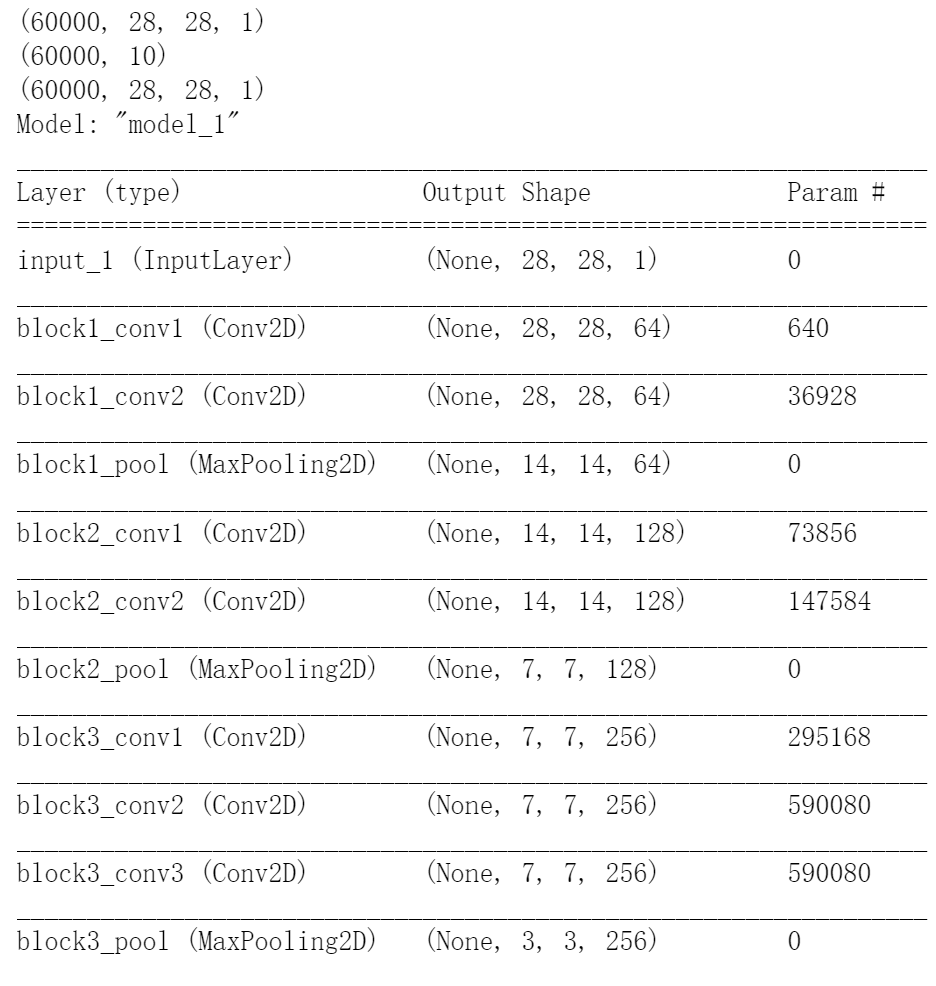
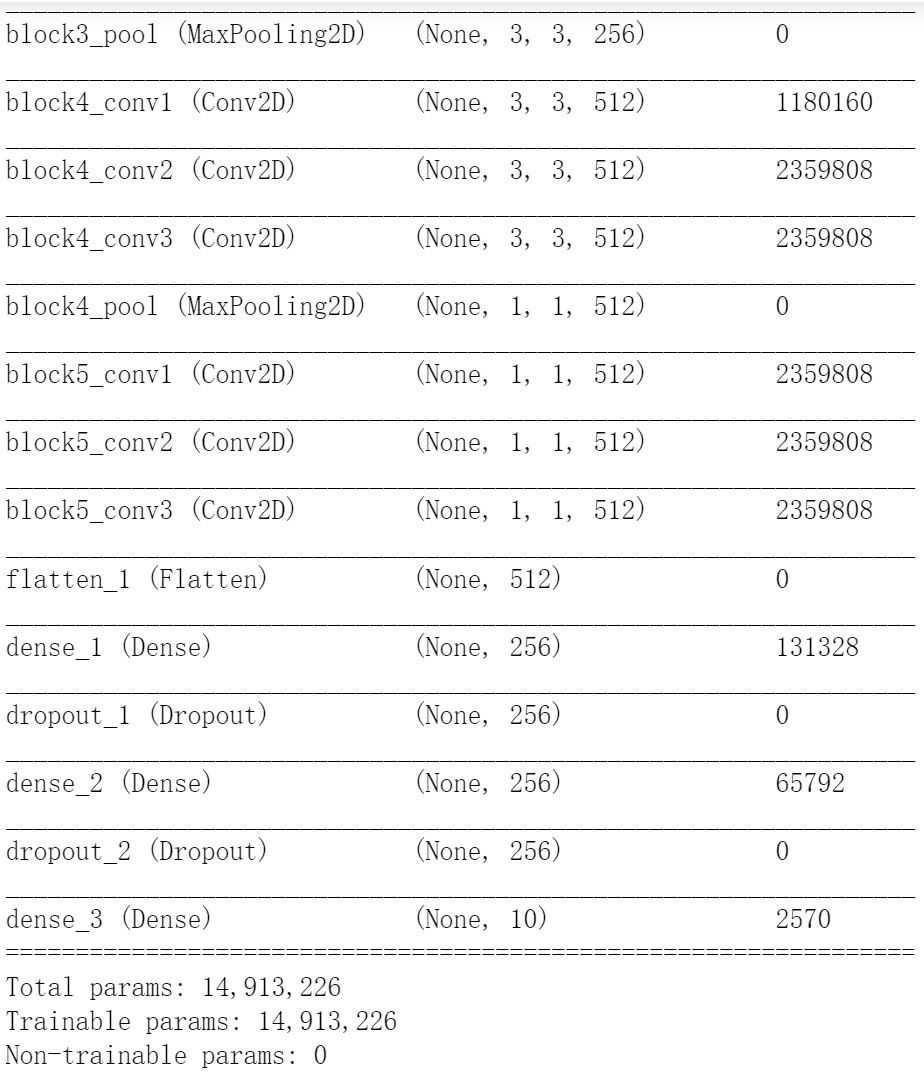
结果1:
pytorch:
import torch
import torch.nn as nn
import torch.nn.functional as F
class Net(nn.Module):
def __init__(self):
super(Net, self).__init__()
# 1 input image channel, 6 output channels, 5x5 square convolution
# kernel
self.conv1 = nn.Conv2d(1, 6, 5)
self.conv2 = nn.Conv2d(6, 16, 5)
# an affine operation: y = Wx + b
self.fc1 = nn.Linear(16 * 5 * 5, 120)
self.fc2 = nn.Linear(120, 84)
self.fc3 = nn.Linear(84, 10)
def forward(self, x):
# Max pooling over a (2, 2) window
x = F.max_pool2d(F.relu(self.conv1(x)), (2, 2))
# If the size is a square you can only specify a single number
x = F.max_pool2d(F.relu(self.conv2(x)), 2)
x = x.view(-1, self.num_flat_features(x))
x = F.relu(self.fc1(x))
x = F.relu(self.fc2(x))
x = self.fc3(x)
return x
def num_flat_features(self, x):
size = x.size()[1:] # all dimensions except the batch dimension
num_features = 1
for s in size:
num_features *= s
return num_features
net = Net()
print(net)
结果2:
Net(
(conv1): Conv2d(1, 6, kernel_size=(5, 5), stride=(1, 1))
(conv2): Conv2d(6, 16, kernel_size=(5, 5), stride=(1, 1))
(fc1): Linear(in_features=400, out_features=120, bias=True)
(fc2): Linear(in_features=120, out_features=84, bias=True)
(fc3): Linear(in_features=84, out_features=10, bias=True)
)

 浙公网安备 33010602011771号