
题目1-3总结
一.前言
java1-3题目集包含了大量的知识点,包括类的创建,正则表达式的使用,对象的创建,还有构造方法的使用(包含无参构造和有参构造),方法的调用和设计一个输出给定日期的下一天的方法,无参构造器和有参构造器都是一样的,只不过一个有参数一个没有而已。
一般创建类的时候,如果不写构造器,那么这个类有一个默认的无参构造器。如果你写了一个有参的构造器,那么那个无参的构造器就被覆盖了。
本次题目集的题量不算太大,但是完成这些题目的难度稍微有些大,花费了我大量的时间和精力,比如题目集3的第三题,难度偏大,需要使用正则来判断输入的求导式子是否合法。
二.设计与分析
1.Account
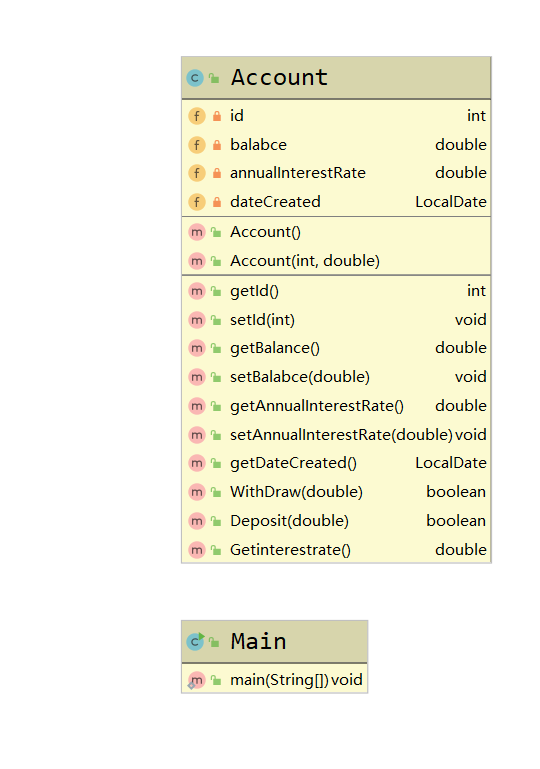
我在Account类里面创建了一个账户对象,写了一个无参构造方法和有参构造方法,在main类里面可以调用该方法new一个新的对象。Account里面包括了getId(),setId(),getbalance(),setbalance(),getAnnualInterestRate(),setAnnualInterestRate()方法。
这些方法能获取用户的信息和设置用户的信息,然后Accouunt类里面还有取钱方法和存钱方法WithDraw(Double)和Deposit(Double),该方法可以判断取钱金额和存钱金额是否合法,如果不合法则返回错误提示,合法则返回 true。
然后进行相应的余额扣除或余额增加操作。Account类里面的Getinterestrate( )方法可以计算月利率。然后在Main类里面调用Account里的方法,实现了所要求的功能。
2.定义日期类
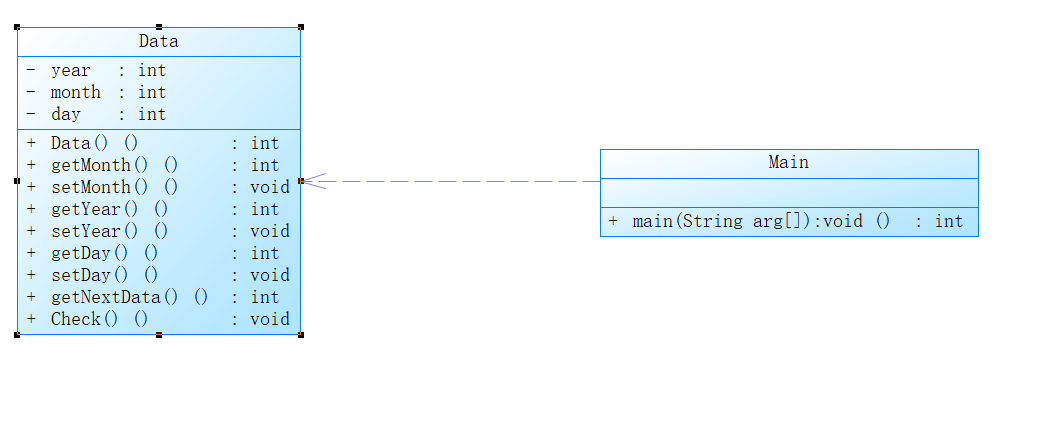
在Data类里面写了获取信息方法和设置信息方法,然后还要判断输入日期是否合法的方法Check(),还要一个获取下一天的方法getNextData(),在Main类里面调用Data类的方法,实现了获取输入日期下一天的功能。
三.心得
1.Account
(1)Account类
import java.time.LocalDate;
import java.util.Scanner;

public class Account {
    private int id;
    private double balabce;
    private double annualInterestRate;
    private LocalDate dateCreated;

    public Account(){
        id = 0;
        balabce = 0;
        annualInterestRate = 0;
        dateCreated = LocalDate.of(2020,7,31);
    }

    public Account(int id,double balabce){
        this.id=id;
        this.balabce=balabce;
    }
    public int getId(){
        return id;
    }
    public void setId(int id){
        this.id=id;
    }

    public double getBalance(){
        return balabce;
    }
    public void setBalabce(double balabce){
        this.balabce=balabce;
    }

    public double getAnnualInterestRate(){
        return annualInterestRate;
    }
    public void setAnnualInterestRate(double annualInterestRate){
        this.annualInterestRate=annualInterestRate;
    }

    public LocalDate getDateCreated()
    {
        return  dateCreated=LocalDate.now();

    }


    public boolean WithDraw(double getmoney){
        if(getmoney>this.balabce||getmoney<0){
            System.out.println("WithDraw Amount Wrong");
            return false;
        }
        else{
            return true;
        }
    }
    public boolean Deposit(double depositmoney){
        if(depositmoney>20000||depositmoney<0){
            System.out.println("Deposit Amount Wrong");
            return  false;
        }
        else{
            return true;
        }
    }

    public double Getinterestrate( ){
        double rate;
        rate=getBalance()*(this.annualInterestRate/1200);
        return rate;
    }

}
(2) Main类
import java.util.Scanner;

public class Main {
    public static void main(String[] args) {
        Scanner sc =new Scanner(System.in);
        double getmoney ;
        double depositmoney;
        double rate;
        int id=sc.nextInt();
        double balance=sc.nextDouble();
        Account account =new Account(id,balance);
        account.setAnnualInterestRate(sc.nextDouble());
        getmoney =sc.nextDouble();
        depositmoney=sc.nextDouble();


        if(account.WithDraw(getmoney)){
            account.setBalabce(account.getBalance()-getmoney);
        }

        if(account.Deposit(depositmoney)){
            account.setBalabce(account.getBalance()+depositmoney);
        }
        System.out.print(String.format("The Account'balance:%.2f\n",account.getBalance()));
        System.out.print(String.format("The Monthly interest:%.2f\n",account.Getinterestrate()));
        System.out.print("The Account'dateCreated:2020-07-31");

    }

}
2.输出给出日期下一天
import java.util.Scanner;

public class Nextdate {

    public static int days[] = new int[13];

    public static void main(String[] args) {

        days[1]=31;days[2]=28;days[3]=31;days[4]=30;
        days[5]=31;days[6]=30;days[7]=31;days[8]=31;
        days[9]=30;days[10]=31;days[11]=30;days[12]=31;

        Scanner input = new Scanner(System.in);
        while(input.hasNext()) {
            int year = input.nextInt();
            int month = input.nextInt();
            int day = input.nextInt();
            if( year < 1600 || year > 2100 || month < 1 || month > 12 || day < 1 || day > 31 ) {
                System.out.println("输入数据非法");
                continue;
            }
            if(judgeLeap(year)) { //闰年
                days[2] = 29;
            } else {
                days[2] = 28;
            }
            if(day > days[month]) {
                System.out.println("输入数据非法");
                continue;
            }
            day++;   //计算下一天
            if(day > days[month]) {
                day = 1;
                month++; //跳下一个月
                if(month > 12) {
                    month = 1;
                    year++; //跳下一个年
                }
            }
            System.out.println(year + " " + month + " " + day);
        }
    }

    public static boolean judgeLeap(int year) {
        if( (year%4 == 0 && year%100 != 0) || year%400 == 0 )
            return true;
        else
            return false;
    }
}
四.总结
通过这几次的题目集练习,我学会了类的创建,正则表达式的使用,对象的创建,还有构造方法的使用(包含无参构造和有参构造),方法的调用和设计一个输出给定日期的下一天的方法,能够独立解决一些不太复杂的实际问题,然后我的代码编写能力和代码编写速度需要进一步提高,正则表达式还不够熟练,需要进一步学习。

 浙公网安备 33010602011771号