
【SpringMVC】@RequestMapping注解
@RequestMapping注解的源码
@Target({ElementType.TYPE, ElementType.METHOD})
@Retention(RetentionPolicy.RUNTIME)
@Documented
@Mapping
public @interface RequestMapping {
    String name() default "";

    @AliasFor("path")
    String[] value() default {};

    @AliasFor("value")
    String[] path() default {};

    RequestMethod[] method() default {};

    String[] params() default {};

    String[] headers() default {};

    String[] consumes() default {};

    String[] produces() default {};
}
@RequestMapping注解的功能
@RequestMapping注解的作用就是将请求和处理请求的控制器方法关联起来,建立映射关系。
SpringMVC 接收到指定的请求,就会来找到在映射关系中对应的控制器方法来处理这个请求。
该注解可以标识在类和方法上。
@RequestMapping注解的位置
@RequestMapping标识一个类:设置映射请求的请求路径的初始信息
@RequestMapping标识一个方法:设置映射请求请求路径的具体信息
如果有请求路径的初始信息,则先设置请求路径的初始信息才能设置请求路径的具体信息。
比如,想从index的超链接跳转到welcome页面:
index.html
<!DOCTYPE html>
<html lang="en" xmlns:th="http://www.thymeleaf.org">
<head>
    <meta charset="UTF-8">
    <title>首页</title>
</head>
<body>
    <h1>首页</h1>
    <a th:href="@{/testRequestMapping}">访问welcome页面 </a>
</body>
</html>
index的超链接跳转的路径是/testRequestMapping
welcome.html
<!DOCTYPE html>
<html lang="en">
<head>
    <meta charset="UTF-8">
    <title>welcome</title>
</head>
<body>
<h1>Welcome to My Blog</h1>
</body>
</html>
在welcome的控制器的类和方法上都加上RequestMapping注解
@Controller
@RequestMapping("/hello")
public class RequestMappingController {

    @RequestMapping("/testRequestMapping")
    public String welcome(){
        return "welcome";
    }
}
结果就是跳转失败
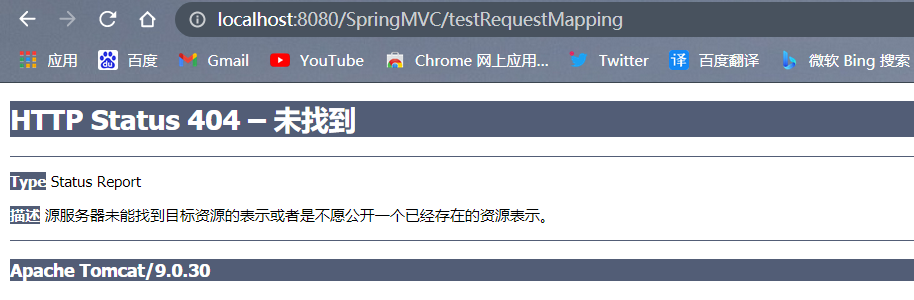
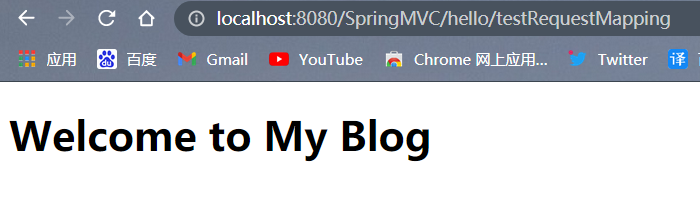
如果修改跳转路径为/hello/testRequestMapping,即可成功
<a th:href="@{/hello/testRequestMapping}">访问welcome页面 </a>
@RequestMapping注解的value属性
@RequestMapping注解的value属性通过请求的请求地址匹配请求映射
@RequestMapping注解的value属性是一个字符串类型的数组,表示该请求映射能够匹配多个请求地址所对应的请求
@RequestMapping注解的value属性必须设置,至少通过请求地址匹配请求映射
index.html
<!DOCTYPE html>
<html lang="en" xmlns:th="http://www.thymeleaf.org">
<head>
    <meta charset="UTF-8">
    <title>首页</title>
</head>
<body>
    <h1>首页</h1>
    <a th:href="@{/testRequestMapping}">通过/testRequestMapping访问welcome页面 </a>
    <br>
    <a th:href="@{/test}">通过/test访问welcome页面 </a>
</body>
</html>
@Controller
public class RequestMappingController {

    @RequestMapping(value = {"/testRequestMapping","/test"})
    public String welcome(){
        return "welcome";
    }
}
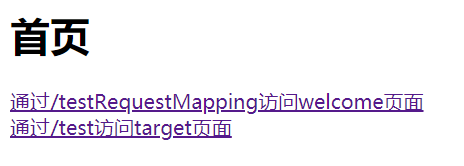
两个超连接都可访问成功
@RequestMapping注解的method属性
@RequestMapping注解的method属性通过请求的请求方式(get或post)匹配请求映射
@RequestMapping注解的method属性是一个RequestMethod类型的数组,表示该请求映射能够匹配多种请求方式的请求
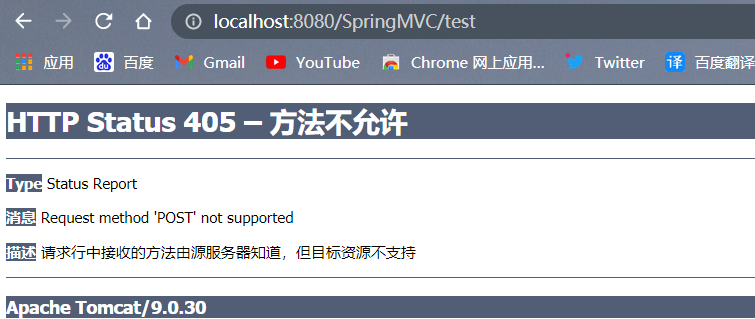
若当前请求的请求地址满足请求映射的value属性,但是请求方式不满足method属性,则浏览器报错405:Request method 'POST' not supported
index.html
<!DOCTYPE html>
<html lang="en" xmlns:th="http://www.thymeleaf.org">
<head>
    <meta charset="UTF-8">
    <title>首页</title>
</head>
<body>
    <form th:action="@{/test}" method="post">
        <input type="submit" value="以post方式提交">
    </form>
    <br>
    <form th:action="@{/test}" method="get">
        <input type="submit" value="以get方式提交">
    </form>
</body>
</html>
welcome.html的控制器
    @RequestMapping(value = "/test",
    method = {RequestMethod.GET})
    public String welcome(){
        return "welcome";
    }
如果不设置控制器的method,则index的post和get两种方式都可以访问welcome.html
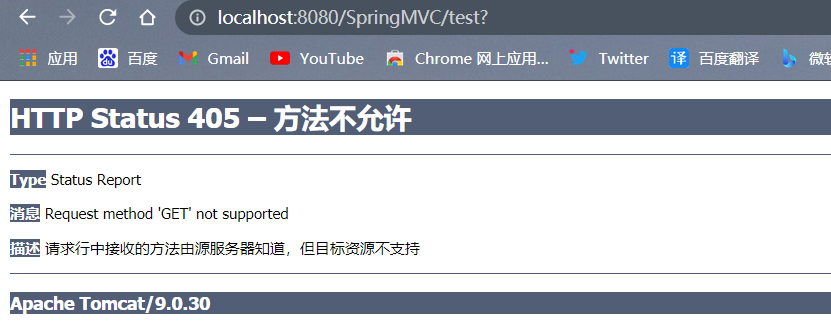
如果设置控制器的method为RequestMethod.GET,则只能用get方式访问
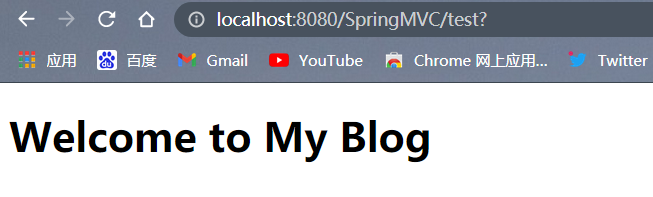
以post方式访问:
以get方式访问:
对于处理指定请求方式的控制器方法,SpringMVC中提供了@RequestMapping的派生注解
处理get请求的映射-->@GetMapping
处理post请求的映射-->@PostMapping
处理put请求的映射-->@PutMapping
处理delete请求的映射-->@DeleteMapping
免去了设置method的麻烦,只写映射路径即可
    @GetMapping("/test")
    public String welcome(){
        return "welcome";
    }
常用的请求方式有get,post,put,delete
但是目前浏览器只支持get和post,若在form表单提交时,为method设置了其他请求方式的字符串(put或delete),则按照默认的请求方式get处理
index.html
<!DOCTYPE html>
<html lang="en" xmlns:th="http://www.thymeleaf.org">
<head>
    <meta charset="UTF-8">
    <title>首页</title>
</head>
<body>
    <form th:action="@{/test}" method="put">
        <input type="submit" value="以put方式提交">
    </form>
    <br>
</body>
</html>
    @PostMapping("/test")
    public String welcome(){
        return "welcome";
    }
@RequestMapping注解的params属性
@RequestMapping注解的params属性通过请求的请求参数匹配请求映射
@RequestMapping注解的params属性是一个字符串类型的数组,可以通过四种表达式设置请求参数和请求映射的匹配关系
"param":要求请求映射所匹配的请求必须携带param请求参数
"!param":要求请求映射所匹配的请求必须不能携带param请求参数
"param=value":要求请求映射所匹配的请求必须携带param请求参数且param=value
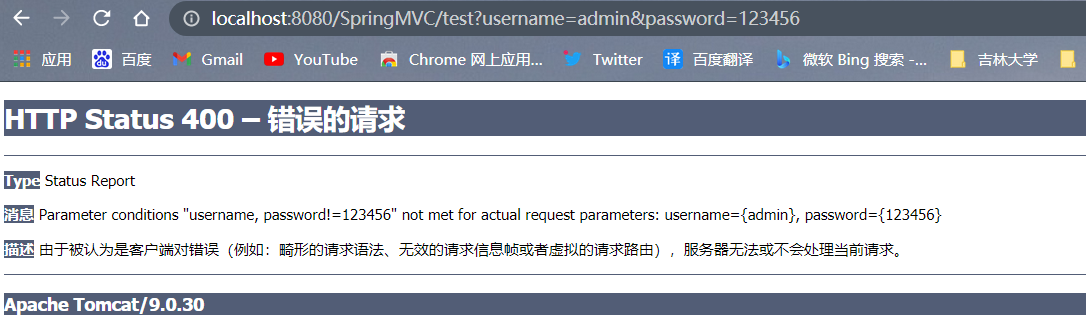
"param!=value":要求请求映射所匹配的请求必须携带param请求参数但是param!=value
<a th:href="@{/test(username='admin',password=123456)}">测试@RequestMapping的params属性-->/test</a><br>
@RequestMapping(
        value = {"/testRequestMapping", "/test"}
        ,method = {RequestMethod.GET, RequestMethod.POST}
        ,params = {"username","password!=123456"}
)
public String testRequestMapping(){
    return "welcome";
}
@RequestMapping注解的headers属性
@RequestMapping注解的headers属性通过请求的请求头信息匹配请求映射
@RequestMapping注解的headers属性是一个字符串类型的数组,可以通过四种表达式设置请求头信息和请求映射的匹配关系
"header":要求请求映射所匹配的请求必须携带header请求头信息
"!header":要求请求映射所匹配的请求必须不能携带header请求头信息
"header=value":要求请求映射所匹配的请求必须携带header请求头信息且header=value
"header!=value":要求请求映射所匹配的请求必须携带header请求头信息且header!=value
若当前请求满足@RequestMapping注解的value和method属性,但是不满足headers属性,此时页面显示404错误,即资源未找到
SpringMVC路径的模糊匹配
?:表示任意的单个字符
    @RequestMapping(value = "/a?a/test")
    public String welcome(){
        return "welcome";
    }
*:表示任意的0个或多个字符
    @RequestMapping(value = "/a*a/test")
    public String welcome(){
        return "welcome";
    }
/**:表示任意的一层或多层目录
    @RequestMapping(value = "/**/test")
    public String welcome(){
        return "welcome";
    }
- 注意:
-
在使用
/**时,只能使用/**/xxx的方式 -
?和*不可以用。/?来占位
-
SpringMVC支持路径中的占位符(重点)
原始方式:/deleteUser?id=1
rest方式:/deleteUser/1
SpringMVC路径中的占位符常用于RESTful风格中,当请求路径中将某些数据通过路径的方式传输到服务器中,就可以在相应的@RequestMapping注解的value属性中通过占位符{xxx}表示传输的数据,在通过@PathVariable注解,将占位符所表示的数据赋值给控制器方法的形参
<a th:href="@{/testRest/1/admin}">测试路径中的占位符-->/testRest</a><br>
@RequestMapping("/testRest/{id}/{username}")
public String testRest(@PathVariable("id") String id, @PathVariable("username") String username){
    System.out.println("id:"+id+",username:"+username);
    return "success";
}
//最终输出的内容为-->id:1,username:admin

 浙公网安备 33010602011771号