
异常处理
1 .阅读并运行下面程序,然后了解Java中实现异常处理的基础知识
import javax.swing.*;
class AboutException {
public static void main(String[] a)
{
int i=1, j=0, k;
//k=i/j;
try
{
k = i/j; // Causes division-by-zero exception
//throw new Exception("Hello.Exception!");
}
catch ( ArithmeticException e)
{
System.out.println("被0除. "+ e.getMessage());
}
catch (Exception e)
{
if (e instanceof ArithmeticException)
System.out.println("被0除");
else
{
System.out.println(e.getMessage());
}
}
finally
{
JOptionPane.showConfirmDialog(null,"OK");
}
}
}
运行截图:
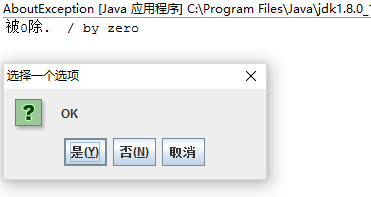
使用Java异常处理机制:
把可能会发生错误的代码放进try语句块中。
当程序检测到出现了一个错误时会抛出一个异常对象。异常处理代码会捕获并处理这个错误。
catch语句块中的代码用于处理错误。
当异常发生时,程序控制流程由try语句块跳转到catch语句块。
不管是否有异常发生,finally语句块中的语句始终保证被执行。
如果没有提供合适的异常处理代码,JVM将会结束掉整个应用程序。
2 .请尝试解释以下奇怪的现象:


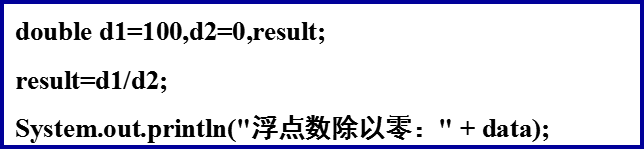

用javap去反汇编两个示例程序的.class文件。第一个程序生成idiv字节码指令,第二个程序生成ddiv字节码指令。
JVM在具体实现这两个指令时,采用了不同的处理策略,导致两段代码运行时得到不同的结果
3 .阅读以下代码,写出程序运行结果:
|
1
2
3
4
5
6
7
8
9
10
11
12
13
14
15
16
17
18
19
20
|
public class CatchWho { public static void main(String[] args) { try { try { throw new ArrayIndexOutOfBoundsException(); } catch(ArrayIndexOutOfBoundsException e) { System.out.println( "ArrayIndexOutOfBoundsException" + "/内层try-catch"); } throw new ArithmeticException(); } catch(ArithmeticException e) { System.out.println("发生ArithmeticException"); } catch(ArrayIndexOutOfBoundsException e) { System.out.println( "ArrayIndexOutOfBoundsException" + "/外层try-catch"); } }} |
运行截图:

4 .写出程序运行的结果:
|
1
2
3
4
5
6
7
8
9
10
11
12
13
14
15
16
17
18
19
|
public class CatchWho2 { public static void main(String[] args) { try { try { throw new ArrayIndexOutOfBoundsException(); } catch(ArithmeticException e) { System.out.println( "ArrayIndexOutOfBoundsException" + "/内层try-catch"); } throw new ArithmeticException(); } catch(ArithmeticException e) { System.out.println("发生ArithmeticException"); } catch(ArrayIndexOutOfBoundsException e) { System.out.println( "ArrayIndexOutOfBoundsException" + "/外层try-catch"); } }} |
运行截图:

5 .阅读示例,再运行它,观察其输出并进行总结。
|
1
2
3
4
5
6
7
8
9
10
11
12
13
14
15
16
17
18
19
20
21
22
23
24
25
26
27
28
29
30
31
32
33
34
35
36
37
38
39
40
41
42
|
public class EmbededFinally { public static void main(String args[]) { int result; try { System.out.println("in Level 1"); try { System.out.println("in Level 2"); // result=100/0; //Level 2 try { System.out.println("in Level 3"); result=100/0; //Level 3 } catch (Exception e) { System.out.println("Level 3:" + e.getClass().toString()); } finally { System.out.println("In Level 3 finally"); } // result=100/0; //Level 2 } catch (Exception e) { System.out.println("Level 2:" + e.getClass().toString()); } finally { System.out.println("In Level 2 finally"); } // result = 100 / 0; //level 1 } catch (Exception e) { System.out.println("Level 1:" + e.getClass().toString()); } finally { System.out.println("In Level 1 finally"); } }} |
运行截图:

总结:
try...catch语句为配对出现,程序会按着代码的顺序依次执行,当try中语句出现异常时,他会执行与当前try配对的catch语句。
6 .finally语句块一定会执行吗?请通过 示例程序回答问题
程序:
|
1
2
3
4
5
6
7
8
9
10
11
12
13
14
15
16
17
18
19
20
21
22
23
24
25
26
27
28
|
public class SystemExitAndFinally { public static void main(String[] args) { try{ System.out.println("in main"); throw new Exception("Exception is thrown in main"); //System.exit(0); } catch(Exception e) { System.out.println(e.getMessage()); System.exit(0); } finally { System.out.println("in finally"); } }} |
运行结果:

finally不会每次都执行,例如以上程序,当执行完throw new Exception("Exception is thrown in main");语句后便关闭了程序。
7 . 如何跟踪异常的传播路径?
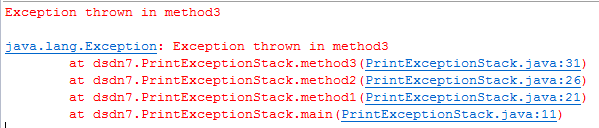
当程序中出现异常时,JVM会依据方法调用顺序依次查找有关的错误处理程序。
可使用printStackTrace 和 getMessage方法了解异常发生的情况:
printStackTrace:打印方法调用堆栈。
每个Throwable类的对象都有一个getMessage方法,它返回一个字串,这个字串是在Exception构造函数中传入的,通常让这一字串包含特定异常的相关信息。
示例程序:
|
1
2
3
4
5
6
7
8
9
10
11
12
13
14
15
16
17
18
19
20
21
22
23
24
25
26
27
28
29
30
|
//UsingExceptions.java//Demonstrating the getMessage and printStackTrace//methods inherited into all exception classes.public class PrintExceptionStack {public static void main( String args[] ){ try { method1(); } catch ( Exception e ) { System.err.println( e.getMessage() + "\n" ); e.printStackTrace(); }}public static void method1() throws Exception{ method2();}public static void method2() throws Exception{ method3();}public static void method3() throws Exception{ throw new Exception( "Exception thrown in method3" );}} |
截图:
8 .以下代码完全符合Java语法规范,但是为什么它们不能通过编译:
|
1
2
3
4
5
6
|
public class TestThrows { public static void main(String[] args) { FileInputStream fis = new FileInputStream("a.txt"); } } |
throws语句表明某方法中可能出现某种(或多种)异常,但它自己不能处理这些异常,而需要由调用者来处理。 当一个方法包含throws子句时,需要在调用此方法的代码中使用try/catch/finally进行捕获,或者是重新对其进行声明,否则编译时报错。
9 .编写一个程序,此程序在运行时要求用户输入一个 整数,代表某门课的考试成绩,程序接着给出“不及格”、“及格”、“中”、“良”、“优”的结论。
|
1
2
3
4
5
6
7
8
9
10
11
12
13
14
15
16
17
18
19
20
21
22
23
24
25
26
27
28
29
30
31
32
|
import java.util.Scanner;public class Test{ public static void main(String[] args) { try { System.out.println("请输入成绩"); Scanner in=new Scanner(System.in); double a=in.nextDouble(); if(a<60&&a>=0) System.out.println("不及格"); else if(a<70) System.out.println("及格"); else if(a<80) System.out.println("中"); else if(a<90) System.out.println("良"); else if(a>=90&&a<=100) System.out.println("优"); else System.out.println("成绩无效"); } catch(Exception e) { System.out.println("成绩无效"); } }} |


 浙公网安备 33010602011771号