
CMU15-445 POJECT#1-buffer pool
前段时间学习了CMU15-445 2021fall的DBMS课程,最近春招将近,作为复习,将四个project的实验重新梳理一下。
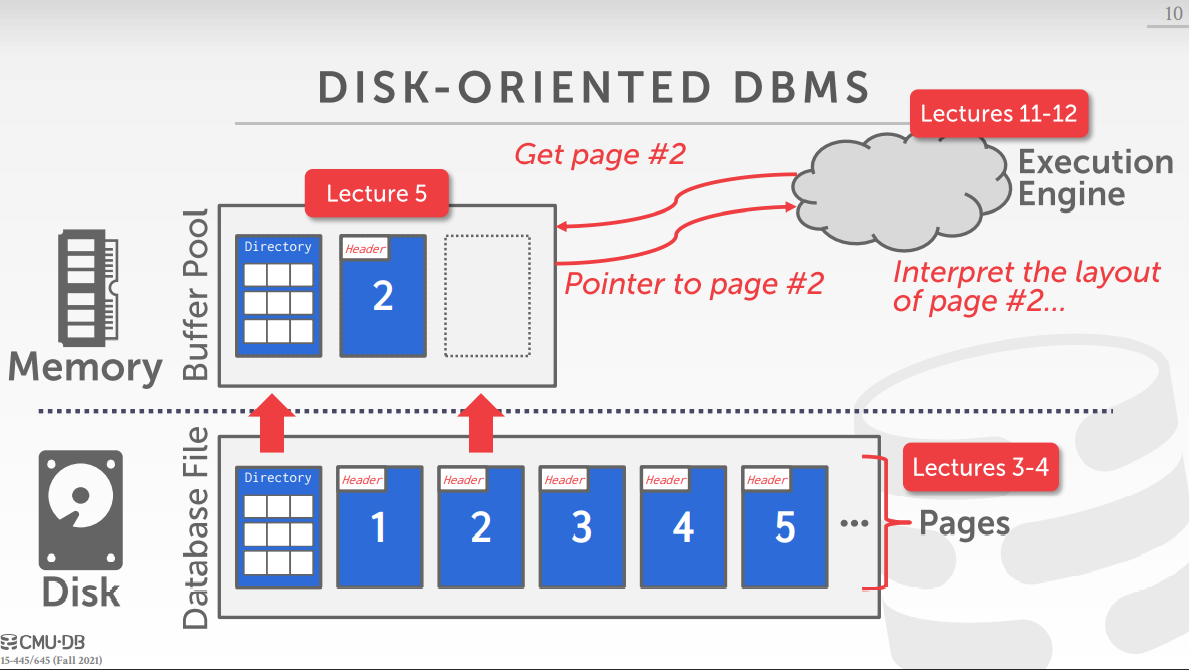
- 上图中的buffer pool部分即为本project的主要内容。
buffer pool可以用memory mapping (mmap)将文件中的内容存储在程序的地址空间以供使用。
The DBMS can use memory mapping (mmap) to store the contents of a file into the address space of a program.
- 而本实验中主要是完成buffer pool manager,即对缓存池空间的管理,包括获取磁盘页放入缓存池中、删除缓存页等
1. lru replacer (LRU 页面置换器)
LRU是Least Recently Used的缩写,即最近最少使用页面置换算法,是为虚拟页式存储管理服务的,是根据页面调入内存后的使用情况进行决策了。由于无法预测各页面将来的使用情况,只能利用“最近的过去”作为“最近的将来”的近似,因此,LRU算法就是将最近最久未使用的页面予以淘汰。
提供的接口有:
Vitim: 顾名思义,选出受害者,即通过LRU算法选出一个页面(要被淘汰的),如果无页可换,返回false;
Pin:意味着被pin的页正在cpu使用中,不能被LRU算法选中;
Unpin: 页不再被cpu使用,可以被LRU算法选中;
Size: 返回当前位于缓存中页面数;
实现细节:
- 使用链表记录所有位于缓存中的页,并通过FIFO的方式存取数据,然后对于被pin过的页面,会被重新放至队列尾部,这样就可以做到每次置换出的都是Least Recently Used的页面。
- 当每次某一页被pin时,由于要做到从页号到缓存页帧号的映射,如果全部遍历效率过低,所以通过map建立映射:
unordered_map<frame_id_t, std::list<frame_id_t>::iterator> iterator_table_
2. BUFFER POOL MANAGER INSTANCE
这一部分是本实验的主体部分,用到的数据结构有:
1.std::unordered_map<page_id_t, frame_id_t> page_table_:建立页号到页框映射,与lru replacer中使用到的页表不同的是,lru中页表只记录未被使用且存在于缓存中的页(有部分页可能正在被cpu使用),即可被替换的页,而这里的页表会记录所有位于缓存中的页;
2. std::list<frame_id_t> free_list_:空闲列表,记录了所有未存储磁盘数据的缓存页;
3. Page *pages_:Array of buffer pool pages.
4. Replacer *replacer_:上一节所实现的置换器;
5. LogManager *log_manager_: 磁盘管理器,用于取出磁盘中对应的页;
6. std::mutex latch_:互斥锁。
主要实现的接口有:
FetchPgImp(page_id):外界想通过bpm获取page_id对应页面时,通过这个接口进行,如果page_id已经在缓存中,直接返回该页面指针。如果不在缓存中,则首先需要判断是否有空闲空间(通过free_list_),如果有就从磁盘取出页放入缓存中。否则需要通过lru replacer替换一页出去,替换时需要判断该页是否为脏页,如果为脏页,需要将数据写回磁盘。之后将新页写入该页框处。
UnpinPgImp(page_id, is_dirty):意味着使用该页的程序减一(某cpu不使用该页了),缓存中每一页都有pin_count来记录当前使用该页面的程序数,如果pin_count为0,意味着该页面可以被置换出去了。
FlushPgImp(page_id): 将缓存中某一页面写回入磁盘中,并重置dirty字段。
NewPgImp(page_id): 新建一页(新创建),获取一个未使用过的页号。如果缓存中已经有空闲页框,则将页面放在此处即可,否则需要置换出去一页再将该页框作为新页在缓存中的位置。
DeletePgImp(page_id): 将一页从缓存中删除(以及磁盘上的数据),如果pin_count不为0,即当前该页还在被其他程序使用中,则无法被删除。
FlushAllPagesImpl(): 将缓存中的所有数据写回磁盘中。
3. PARALLEL BUFFER POOL MANAGER
其实之一部分内容不多,主要封装了上一步实现的bmp,使得系统可以同时存在多个bmp。主要值得注意的是,在新建页的时候,页号的分配。
对于bmps[i],他的页号page_id应该满足:page_id %n == i(n为系统的bmp个数)。
另外,由于每个bmp内部的操作是互相不能干扰的,且需要具有原子性,所以每个操作中都是用互斥锁以确保操作是原子的。
为了方便,我在这里使用的是std::lock_guard<std::mutex> l_g(mtx_);(std::mutex mtx_;)
以前对于C++并发编程和C++11并发相关内容没怎么了解过,这次也乘机学习一波。
To go with the various mutex types, the C++ Standard defines a triplet of class templates for objects that hold a lock. These are:
std::lock_guard<>,
std::unique_lock<>and
std::shared_lock<>.
For basic operations, they all acquire the lock in the constructor, and release it in the destructor, though they can be used in more complex ways if desired.
std::lock_guard<>is the simplest type, and just holds a lock across a critical section in a single block:
std::mutex m;
void f(){
    std::lock_guard<std::mutex> guard(m);
    // do stuff
}
std::unique_lock<>is similar, except it can be returned from a function without releasing the lock, and can have the lock released before the destructor:
std::mutex m;
std::unique_lock<std::mutex> f(){
    std::unique_lock<std::mutex> guard(m);
    // do stuff
    return std::move(guard);
}
void g(){
    std::unique_lock<std::mutex> guard(f());
    // do more stuff
    guard.unlock();
}
See my previous blog post for more about
std::unique_lock<>andstd::lock_guard<>.
std::shared_lock<>is almost identical tostd::unique_lock<>except that it acquires a shared lock on the mutex. If you are using astd::shared_timed_mutexthen you can usestd::lock_guard<std::shared_timed_mutex>orstd::unique_lock<std::shared_timed_mutex>for the exclusive lock, andstd::shared_lock<std::shared_timed_mutex>for the shared lock.
std::shared_timed_mutex m;
void reader(){
    std::shared_lock<std::shared_timed_mutex> guard(m);
    // do read-only stuff
}
void writer(){
    std::lock_guard<std::shared_timed_mutex> guard(m);
    // update shared data
}
嘿,既然都到这儿了,顺便回忆(新学)一波智能指针。(放下一篇吧)

 浙公网安备 33010602011771号