
ciga·rette
A cigarette is a narrow cylinder containing psychoactive [having an effect the mind] material, typically tobacco, that is rolled into thin paper for smoking. Most cigarettes contain a "reconstituted tobacco" product known as "sheet", which consists of "recycled (tobacco) stems, stalks, scraps, collected dust, and floor sweepings", to which are added glue, chemicals and fillers; the product is then sprayed with nicotine that was extracted from the tobacco scraps, and shaped into curls. The cigarette is ignited at one end, causing it to smolder; the resulting smoke is orally inhaled via the opposite end. A cigarette filter or filter tip is a component of a cigarette. Most modern cigarettes are filtered, although this does not make them safer. The common name for the remains of a cigarette after smoking is a cigarette butt. The butt is typically about 30% of the cigarette's original length. It is also called a fag-end or dog-end.
The earliest forms of cigarettes were similar to their predecessor, the cigar. Cigarettes appear to have had antecedents [precursor] in Mexico and Central America around the 9th century in the form of reeds and smoking tubes. The Maya, and later the Aztecs, smoked tobacco and other psychoactive drugs in religious rituals and frequently depicted priests and deities smoking on pottery and temple engravings. “古罗马亡于铅”,印第安亡于烟?
The term cigarette, as commonly used, refers to a tobacco cigarette but is sometimes used to refer to other substances, such as a cannabis [大麻 =marijuana] cigarette. A cigarette is distinguished from a cigar by its usually smaller size, use of processed leaf, and paper wrapping, which is typically white. Cigar wrappers are typically composed of tobacco leaf or paper dipped in tobacco extract.
The North American, Central American, and South American cigarette used various plant wrappers; when it was brought back to Spain, maize wrappers were introduced, and by the 17th century, fine paper. By 1830, the cigarette had crossed into France, where it received the name cigarette; and in 1845, the French state tobacco monopoly began manufacturing them. The French word was adopted by English in the 1840s. Some American reformers promoted the spelling cigaret, but this was never widespread and is now largely abandoned.
Cigarette manufacturers have described cigarettes as a drug administration system for the delivery of nicotine in acceptable and attractive form. Cigarettes are addictive (because of nicotine) and cause cancer, chronic obstructive pulmonary [relating to the lungs] disease, heart disease, and other health problems. Cigarette smoking causes disease and harms nearly every organ of the body. Nicotine is also highly addictive. About half of cigarette smokers die of tobacco-related disease and lose on average 14 years of life. Every year, tobacco cigarettes kill more than 8 million people worldwide; with 1.2 million of those being non-smokers dying as the result of exposure to second-hand smoke. Second-hand smoke from cigarettes causes many of the same health problems as smoking, including cancer, which has led to legislation and policy that has prohibited smoking in many workplaces and public areas. Cigarette smoke contains over 7,000 chemical compounds, including arsenic [砒霜; 信石], formaldehyde [甲醛], hydrogen cyanide [氰化物], lead, nicotine, carbon monoxide, acrolein [丙烯醛], and other poisonous substances. Over 70 of these are carcinogenic [likely to cause cancer]. Cigarette use by pregnant women has also been shown to cause birth defects, including low birth weight, fetal abnormalities, and premature birth.
Formalin [福尔马林] is the solution of formaldehyde in water [甲醛水溶液]. Forensics is the use of scientific techniques to solve crimes.
By the late 19th century cigarettes were known as coffins nails but the link between lung cancer and smoking wasn't established until the 20th century. The widespread smoking of cigarettes in the Western world is largely a 20th-century phenomenon. In 1975, the U.S. government stopped putting cigarettes in military rations. During the second half of the 20th century, the adverse health effects of tobacco smoking started to become widely known and text-only health warnings became common on cigarette packets.
Cigarettes are smoked by over 1 billion people, which is nearly 20% of the world's population in 2014. About 800 million of these smokers are men. While smoking rates have leveled off or declined in developed nations, especially among men, in developing nations tobacco consumption continues to rise. More than 80% of all smokers now live in countries with low or middle incomes, and 60% in just 10 countries, a list headed by China. Smokers are over half of adult males in Indonesia (57%, but mostly kretek, a local form of cigarette) and China (53% estimated), and nearly half in Bangladesh, though for women the figure is much lower. List of countries by cigarette consumption per capita
An electronic cigarette is a handheld battery-powered vaporizer that simulates smoking by providing some of the behavioral aspects of smoking, including the hand-to-mouth action of smoking, but without combusting tobacco. Using an e-cigarette is known as "vaping" and the user is referred to as a "vaper." Youth who use e-cigarettes are more likely to go on to smoke cigarettes. It is estimated their safety risk to users is similar to that of smokeless tobacco. Less serious adverse effects include abdominal pain, headache, blurry vision, throat and mouth irritation, vomiting, nausea, and coughing. Nicotine itself is associated with some health harms.
六级/考研单词: tobacco, cylinder, recycle, stem, stalk, scrap, spray, extract, curl, ignite, oral, filter, component, butt, successor, secular, ritual, seldom, depict, priest, pottery, temple, wrap, compose, dip, monopoly, manufacture, reform, abandon, administer, chronic, heal, million, legislate, prohibit, compound, hydrogen, carbon, poison, pregnant, defect, premature, nail, lung, militant, ration, adverse, parcel, billion, electron, simulate, irritate, cough
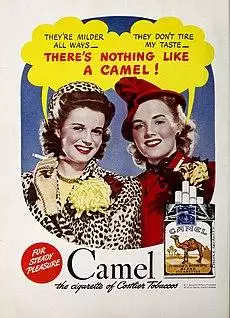 A 1942 ad encourages women to smoke.

 浙公网安备 33010602011771号