
IBM Personal Computer
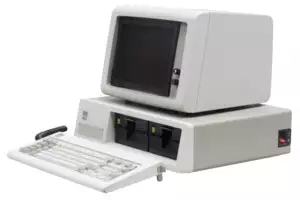
The IBM Personal Computer (model 5150, commonly known as the IBM PC) is the first computer released in the IBM PC model line and the basis for the IBM PC compatible de facto standard. Released on August 12, 1981, it was created by a team of engineers and designers directed by Don Estridge in Boca Raton, Florida.
The machine was based on open architecture and a substantial market of third-party peripherals, expansion cards and software grew up rapidly to support it.
The PC had a substantial influence on the personal computer market. The specifications of the IBM PC became one of the most popular computer design standards in the world, and the only significant competition it faced from a non-compatible platform throughout the 1980s was from the Apple Macintosh product line. The majority of modern personal computers are distant descendants of the IBM PC.
- Release date: August 12, 1981
- Discontinued: April 2, 1987
- Introductory price: Starting at US$1,565 (equivalent to $4,401 in 2019)
- CPU: Intel 8088 @ 4.77 MHz
- Memory: 16 kB – 640 kB
- Video: IBM Monochrome Display Adapter or IBM Color Graphics Adapter
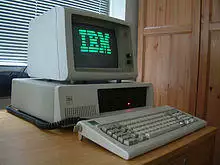
- Display: IBM 5151 monochrome display, IBM 5153 color display, or Composite-input television
- Input: IBM Model F 83-key keyboard with five-pin connector
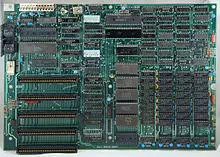
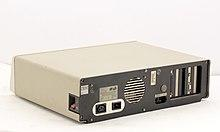
- Expansion: Five 62-pin expansion slots attached to 8-bit CPU I/O bus
Prior to the 1980s, IBM had largely been known as a provider of business computer systems. As the 1980s opened, their market share in the growing minicomputer market failed to keep up with competitors, while other manufacturers were beginning to see impressive profits in the microcomputer space. The microcomputer market was large enough for IBM's attention, with $15000 million in sales by 1979 and projected annual growth of more than 40% during the early 1980s.
IBM had previously produced microcomputers, such as 1975's IBM 5100, but targeted them towards businesses; the 5100 had a price tag as high as $20,000. Their entry into the home computer market needed to be competitively priced.
The IBM PC debuted on August 12, 1981 after a twelve-month development. Pricing started at $1,565 for a configuration with 16K RAM, Color Graphics Adapter, and no disk drives. The price was designed to compete with comparable machines in the market. For comparison, the Datamaster, announced two weeks earlier as IBM's least expensive computer, cost $10,000.
Sales exceeded IBM's expectations by as much as 800%, shipping 40,000 PCs a month at one point. The company estimated that 50 to 70% of PCs sold in retail stores went to the home. In 1983 they sold more than 750,000 machines, while DEC, a competitor whose success among others had spurred them to enter the market, had sold only 69,000 machines in that period.
By 1984, IBM's revenue from the PC market was $4 billion, more than twice that of Apple. A 1983 study of corporate customers found that two thirds of large customers standardizing on one computer chose the PC, compared to 9% for Apple. A 1985 Fortune survey found that 56% of American companies with personal computers used PCs, compared to Apple's 16%.
六级/考研单词: compute, compatible, hardware, rapid, descend, equivalent, slot, manufacture, million, tag, configuration, expense, wholesale, spur, billion, tertiary

 浙公网安备 33010602011771号