


ally, alliance
结合,结盟: v. ally; n. alliance
ally做名词: 同盟者, 同盟国
Allied powers are or nations that have joined in an alliance.
The Allies of World War I or Entente [相互谅解] Powers were the coalition [同盟] of countries led by France, Britain, Russia, Italy and Japan against the Central Powers of Germany, Austria-Hungary, the Ottoman Empire, and Bulgaria during the First World War (1914–1918). The treaties signed at the Paris Peace Conference, 1919 recognized the United Kingdom, France, Italy, Japan and the United States as the 'principal Allied powers'.
The Allies of World War II were the countries that together opposed the Axis powers during the Second World War (1939–1945). The Allies promoted the alliance as a means to defeat German, Japanese and Italian aggression [侵略].
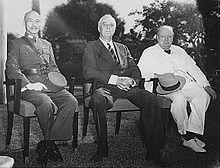
The Allied leaders of the Asian and Pacific Theater [a large area where a war is being fought]: Generalissimo [commander of combined military and naval and air forces, or of combined armies ] Chiang Kai-shek, Franklin D. Roosevelt, and Winston Churchill meeting at the Cairo Conference in 1943:
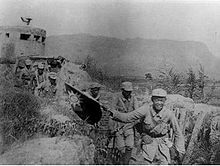
Victorious Chinese Communist soldiers holding the flag of the Republic of China during the Hundred Regiments Offensive.
China had been at war with Japan since July 1937. It declared war on Japan, Germany and Italy and joined the Allies in December 1941 after the attacks on Pearl Harbor.
[百度百科] 1937年7月7日,日本发动全面侵华战争,中国展开了全面性抗战,中日之间已完全处于战争状态,但国民政府仅发表了《自卫抗战声明书》,并未正式对日宣战。1941年12月7日,日本突袭珍珠港,太平洋战争爆发。1941年12月9日中华民国政府对日宣战布告。
1937年7月16日,国民政府曾召开会议,讨论对日宣战的问题。由于中国军需品不能自给自足,有相当大一部分需要外国输送,如果宣战,日本政府可以以交战国的身份,通过各国禁止一切军需物品和军需原料输入中国。再者,日本海军远远强大与中国海军,握有制海权,中国没有能力保护从海上输入的援华物资。另外,中国在日本的侨民极多,中日一旦断交,中国在日侨民就会被驱逐或拘捕,中国没有能力将侨民接回国内,侨民便得不到应有的保护。由于以上这些原因,会议作出决定:对日不宣战,不断交。
与此同时,日本政府也曾召开会议,研究和讨论对中国宣战和断交等问题。他们权衡利害得失,觉得这个问题极端错综复杂,会议研究结果事先把这个问题搁置起来,伺机而行。日本占领南京后不久,便发表了“今后不以国民党政府为对手”的近卫声明,不承认蒋介石的国民党政府代表中国。之后,日本推出汪精卫傀儡政权,视作中国政府,并与之建立了“外交关系”。所以,日本政府发动了太平洋战争后,向英、美宣战时,也没有对中国宣战。

 浙公网安备 33010602011771号