

1,c++的编程模板
 1 #include <iostream>
 2
 3 using namespace std;
 4
 5 int main(int argc, char *argv[])
 6 {
 7    cout << "1,hello world" << endl;
 8    cout << "2,hello,world" << '\n';
 9
10    return 0;
11 }
2,c++输出标志-->cout
 1 #include <iostream>
 2
 3 using namespace std;
 4
 5 int main(int argc, char *argv[])
 6 {
 7    cout << "hello" << ' ' << "world" << endl;
 8
 9    return 0;
10 }
3,c++输入标志-->cin
 1 #include <iostream>  //输入输出流
 2
 3 using namespace std;
 4
 5 int main(int argc, char *argv[])
 6 {
 7    int a = 0;
 8    char b = '\0';
 9    float c = 0;
10    char buf[128] = {'\0'};
11
12    //数据给的先后:a -> b -> c -> buf
13    cin >> a >> b >> c >> buf;
14    cout << a << ' ' << b << ' ' << c << ' ' << buf << endl;
15
16    return 0;
17 }
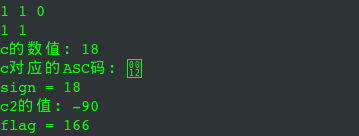
4,c++布尔型-->bool
 1 #include <iostream>  //输入输出流
 2 #include <string.h>  //string
 3
 4 using namespace std;
 5
 6 int main(int argc, char *argv[])
 7 {
 8    bool sign = true;  //数值上->1
 9    bool flag = false; //数值上->0
10    cout << sizeof(bool) << ' ' << sign << ' ' << flag << endl;  //1 1 0
11
12    sign = 18;
13    flag = -90;
14    cout << sign << ' ' << flag << ' ' << endl;  //1 1
15
16    char c = 18;
17    cout << "c的数值:" << (int)c << endl;   //18
18    cout << "c对应的ASC码:" << c << endl;
19    memcpy(&sign, &c, 1);
20    cout << "sign = " << sign << endl;  //sign = 18
21
22    //布尔型是非负数,数据存储是以补码的形式保存
23    char c2 = -90;
24 //  cout << "c2对应的ASC码:" << c2 << endl; //负数没有ASC码
25    cout << "c2的值:" << (int)c2 << endl;
26    memcpy(&flag, &c2, 1);
27    cout << "flag = " << flag << endl;  //166     -90的补码
28
29    return 0;
30 }
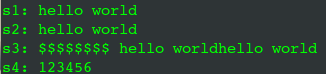
5,c++字符串的拷贝、拼接
 1 #include <iostream>  //输入输出流
 2 #include <string.h>
 3
 4 using namespace std;
 5
 6 int main(int argc, char *argv[])
 7 {
 8    string s1 = "hello world";
 9    cout << "s1: " << s1 << endl;
10
11    string s2;
12    s2 = s1;   //拷贝
13    cout << "s2: " << s2 << endl;
14
15    string s3 = "$$$$$$$$";
16    s3 = s3 + ' ' + s2 + s1;  //拼接
17    cout << "s3: " << s3 << endl;
18
19    //字符串拼接前两个必须有string对象
20    string s4 = "";
21 /*错误示例
22    s4 = "123" + "456";
23    cout << "s4: " << s4 << endl;
24 */
25    s4 = s4 + "123" + "456";
26    cout << "s4: " << s4 << endl;
27
28    return 0;
29 }
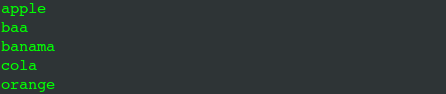
6,c++冒泡排序法实现字符串比较
 1 #include <iostream>  //输入输出流
 2 #include <string.h>
 3
 4 using namespace std;
 5
 6 int main(int argc, char *argv[])
 7 {
 8    string s1 = "hello world";
 9    string s2 = "1234";
10 //   if(s1 > s2)
11 //   if(s1 >= s2)
12 //   if(s1 < s2)
13 //   if(s1 <= s2)
14 //   if(s1 == s2)
15 //   {}
16
17    string str[5] = {"apple","orange","banama","baa","cola"};
18    //冒泡排序
19    int i = 0,j = 0;
20    string tmp;
21    for(;i<5-1;i++)
22    {
23       for(j=0; j<5-i-1; j++)
24       {
25          if(str[j] > str[j+1])
26          {
27             tmp = str[j];
28             str[j] = str[j+1];
29             str[j+1] = tmp;
30          }
31       }
32    }
33    for(i=0; i<5; i++)
34    {
35       cout << str[i] << endl;
36    }
37
38    return 0;
39 }
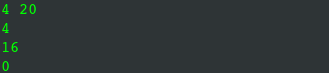
7,c++字节数sizeof
 1 #include <iostream>  //输入输出流
 2 #include <string.h>
 3
 4 using namespace std;
 5 /*
 6 typedef struct Test
 7 {
 8    char *data;
 9 }Test;
10 */
11 int main(int argc, char *argv[])
12 {
13    //1
14    string str[5] = {"apple","orange","banama","baa","cola"};
15    cout << sizeof(string) << ' ' << sizeof(str) << endl;  //4 20
16
17    //2
18    string s = "12345678asdfghjk";
19    cout << sizeof(s) << endl;     //4
20    cout << s.length() << endl;   //获得有效数据的大小   16
21    s.clear();     //清除数据,但是保留数据存储空间
22    cout << s.length() << endl;   //0
23 /*
24    //3
25    Test t;    //sizeof(t)
26    t->data = (char*)malloc(1024);  //sizeof(t)
27    char *p = NULL;  //sizeof(p)
28    char *p = (char *)malloc(1024); //sizeof(p)
29    sizeof(*p) = sizeof(char)   -->1
30 */
31    return 0;
32 }
8,c++初始化与赋值
 1 #include <iostream>  //输入输出流
 2 #include <string.h>
 3
 4 using namespace std;
 5
 6 int main(int argc, char *argv[])
 7 {
 8    int a(90);  //c++初始化
 9    int b = 90;  //c初始化
10
11 //   a(998);   //错误,二次初始化
12    a = 89;   //c++赋值
13    b = 889;
14    cout << "a = " << a << "b = " << b << endl;
15
16    int c(b);  //初始化
17    cout << "c = " << c << endl;
18
19    string str("hello world");   //c++初始化
20    cout << "str = " << str << endl;
21
22    return 0;
23 }

9,c++之for循环
 1 #include <iostream>  //输入输出流
 2 #include <string.h>
 3
 4 using namespace std;
 5
 6 int main(int argc, char *argv[])
 7 {
 8    int a[6] = {1,2,3,4,5,6};
 9    int i = 0;
10    for(int i=0; i<6; i++)
11    {
12       cout << a[i] << ' ';
13    }
14    cout << endl;
15
16    for(int i=0; i<6; i++)
17    {
18       a[i] += 10;
19       cout << a[i] << ' ';
20    }
21    cout << endl;   //换行
22
23    return 0;
24 }

10,c++之结构体
 1 #include <iostream>  //输入输出流
 2 #include <string.h>
 3
 4 using namespace std;
 5
 6 struct STU
 7 {
 8    int iId;
 9    string strName;
10    float fScore;
11
12    void info()   //c++区别于c,c++可在结构体中定义函数
13    {
14       cout << iId << ' ' << strName << ' ' << fScore << endl;
15    }
16 };
17
18 int main(int argc, char *argv[])
19 {
20 //   struct STU s = {1001,"aaa",89};   //c语言用法
21    STU s = {1001,"aaa",99};    //c++用法
22    cout << s.iId << ' ' << s.strName << ' ' << s.fScore << endl;
23
24    STU s2 = {1002,"rose",100};
25 //   info();   //错误用法
26    s2.info();
27
28    cout << sizeof(STU) << ' ' << sizeof(s2) << endl; //32位机
29
30    return 0;
31 }

11,c++之构造函数
 1 #include <iostream>  //输入输出流
 2 #include <string.h>
 3
 4 using namespace std;
 5
 6 struct STU
 7 {
 8    int iId;
 9    string strName;
10    float fScore;
11
12    //构造函数:在对象产生的时候自动调用
13    STU(int id,string name,float score)  //函数名和结构体名一致
14    {
15       iId = id;
16       strName = name;
17       fScore = score;
18       cout << "STU be called" << endl;
19    }
20
21    void info()   //c++区别于c,c++可在结构体中定义函数
22    {
23       cout << iId << ' ' << strName << ' ' << fScore << endl;
24    }
25 };
26
27 int main(int argc, char *argv[])
28 {
29    //自动调用构造函数对成员赋值
30    STU s(1001,"jack",89);
31    s.info();
32
33    return 0;
34 }

12,c++之动态申请空间
 1 #include <iostream>  //输入输出流
 2 #include <string.h>
 3
 4 using namespace std;
 5
 6 int main(int argc, char *argv[])
 7 {
 8 //   int *p = (int *)malloc(sizeof(int));  //c语言申请动态空间 free(p);
 9 //   int *p = new int;    //c++动态申请空间  delete p;
10
11    int *p = new int(1998);   // --> delete p;
12    cout << *p << endl;    //1998
13    delete p;
14    cout << *p << endl;
15
16 //   int *p2 = (int *)malloc(sizeof(int)*10);  //c语言用法   free(p2);
17    int *p2 = new int[10];   //c++用法(存放10个整数的空间)  delete []p2;
18    int *p3 = new int[1];   // --> delete []p3;
19
20    return 0;
21 }

13,c++之结构体指针
 1 #include <iostream>  //输入输出流
 2 #include <string.h>
 3
 4 using namespace std;
 5
 6 struct STU
 7 {
 8    int iId;
 9    string strName;
10    float fScore;
11
12    //构造函数:在对象产生的时候自动调用
13    STU(int id,string name,float score)  //函数名和结构体名一致
14    {
15       iId = id;
16       strName = name;
17       fScore = score;
18       cout << "STU be called" << endl;
19    }
20
21    void info()   //c++区别于c,c++可在结构体中定义函数
22    {
23       cout << iId <<' ' << strName << ' ' << fScore << endl;
24    }
25 };
26
27 int main(int argc, char *argv[])
28 {
29 //   STU *s = (STU *)malloc(sizeof(STU));
30    //产生对象的同时,调用构造函数对对象赋值
31    STU *s = new STU(1001,"jack",100);
32    s->info();
33
34    return 0;
35 }

14,c++之npc
 1 #include <iostream>  //输入输出流
 2 #include <string.h>
 3
 4 using namespace std;
 5
 6 struct NPC
 7 {
 8    string strName;
 9    int iBlood;
10    int iAttack;
11    string strSkill;
12
13    //构造函数:在对象产生的时候自动调用
14    NPC(string name,int blood,string skill,int attack)  //函数名和结构体名一致
15    {
16       strName = name;
17       iBlood = blood;
18       iAttack = attack;
19       strSkill = skill;
20    }
21
22    void info()   //c++区别于c,c++可在结构体中定义函数
23    {
24       cout << "人物:" << strName << " 血量:" << iBlood << " 技能:" << strSkill << " 攻击力:" << iAttack << endl;
25    }
26 };
27
28 int main(int argc, char *argv[])
29 {
30    NPC *npc[3] = {NULL};  //产生指针数组
31    string strName="";
32    int iBlood = 0;
33    string strSkill = "";
34    int iAttack = 0;
35
36    for(int i=0;i<3;i++)
37    {
38       cout << "请输入游戏任务的名字,血量值,技能,攻击值\n";
39       cin >> strName >> iBlood >> strSkill >> iAttack;
40       npc[i] = new NPC(strName,iBlood,strSkill,iAttack);
41    }
42    for(int i=0;i<3;i++)
43    {
44       npc[i]->info();
45    }
46
47    return 0;
48 }
15,c++之数组指针重命名
 1 #include <iostream>  //输入输出流
 2 #include <string.h>
 3 #include <stdlib.h>
 4
 5 using namespace std;
 6
 7 //数组指针重命名
 8 typedef int(*PP)[5];
 9
10 int main(int argc, char *argv[])
11 {
12    //int a[4][5]; --> (int[5]) a[4]  //a+1 --> 5*sizeof(int)
13    void *p = malloc(sizeof(int)*4*5);
14    int (*p2)[5] = (PP)p;
15
16    int data=0;
17    for(int i=0; i<4; i++)
18    {
19       for(int j=0; j<5; j++)
20       {
21          p2[i][j] = data;
22          data++;
23       }
24    }
25
26    for(int i=0; i<4; i++)
27    {
28       for(int j=0; j<5; j++)
29       {
30          cout << p2[i][j] << ' ';
31       }
32       cout << endl;
33    }
34
35    return 0;
36 }
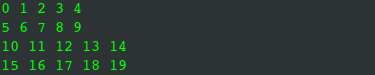
16,c++之数组动态申请空间
 1 #include <iostream>  //输入输出流
 2 #include <string.h>
 3 #include <stdlib.h>
 4
 5 using namespace std;
 6
 7
 8 int main(int argc, char *argv[])
 9 {
10    //int a[4][5];   //a+1 --> 5*sizeof(int)
11    //int(*p)[5] --> a
12
13    //int b[2][3][4];
14    //int (*p)[3][4]  --> b
15
16    int (*p)[5] = new int[4][5];
17
18    int data=0;
19    for(int i=0; i<4; i++)
20    {
21       for(int j=0; j<5; j++)
22       {
23          p[i][j] = data;
24          data++;
25       }
26    }
27    for(int i=0; i<4; i++)
28    {
29       for(int j=0; j<5; j++)
30       {
31          cout << p[i][j] << ' ';
32       }
33       cout << endl;
34    }
35
36    return 0;
37 }
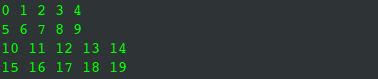
17,c++之多维数组动态申请空间
 1 #include <iostream>  //输入输出流
 2 #include <string.h>
 3 #include <stdlib.h>
 4
 5 using namespace std;
 6
 7 int main(int argc, char *argv[])
 8 {
 9    //int a[2][3][4][5];  // a+1 --> sizeof(int)*3*4*5;
10    //int[3][4][5] a[2];
11    //a --> int (*p)[3][4][5]
12    int (*p)[3][4][5] = new int[2][3][4][5];
13
14    return 0;
15 }

 浙公网安备 33010602011771号