
实验3 转移指令跳转原理及其简单应用编程
实验一
源码及截图
assume cs:code, ds:data

data segment
    x db 1, 9, 3
    len1 equ $ - x

    y dw 1, 9, 3
    len2 equ $ - y
data ends

code segment
start:
    mov ax, data
    mov ds, ax

    mov si, offset x
    mov cx, len1
    mov ah, 2
 s1:mov dl, [si]
    or dl, 30h
    int 21h

    mov dl, ' '
    int 21h

    inc si
    loop s1

    mov ah, 2
    mov dl, 0ah
    int 21h

    mov si, offset y
    mov cx, len2/2
    mov ah, 2
 s2:mov dx, [si]
    or dl, 30h
    int 21h

    mov dl, ' '
    int 21h

    add si, 2
    loop s2

    mov ah, 4ch
    int 21h
code ends
end start

问题 1
loop s1 跳转的位移量为 -14;
loop s2 跳转的位移量为 -16;
执行 loop 后,CPU 只是简单地将偏移量加到 IP 上。
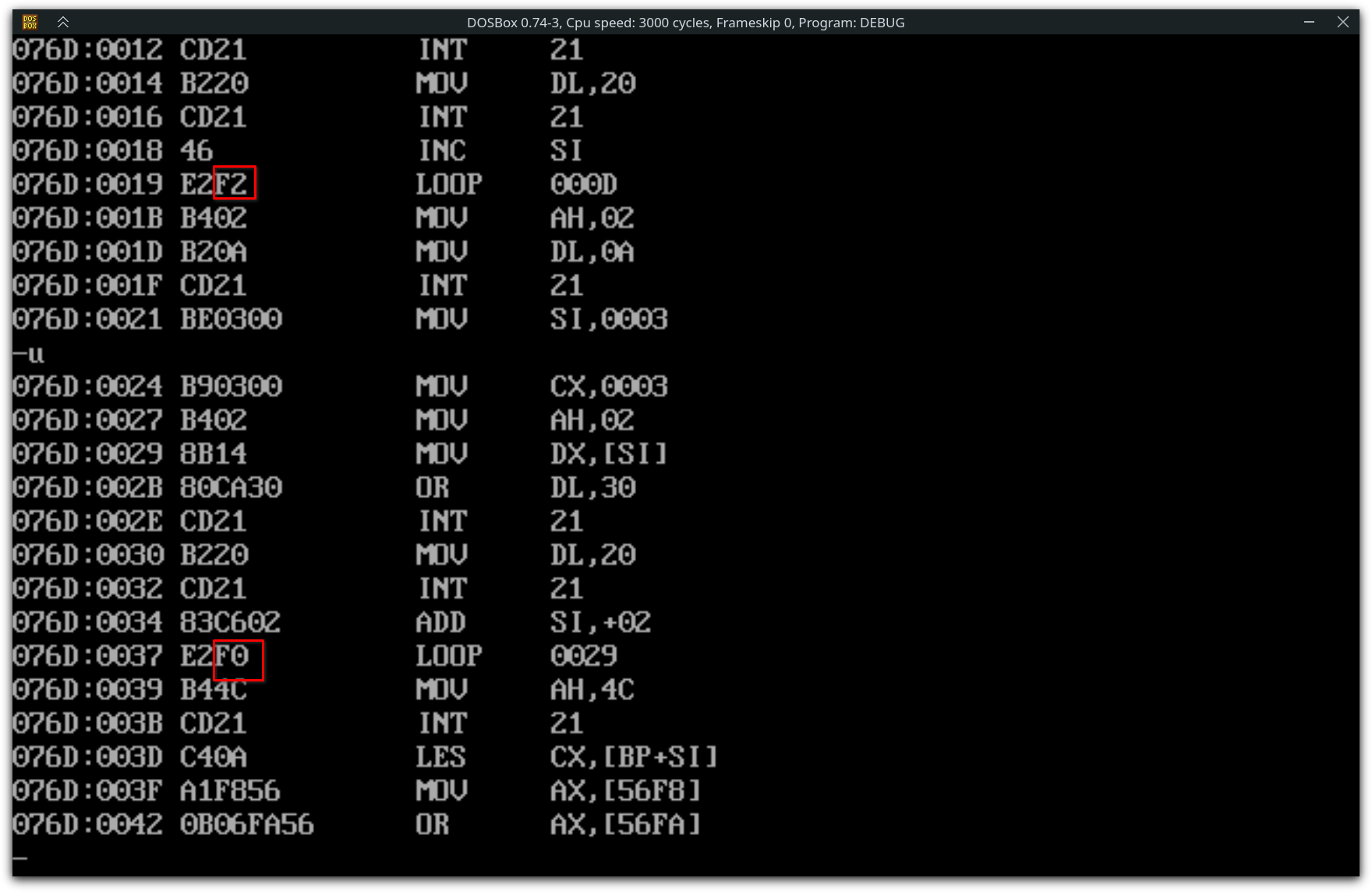
见 「Intel® 64 and IA-32 Architectures Software Developer’s Manual」LOOP
The target instruction is specified with a relative offset (a signed offset relative to the current value of the instruction pointer in the IP/EIP/RIP register). This offset is generally specified as a label in assembly code, but at the machine code level, it is encoded as a signed, 8-bit immediate value, which is added to the instruction pointer. Offsets of –128 to +127 are allowed with this instruction.
实验二
源码
assume cs:code, ds:data

data segment
    dw 200h, 0h, 230h, 0h
data ends

stack segment
    db 16 dup(0)
stack ends

code segment
start:
    mov ax, data
    mov ds, ax

    mov word ptr ds:[0], offset s1
    mov word ptr ds:[2], offset s2
    mov ds:[4], cs

    mov ax, stack
    mov ss, ax
    mov sp, 16

    call word ptr ds:[0]
s1: pop ax

    call dword ptr ds:[2]
s2: pop bx
    pop cx

    mov ah, 4ch
    int 21h
code ends
end start
ax = 21, bx = 26, cx = 76E
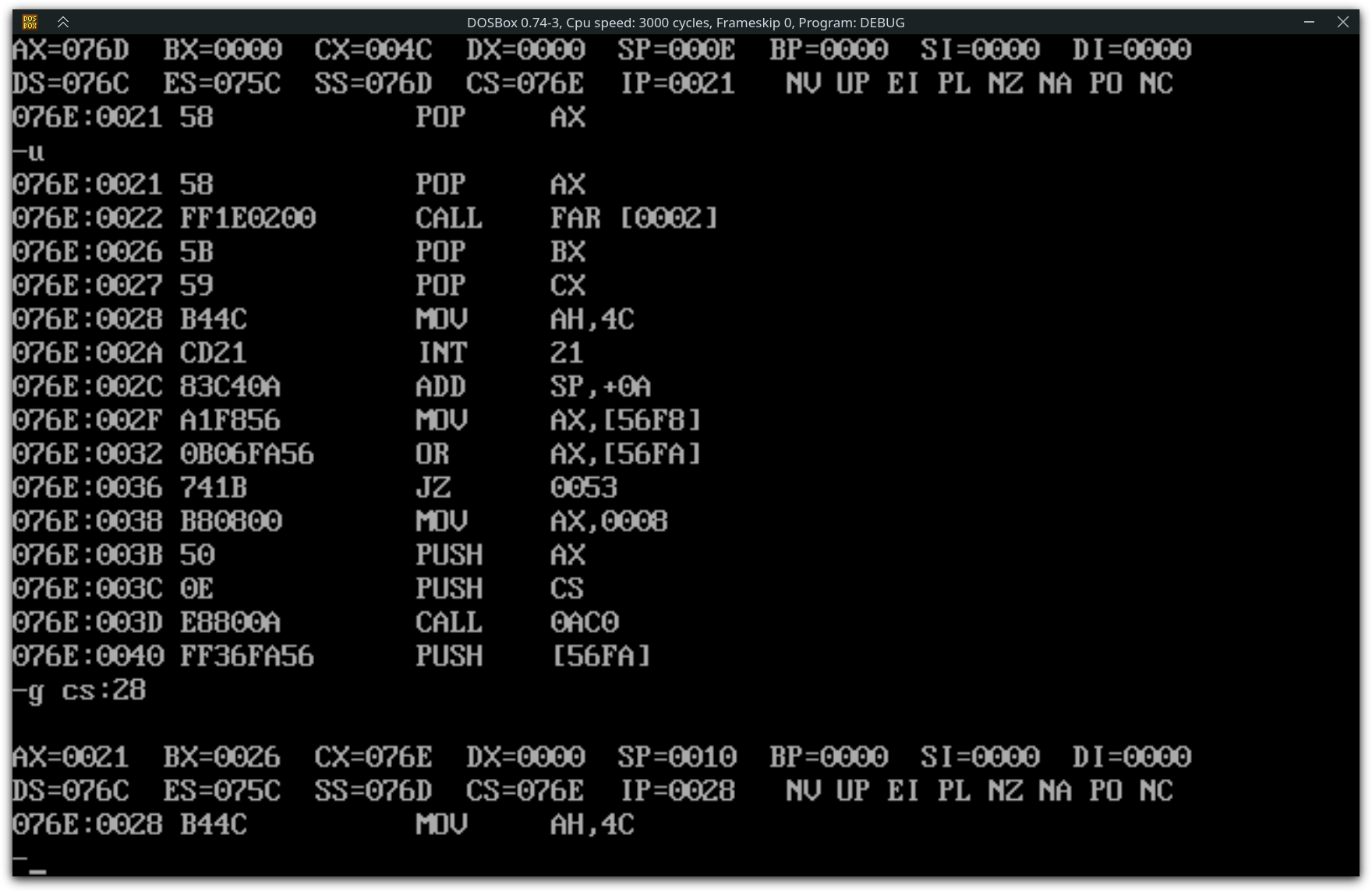
结论一致。
实验三
assume cs:code, ds:data

data segment
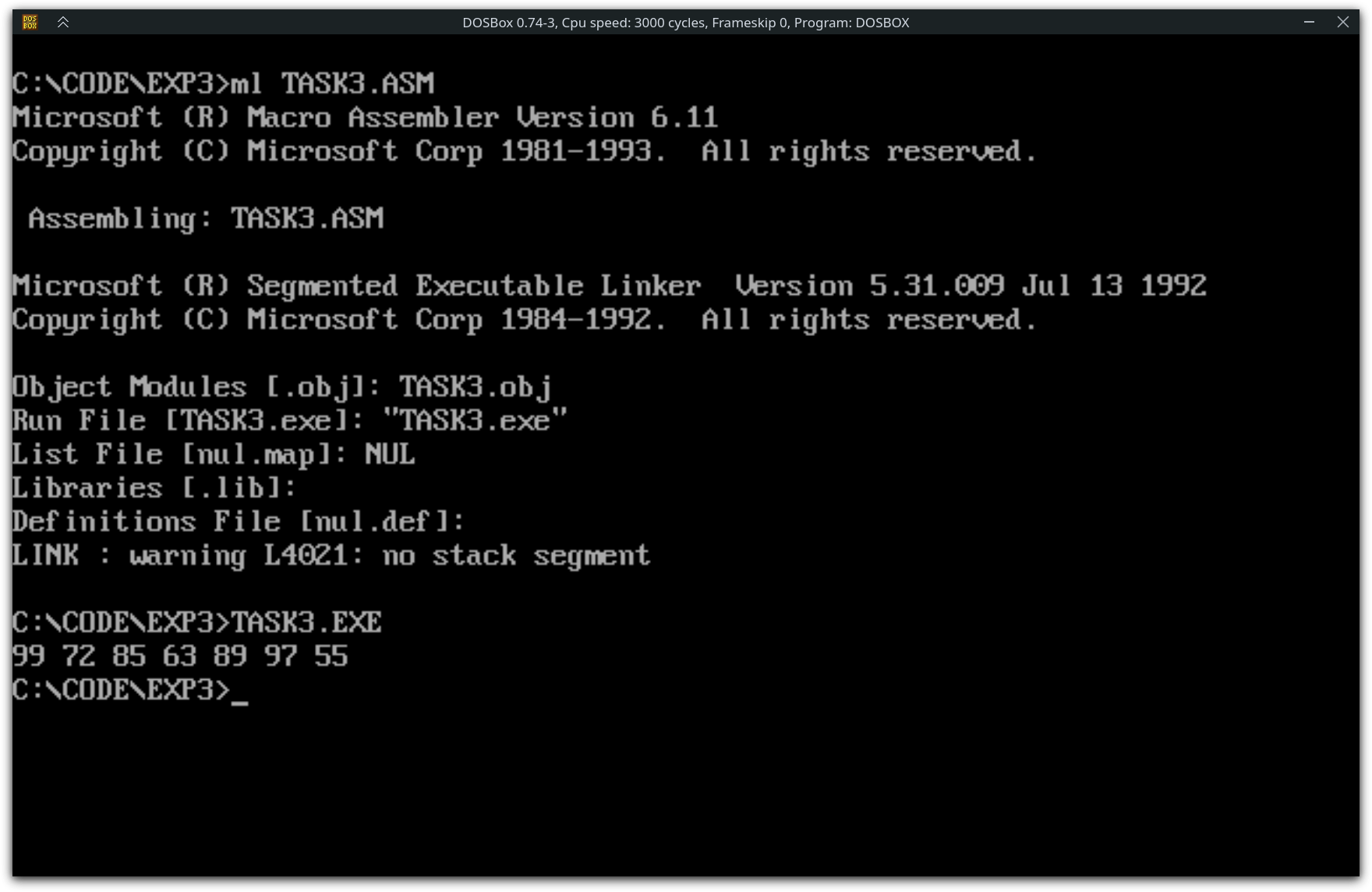
    x db 99, 72, 85, 63, 89, 97, 55
    len equ $- x
data ends

stack segment
    db 16 dup(0)
stack ends

code segment
; args
;    ax input two-digit
printNumber:
    mov bl, 10
    div bl
    mov bl, ah

    mov ah, 2
    mov dl, al
    add dl, '0'
    int 21h
    mov dl, bl
    add dl, '0'
    int 21h
    ret
printSpace:
    mov dl, ' '
    mov ah, 2
    int 21h
    ret
start:
    mov ax, data
    mov ds, ax
    mov cx, len
    mov si, offset x
lp: mov ax, 0
    mov al, byte ptr [si]
    call printNumber
    call printSpace
    inc si
    loop lp

    mov ah, 4ch
    int 21h
code ends
end start
实验四
assume cs:code, ds:data

data segment
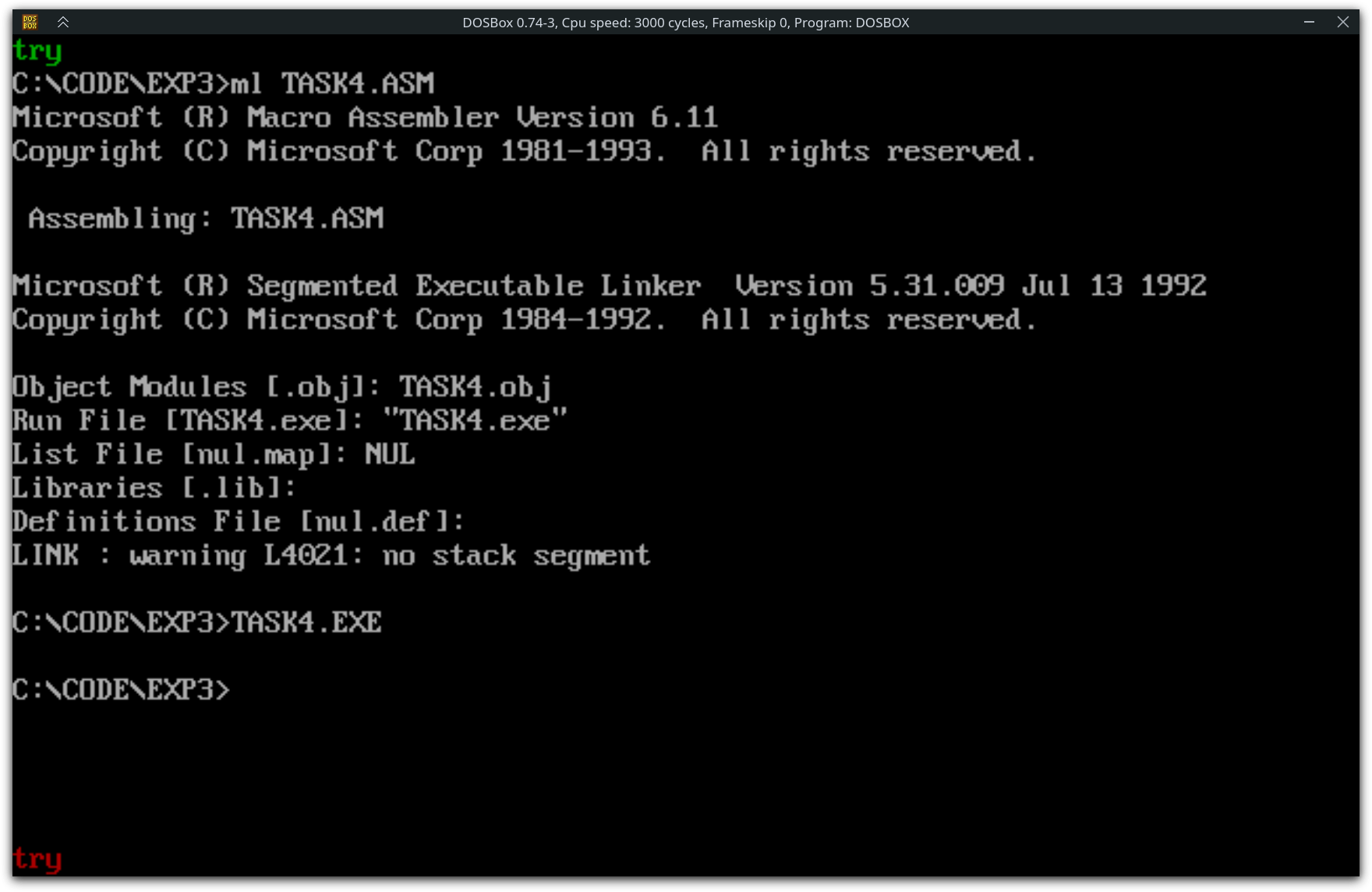
    pstr db 'try'
    len equ $ - pstr
data ends

stack segment
    db 16 dup(0)
stack ends

code segment
; args
;   ds:si ptr to string
;   cx len of string
;   bl color of output
;   bh line number of output, in range [0, 24]
printStr:
    mov ax, 0B800H
    mov es, ax
    mov ax, 0
    mov al, 160
    mul bh
    mov di, ax
printStr_lp1:
    mov ax, [si]
    mov es:[di], ax
    mov es:[di+1], bl
    inc si
    add di, 2
    loop printStr_lp1
    ret

start:
    mov ax, data
    mov ds, ax

    mov si, offset pstr
    mov cx, len
    mov bl, 2h ; green on black
    mov bh, 0
    call printStr

    mov si, offset pstr
    mov cx, len
    mov bl, 4h ; red on black
    mov bh, 24
    call printStr

    mov ah, 4ch
    int 21h
code ends
end start
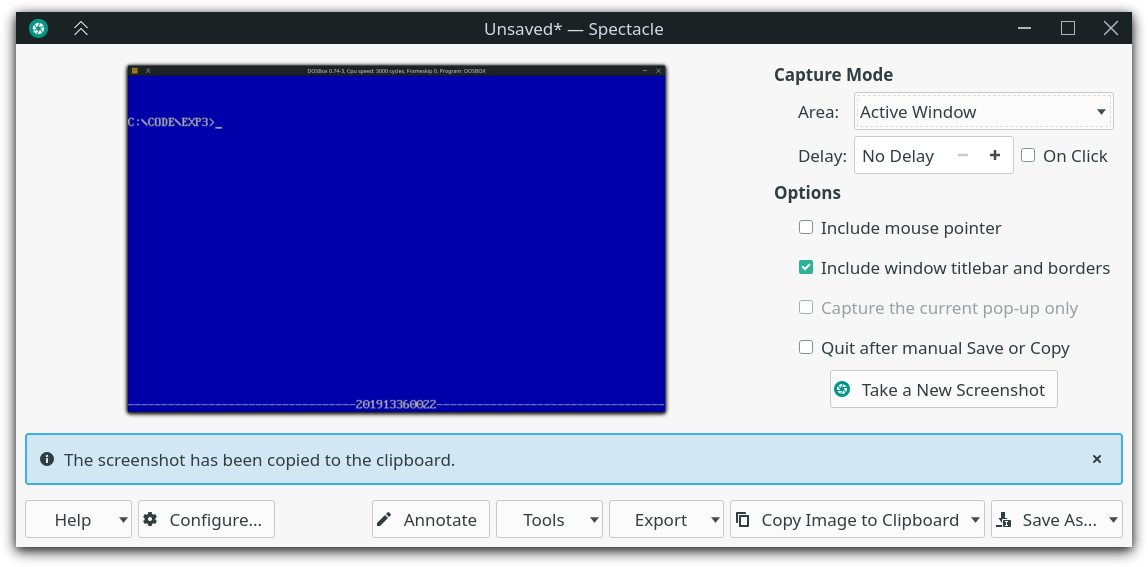
实验五
assume cs:code, ds:data

data segment
    stu_no db '201913360022'
    len = $ - stu_no
data ends

stack segment
    db 16 dup(0)
stack ends

code segment
; args
;   ds:si ptr to string
;   cx len of string
;   bl color of output
;   bh line number of output, in range [0, 24]
start:
    mov ax, data
    mov ds, ax

    ; 80*25 = 2000
    mov ax, 0B800H
    mov es, ax
    mov di, 0
    mov cx, 2000
    mov ax, 17H ; white on blue
lp1:mov es:[di+1], ax
    add di, 2
    loop lp1 ; fill background

    mov ax, 0
    mov al, 160
    mov bh, 24
    mul bh
    mov di, ax
    mov cx, 80
    mov bl, '-'
lp2:mov es:[di], bl
    add di, 2
    loop lp2 ; fill '-'

    mov di, ax
    add di, 34*2
    mov si, offset stu_no
    mov cx, len
lp3:mov al, [si]
    mov es:[di], al
    inc si
    add di, 2
    loop lp3 ; fill stu_no

    mov ah, 4ch
    int 21h
code ends
end start

 浙公网安备 33010602011771号