

SpringBoot28 web原生组件注入servlet、filter、listener
方式一、使用servlet Api
@ServletComponentScan(basePackages = "com.bootweb") :指定扫描原生Servlet组件都放在那里;放在主方法文件上。
@WebServlet(urlPatterns = "/my"):效果:直接响应,没有经过Spring的拦截器?
@WebFilter(urlPatterns={"/css/*","/images/*"})
@WebListener
推荐可以这种方式;
主方法类:
@ServletComponentScan(basePackages = "com.bootweb") //缺省则是主配置类所在目录下的所有
@SpringBootApplication
public class BootwebApplication {

    public static void main(String[] args) {
        SpringApplication.run(BootwebApplication.class, args);
    }

}
自定义的原生组件:
@WebServlet("/my")
public class MyServlet extends HttpServlet{
    @Override
    protected void doGet(HttpServletRequest req, HttpServletResponse resp) throws ServletException, IOException {
//        super.doGet(req, resp);
        resp.getWriter().write("6666");
    }
}
//==============
@Slf4j
@WebFilter(urlPatterns = {"/css/*","/images"})//单* 是servlet中的写法,** 是spring中的写法
public class MyFilter implements Filter {
    @Override
    public void init(FilterConfig filterConfig) throws ServletException {
        log.info("MyFilter 初始化完成");
    }

    @Override
    public void doFilter(ServletRequest request, ServletResponse response, FilterChain chain) throws IOException, ServletException {
        log.info("MyFilter 开始工作");
        chain.doFilter(request,response);
    }

    @Override
    public void destroy() {
        log.info("MyFilter 销毁");
    }
}
//=======
@Slf4j
@WebListener
public class MyListener implements ServletContextListener {
    @Override
    public void contextInitialized(ServletContextEvent sce) {
        log.info("MyListener监听到项目启动");
    }

    @Override
    public void contextDestroyed(ServletContextEvent sce) {
        log.info("MyListener监听到项目销毁");

    }
}
方式二、使用XXXRegistrationBean
ServletRegistrationBean, FilterRegistrationBean, and ServletListenerRegistrationBean
自定义config,注入上述三个@BEAN
@Configuration
public class MyRegisterConfig {
    @Bean
    public ServletRegistrationBean newServlet(){
        MyServlet myServlet = new MyServlet();
        return new ServletRegistrationBean(myServlet,"/my","/my2");
    }

    @Bean
    public FilterRegistrationBean newFilter(){
        MyFilter myFilter = new MyFilter();
//        return new FilterRegistrationBean(myFilter,newServlet());
        FilterRegistrationBean filterRegistrationBean = new FilterRegistrationBean(myFilter);
        filterRegistrationBean.setUrlPatterns(Arrays.asList("/my","/my2"));
        return filterRegistrationBean;
    }

    @Bean
    public ServletListenerRegistrationBean newListener(){
        MyListener myListener = new MyListener();
        return new ServletListenerRegistrationBean(myListener);
    }
}
遗留问题:
proxyBeanMethod=true/false 的作用是什么?
上述执行过程,为什么没有经过之前定义的拦截器?
现在系统中有两个servlet
1、自定义的 路径 “/my”
2、DispatcherServlet "/"
精确优先原则,没有走spring流程,直接由tomcat处理
扩展:DispatchServlet 如何注册进来
- 容器中自动配置了 DispatcherServlet 属性绑定到 WebMvcProperties;对应的配置文件配置项是 spring.mvc。
- 通过 ServletRegistrationBean<DispatcherServlet> 把 DispatcherServlet 配置进来。
- 默认映射的是 / 路径。
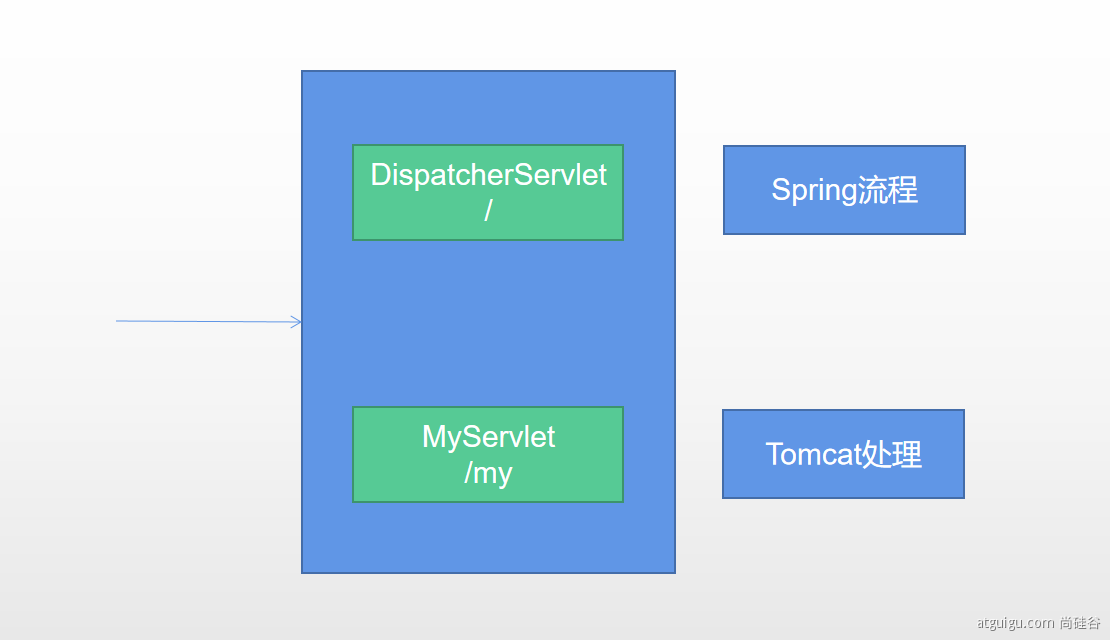
Tomcat处理原生多个Servlet时;
多个Servlet都能处理到同一层路径,精确优选原则
A: /my/
B: /my/1

 浙公网安备 33010602011771号