
Flink FileSystem抽象类了解
Flink在集群启动的第一个操作就是初始化文件系统。Flink中的文件系统主要有两个用途,
第一:Flink实现容错,存储程序状态,恢复数据,主要通过FsDataOutputStream实例来实现。第二:保存链接状态,避免每次创建链接的资源消耗。
Flink的文件系统功能定义主要在org.apache.flink.core.fs.FileSystem中。Flink本身文件系统是插件式来实现,默认实现LocalFileSystem,同时通过插件方式通过SPI方式进行文件系统加载,如果plugin没有匹配成功的话,用HadoopFileSystem作为兜底方案。
Flink目前支撑的主流文件系统有:
hdfs: Hadoop Distributed File Systems3,s3n, ands3a: Amazon S3 file systemgcs: Google Cloud Storagemaprfs: The MapR distributed file system
都是通过配置FLINK_PLUGINS_DIR变量指定插件所在目录,通过SPI方式加载实现了org.apache.flink.core.fs.FileSystem且在对应jar文件中META-INF/services/ 目录下进行注册的类。
在org.apache.flink.core.fs.FileSystem只定义类简单通用的方法,下面是该抽象类中的主要内容:
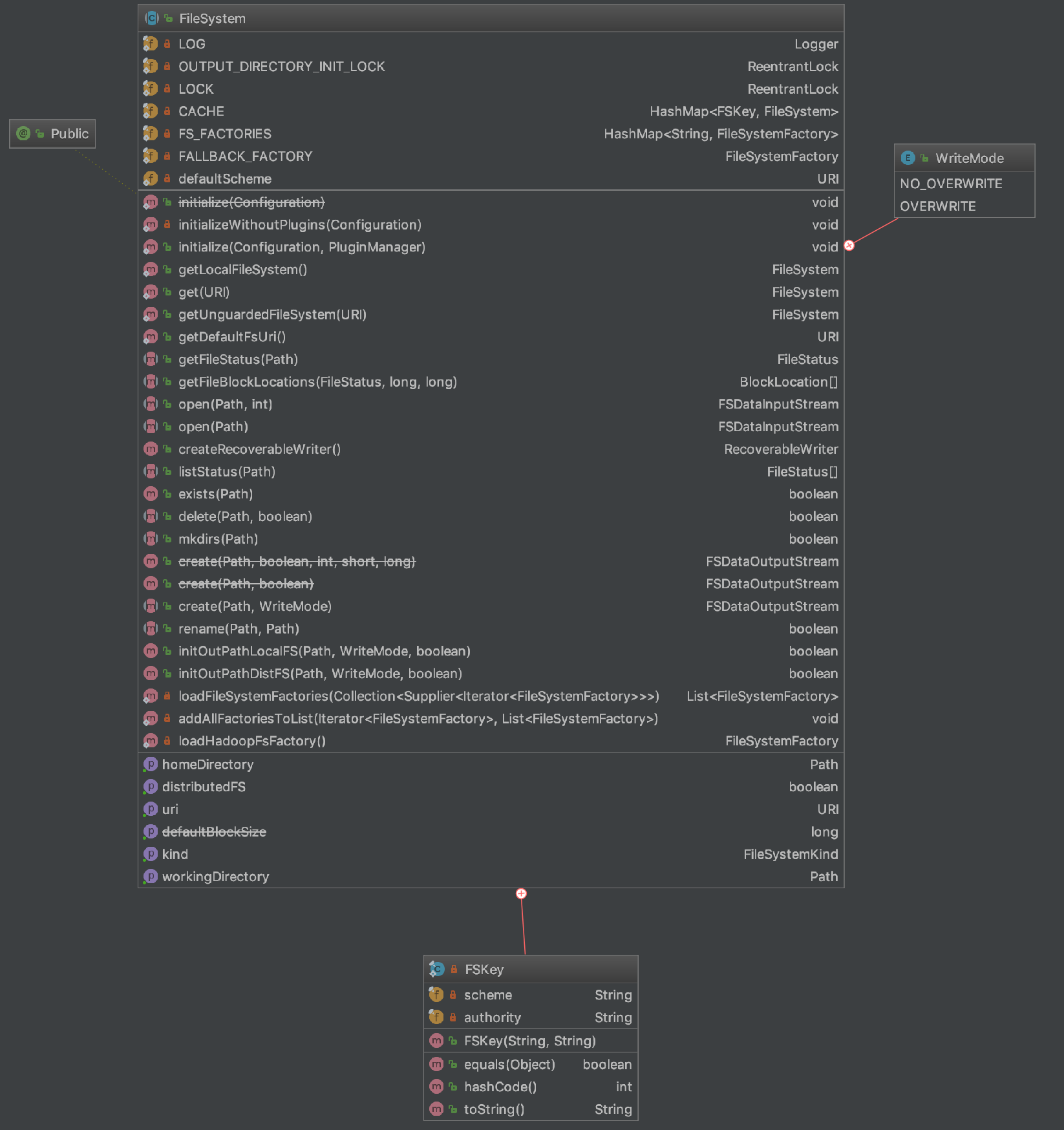
大部分都是抽象方法,没有具体实现,重点看一下initialize方法,内容如下:
 1 public static void initialize(
 2         Configuration config,
 3         PluginManager pluginManager) throws IllegalConfigurationException {
 4
 5         LOCK.lock();
 6         try {
 7             // make sure file systems are re-instantiated after re-configuration
 8             CACHE.clear();
 9             FS_FACTORIES.clear();
10
11             Collection<Supplier<Iterator<FileSystemFactory>>> factorySuppliers = new ArrayList<>(2);
12             factorySuppliers.add(() -> ServiceLoader.load(FileSystemFactory.class).iterator());
13
14             if (pluginManager != null) {
15                 factorySuppliers.add(() ->
16                     Iterators.transform(pluginManager.load(FileSystemFactory.class), PluginFileSystemFactory::of));
17             }
18
19             final List<FileSystemFactory> fileSystemFactories = loadFileSystemFactories(factorySuppliers);
20
21             // configure all file system factories
22             for (FileSystemFactory factory : fileSystemFactories) {
23                 factory.configure(config);
24                 String scheme = factory.getScheme();
25
26                 FileSystemFactory fsf = ConnectionLimitingFactory.decorateIfLimited(factory, scheme, config);
27                 FS_FACTORIES.put(scheme, fsf);
28             }
29
30             // configure the default (fallback) factory
31             FALLBACK_FACTORY.configure(config);
32
33             // also read the default file system scheme
34             final String stringifiedUri = config.getString(CoreOptions.DEFAULT_FILESYSTEM_SCHEME, null);
35             if (stringifiedUri == null) {
36                 defaultScheme = null;
37             }
38             else {
39                 try {
40                     defaultScheme = new URI(stringifiedUri);
41                 }
42                 catch (URISyntaxException e) {
43                     throw new IllegalConfigurationException("The default file system scheme ('" +
44                             CoreOptions.DEFAULT_FILESYSTEM_SCHEME + "') is invalid: " + stringifiedUri, e);
45                 }
46             }
47         }
48         finally {
49             LOCK.unlock();
50         }
51     }
12行,通过SPI方式加载FileSystemFactory。
14-17行,通过配置信息,主要是扫描FLINK_PLUGINS_DIR变量指定的plugin目录,通过SPI方式进行文件系统类型的加载。
19行通过loadFileSystemFactories方法加载文件系统中,会总是把LocalFileSystemFactory加进去。
31行FALLBACK_FACTORY.configure(config);作为兜底方案,会默认对HadoopFileSystem进行加载。如果运行环境中没有Hadoop相关的代码实现,会throw一些异常信息,但是有其他文件系统的情况下,不影响程序运行。
在FileSystem抽象类中还有两个方法值得研究一下, initOutPathLocalFS、initOutPathDistFS通过WriteMode的判定,对输出目录的具体操作。但是具体的delete,create,open等方法是调用不同文件系统格子的实现方式。

 浙公网安备 33010602011771号