简单谈谈dom解析xml和html
前言
文件对象模型(Document Object Model,简称DOM),是W3C组织推荐的处理可扩展标志语言的标准编程接口。html,xml都是基于这个模型构造的。这也是一个W3C推出的标准。java,python,javascript等语言都提供了一套基于dom的编程接口。
java使用dom解析xml
一段xml文档, note.xml:
Don't forget the meeting!
我们先使用w3c dom解析该xml:
@Test
public void test() {
NodeList nodeList = doc.getChildNodes().item(0).getChildNodes();
System.out.println("xml size: " + nodeList.getLength());
for(int i = 0; i < nodeList.getLength(); i ++) {
Node node = nodeList.item(i);
System.out.println(node.getNodeType());
System.out.println(node.getNodeName());
}
}
输出:
xml size: 9
3
#text
1
to
3
#text
1
from
3
#text
1
heading
3
#text
1
body
3
#text
我们看到代码输出note节点的字节点的时候,有9个节点,但是xml文档中note节点实际上只有to、from、heading、body4个节点。 那为什么是9个呢,原因是这样的。
选取几个w3c规范中关于节点类型的描述:
| 节点类型 | 描述 | nodeName返回值 | nodeValue返回值 | 子元素 | 类型常量值 |
|---|---|---|---|---|---|
| Document | 表示整个文档(DOM 树的根节点) | #document | null | Element(max. one),Comment,DocumentType | 9 |
| Element | 表示 element(元素)元素 | element name | null | Text,Comment,CDATASection | 1 |
| Attr | 表示属性 | 属性名称 | 属性值 | Text | 2 |
| Text | 表示元素或属性中的文本内容。 | #text | 节点内容 | None | 3 |
| CDATASection | 表示文档中的 CDATA 区段(文本不会被解析器解析) | #cdata-section | 节点内容 | None | 4 |
| Comment | 表示注释 | #comment | 注释文本 | None | 8 |
更多细节请查看w3c DOM节点类型
下面解释一下文档节点的字节点的处理过程:

其中红色部分为Text节点,紫色部分是Element节点(只画了部分)。</body>后面的也是一个Element节点,所有4个Element节点,5个Text节点。
所以输出的内容中3 #text表示该节点是个Text节点,1 节点name是个Element节点,这与表格中表述的是一样的。
测试代码:
@Test
public void test1() {
NodeList nodeList = doc.getChildNodes().item(0).getChildNodes();
System.out.println("xml size: " + nodeList.getLength());
for(int i = 0; i < nodeList.getLength(); i ++) {
Node node = nodeList.item(i);
if(node.getNodeType() == Node.TEXT_NODE) {
System.out.println(node.getNodeValue().replace("\n","hr").replace(' ', '-'));
}
}
}
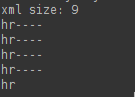
很明显,我们把空格和回车键替换打印后发现我们的结论是正确的。
测试代码:
@Test
public void test2() {
System.out.println("doc type: " + doc.getNodeType());
NodeList nodeList = doc.getChildNodes().item(0).getChildNodes();
Node secondNode = nodeList.item(1);
System.out.println("element [to] node type: " + secondNode.getNodeType());
System.out.println("element [to] node name: " + secondNode.getNodeName());
System.out.println("element [to] node value: " + secondNode.getNodeValue());
System.out.println("element [to] children len: " + secondNode.getChildNodes().getLength());
System.out.println("element [to] children node type: " + secondNode.getChildNodes().item(0).getNodeType());
System.out.println("element [to] children node value: " + secondNode.getChildNodes().item(0).getNodeValue());
System.out.println("element [to] children node name: " + secondNode.getChildNodes().item(0).getNodeName());
Node attNode = secondNode.getAttributes().item(0);
System.out.println("attr type: " + attNode.getNodeType());
}
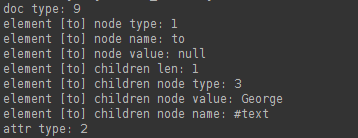
输出结果跟表格中是一样的。
大家有兴趣的话其他类型的节点比如CDATA节点大家可以自行测试~
javascript使用dom解析html
html代码:
gogogo
js代码:
console.log(document.nodeType);
var div = document.getElementsByTagName("div")[0]; //9
console.log(div.nodeType); //1
for(var i = 0;i < div.childNodes.length; i ++) {
console.log(div.childNodes[i].nodeType);
}
分别输出9,1,3,1,3
跟我们在表格中对应~
总结
本次博客主要讲解了dom解析xml和html。 以前使用java解析xml的时候总是使用一些第三方库,比如jdom。 但是dom却是w3c的规范,不止java,包括javascript,python这些主流语言也都主持,有了规范,语言只是实现了这些规范而已。


 浙公网安备 33010602011771号