
类的自带方法执行顺序
# -- encoding:utf-8--
'''
类的自带方法
__call__   类可以带参数
__new__    实例化之前执行,在构造方法之前
__init__   构造方法
__del__    析构方法
__str__    返回实例的描述
__class__  返回所属类名
__module__ 返回当前实例所属模块
__metaclass__ 用来定义一个类以何种形式来创建
'''
class MyType(type):
    def __init__(self, what, bases=None, dict=None):
        print("--MyType init--")
        super(MyType, self).__init__(what, bases, dict)
    def __call__(self, *args, **kwargs):
        print("--MyType call--")
        obj = self.__new__(self, *args, **kwargs)
        self.__init__(obj, *args, **kwargs)

class People(object):
    skin = "yellow"
    __metaclass__ = MyType
    def __init__(self, name, age):
        print("--People init--")
        self.name = name
        self.age = age
        self.data = {}

    # People("小白", "26")("a", "b", "c") xyz对应值为abc
    # def __call__(self, x, y, z):
    #     print("__call__方法" , x, y, z)

    def __new__(cls, *args, **kwargs):
        print("--People new--")
        return object.__new__(cls)

    #更改对实例的描述,不打印内存地址
    def __str__(self):
        # print("__str__方法")
        return "人类"

    def say(self):
        print("你好啊!")

p = People("小白", "26")
print(type(People))          #People类是通过type类创建的
print(type(p))               #父类是People
print(p)                     #打印"人类"
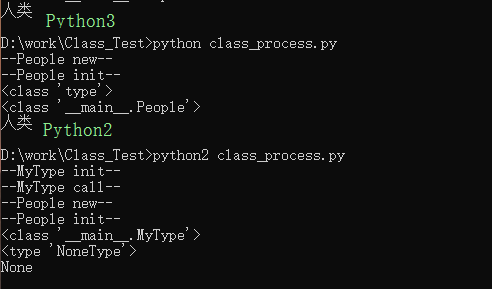
运行结果如下:

 浙公网安备 33010602011771号