
【转载】 白话 Golang 协程池
文章目录
1.何为并发
并发指在一段时间内有多个任务(程序,线程,协程等)被同时执行。注意,不是同一时刻。
在单处理机系统中,每一时刻仅能有一个任务被执行,故微观上这些任务只能是分时地交替执行。倘若在计算机系统中有多个处理机,则这些可以并发执行的任务被分配到多个处理机上同时执行,这就实现了并行。
并发 (Concurrency) 和 并行 ( Parallelism) 是不同的。这里引用 Erlang 之父 Joe Armstrong 对并发与并行区别的形象描述:

2.并发的好处
并发最直接的好处就是高效。
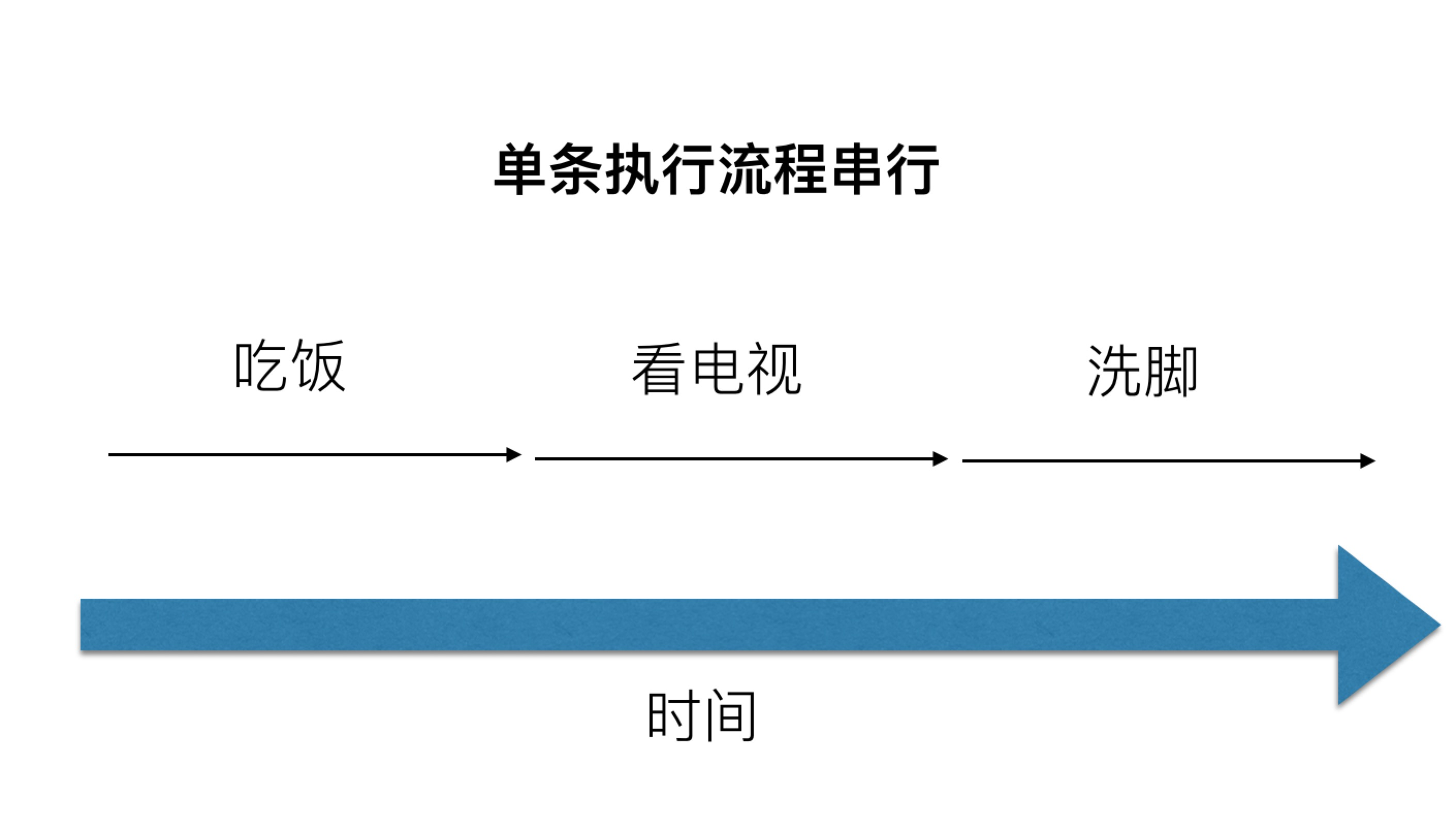
假如我们要做三件事情,一是吃饭,二是洗脚,三是看电视。如果串行执行,那么非常浪费时间。
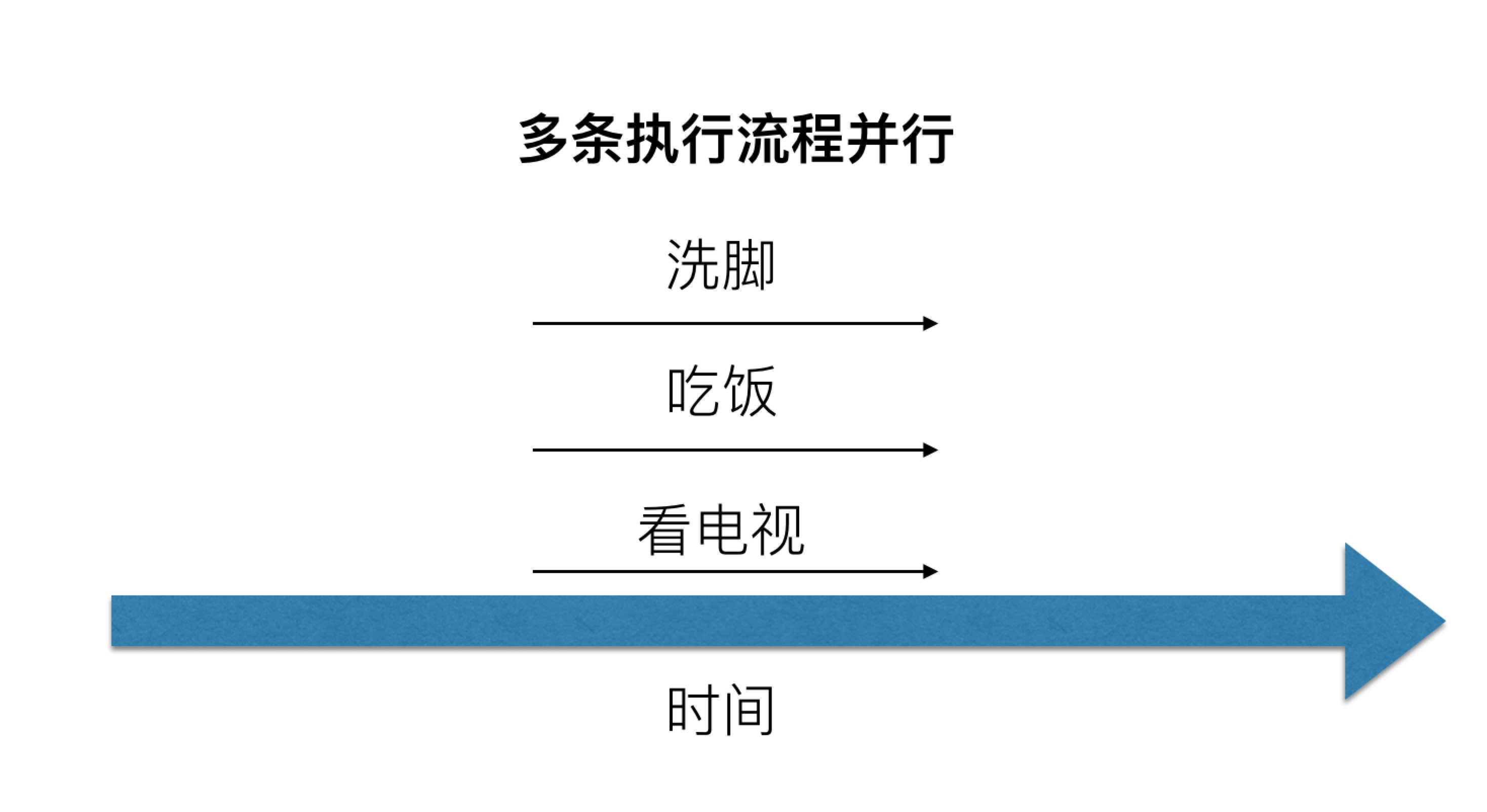
如果改成并发执行,吃饭,洗脚,看电视同时进行,则非常节省时间。
3.Go 如何并发
Go 为并发而生。
Go 程(goroutine)是由 Go 运行时管理的轻量级线程。通过它我们可以轻松实现并发编程。
package main
import (

"fmt"

"sync"

"time"

)
func eatFood() {

fmt.Println("eat cost 3 seconds")

time.Sleep(3 * time.Second)

}
func washFeet() {

fmt.Println("wash feet cost 3 seconds")

time.Sleep(3 * time.Second)

}
func watchTV() {

fmt.Println("watch tv cost 3 seconds")

time.Sleep(3 * time.Second)

}
func worker(task func(), wg *sync.WaitGroup) {

defer wg.Done()

task()

}
func main() {

var wg sync.WaitGroup

wg.Add(3)
// 并发执行

start := time.Now().Unix()

go worker(eatFood, &wg)  // 创建一个 goroutine 执行吃饭任务

go worker(washFeet, &wg) // 创建一个 goroutine 执行洗脚任务

go worker(watchTV, &wg)  // 创建一个 goroutine 执行看电视任务

wg.Wait()                // 等待三个 goroutine 全部执行完成

fmt.Printf("total only cost %v seconds", time.Now().Unix()-start)

}
- 1
- 2
- 3
- 4
- 5
- 6
- 7
- 8
- 9
- 10
- 11
- 12
- 13
- 14
- 15
- 16
- 17
- 18
- 19
- 20
- 21
- 22
- 23
- 24
- 25
- 26
- 27
- 28
- 29
- 30
- 31
- 32
- 33
- 34
- 35
- 36
- 37
- 38
- 39
- 40
运行输出:
wash feet cost 3 seconds
eat cost 3 seconds
watch tv cost 3 seconds
total only cost 3 seconds
- 1
- 2
- 3
- 4
4.GPM 调度模型
说到 Go 程,不得不说 Go 程的调度。
Go 优秀的并发性能得益于出色的基于 G-M-P 模型的 Go 程调度器,官方宣称用 Golang 写并发程序的时候随便起个成千上万的 goroutine 毫无压力。
Go 程的调度模型是 G-P-M,通过 P(Processor,逻辑处理器)将 G(Goroutine,用户线程)与 M(Machine,系统线程)解耦,我们可以随意开启多个 G 交由调度器分配到 P,再通过 P 将 G 交由 M 来完成执行。
Go 调度器的基本模型:

-
每个 P 维护一个 G 的本地队列;
-
当一个 G 被创建出来,或者变为可执行状态时,优先把它放到 P 的本地队列中,否则放到全局队列;
-
当一个 G 在 M 里执行结束后,P 会从队列中把该 G 取出;如果此时 P 的队列为空,即没有其他 G 可以执行, M 会先尝试从全局队列寻找 G 来执行,如果全局队列为空,它会随机挑选另外一个 P,从它的队列里拿走一半 G 到自己的队列中执行。
注意: P 的数量在默认情况下,会被设定为 CPU 的核数。而 M 虽然需要跟 P 绑定执行,但数量上并不与 P 相等。这是因为 M 会因为系统调用或者其他事情被阻塞,因此随着程序的执行,M 的数量可能增长,而 P 在没有用户干预的情况下,则会保持不变。
5.Go 程的代价
Go 程是轻量级线程,使用简单,但它是 Go 为我们提供的免费午餐吗?
天下没有免费的午餐,Go 程也不例外。
Go 程虽然轻量,但仍有开销。
Go 的开销主要是三个方面:创建(占用内存)、调度(增加调度器负担)和删除(增加 GC 压力)。
内存开销:
空间上,一个 Go 程占用约 2K 的内存,在源码src/runtime/runtime2.go里面,我们可以找到 Go 程的结构定义type g struct。
调度开销:
时间上,协程调度也会有 CPU 开销。我们可以利用runntime.Gosched()让当前协程主动让出 CPU 去执行另外一个协程,下面看一下协程之间切换的耗时。
const NUM = 10000
func cal() {

for i := 0; i < NUM; i++ {

runtime.Gosched()

}

}
func main() {

// 只设置一个 Processor

runtime.GOMAXPROCS(1)

start := time.Now().UnixNano()

go cal()

for i := 0; i < NUM; i++ {

runtime.Gosched()

}

end := time.Now().UnixNano()

fmt.Printf("total %vns per %vns", end-start, (end-start)/NUM)

}
- 1
- 2
- 3
- 4
- 5
- 6
- 7
- 8
- 9
- 10
- 11
- 12
- 13
- 14
- 15
- 16
- 17
- 18
- 19
运行输出:
total 997200ns per 99ns
- 1
可见一次协程的切换,耗时大概在 100ns,相对于线程的微秒级耗时切换,性能表现非常优秀,但是仍有开销。
GC 开销:
创建 Go 程到运行结束,占用的内存资源是需要由 GC 来回收,如果无休止地创建大量 Go 程后,势必会造成对 GC 的压力。
package main
import (

"fmt"

"runtime"

"runtime/debug"

"sync"

"time"

)
func createLargeNumGoroutine(num int, wg *sync.WaitGroup) {

wg.Add(num)

for i := 0; i < num; i++ {

go func() {

defer wg.Done()

}()

}

}
func main() {

// 只设置一个 Processor 保证 Go 程串行执行

runtime.GOMAXPROCS(1)

// 关闭GC改为手动执行

debug.SetGCPercent(-1)
var wg sync.WaitGroup

createLargeNumGoroutine(1000, &wg)

wg.Wait()

t := time.Now()

runtime.GC() // 手动 GC。

cost := time.Since(t)

fmt.Printf("GC cost %v when goroutine num is %v\n", cost, 1000)
createLargeNumGoroutine(10000, &wg)

wg.Wait()

t = time.Now()

runtime.GC() // 手动 GC。

cost = time.Since(t)

fmt.Printf("GC cost %v when goroutine num is %v\n", cost, 10000)
createLargeNumGoroutine(100000, &wg)

wg.Wait()

t = time.Now()

runtime.GC() // 手动 GC。

cost = time.Since(t)

fmt.Printf("GC cost %v when goroutine num is %v\n", cost, 100000)

}
- 1
- 2
- 3
- 4
- 5
- 6
- 7
- 8
- 9
- 10
- 11
- 12
- 13
- 14
- 15
- 16
- 17
- 18
- 19
- 20
- 21
- 22
- 23
- 24
- 25
- 26
- 27
- 28
- 29
- 30
- 31
- 32
- 33
- 34
- 35
- 36
- 37
- 38
- 39
- 40
- 41
- 42
- 43
- 44
- 45
- 46
- 47
运行输出:
GC cost 0s when goroutine num is 1000
GC cost 2.0027ms when goroutine num is 10000
GC cost 30.9523ms when goroutine num is 100000
- 1
- 2
- 3
当创建的 Go 程数量越多,GC 耗时越大。
上面的分析目的是为了尽可能地量化 goroutine 的开销。虽然官方宣称用 Golang 写并发程序的时候随便起个成千上万的 goroutine 毫无压力,但当我们起十万、百万甚至千万个 goroutine 呢?goroutine 轻量的开销将被放大。
6.协程池的作用
无休止地创建大量 goroutine,势必会因为对大量 go 程的创建、调度和销毁带来性能损耗。
为了解决这个问题,可以引入协程池。
使用协程池限制 Go 程的开辟个数在大型并发场景是有必要的,这也是性能优化方法中对象复用思想的一个具体应用。
7.简易协程池的设计&实现
一个简单的协程池可以这么设计。
(1)定义一个接口表示任务,每一个具体的任务实现这个接口。
(2)使用 channel 作为任务队列,当有任务需要执行时,将这个任务插入到队列中。
(3)开启固定的协程(worker)从任务队列中获取任务来执行。
结构如下:

上面这个协程池的特点:
(1)Go 程数量固定。可以将 worker 的数量设置为最大同时并发数 runtime.NumCPU()。
(2)Task 泛化。提供任务接口,支持多类型任务,不同业务场景下只要实现任务接口便可以提交到任务队列供 worker 调用。
(3)简单易用。设计简约,实现简单,使用方便。
下面给出一个实现和使用示例:
package main
import (

"fmt"

"runtime"

"sync"

"time"

)
// Task 任务接口。

type Task interface {

Execute()

}
// Pool 协程池。

type Pool struct {

TaskChannel chan Task // 任务队列

}
// NewPool 创建一个协程池。

func NewPool(cap ...int) *Pool {

// 获取 worker 数量

var n int

if len(cap) > 0 {

n = cap[0]

}

if n == 0 {

n = runtime.NumCPU()

}
p := &Pool{

TaskChannel: make(chan Task),

}
// 创建指定数量 worker 从任务队列取出任务执行。

for i := 0; i < n; i++ {

go func() {

for task := range p.TaskChannel {

task.Execute()

}

}()

}

return p

}
// Submit 提交任务。

func (p *Pool) Submit(t Task) {

p.TaskChannel <- t

}
// EatFood 吃饭任务。

type EatFood struct {

wg *sync.WaitGroup

}
func (e EatFood) Execute() {

defer e.wg.Done()

fmt.Println("eat cost 3 seconds")

time.Sleep(3  time.Second)

}
// WashFeet 洗脚任务。

type WashFeet struct {

wg *sync.WaitGroup

}
func (w WashFeet) Execute() {

defer w.wg.Done()

fmt.Println("wash feet cost 3 seconds")

time.Sleep(3  time.Second)

}
// WatchTV 看电视任务。

type WatchTV struct {

wg *sync.WaitGroup

}
func (w WatchTV) Execute() {

defer w.wg.Done()

fmt.Println("watch tv cost 3 seconds")

time.Sleep(3  time.Second)

}
func main() {

p := NewPool()

var wg sync.WaitGroup

wg.Add(3)

task1 := &EatFood{

wg: &wg,

}

task2 := &WashFeet{

wg: &wg,

}

task3 := &WatchTV{

wg: &wg,

}

p.Submit(task1)

p.Submit(task2)

p.Submit(task3)

// 等待所有任务执行完成。

wg.Wait()

}

- 1
- 2
- 3
- 4
- 5
- 6
- 7
- 8
- 9
- 10
- 11
- 12
- 13
- 14
- 15
- 16
- 17
- 18
- 19
- 20
- 21
- 22
- 23
- 24
- 25
- 26
- 27
- 28
- 29
- 30
- 31
- 32
- 33
- 34
- 35
- 36
- 37
- 38
- 39
- 40
- 41
- 42
- 43
- 44
- 45
- 46
- 47
- 48
- 49
- 50
- 51
- 52
- 53
- 54
- 55
- 56
- 57
- 58
- 59
- 60
- 61
- 62
- 63
- 64
- 65
- 66
- 67
- 68
- 69
- 70
- 71
- 72
- 73
- 74
- 75
- 76
- 77
- 78
- 79
- 80
- 81
- 82
- 83
- 84
- 85
- 86
- 87
- 88
- 89
- 90
- 91
- 92
- 93
- 94
- 95
- 96
- 97
- 98
- 99
- 100
- 101
- 102
运行结果:
wash feet cost 3 seconds
watch tv cost 3 seconds
eat cost 3 seconds
- 1
- 2
- 3
设计时,我们也可以将任务队列中的任务设计为无参匿名函数,这样子使用起来可能会更简单。
// Pool 协程池。
type Pool struct {
	TaskChannel chan func() // 任务队列
}
- 1
- 2
- 3
- 4
上面这个协程池,设计简约,实现和使用起来也比较简单方便,但是严格来说,其并不是一个成熟的协程池,因为并没有提供 worker 与 go 程池的状态控制能力,worker 数量也无法根据节点算力和业务晚高峰时进行动态扩增和缩减。如果没有动态扩缩容能力,那么很有可能出现 go 程的并发量不足以完全利用节点的算力,或者请求量不足的情况下,出现部分 go 程长期空闲的情况。
总地来说上面简易协程池的不足:
(1)无法知道 worker 与 pool 的状态;
(2)worker 数量不足无法动态扩增;
(3)worker 数量过多无法自动缩减。
8.开源协程池的使用
一个成熟的协程池应该具有如下能力:
(1)worker & pool 状态控制;
性能测试、任务超时等都需要知道和控制任务与 Go 程池的状态。
(2)无锁化操作;
在 worker 和 pool 的状态读写时使用 atomic 原子操作,避免多次上锁带来性能损耗。
(3)动态可伸缩;
根据实际请求量的大小,动态扩缩容以避免 Go 程数量出现过少或过多的情况。
(4)资源复用。
对回收的 worker 放到 sync.Pool 进行复用,而不是直接销毁,降低 GC 压力,提高性能。
工程实践中,建议使用业界开源成熟的协程池组件。
目前有很多第三方库实现了协程池,可以很方便地用来控制协程的并发数量,比较受欢迎的有:
下面以 panjf2000/ants 为例,简单介绍其使用。
ants 是一个高性能的 goroutine 池,实现了对大规模 goroutine 的调度管理、goroutine 复用,允许使用者在开发并发程序的时候限制 goroutine 数量,复用资源,达到更高效执行任务的效果。
还是以上面吃饭,洗脚和看电视三个任务为例,演示 ants 的使用。
package main
import (

"fmt"

"sync"

"time"
"github.com/panjf2000/ants"

)
func eatFood() {

fmt.Println("eat cost 3 seconds")

time.Sleep(3 * time.Second)

}
func washFeet() {

fmt.Println("wash feet cost 3 seconds")

time.Sleep(3 * time.Second)

}
func watchTV() {

fmt.Println("watch tv cost 3 seconds")

time.Sleep(3 * time.Second)

}
func main() {

var wg sync.WaitGroup

taskEatFood := func() {

defer wg.Done()

eatFood()

}

taskWashFeet := func() {

defer wg.Done()

washFeet()

}

taskWatchTV := func() {

defer wg.Done()

watchTV()

}

t := time.Now()

wg.Add(3)

// Use the common pool

ants.Submit(taskEatFood)

ants.Submit(taskWashFeet)

ants.Submit(taskWatchTV)

wg.Wait()

fmt.Printf("total only cost %v\n", time.Since(t))

}
- 1
- 2
- 3
- 4
- 5
- 6
- 7
- 8
- 9
- 10
- 11
- 12
- 13
- 14
- 15
- 16
- 17
- 18
- 19
- 20
- 21
- 22
- 23
- 24
- 25
- 26
- 27
- 28
- 29
- 30
- 31
- 32
- 33
- 34
- 35
- 36
- 37
- 38
- 39
- 40
- 41
- 42
- 43
- 44
- 45
- 46
- 47
- 48
运行输出:
watch tv cost 3 seconds
eat cost 3 seconds
wash feet cost 3 seconds
total only cost 3.0012512s
- 1
- 2
- 3
- 4
更多信息请参阅 github.com/panjf2000/ants。
9.小结
资源复用是高性能编程的基本方法之一,在高并发场景,我们可以使用协程池来复用协程提高程序性能。
其他诸如:
无锁: 尽量不要加锁对某个变量读写,而应该分多个变量单独读写;
缓存: 网络IO是接口耗时的主要部分,对实时性要求不高的业务场景,可以增加本地缓存降低接口耗时;
减包: 限制请求时分页大小,减小回包大小,降低打解包对 CPU 的消耗。
这些方法都是编写高性能程序的有效手段,本文不过多探讨,感兴趣的同学可自行探索实践或参见微服务接口设计原则。
参考文献
[1] 知乎.Go 为什么这么快
[2] 潘建锋.Goroutine 并发调度模型深度解析之手撸一个高性能 goroutine 池
[3] Dmitry Vyukov.Go Preemptive Scheduler Design Doc
[4] 张彦飞.协程究竟比线程能省多少开销?
[5] 博客园.go runtime.Gosched()的作用分析
[6] 书栈网.GC 的认识
[7] Go 语言高性能编程.控制协程(goroutine)的并发数量

 浙公网安备 33010602011771号