
乐观锁&悲观锁
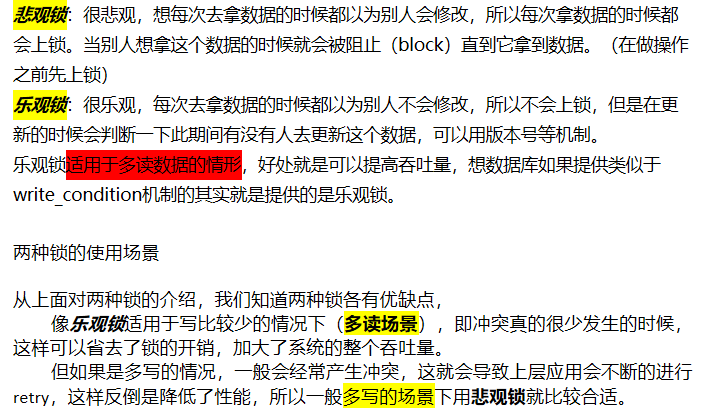
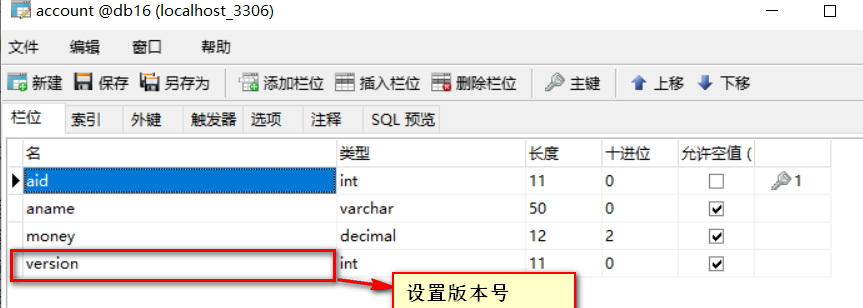
数据库建表account:
1)乐观锁示例操作
(1)新建实体类,加注解
@Entity
@JsonIgnoreProperties(value={"hibernateLazyInitializer","handle"})
public class Account {
    @Id
    @GeneratedValue(strategy = GenerationType.IDENTITY)
    private Integer aid;
    private String aname;
    private Double money;

    //@Version
    private int version;

(2)新建Dao
public interface AccountDao extends JpaRepository<Account,Integer>, JpaSpecificationExecutor<Account>, Serializable {

}

(3)AccountService
public interface AccountService extends BaseService<Account,Integer> {
    //悲观锁自定义的两个方法
    public Account mod1(int aid);

    public Account mod2(int aid);
}
BaseService:
public interface BaseService<G,ID> {
    public void add(G g);
    public void mod(G g);
    public void del(ID sid);
    public G get(ID sid);
    public List<G> query();
    public List<G> query(G g);
    //pageNo:表示当前页 pageSize:表示每页显示多少条记录
    public Page<G> query(G g, int pageNo, int pageSize);
    //把当前面,每页显示多少记录封装到pageable对象中
    public Page<G> query(G g, Pageable pageable);


}

(4)新建控制器
@RestController
public class AccountController {

    //乐观锁1
    @RequestMapping("/testlock1")
    //乐观锁失败后重试,自定义方法加的注释方法
    //@RetryOnOptimisticLockingFailure
    public Account testLock1(){
        int aid = 1;
        Account a = accountDao.getOne(aid);
        a.setMoney(a.getMoney()-100);
        accountDao.save(a);
        return a;
    }

    //乐观锁2
    @RequestMapping("/testlock2")
   //乐观锁失败后重试,自定义方法加的

   //@RetryOnOptimisticLockingFailure
    public Account testLock2(){
        int aid = 1;
        Account a = accountDao.getOne(aid);
        a.setMoney(a.getMoney()-100);
        //睡眠10s 模拟操作
        try {
            Thread.sleep(10000);
        }catch(Exception e){
            e.printStackTrace();
        }
        accountDao.save(a);
        return a;
    }
    //使用悲观锁
    @RequestMapping("/testlock3")
    public Account testLock3(){
        int aid = 1;
        Account a = accountService.mod1(aid);
        return a;
    }

    //使用悲观锁
    @RequestMapping("/testlock4")
    public Account testLock4(){
        int aid = 1;
        Account a = accountService.mod2(aid);
        return a;
    }

    @Resource
    private AccountDao accountDao;
    @Resource
    private AccountService accountService;
}
(5)开两个浏览器进行测试
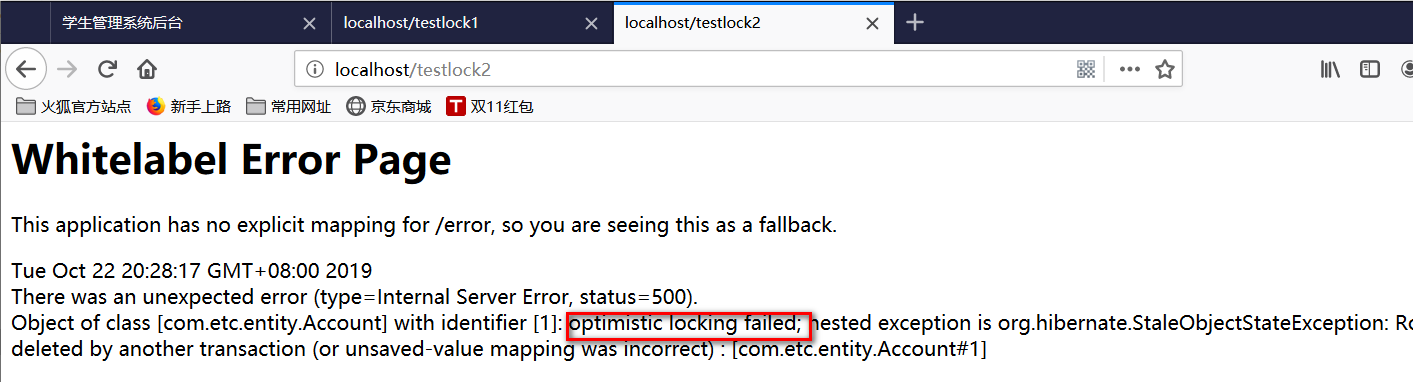
先测试testlock2,乐观锁失败
自定义乐观锁失败后重试:
@Aspect
@Component
public class RetryOnOptimisticLockingAspect {

    private static final Logger logger = LoggerFactory.getLogger(RetryOnOptimisticLockingAspect.class);
    private static final int maxRetries = 5;//乐观锁失败后,最多重试的次数

    @Pointcut("@annotation(RetryOnOptimisticLockingFailure)")//自定义切入点
    public void retryOnOptFailure(){}

    //具体要执行的切面的代码,是一个环绕通知
    @Around(value = "retryOnOptFailure()")
    public Object doConcurrentOperation(ProceedingJoinPoint pjp) throws Throwable{
        int numAttempts = 0;//当前重试的次数
        do{
            numAttempts++;
            try {
                return pjp.proceed();//执行目标业务方法调用
            }catch(Exception e){
                if (e instanceof ObjectOptimisticLockingFailureException ||
                        e instanceof StaleStateException ||e instanceof JpaSystemException) {
                    logger.info("更新数据---乐观锁重试中---");
                    if (numAttempts > maxRetries){
                        logger.info("抛出异常");
                        throw e;
                    }
                }else throw e;//不属于乐观锁的异常
            }
        }while(numAttempts<maxRetries);

        return null;
    }


}
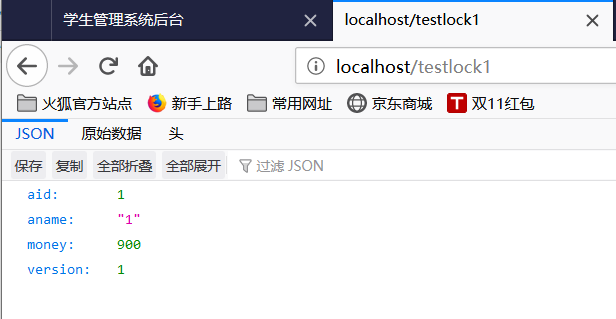
后测试testlock1
使用悲观锁解决问题:
(1)实体类的@Version注释掉
@Entity
@JsonIgnoreProperties(value={"hibernateLazyInitializer","handle"})
public class Account {
    @Id
    @GeneratedValue(strategy = GenerationType.IDENTITY)
    private Integer aid;
    private String aname;
    private Double money;

    //@Version
    private int version;

(2)AccountService
public interface AccountService extends BaseService<Account,Integer> {
    //悲观锁自定义的两个方法
    public Account mod1(int aid);

    public Account mod2(int aid);
}
@Service
public class AccountServiceImpl implements AccountService {
    @Resource
    private AccountDao accountDao;
    @Override
    @Transactional
    public Account mod1(int aid) {
        Account a = accountDao.getAid(aid);
        a.setMoney(a.getMoney()-100);
        accountDao.save(a);
        return a;
    }
    @Override
    @Transactional
    public Account mod2(int aid) {
        Account a = accountDao.getAid(aid);
        a.setMoney(a.getMoney()-100);
        try {
            Thread.sleep(10000);
        } catch (InterruptedException e) {
            e.printStackTrace();
        }
        accountDao.save(a);
        return a;
    }}


(3)控制层:同上
(4)打开浏览器,一个过程执行完成后,另一个过程才能被执行。

 浙公网安备 33010602011771号