
Python: asyncio
改造老旧教程案例:
asyncio.gather
import asyncio


async def b():
    print(5)
    await asyncio.sleep(2)
    print(55)
    return 5


async def p():
    print(4)
    await asyncio.sleep(1)
    print(44)
    return 55


async def main():
    tasks = [b(), p()]
    res = await asyncio.gather(*tasks)
    print(res)


asyncio.run(main())
asyncio.create_task
import asyncio


async def b():
    print(5)
    await asyncio.sleep(2)
    print(55)
    return 5


async def p():
    print(4)
    await asyncio.sleep(1)
    print(44)
    return 55


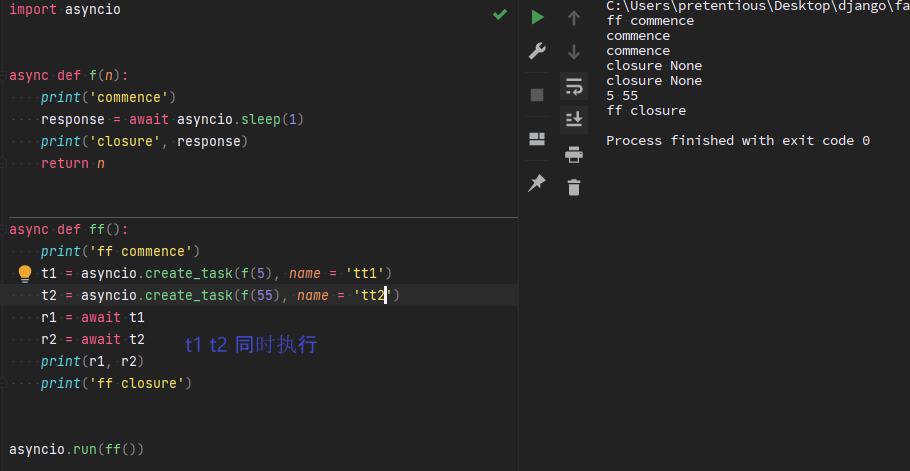
async def main():
    task1 = asyncio.create_task(b(), name = 'B')
    task2 = asyncio.create_task(p(), name = 'P')
    tasks = [task1, task2]
    done, pending = await asyncio.wait(tasks, timeout = None, return_when = asyncio.ALL_COMPLETED)
    print(type(done))
    for task in done:
        print(task)
        print(task.result())
    print(pending)
    print(tasks)


asyncio.run(main())
new API:
import asyncio, random, datetime


async def wait_and_echo(content):
    wait = random.randint(1, 5)
    print(f'print {content} after {wait} seconds')
    await asyncio.sleep(wait)
    print(f'{content} printed at {datetime.datetime.now().strftime("%H:%M:%S")}')


async def main():
    await asyncio.gather(*[wait_and_echo(x) for x in range(10)])


asyncio.run(main())
Step by Step:
import asyncio
from datetime import datetime


async def say_after(delay, content):
    await asyncio.sleep(delay)
    print(content)


async def main():
    print(f'started at {datetime.now().strftime("%T")}')
    await say_after(1, 'first')
    await say_after(2, 'second')
    print(f'finished at {datetime.now().strftime("%T")}')


asyncio.run(main())

Use asyncio.create_task()
import asyncio
from datetime import datetime


async def say_after(delay, content):
    await asyncio.sleep(delay)
    print(content)


async def main():
    # asyncio.create_task() function to run coroutines concurrently as asyncio Tasks
    task1 = asyncio.create_task(say_after(1, 'first'))
    task2 = asyncio.create_task(say_after(2, 'second'))
    print(f'started at {datetime.now().strftime("%T")}')
    await task1
    await task2
    print(f'finished at {datetime.now().strftime("%T")}')


asyncio.run(main())

Awaitables
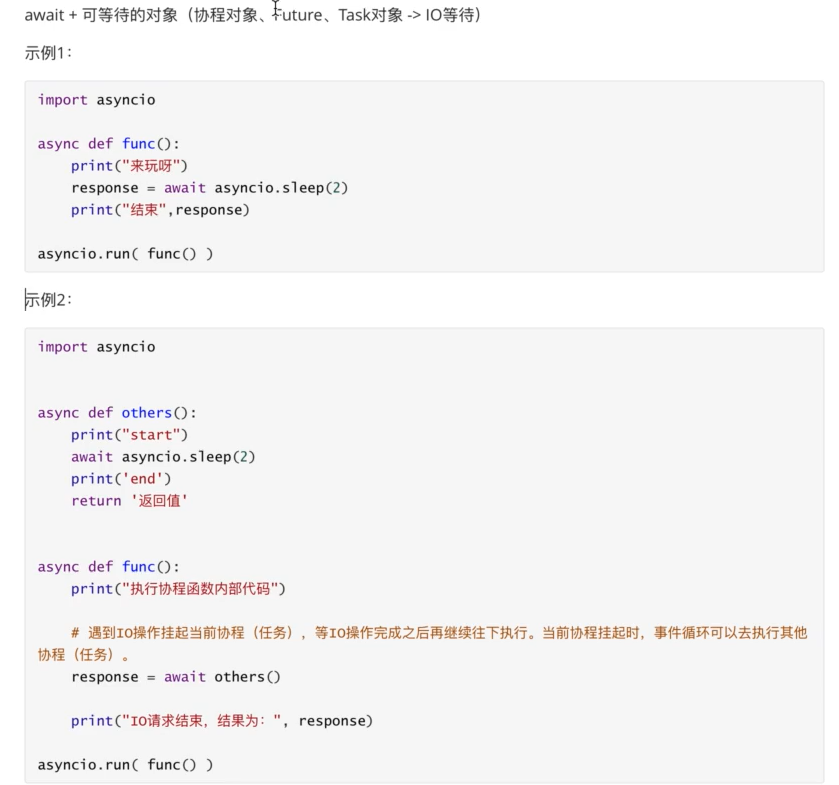
We say that an object is an awaitable object if it can be used in an await expression. Many asyncio APIs are designed to accept awaitables.
There are three main types of awaitable objects: coroutines, Tasks, and Futures.
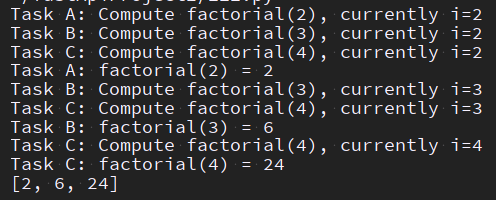
import asyncio


async def factorial(name, number):
    f = 1
    for i in range(2, number + 1):
        print(f'Task {name}: Compute factorial({number}), currently i={i}')
        await asyncio.sleep(1)
        f *= i
    print(f'Task {name}: factorial({number}) = {f}')
    return f


async def main():
    # Schedule three calls *concurrently*
    res = await asyncio.gather(*[
      factorial('A', 2),
      factorial('B', 3),
      factorial('C', 4)
    ])
    print(res)


asyncio.run(main())

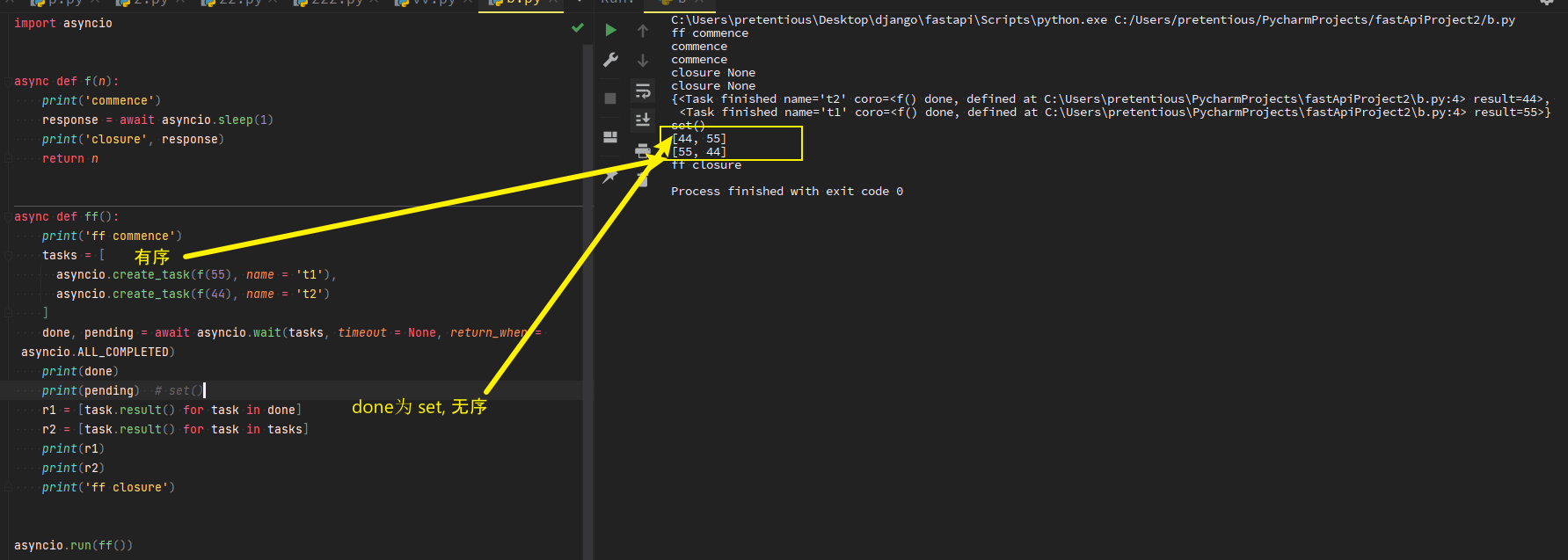
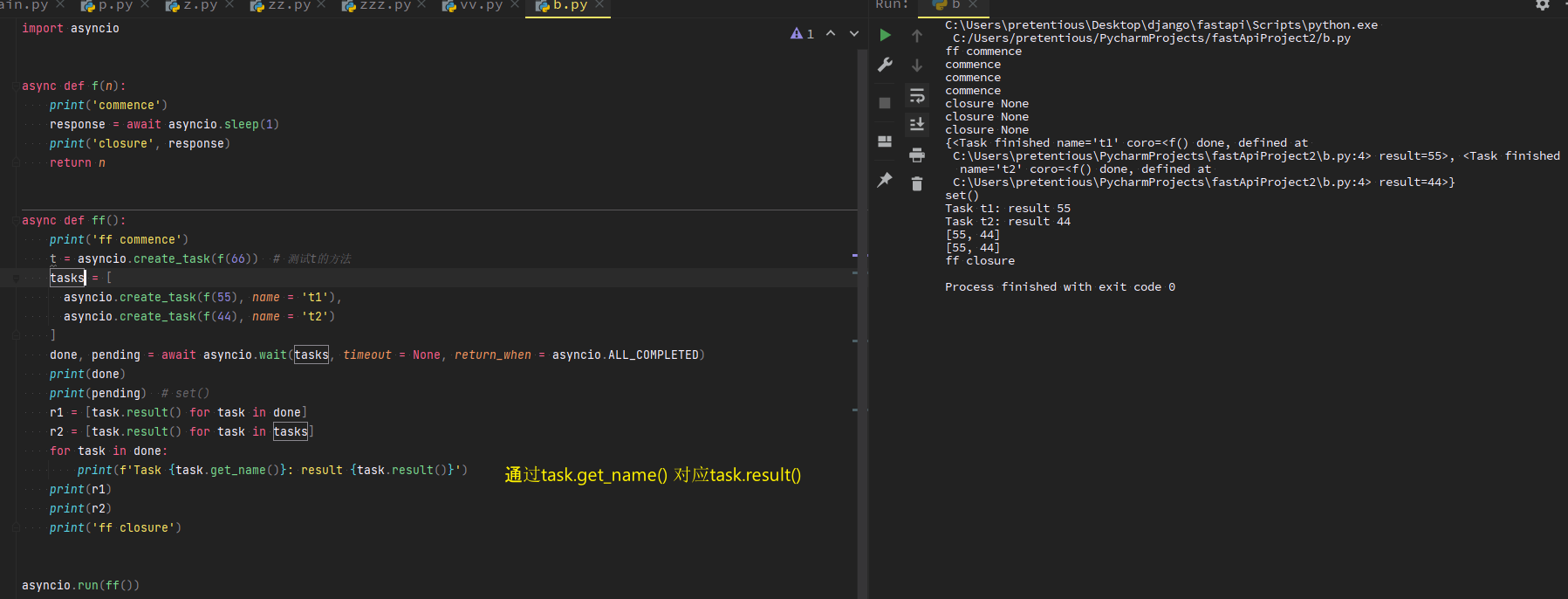
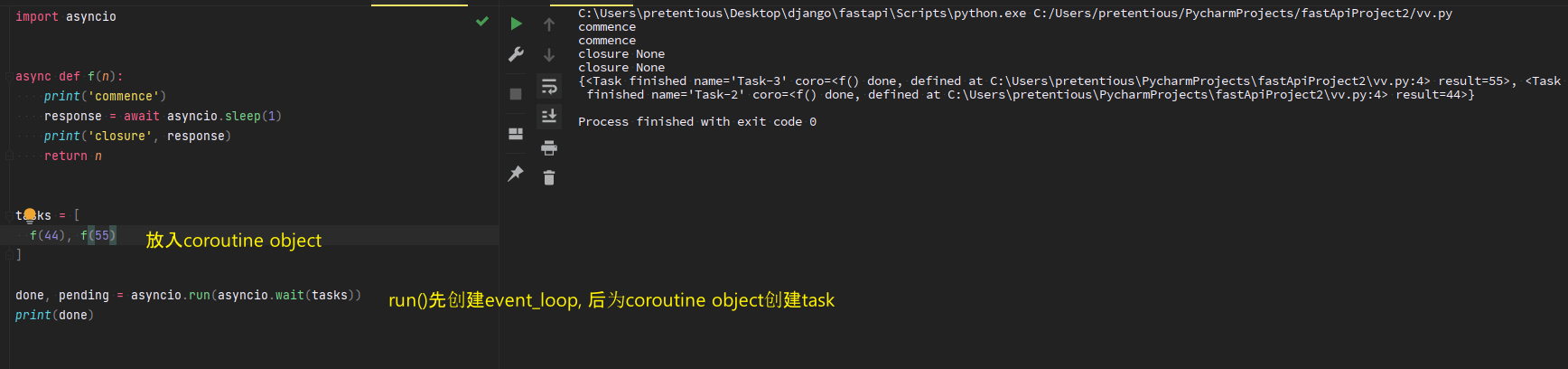
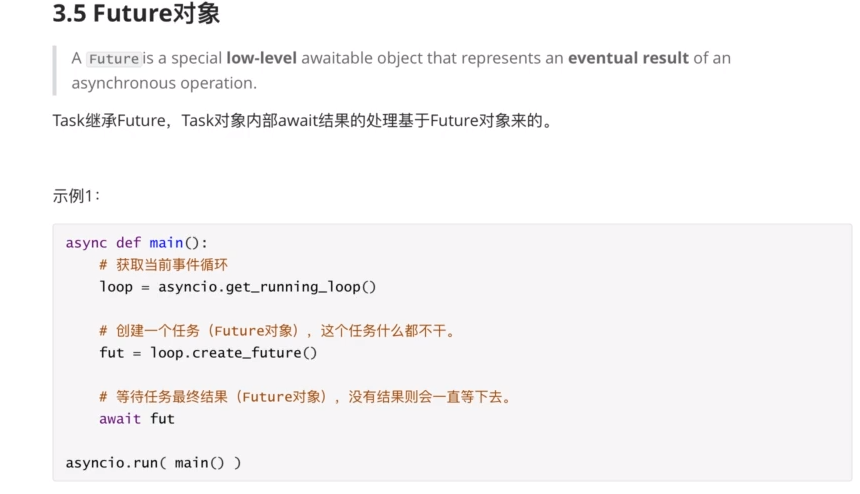
Task: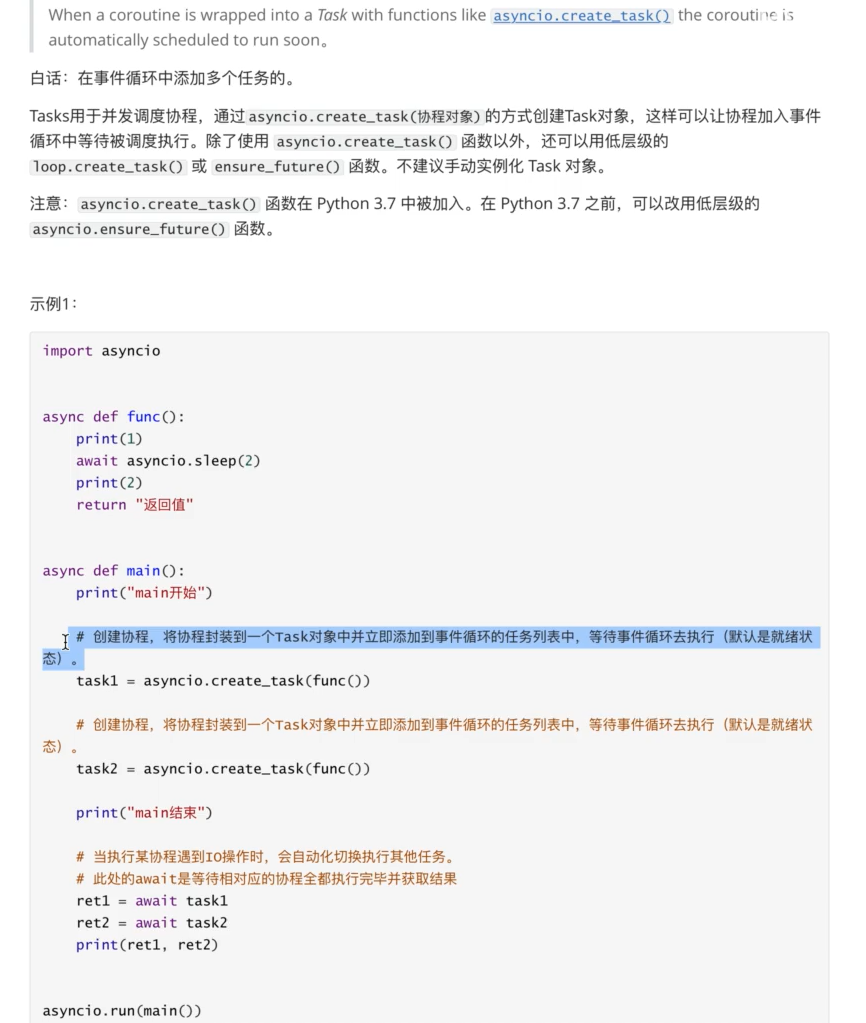


import asyncio


async def main():
    loop = asyncio.get_running_loop()  # asyncio.ProactorEventLoop
    # <ProactorEventLoop running=True closed=False debug=False> <class 'asyncio.windows_events.ProactorEventLoop'>
    print(loop, type(loop))
    future = loop.create_future()  # asyncio.Future
    print(future)
    await future


asyncio.run(main())
import asyncio


async def main():
    # 获取当前事件循环
    loop = asyncio.get_running_loop()  # asyncio.ProactorEventLoop
    # <ProactorEventLoop running=True closed=False debug=False> <class 'asyncio.windows_events.ProactorEventLoop'>
    print(loop, type(loop))
    future = loop.create_future()  # asyncio.Future
    await loop.create_task(set_result(future))
    data = await future
    print(data)


async def set_result(future: asyncio.Future):
    await asyncio.sleep(2)
    future.set_result(55)
    print(future.result())


asyncio.run(main())


 浙公网安备 33010602011771号