
Python: functools
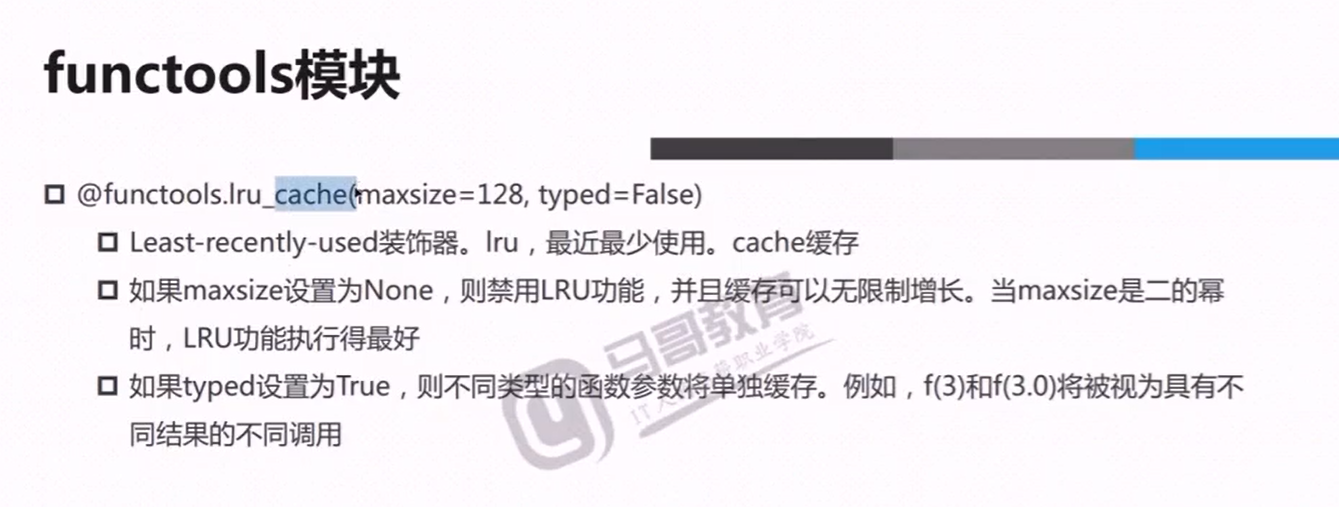
- lru_cache
import functools, time


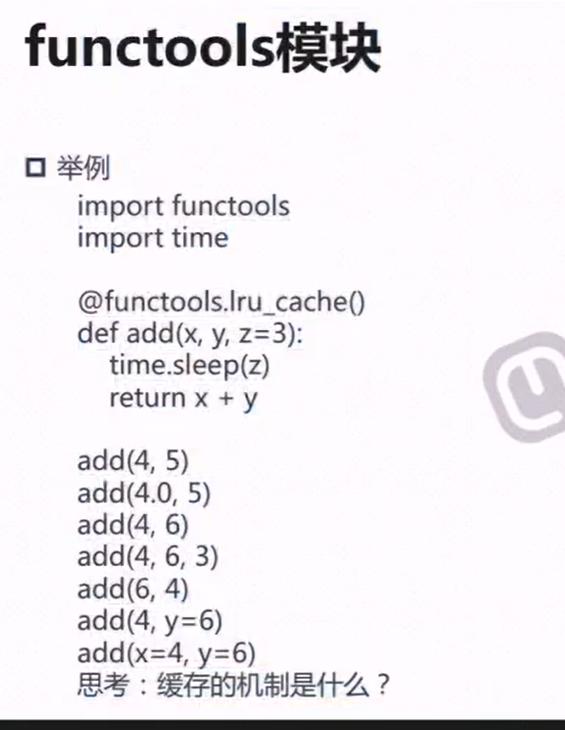
@functools.lru_cache(maxsize=128, typed=False)
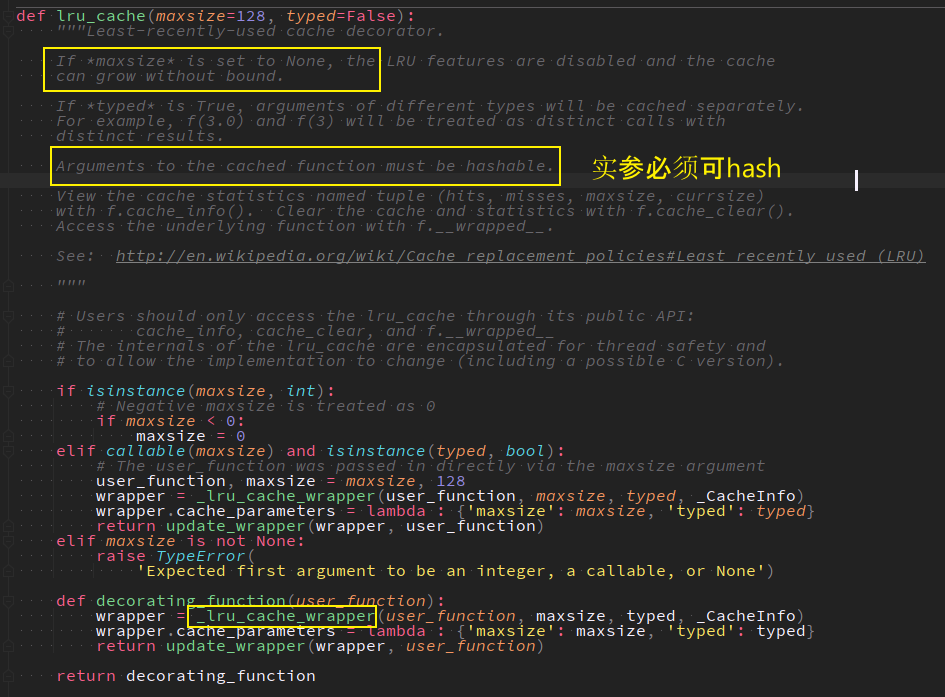
def b(x, y, z=3):
    time.sleep(2)
    return x + y


print(b(5, 6))
print('~' * 60)
print(b(5, 6))  # immediate

print(b(5.0, 6))  # immediate  11
import functools, time


@functools.lru_cache(maxsize=128, typed=True)
def b(x, y, z=3):
    time.sleep(2)
    return x + y


print(b(5, 6))
print('~' * 60)
print(b(5, 6))  # immediate

print(b(5.0, 6))  # not immediate 11.0
import functools, time


@functools.lru_cache(maxsize=128, typed=True)
def b(x, y=6, z=3):
    time.sleep(2)
    return x + y


print(b(5, 6))
print('~' * 60)
print(b(5))  # not immediate
print('~' * 60)
print(b(5, y=6))  # not immedate


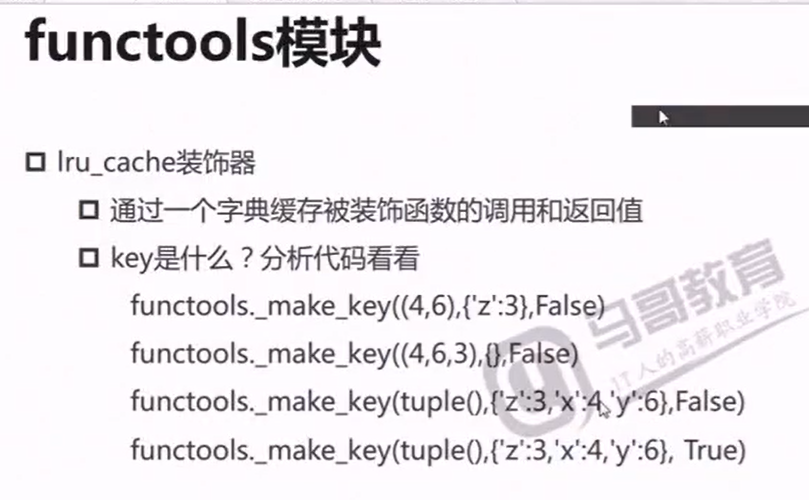
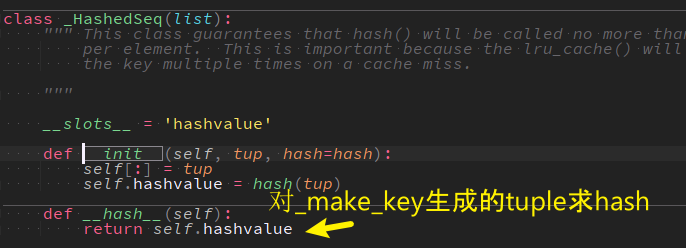
import functools, time


@functools.lru_cache(maxsize=None, typed=False)
def b(x, y=6, z=3):
    time.sleep(2)
    return x + y


print(b(x=5, y=6))
print('~' * 60)
print(b(x=5, y=6))  # immediate
print('~' * 60)
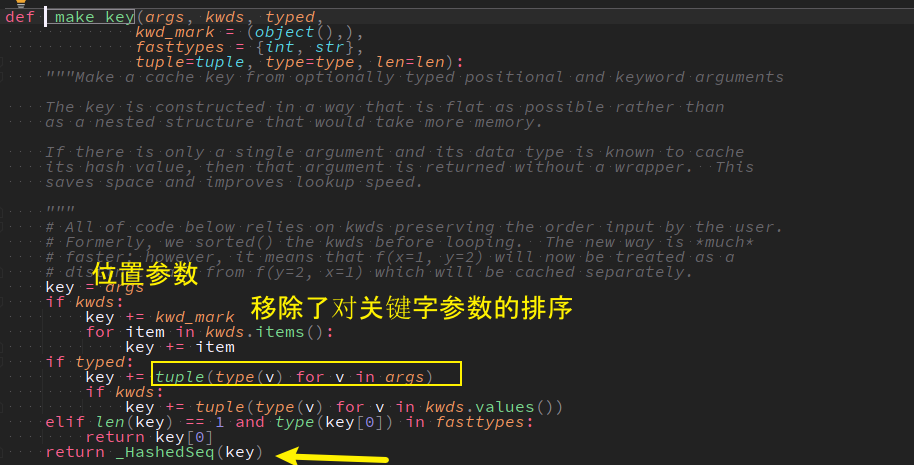
print(b(y=6, x=5))  # not immediate 没有对kwargs进行sorted


@functools.lru_cache(maxsize=None, typed=True)
def b(x):
    return x


print(b([1, 2]))  # TypeError: unhashable type: 'list'
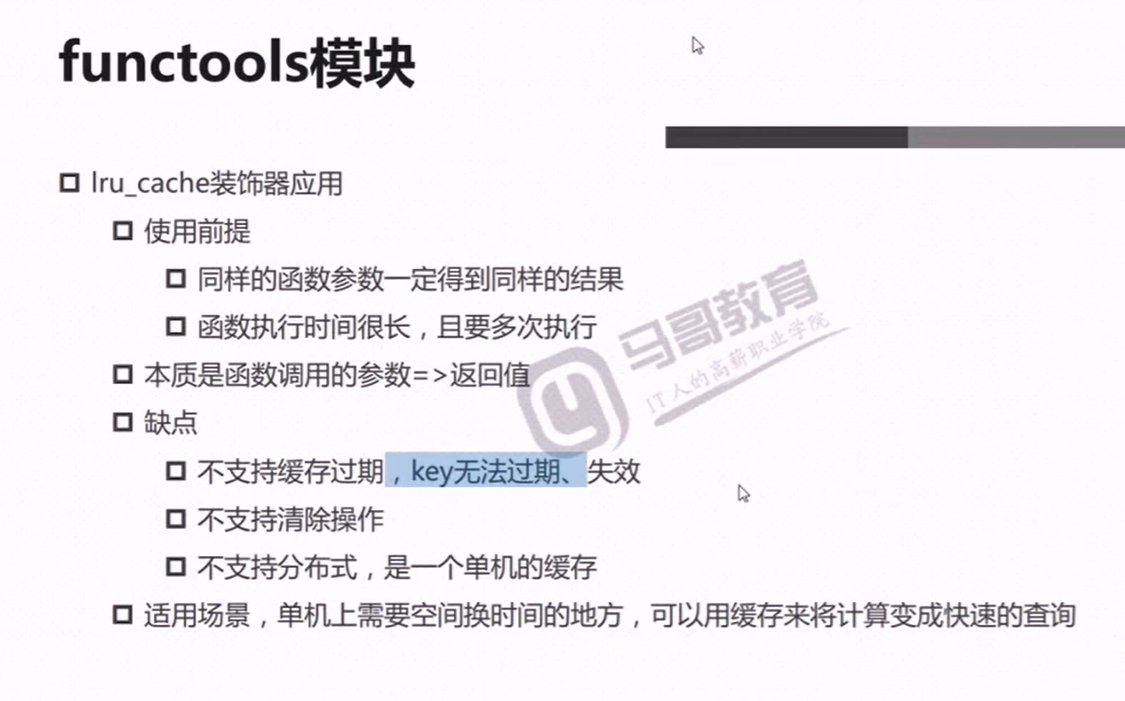
import functools


@functools.lru_cache(maxsize=None, typed=False)  # 无上限缓存
def fibonacci(n):
    if n < 0:
        return None
    elif n < 2:
        return n
    else:
        return fibonacci(n - 1) + fibonacci(n - 2)


print([fibonacci(v) for v in range(40)])

print(fibonacci.cache_info())
print(fibonacci.__wrapped__)
print(fibonacci)
fibonacci.cache_clear()
print(fibonacci.cache_info())
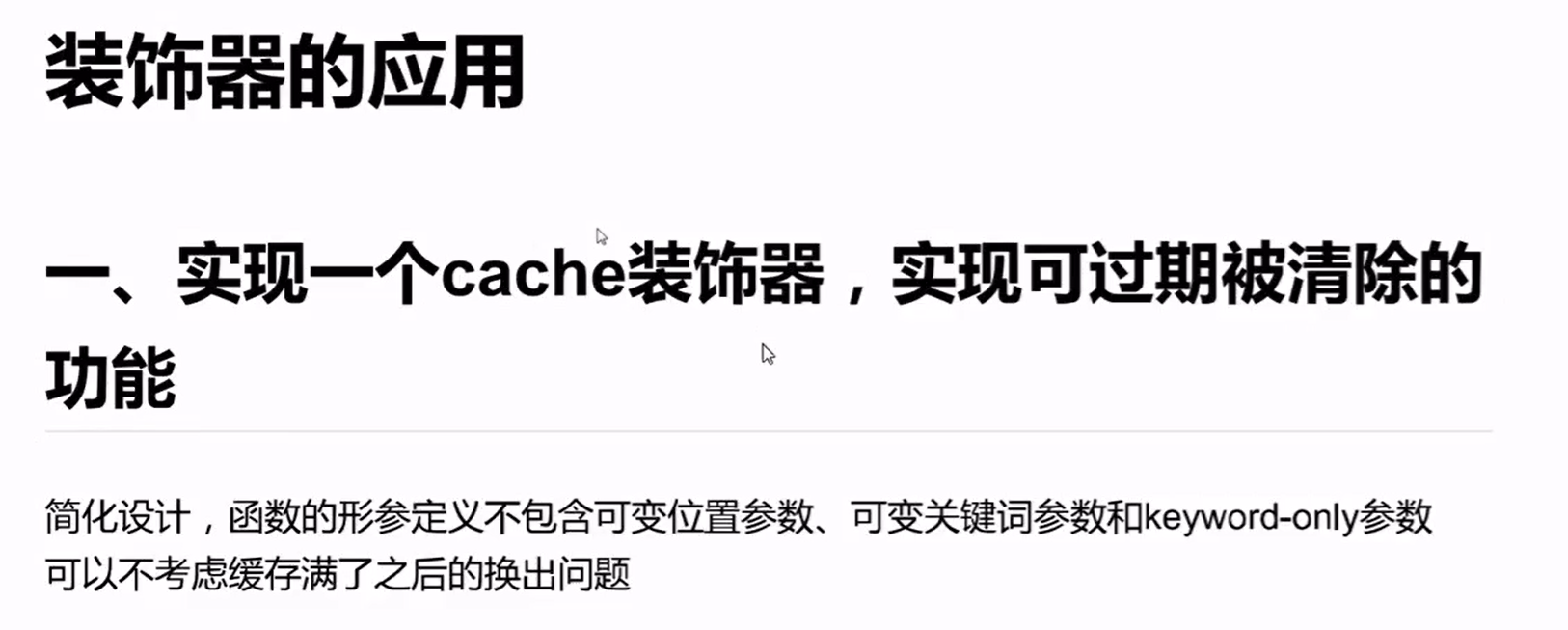
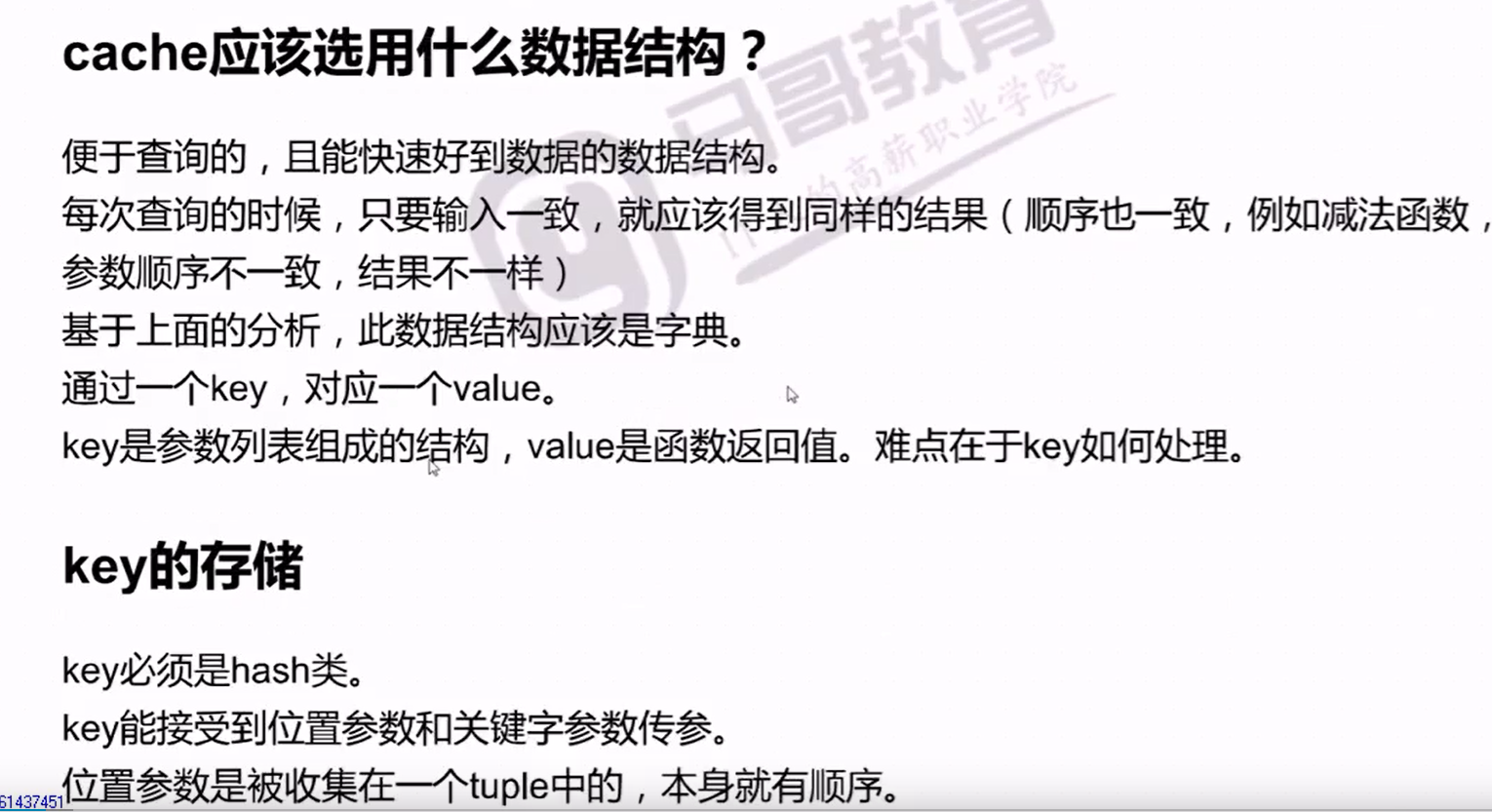
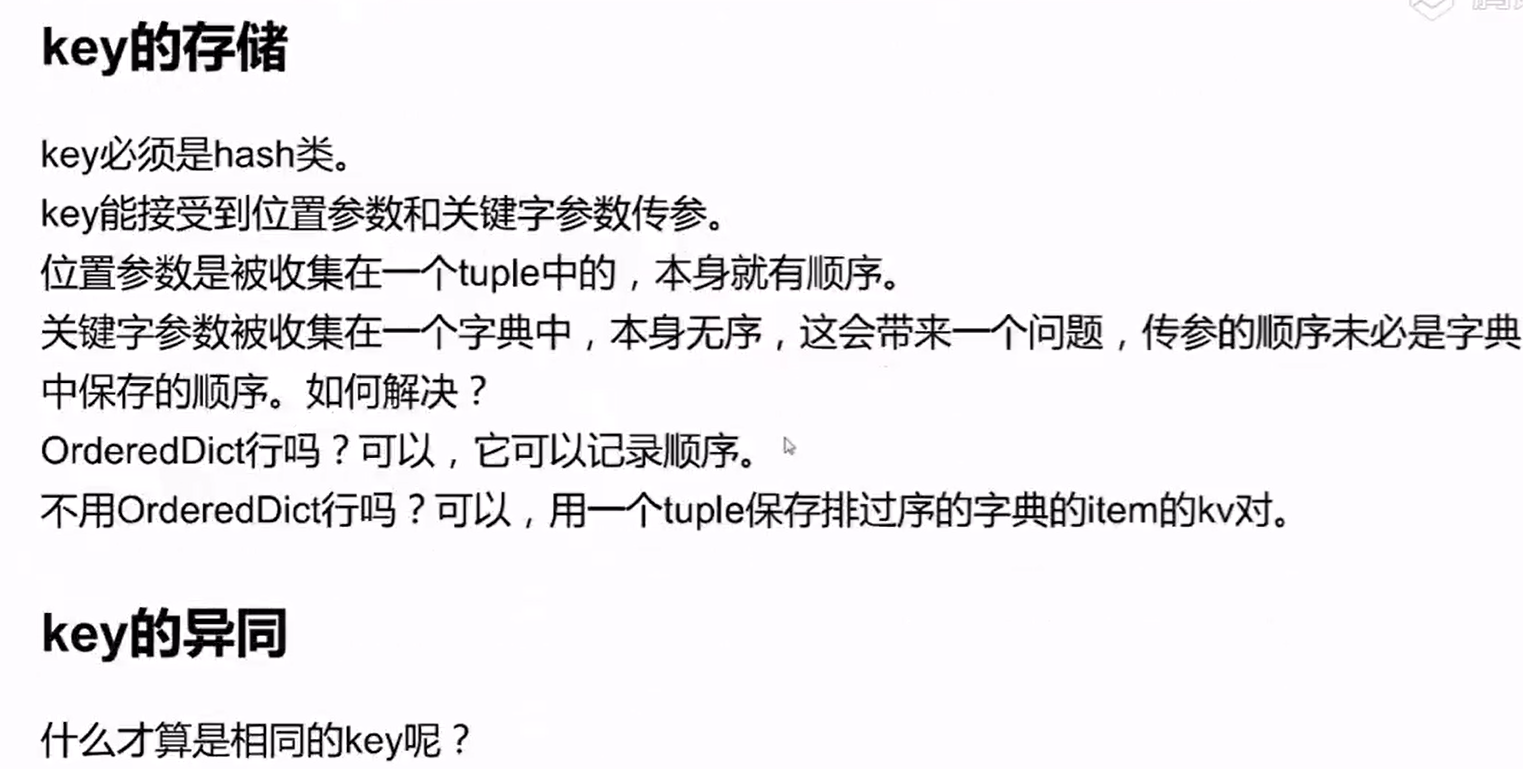
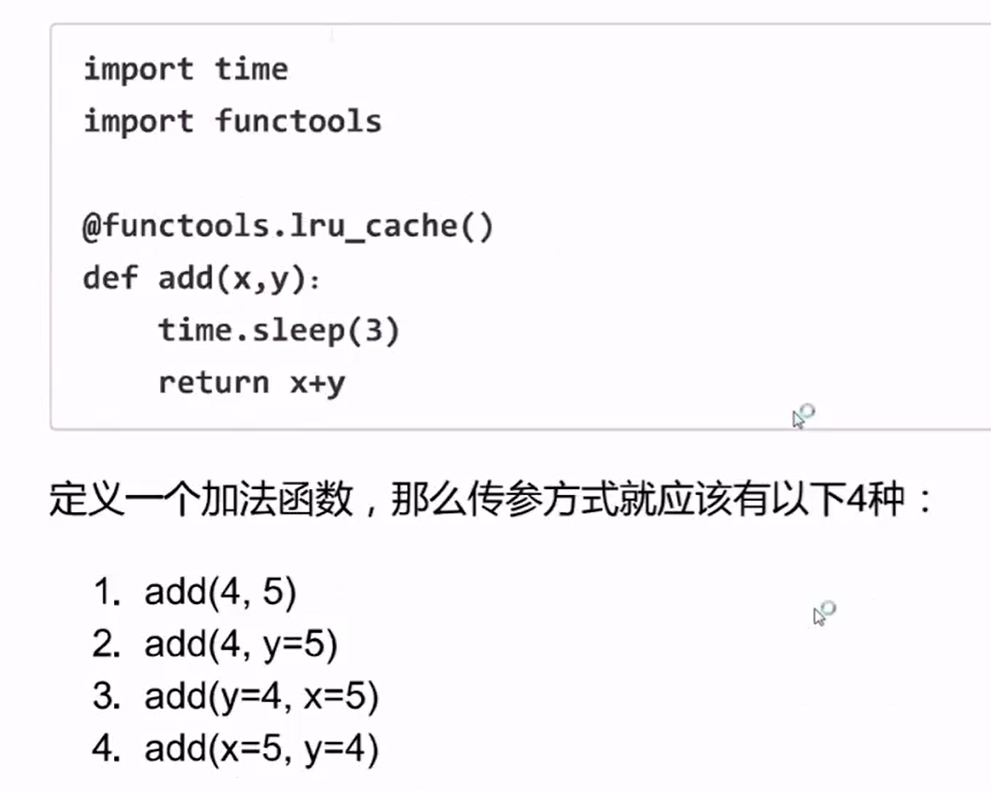
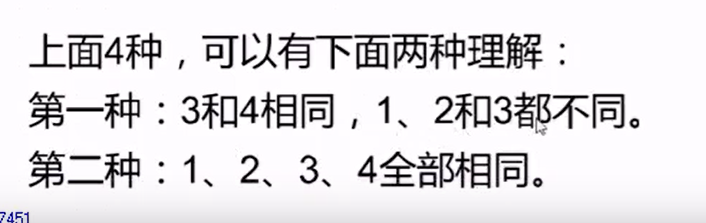
-
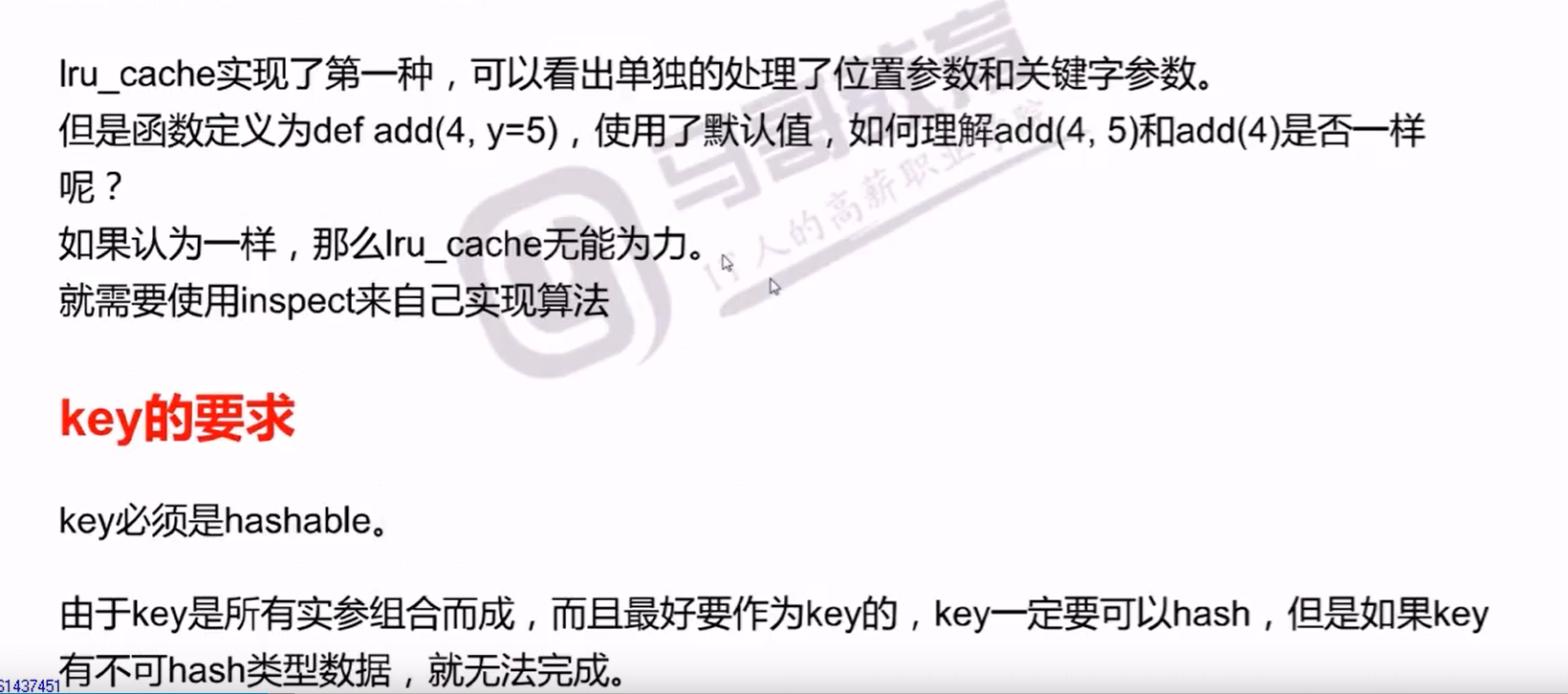
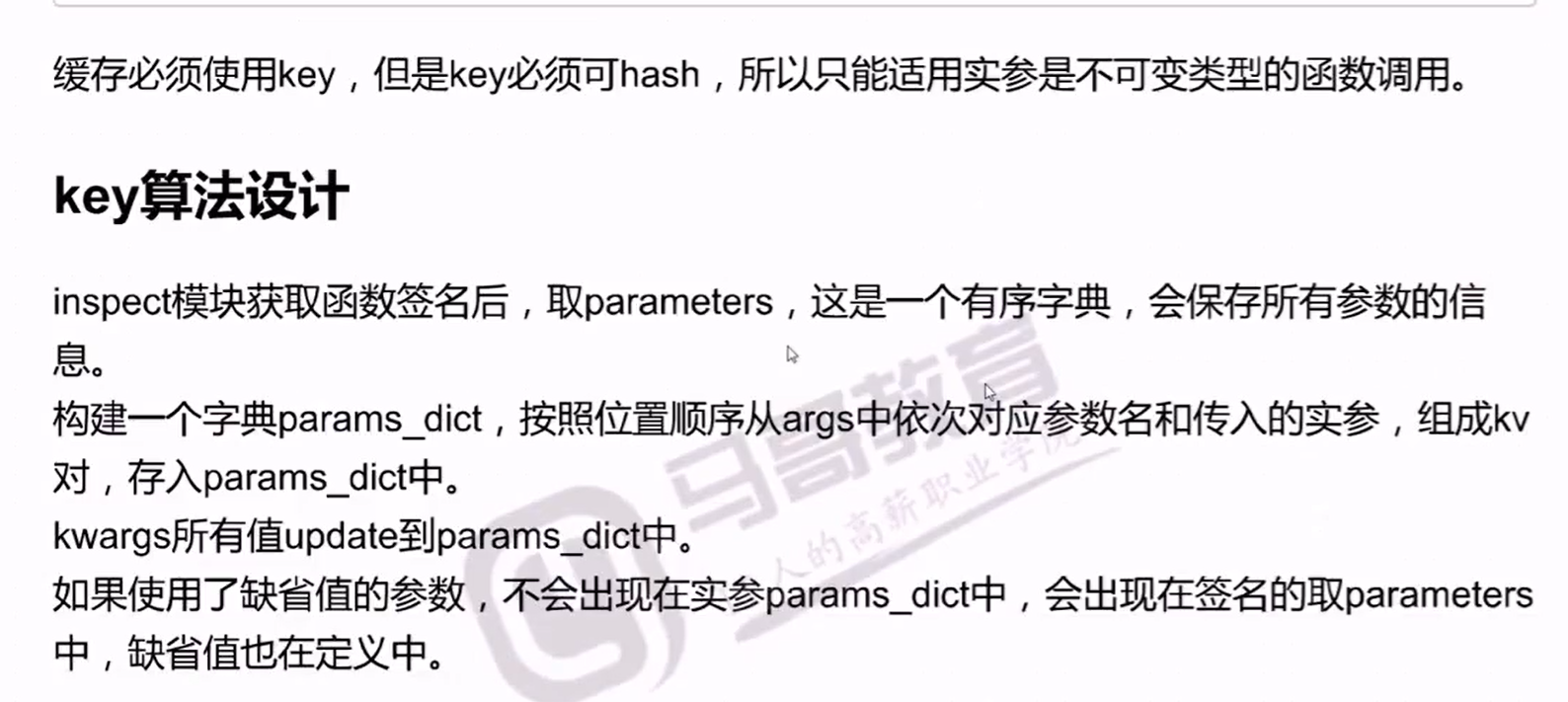
lru_cache实现
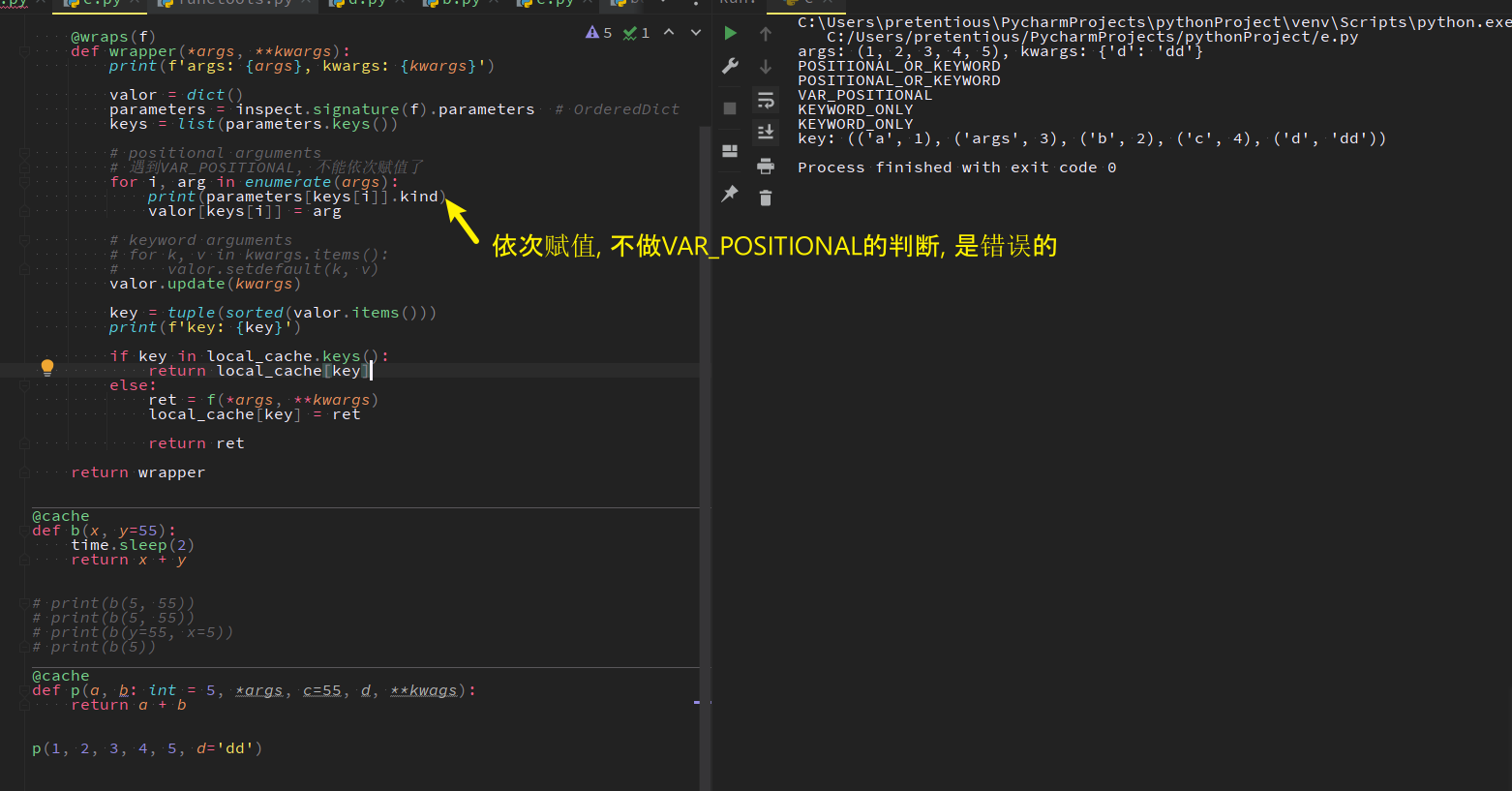
from functools import wraps
import time, inspect


def cache(f):
    local_cache = dict()

    @wraps(f)
    def wrapper(*args, **kwargs):
        print(f'args: {args}, kwargs: {kwargs}')

        valor = dict()
        parameters = inspect.signature(f).parameters  # OrderedDict
        keys = list(parameters.keys())

        # positional arguments
        # 遇到VAR_POSITIONAL, 不能依次赋值了
        for i, arg in enumerate(args):
            print(parameters[keys[i]].kind)
            valor[keys[i]] = arg

        # keyword arguments
        # for k, v in kwargs.items():
        #     valor.setdefault(k, v)
        valor.update(kwargs)

        key = tuple(sorted(valor.items()))
        print(f'key: {key}')

        if key in local_cache.keys():
            return local_cache[key]
        else:
            ret = f(*args, **kwargs)
            local_cache[key] = ret

            return ret

    return wrapper


@cache
def b(x, y=55):
    time.sleep(2)
    return x + y


# print(b(5, 55))
# print(b(5, 55))
# print(b(y=55, x=5))
# print(b(5))

@cache
def p(a, b: int = 5, *args, c=55, d, **kwags):
    return a + b


p(1, 2, 3, 4, 5, d='dd')
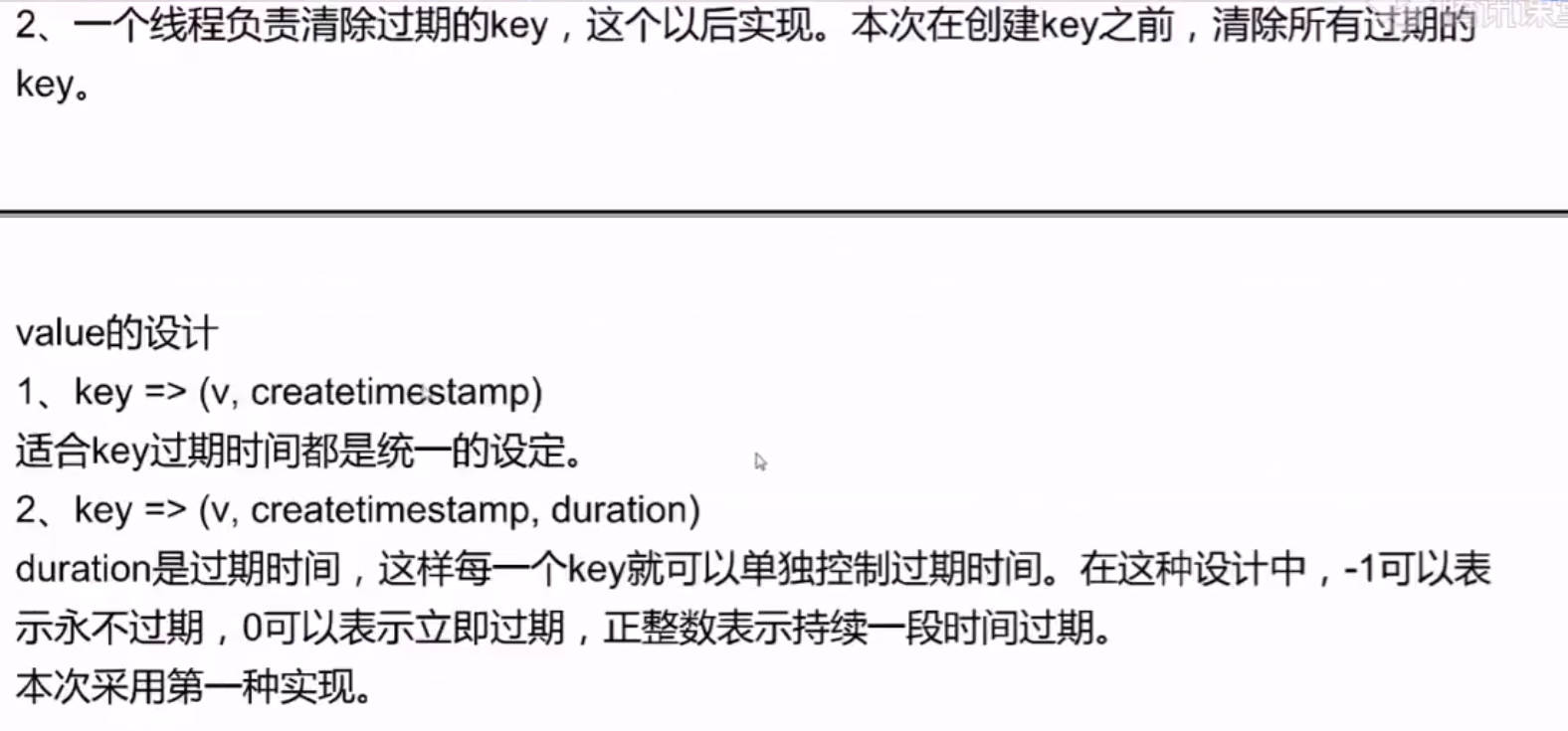
from functools import wraps
import time, inspect, datetime


def duration(f):
    @wraps(f)
    def wrapper(*args, **kwargs):
        commence = datetime.datetime.now()
        ret = f(*args, **kwargs)
        delta = (datetime.datetime.now() - commence).total_seconds()
        print(f'\nfunction {f.__qualname__} elapsed {delta} seconds\n')
        return ret

    return wrapper


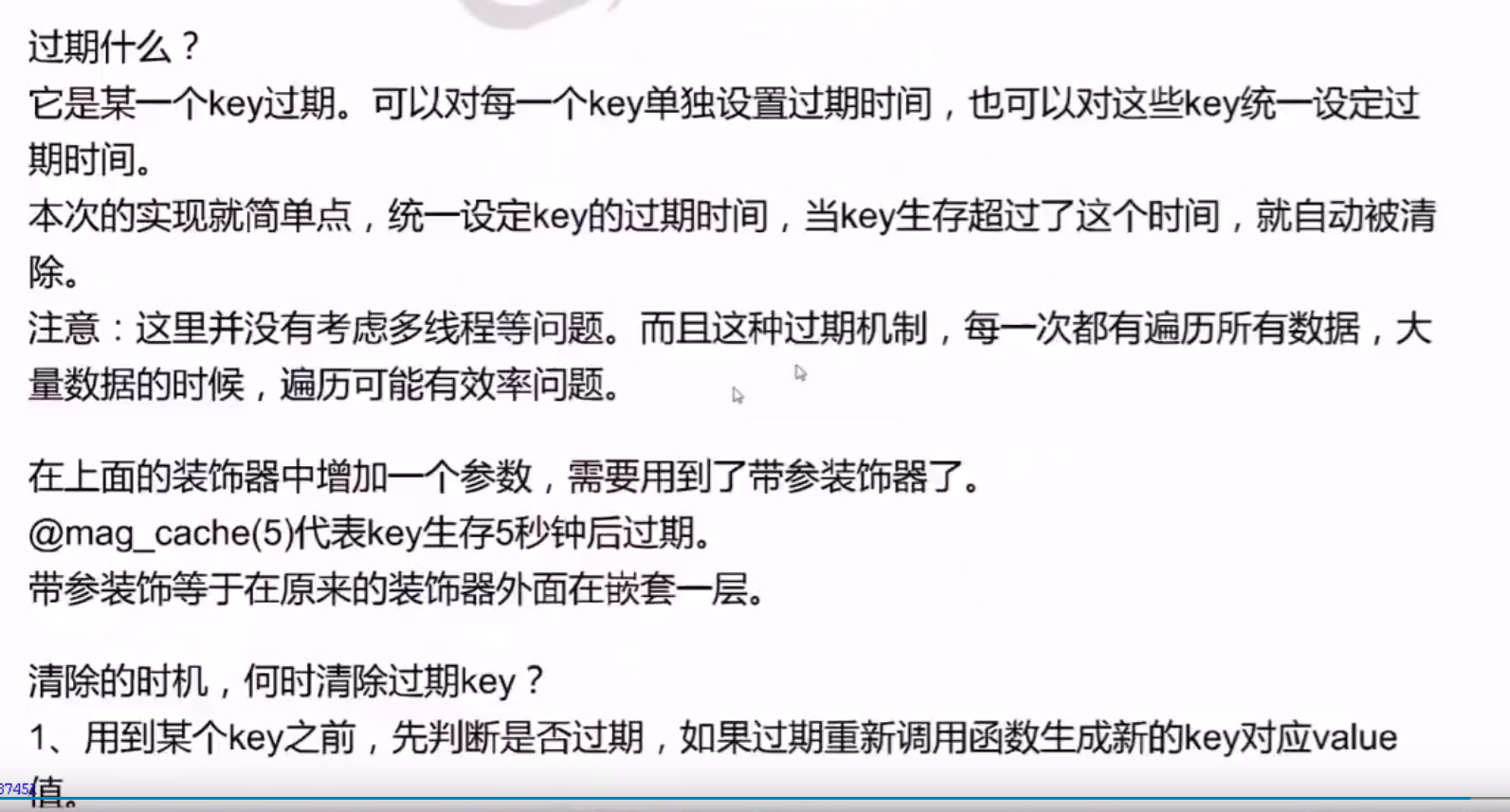
def cache(duration = 3):
    local_cache = dict()

    def outer(f):
        @wraps(f)
        def wrapper(*args, **kwargs):
            print(f'args: {args}, kwargs: {kwargs}')

            def clear_expire_keys(cache: dict):
                # perish expire keys
                expire_keys = []
                for k, (_, timestamp) in cache.items():
                    if datetime.datetime.now().timestamp() - timestamp > duration:
                        expire_keys.append(k)

                for k in expire_keys:
                    cache.pop(k)

            clear_expire_keys(local_cache)

            def make_key(f, *args, **kwargs):
                valor = dict()
                parameters = inspect.signature(f).parameters  # OrderedDict
                keys = list(parameters.keys())
                print(f'keys: {keys}')

                # positional arguments
                # 遇到VAR_POSITIONAL, 不能依次赋值了
                for i, v in enumerate(args):
                    # print(parameters[keys[i]].kind, type(str(parameters[keys[i]].kind)))
                    if parameters[keys[i]].kind.name == 'VAR_POSITIONAL':  # 判断是否为VAR_POSITIONAL
                        valor.setdefault(keys[i], tuple())
                        valor[keys[i]] += args[i:]
                        break
                    valor[keys[i]] = v
                    keys.remove(keys[i])  # 移除已经加入valor的参数

                # keyword arguments
                # valor.update(kwargs)  # 会产生参数覆盖问题
                for k, v in kwargs.items():
                    if k in valor:
                        raise TypeError(f'{f.__qualname__}() got multiple values for argument {repr(k)}')
                    valor.update({k: v})
                    keys.remove(k)  # 移除已经加入valor的参数

                # 在计算key前, 把未传递的默认值参数加入到valor, args, kwargs一定没有默认值
                print(f'keys: {keys}')
                for item in keys:
                    if parameters[item].default != parameters[item].empty:
                        valor.update({item: parameters[item].default})
                return tuple(sorted(valor.items()))

            key = make_key(f, *args, **kwargs)  # 计算local_cache的 key
            print(f'key: {key}')

            if key not in local_cache.keys():
                local_cache[key] = f(*args, **kwargs), datetime.datetime.now().timestamp()

            return local_cache[key]

            # if key in local_cache.keys():
            #     return local_cache[key]
            # else:
            #     ret = f(*args, **kwargs)
            #     local_cache[key] = ret
            #
            #     return ret

        return wrapper

    return outer


@duration
@cache()
def b(x, y = 55):
    time.sleep(2)
    return x + y


# print(b(5, 55))
# print(b(5, 55, x=5, y=55))  # valor.update(kwargs), b(5, 55) 调用后, local_cache缓存 key: (('x', 5), ('y', 55)), 直接返回, 不会传参给原函数, 在对kwargs合并时, 做检查
# print(b(5, 55, x=55, y=55))  # local_cache 找不到 key: (('x', 55), ('y', 55)) 时, 会传参给原函数, 异常
# print(b(5, y=55))
# print(b(5))


# print(b(5, 55))
# print(b(y=55, x=5))
# print(b(5))

@duration
@cache(duration = 4)
def p(a, b: int = 5, *args, c = 55, d, **kwargs):
    time.sleep(2)
    return a + b


print(p(1, d = 'dd'))
time.sleep(3.5)
print(p(1, b = 5, d = 'dd'))
print(p(1, b = 5, c = 55, d = 'dd'))
# print(p(1, 2, 3, 4, 5, d='dd'))

 浙公网安备 33010602011771号