
jdk1.8源码(三) - String类
String 类的定义
//package java.lang;
public final class String
    implements java.io.Serializable, Comparable<String>, CharSequence
这是一个用 final 声明的常量类,不能被任何类所继承,而且一旦一个String对象被创建, 包含在这个对象中的字符序列是不可改变的, 包括该类后续的所有方法都是不能修改该对象的,直至该对象被销毁,这是我们需要特别注意的(该类的一些方法看似改变了字符串,其实内部都是创建一个新的字符串,下面讲解方法时会介绍)。接着实现了 Serializable接口,这是一个序列化标志接口,还实现了 Comparable 接口,用于比较两个字符串的大小(按顺序比较单个字符的ASCII码),后面会有具体方法实现;最后实现了 CharSequence 接口,表示是一个有序字符的集合,相应的方法后面也会介绍。
String字段属性
 //String内部实际上是char数组
    private final char value[];
 // hash码
    private int hash;
 //序列号的唯一Id
    private static final long serialVersionUID = -6849794470754667710L;
equals 和 hashCode方法
public boolean equals(Object anObject) {
        if (this == anObject) {
            return true;
        }
        if (anObject instanceof String) {
            String anotherString = (String)anObject;
            int n = value.length;
            if (n == anotherString.value.length) {
                char v1[] = value;
                char v2[] = anotherString.value;
                int i = 0;
                while (n-- != 0) {
                    if (v1[i] != v2[i])
                        return false;
                    i++;
                }
                return true;
            }
        }
        return false;
    }


public int hashCode() {
        int h = hash;
        if (h == 0 && value.length > 0) {
            char val[] = value;

            for (int i = 0; i < value.length; i++) {
                h = 31 * h + val[i];
            }
            hash = h;
        }
        return h;
    }
String 类的 hashCode 算法很简单,主要就是中间的 for 循环,计算公式如下:
s[0]*31^(n-1) + s[1]*31^(n-2) + ... + s[n-1]
concat方法
public String concat(String str) {
        int otherLen = str.length();
        if (otherLen == 0) {
            return this;
        }
        int len = value.length;
        char buf[] = Arrays.copyOf(value, len + otherLen);
        str.getChars(buf, len);
        return new String(buf, true);
    }
注意:返回值是 new String(buf, true),也就是重新通过 new 关键字创建了一个新的字符串,原字符串是不变的。这也是前面我们说的一旦一个String对象被创建, 包含在这个对象中的字符序列是不可改变的。
常量池
注:在 JDK1.7 以后,方法区的常量池被移除放到堆中了
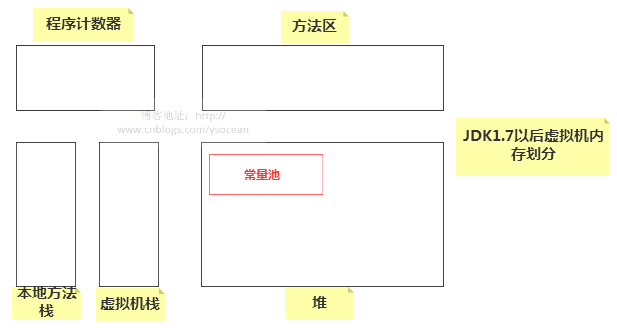
常量池:Java运行时会维护一个String Pool(String池), 也叫“字符串缓冲区”。String池用来存放运行时中产生的各种字符串,并且池中的字符串的内容不重复。
①、字面量创建字符串或者纯字符串(常量)拼接字符串会先在字符串池中找,看是否有相等的对象,没有的话就在字符串池创建该对象;有的话则直接用池中的引用,避免重复创建对象。
②、new关键字创建时,直接在堆中创建一个新对象,变量所引用的都是这个新对象的地址。
③、使用包含变量表达式来创建String对象,则不仅会检查维护字符串池,还会在堆区创建这个对象,最后是指向堆内存的对象。
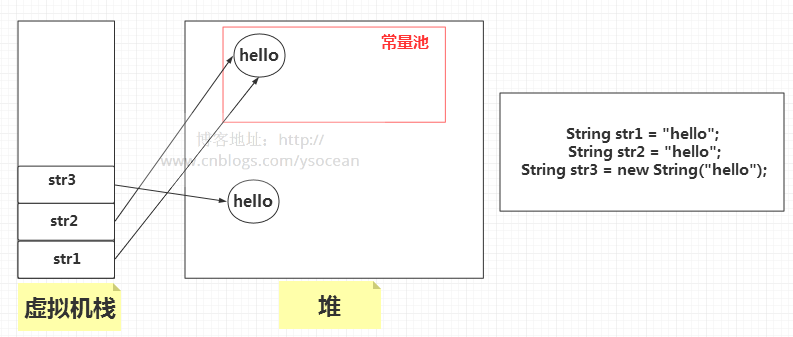
String str1 = "hello";
String str2 = "hello";
String str3 = new String("hello");
System.out.println(str1==str2);//true
System.out.println(str1==str3);//fasle
System.out.println(str2==str3);//fasle
System.out.println(str1.equals(str2));//true
System.out.println(str1.equals(str3));//true
System.out.println(str2.equals(str3));//true
对于上面的情况,首先 String str1 = "hello",会先到常量池中检查是否有“hello”的存在,发现是没有的,于是在常量池中创建“hello”对象,并将常量池中的引用赋值给str1;第二个字面量 String str2 = "hello",在常量池中检测到该对象了,直接将引用赋值给str2;第三个是通过new关键字创建的对象,常量池中有了该对象了,不用在常量池中创建,然后在堆中创建该对象,并将堆中对象的引用赋值给str3。如下图所示:
intern()方法
这是一个本地方法,当调用intern方法时,如果池中已经包含一个与该String确定的字符串相同equals(Object)的字符串,则返回该字符串。否则,将此String对象添加到池中,并返回此对象的引用。

 浙公网安备 33010602011771号