


Spring BeanPostProcessor接口
[[Spring IOC 源码学习总笔记]]
BeanPostProcessor
BeanPostProcessor是 Spring 框架提供的一个扩展点接口,它允许开发者在 Spring 容器完成 Bean 的实例化、依赖注入之后,在初始化阶段的前后“拦截”并自定义 Bean 的逻辑。
package org.springframework.beans.factory.config;

import org.springframework.beans.BeansException;
import org.springframework.lang.Nullable;

public interface BeanPostProcessor {

	/**
	 * Apply this {@code BeanPostProcessor} to the given new bean instance <i>before</i> any bean
	 * initialization callbacks (like InitializingBean's {@code afterPropertiesSet}
	 * or a custom init-method). The bean will already be populated with property values.
	 * The returned bean instance may be a wrapper around the original.
	 * <p>The default implementation returns the given {@code bean} as-is.
	 *
	 *这个是在 Bean 实例化并且填充属性之后调用, 但是 Bean 中一些生命周期方法如 InitializingBean 接口的
	 * afterPropertiesSet 方法、自定义的 init-method 方法等都尚未执行,在这些方法执行之前触发 postProcessBeforeInitialization 方法。
	 *
	 * @param bean the new bean instance
	 * @param beanName the name of the bean
	 * @return the bean instance to use, either the original or a wrapped one;
	 * if {@code null}, no subsequent BeanPostProcessors will be invoked
	 * @throws org.springframework.beans.BeansException in case of errors
	 * @see org.springframework.beans.factory.InitializingBean#afterPropertiesSet
	 */
	@Nullable
	default Object postProcessBeforeInitialization(Object bean, String beanName) throws BeansException {
		return bean;
	}

	/**
	 * Apply this {@code BeanPostProcessor} to the given new bean instance <i>after</i> any bean
	 * initialization callbacks (like InitializingBean's {@code afterPropertiesSet}
	 * or a custom init-method). The bean will already be populated with property values.
	 * The returned bean instance may be a wrapper around the original.
	 * <p>In case of a FactoryBean, this callback will be invoked for both the FactoryBean
	 * instance and the objects created by the FactoryBean (as of Spring 2.0). The
	 * post-processor can decide whether to apply to either the FactoryBean or created
	 * objects or both through corresponding {@code bean instanceof FactoryBean} checks.
	 * <p>This callback will also be invoked after a short-circuiting triggered by a
	 * {@link InstantiationAwareBeanPostProcessor#postProcessBeforeInstantiation} method,
	 * in contrast to all other {@code BeanPostProcessor} callbacks.
	 * <p>The default implementation returns the given {@code bean} as-is.
	 *
	 *  在 InitializingBean 接口的 afterPropertiesSet 和自定义的 init-method 之后触发该方法。
	 *
	 * @param bean the new bean instance
	 * @param beanName the name of the bean
	 * @return the bean instance to use, either the original or a wrapped one;
	 * if {@code null}, no subsequent BeanPostProcessors will be invoked
	 * @throws org.springframework.beans.BeansException in case of errors
	 * @see org.springframework.beans.factory.InitializingBean#afterPropertiesSet
	 * @see org.springframework.beans.factory.FactoryBean
	 */
	@Nullable
	default Object postProcessAfterInitialization(Object bean, String beanName) throws BeansException {
		return bean;
	}

}
容器注册 BeanPostProcessor 顺序的源码
在创建容器的过程中, 会将所有实现 BPP 接口的 bean 先实例化, 预注册/添加到 BeanFactory
org.springframework.context.support.AbstractApplicationContext#refresh 部分源码
@Override
public void refresh() throws BeansException, IllegalStateException {
	// 容器刷新, 执行时, 需要锁住
	synchronized (this.startupShutdownMonitor) {
		StartupStep contextRefresh = this.applicationStartup.start("spring.context.refresh");

		// Prepare this context for refreshing.
		/**
		 * 一, (ApplicationContex)预准备工作;
		 */
		prepareRefresh();

		// Tell the subclass to refresh the internal bean factory.
		/**
		 * 二, 获取一个新的 BeanFactory;
		 */
		ConfigurableListableBeanFactory beanFactory = obtainFreshBeanFactory();

		/**
		 * 三,(BeanFactory)预准备工作;
		 */
		// Prepare the bean factory for use in this context.
		prepareBeanFactory(beanFactory);

		try {
			// Allows post-processing of the bean factory in context subclasses.
			/**
			 * 四, beanFactory 已经准备好了, 给子类(Context)预留一个扩展点; (这里是空实现)
			 */
			postProcessBeanFactory(beanFactory);

			StartupStep beanPostProcess = this.applicationStartup.start("spring.context.beans.post-process");

			// Invoke factory processors registered as beans in the context.
			/**
			 * 五, 调用 BeanFactoryPostProcessor 和 BeanDefinitionRegistryPostProcessor;
			 */
			invokeBeanFactoryPostProcessors(beanFactory);

			// Register bean processors that intercept bean creation.
			/**
			 *  六,注册 BeanPostProcessor (BPP)处理器;
			 *  1. 拿到所有实现 BeanPostProcessor 的 bean, 然后进行分类存起来
			 *  这有一个关键点, Spring 对 BeanDefinition 分成三种角色:
			 *  	1. 用户定义的 Bean (ROLE_APPLICATION)
			 *      2. 较复杂的 (ROLE_SUPPORT) 较复杂的?  (不重要, 不要每一个细节都扣...)
			 *      3. Spring 内置的(ROLE_INFRASTRUCTURE)
			 *  2. 如果实现了 BeanPostProcessor 则会先(getBean)实例化这个bean
			 *  	1. 这里先 (getBean)实例化, 实现 BPP接口的 bean
			 *    	2. 这里按实现(PriorityOrdered)排序接口的、@Ordered注解的 等排序存起来. 实际调用的顺序 其实就是存起来的顺序
			 *      3. 另外 BeanPostProcessor 接口粗粒度太大了, Spring 还细分一些子接口:
			 *         1. SmartInstantiationAwareBeanPostProcessor 它提供了更高级的Bean实例化控制方法。主要作用在于允许对Bean的实例化过程进行更精细的控制和定制。
			 *         2. MergedBeanDefinitionPostProcessor 在合并Bean定义(MergedBeanDefinition)之后但在实例化Bean之前,允许对合并后的Bean定义进行修改、调整或附加元数据。
			 *         3. DestructionAwareBeanPostProcessor 它允许在Bean被销毁之前(例如,容器关闭或特定作用域的Bean销毁)执行一些操作。
			 *         等等以上也会存起来
			 *      4. 最终调用 BPP是在 {@link AbstractApplicationContext#finishBeanFactoryInitialization(ConfigurableListableBeanFactory)} 实例初始化其他Bean调用
			 *
			 */
			registerBeanPostProcessors(beanFactory);

			beanPostProcess.end();

			// Initialize message source for this context.
			/**
			 * 七,初始化I18N国际化, 消息源;
			 */
			initMessageSource();

			// Initialize event multicaster for this context.
			/**
			 * 八, 初始化 事件多播器;
			 */
			initApplicationEventMulticaster();

			// Initialize other special beans in specific context subclasses.
			/**
			 * 九, 给子类(Context)留下一个扩展点
			 */
			onRefresh();

			// Check for listener beans and register them.
			/**
			 * 十,向多播器注册监听器;
			 */
			registerListeners();

			// Instantiate all remaining (non-lazy-init) singletons.
			/**
			 * 十一,实例化剩下的所有单例bean
			 */
			finishBeanFactoryInitialization(beanFactory);
	....
关键在第六步: 注册所有的 BeanPostProcessor, 调用栈:
org.springframework.context.support.AbstractApplicationContext#registerBeanPostProcessors
org.springframework.context.support.PostProcessorRegistrationDelegate#registerBeanPostProcessors(org.springframework.beans.factory.config.ConfigurableListableBeanFactory, org.springframework.context.support.AbstractApplicationContext)
/**
 *  in short:
 *  1. 拿到所有实现 BeanPostProcessor 的 bean, 然后进行分类存起来
 *  这有一个关键点, Spring 对 BeanDefinition 分成三种角色:
 *  	1. 用户定义的 Bean (ROLE_APPLICATION)
 *      2. 较复杂的 (ROLE_SUPPORT) 较复杂的? 通常是一个外部配置
 *      3. Spring 内置的(ROLE_INFRASTRUCTURE)
 *  2. 如果实现了 BeanPostProcessor 则会实例化这个bean, 但注意这里只是注册,并不会调用BeanPostProcessor的相关方法
 *
 *  另外 BeanPostProcessor 粗粒度太大, Spring 还细分一些子接口:
 *  - SmartInstantiationAwareBeanPostProcessor 它提供了更高级的Bean实例化控制方法。主要作用在于允许对Bean的实例化过程进行更精细的控制和定制。
 *  - MergedBeanDefinitionPostProcessor 在合并Bean定义(MergedBeanDefinition)之后但在实例化Bean之前,允许对合并后的Bean定义进行修改、调整或附加元数据。
 *  - DestructionAwareBeanPostProcessor 它允许在Bean被销毁之前(例如,容器关闭或特定作用域的Bean销毁)执行一些操作。
 */
public static void registerBeanPostProcessors(
		ConfigurableListableBeanFactory beanFactory, AbstractApplicationContext applicationContext) {

	// WARNING: Although it may appear that the body of this method can be easily
	// refactored to avoid the use of multiple loops and multiple lists, the use
	// of multiple lists and multiple passes over the names of processors is
	// intentional. We must ensure that we honor the contracts for PriorityOrdered
	// and Ordered processors. Specifically, we must NOT cause processors to be
	// instantiated (via getBean() invocations) or registered in the ApplicationContext
	// in the wrong order.
	//
	// Before submitting a pull request (PR) to change this method, please review the
	// list of all declined PRs involving changes to PostProcessorRegistrationDelegate
	// to ensure that your proposal does not result in a breaking change:
	// https://github.com/spring-projects/spring-framework/issues?q=PostProcessorRegistrationDelegate+is%3Aclosed+label%3A%22status%3A+declined%22
	/**
	 * 拿到所有实现 BeanPostProcessor 的 bean名称
	 */
	String[] postProcessorNames = beanFactory.getBeanNamesForType(BeanPostProcessor.class, true, false);

	// Register BeanPostProcessorChecker that logs an info message when
	// a bean is created during BeanPostProcessor instantiation, i.e. when
	// a bean is not eligible for getting processed by all BeanPostProcessors.
	/**
	 * 计算 BeanPostProcessor(BPP) 的总数,  +1 是什么操作?
	 * 原因是: 下一行,又加了一个 BeanPostProcessorChecker
	 */
	int beanProcessorTargetCount = beanFactory.getBeanPostProcessorCount() + 1 + postProcessorNames.length;
	// BeanPostProcessorChecker 这个BeanPostProcessor, 没啥实际作用, 就是记录了一些日志;
	beanFactory.addBeanPostProcessor(
			new BeanPostProcessorChecker(beanFactory, postProcessorNames, beanProcessorTargetCount));
	// Separate between BeanPostProcessors that implement PriorityOrdered,
	// Ordered, and the rest.
	/**
	 * 对 BeanPostProcessor 进行分类存起来,  再调用
	 * 比如
	 * 1. priorityOrderedPostProcessors //有实现(PriorityOrdered)排序接口的
	 * 2. internalPostProcessors Spring内部的bean, 见: Spring将bean分为三种角色
	 * 3. @Ordered 注解的
	 * 4. nonOrderedPostProcessorNames	//没有noneOrder的
	 */
	List<BeanPostProcessor> priorityOrderedPostProcessors = new ArrayList<>();
	List<BeanPostProcessor> internalPostProcessors = new ArrayList<>();
	List<String> orderedPostProcessorNames = new ArrayList<>();
	List<String> nonOrderedPostProcessorNames = new ArrayList<>();
	for (String ppName : postProcessorNames) {
		if (beanFactory.isTypeMatch(ppName, PriorityOrdered.class)) {
			/**
			 * 注意, 若 bean 还实现了 PriorityOrdered 接口, 也去去实例化它;
			 */
			BeanPostProcessor pp = beanFactory.getBean(ppName, BeanPostProcessor.class);
			priorityOrderedPostProcessors.add(pp);
			if (pp instanceof MergedBeanDefinitionPostProcessor) {
				internalPostProcessors.add(pp);
			}
		}
		else if (beanFactory.isTypeMatch(ppName, Ordered.class)) {
			orderedPostProcessorNames.add(ppName);
		}
		else {
			nonOrderedPostProcessorNames.add(ppName);
		}
	}

	// First, register the BeanPostProcessors that implement PriorityOrdered.
	sortPostProcessors(priorityOrderedPostProcessors, beanFactory);
	registerBeanPostProcessors(beanFactory, priorityOrderedPostProcessors);

	// Next, register the BeanPostProcessors that implement Ordered.
	List<BeanPostProcessor> orderedPostProcessors = new ArrayList<>(orderedPostProcessorNames.size());
	for (String ppName : orderedPostProcessorNames) {
		BeanPostProcessor pp = beanFactory.getBean(ppName, BeanPostProcessor.class);
		orderedPostProcessors.add(pp);
		if (pp instanceof MergedBeanDefinitionPostProcessor) {
			internalPostProcessors.add(pp);
		}
	}
	sortPostProcessors(orderedPostProcessors, beanFactory);
	registerBeanPostProcessors(beanFactory, orderedPostProcessors);

	/**
	 * 注册所有常规BeanPostProcessors
	 * 这里 getBean 实例化bean !;
	 */
	// Now, register all regular(常规) BeanPostProcessors.
	List<BeanPostProcessor> nonOrderedPostProcessors = new ArrayList<>(nonOrderedPostProcessorNames.size());
	for (String ppName : nonOrderedPostProcessorNames) {
		BeanPostProcessor pp = beanFactory.getBean(ppName, BeanPostProcessor.class);
		nonOrderedPostProcessors.add(pp);
		if (pp instanceof MergedBeanDefinitionPostProcessor) {
			internalPostProcessors.add(pp);
		}
	}
	registerBeanPostProcessors(beanFactory, nonOrderedPostProcessors);

	/**
	 * 最后, 注册所有 内置 BeanPostProcessor
	 */
	// Finally, re-register all internal BeanPostProcessors.
	sortPostProcessors(internalPostProcessors, beanFactory);
	registerBeanPostProcessors(beanFactory, internalPostProcessors);

	//最后再重新放一次, 让它在最后
	// Re-register post-processor for detecting inner beans as ApplicationListeners,
	// moving it to the end of the processor chain (for picking up proxies etc).
	beanFactory.addBeanPostProcessor(new ApplicationListenerDetector(applicationContext));
}
调用 BeanFactory的addBeanPostProcessor方法, 最终会存放的会存放到 org.springframework.beans.factory.support.AbstractBeanFactory#beanPostProcessors 的List 集合中
org.springframework.context.support.PostProcessorRegistrationDelegate#registerBeanPostProcessors(org.springframework.beans.factory.config.ConfigurableListableBeanFactory, java.util.List<? extends org.springframework.beans.factory.config.BeanPostProcessor>)
private static void registerBeanPostProcessors(
			ConfigurableListableBeanFactory beanFactory, List<? extends BeanPostProcessor> postProcessors) {

		if (beanFactory instanceof AbstractBeanFactory abstractBeanFactory) {
			// Bulk addition is more efficient against our CopyOnWriteArrayList there
			abstractBeanFactory.addBeanPostProcessors(postProcessors);
		}
		else {
			for (BeanPostProcessor postProcessor : postProcessors) {
				beanFactory.addBeanPostProcessor(postProcessor);
			}
		}
	}
所以, 可以理解存放顺序就是调用顺序, 逻辑是: 1. 先调用实现 org.springframework.core.PriorityOrdered 接口的 2. 在调用实现 org.springframework.core.Ordered 接口的
容器调用 BeanPostProcessor 过程的源码
在第十一步: 实例化剩下的所有单例bean
实例化bean 过程偏长, 与主题无关, 暂略, 这里只看调用的 BPP 的主要逻辑, 调用栈
org.springframework.context.support.AbstractApplicationContext#finishBeanFactoryInitialization
org.springframework.beans.factory.support.DefaultListableBeanFactory#preInstantiateSingletons
org.springframework.beans.factory.support.AbstractAutowireCapableBeanFactory#doCreateBean 部分源码
protected Object doCreateBean(String beanName, RootBeanDefinition mbd, @Nullable Object[] args)
			throws BeanCreationException {

		// Instantiate the bean.
		BeanWrapper instanceWrapper = null;
		if (mbd.isSingleton()) {
			instanceWrapper = this.factoryBeanInstanceCache.remove(beanName);
		}
		if (instanceWrapper == null) {
			/**
			 *  1. 真正在jvm层面实例化对象;
			 */
			instanceWrapper = createBeanInstance(beanName, mbd, args);
		}
		Object bean = instanceWrapper.getWrappedInstance();
		Class<?> beanType = instanceWrapper.getWrappedClass();
		if (beanType != NullBean.class) {
			mbd.resolvedTargetType = beanType;
		}
..............

		// Initialize the bean instance.
		Object exposedObject = bean;
		try {
			/**
			 * 2.填充Bean属性
			 */
			populateBean(beanName, mbd, instanceWrapper);
			/**
			 * 3.初始化Bean对象
			 *   1.先调用这三个 BeanNameAware, BeanClassLoaderAware, BeanFactoryAware
			 * 	  这三个是在创建BeanFactory 时忽略的三个 Aware 接口
			 *   2. 调用所有 BeanPostProcessors#postProcessBeforeInitialization (作用: 在Bean初始化之前调用)
			 *   3. 调用 init-method 方法
			 *   4. 调用所有 BeanPostProcessors#postProcessAfterInitialization (作用: 在Bean初始化之后调用)
			 */
			exposedObject = initializeBean(beanName, exposedObject, mbd);
		}
		catch (Throwable ex) {
			if (ex instanceof BeanCreationException bce && beanName.equals(bce.getBeanName())) {
				throw bce;
			}
			else {
				throw new BeanCreationException(mbd.getResourceDescription(), beanName, ex.getMessage(), ex);
			}
		}
		.... 省略部分源码

		return exposedObject;
	}
org.springframework.beans.factory.support.AbstractAutowireCapableBeanFactory#initializeBean(java.lang.String, java.lang.Object, org.springframework.beans.factory.support.RootBeanDefinition)
/**
 * Initialize the given bean instance, applying factory callbacks
 * as well as init methods and bean post processors.
 * <p>Called from {@link #createBean} for traditionally defined beans,
 * and from {@link #initializeBean} for existing bean instances.
 * @param beanName the bean name in the factory (for debugging purposes)
 * @param bean the new bean instance we may need to initialize
 * @param mbd the bean definition that the bean was created with
 * (can also be {@code null}, if given an existing bean instance)
 * @return the initialized bean instance (potentially wrapped)
 * @see BeanNameAware
 * @see BeanClassLoaderAware
 * @see BeanFactoryAware
 * @see #applyBeanPostProcessorsBeforeInitialization
 * @see #invokeInitMethods
 * @see #applyBeanPostProcessorsAfterInitialization
 */
@SuppressWarnings("deprecation")
protected Object initializeBean(String beanName, Object bean, @Nullable RootBeanDefinition mbd) {

	/**
	 * 先调用这三个 BeanNameAware, BeanClassLoaderAware, BeanFactoryAware
	 * 这三个是在创建BeanFactory 时忽略的三个 Aware 接口
	 * { @link org.springframework.beans.factory.support.AbstractAutowireCapableBeanFactory#AbstractAutowireCapableBeanFactory() }
	 *
	 */
	invokeAwareMethods(beanName, bean);

	Object wrappedBean = bean;
	if (mbd == null || !mbd.isSynthetic()) {
		/**
		 * 调用所有 BeanPostProcessors#postProcessBeforeInitialization
		 * (作用 在Bean初始化之前调用)
		 * 比如 Spring 中Aware属性的设置, 是通过这种方式扩展的
		 * - org.springframework.context.support.ApplicationContextAwareProcessor
		 * 对应调用 ApplicationContextAware, EnvironmentAware, ApplicationEventPublisherAware 等Aware方法
		 *
		 */
		wrappedBean = applyBeanPostProcessorsBeforeInitialization(wrappedBean, beanName);
	}

	try {
		/**
		 * 调用 init-method 方法
		 */
		invokeInitMethods(beanName, wrappedBean, mbd);
	}
	catch (Throwable ex) {
		throw new BeanCreationException(
				(mbd != null ? mbd.getResourceDescription() : null), beanName, ex.getMessage(), ex);
	}
	if (mbd == null || !mbd.isSynthetic()) {
		/**
		 * 调用所有 BeanPostProcessors#postProcessAfterInitialization
		 * (作用 在Bean初始化之后调用)
		 *
		 * - AspectJAwareAdvisorAutoProxyCreator.class
		 * org.springframework.aop.config.internalAutoProxyCreator 对应的类有根据情况有三个可能
		 *   InfrastructureAdvisorAutoProxyCreator.class,
		 *   AspectJAwareAdvisorAutoProxyCreator.class,
		 *   AnnotationAwareAspectJAutoProxyCreator.class
		 *
		 *  如果需要代理, 这里会真正的对原始 bean 进行代理  进行代理的创建 createProxy
		 *
		 */
		wrappedBean = applyBeanPostProcessorsAfterInitialization(wrappedBean, beanName);
	}

	return wrappedBean;
}
调时机是: 实例 Bean对象 -> 填充Bean的属性 -> 调完Aware接口的注入 -> 调用(BPP) 的Before方法 -> 调用 init-method -> 调用(BPP) 的After方法 ; 也符合大家所知的bean生命周期
且都使用了 applyBeanPostProcessorsBeforeInitialization 和 applyBeanPostProcessorsAfterInitialization方法的返回值作为 wrappedBean 返回出去.
所以:
接口中的两个方法都要将传入的 bean 返回,而不能返回 null,如果返回的是 null 那么我们通过getBean() 方法将得不到目标对象。
org.springframework.beans.factory.support.AbstractAutowireCapableBeanFactory#applyBeanPostProcessorsBeforeInitialization
@Deprecated(since = "6.1")
@Override
public Object applyBeanPostProcessorsBeforeInitialization(Object existingBean, String beanName)
		throws BeansException {

	Object result = existingBean;
	for (BeanPostProcessor processor : getBeanPostProcessors()) {
		Object current = processor.postProcessBeforeInitialization(result, beanName);
		if (current == null) {
			return result;
		}
		result = current;
	}
	return result;
}
org.springframework.beans.factory.support.AbstractAutowireCapableBeanFactory#applyBeanPostProcessorsAfterInitialization
@Deprecated(since = "6.1")
@Override
public Object applyBeanPostProcessorsAfterInitialization(Object existingBean, String beanName)
		throws BeansException {

	Object result = existingBean;
	for (BeanPostProcessor processor : getBeanPostProcessors()) {
		Object current = processor.postProcessAfterInitialization(result, beanName);
		if (current == null) {
			return result;
		}
		result = current;
	}
	return result;
}
BeanPostProcessor 的子接口
另外 BeanPostProcessor 粗粒度太大, Spring 还细分一些子接口:
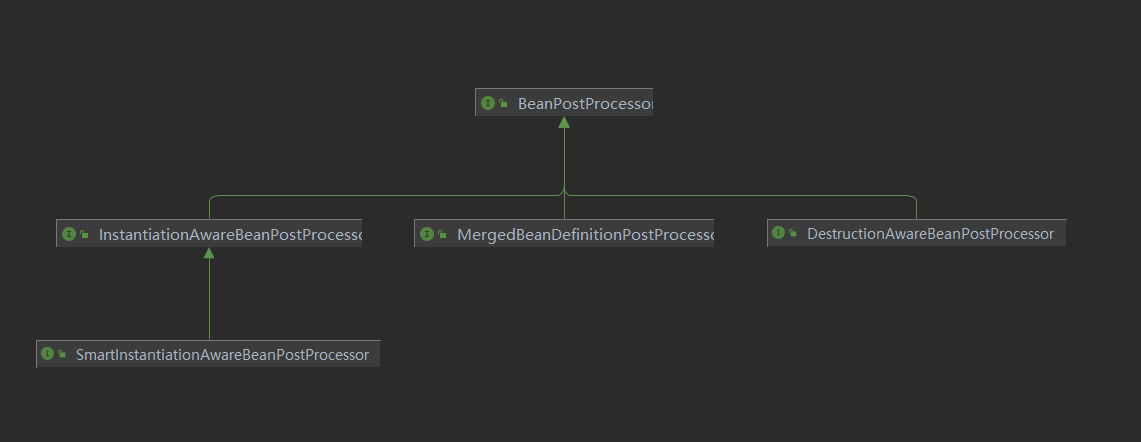
AutowiredAnnotationBeanPostProcessor
@Autowired、@Inject 等就是根据这个回调来实现最终注入依赖的属性的。
public interface InstantiationAwareBeanPostProcessor extends BeanPostProcessor {
	// BeanPostProcessor 接口方法
	@Nullable
	default Object postProcessBeforeInstantiation(Class<?> beanClass, String beanName) throws BeansException {
		return null;
	}
	// BeanPostProcessor 接口方法
	default boolean postProcessAfterInstantiation(Object bean, String beanName) throws BeansException {
		return true;
	}

	/**
	 * Post-process the given property values before the factory applies them
	 * to the given bean.
	 * <p>The default implementation returns the given {@code pvs} as-is.
	 *
	 * 将给定的属性值应用到指定的bean之前进行回调
	 * 可以用来检查和修改属性,最终返回的PropertyValues会应用到bean中
	 * 	`@Autowired、@Resource` 在Spring中 就是根据这个回调来实现最终注入依赖的属性的
	 *
	 * @param pvs the property values that the factory is about to apply (never {@code null})
	 * @param bean the bean instance created, but whose properties have not yet been set
	 * @param beanName the name of the bean
	 * @return the actual property values to apply to the given bean (can be the passed-in
	 * PropertyValues instance), or {@code null} to skip property population
	 * @throws org.springframework.beans.BeansException in case of errors
	 * @since 5.1
	 */
	@Nullable
	default PropertyValues postProcessProperties(PropertyValues pvs, Object bean, String beanName)
			throws BeansException {
		return pvs;
	}

}
那么 postProcessProperties 在哪里调用呢?
相关源码
org.springframework.beans.factory.support.AbstractAutowireCapableBeanFactory#populateBean 填充Bean属性方法
/**
	 * Populate the bean instance in the given BeanWrapper with the property values
	 * from the bean definition.
	 * @param beanName the name of the bean
	 * @param mbd the bean definition for the bean
	 * @param bw the BeanWrapper with bean instance
	 */
	protected void populateBean(String beanName, RootBeanDefinition mbd, @Nullable BeanWrapper bw) {
		// 验证一下入参
		if (bw == null) {
			if (mbd.hasPropertyValues()) {
				throw new BeanCreationException(
						mbd.getResourceDescription(), beanName, "Cannot apply property values to null instance");
			}
			else {
				// Skip property population phase for null instance.
				return;
			}
		}

		if (bw.getWrappedClass().isRecord()) {
			if (mbd.hasPropertyValues()) {
				throw new BeanCreationException(
						mbd.getResourceDescription(), beanName, "Cannot apply property values to a record");
			}
			else {
				// Skip property population phase for records since they are immutable.
				return;
			}
		}

		// Give any InstantiationAwareBeanPostProcessors the opportunity to modify the
		// state of the bean before properties are set. This can be used, for example,
		// to support styles of field injection.
		/**
		 * 如果是AOP, pointcut, advice相关的, synthetic 会配置为 true
		 */
		if (!mbd.isSynthetic() && hasInstantiationAwareBeanPostProcessors()) {
			for (InstantiationAwareBeanPostProcessor bp : getBeanPostProcessorCache().instantiationAware) {
				if (!bp.postProcessAfterInstantiation(bw.getWrappedInstance(), beanName)) {
					return;
				}
			}
		}
		/**
		 * 包含一个或多个{@link PropertyValue}对象的Holder,通常针对特定目标bean的一次更新
		 * 可以理解为: 该bean所有属性的描述
		 */
		PropertyValues pvs = (mbd.hasPropertyValues() ? mbd.getPropertyValues() : null);

		/**
		 * 获取自动注入的方式
		 */
		int resolvedAutowireMode = mbd.getResolvedAutowireMode();
		if (resolvedAutowireMode == AUTOWIRE_BY_NAME || resolvedAutowireMode == AUTOWIRE_BY_TYPE) {
			/**
			 * 该分支处理通过 名称或者类型 注入的属性
			 * (有注解才会走这个分支)
			 */
			MutablePropertyValues newPvs = new MutablePropertyValues(pvs);
			// Add property values based on autowire by name if applicable.
			if (resolvedAutowireMode == AUTOWIRE_BY_NAME) {
				/**
				 * 通过名称注入
				 */
				autowireByName(beanName, mbd, bw, newPvs);
			}
			// Add property values based on autowire by type if applicable.
			if (resolvedAutowireMode == AUTOWIRE_BY_TYPE) {
				/**
				 * 通过类型注入
				 */
				autowireByType(beanName, mbd, bw, newPvs);
			}
			pvs = newPvs;
		}
		/**
		 *  <!> 回调所有 InstantiationAwareBeanPostProcessor#postProcessProperties 方法
		 *  比如, `@Autowired` 的处理对应实现类: {@link org.springframework.beans.factory.annotation.AutowiredAnnotationBeanPostProcessor}
		 *  (作用是: 在工厂将属性值应用到给定bean之前,对它们进行处理)
		 *
		 */
		if (hasInstantiationAwareBeanPostProcessors()) {
			if (pvs == null) {
				pvs = mbd.getPropertyValues();
			}
			// <!> 回调InstantiationAwareBeanPostProcessor#postProcessProperties 方法
			for (InstantiationAwareBeanPostProcessor bp : getBeanPostProcessorCache().instantiationAware) {
				PropertyValues pvsToUse = bp.postProcessProperties(pvs, bw.getWrappedInstance(), beanName);
				if (pvsToUse == null) {
					return;
				}
				pvs = pvsToUse;
			}
		}

....
<!> 回调InstantiationAwareBeanPostProcessor#postProcessProperties 方法
后面注入在: org.springframework.beans.factory.annotation.AutowiredAnnotationBeanPostProcessor#postProcessProperties
@Override
public PropertyValues postProcessProperties(PropertyValues pvs, Object bean, String beanName) {
	InjectionMetadata metadata = findAutowiringMetadata(beanName, bean.getClass(), pvs);
	try {
		// 注入
		metadata.inject(bean, beanName, pvs);
	}
	catch (BeanCreationException ex) {
		throw ex;
	}
	catch (Throwable ex) {
		throw new BeanCreationException(beanName, "Injection of autowired dependencies failed", ex);
	}
	return pvs;
}
InstantiationAwareBeanPostProcessor & SmartInstantiationAwareBeanPostProcessor
SmartInstantiationAwareBeanPostProcessor 它提供了更高级的Bean实例化控制方法。主要作用在于允许对Bean的实例化过程进行更精细的控制和定制。
public interface SmartInstantiationAwareBeanPostProcessor extends InstantiationAwareBeanPostProcessor {
    //用来返回目标对象的类型(比如代理对象通过raw class获取proxy type 用于类型匹配)
    @Nullable
    default Class<?> predictBeanType(Class<?> beanClass, String beanName) throws BeansException {
        return null;
    }
    //这里提供一个拓展点用来解析获取用来实例化的构造器(比如未通过bean定义构造器以及参数的情况下,会根据这个回调来确定构造器)
    @Nullable
    default Constructor<?>[] determineCandidateConstructors(Class<?> beanClass, String beanName)
            throws BeansException {
        return null;
    }
    //获取要提前暴露的bean的引用,用来支持单例对象的循环引用(一般是bean自身,如果是代理对象则需要取用代理引用)
    default Object getEarlyBeanReference(Object bean, String beanName) throws BeansException {
        return bean;
    }
}
相关源码
org.springframework.beans.factory.support.AbstractAutowireCapableBeanFactory#createBean(java.lang.String, org.springframework.beans.factory.support.RootBeanDefinition, java.lang.Object[])
	@Override
	protected Object createBean(String beanName, RootBeanDefinition mbd, @Nullable Object[] args)
			throws BeanCreationException {

		if (logger.isTraceEnabled()) {
			logger.trace("Creating instance of bean '" + beanName + "'");
		}
		RootBeanDefinition mbdToUse = mbd;
		/**
		 * 1. 解析到 BeanDefinition 的 Class
		 */
		Class<?> resolvedClass = resolveBeanClass(mbd, beanName);
		/**
		 * 2. 创建BeanDefinition 复制一份 RootBeanDefinition
		 */
		if (resolvedClass != null && !mbd.hasBeanClass() && mbd.getBeanClassName() != null) {
			mbdToUse = new RootBeanDefinition(mbd);
			mbdToUse.setBeanClass(resolvedClass);
		}
		// Prepare method overrides.
		try {
			/**
			 * 3. 准备和验证 lookup-method 和 replace-method;
			 */
			mbdToUse.prepareMethodOverrides();
		}
		catch (BeanDefinitionValidationException ex) {
			throw new BeanDefinitionStoreException(mbdToUse.getResourceDescription(),
					beanName, "Validation of method overrides failed", ex);
		}

		try {
			/**
			 * <!>给 BeanPostProcessors 一个返回代理实例的机会;
			 * 注意, 这里的逻辑:
			 * 如果其 BeanPostProcessors的子接口返回不为null, 则直接使用这个bean实例返回了, 不走 doCreateBean流程了
			 * (注意的注意! 如果有用户自定义的拦截创建, 甚至优先Spring的AOP代理创建)
			 */
			Object bean = resolveBeforeInstantiation(beanName, mbdToUse);
			if (bean != null) {
				return bean;
			}
		}
		catch (Throwable ex) {
			throw new BeanCreationException(mbdToUse.getResourceDescription(), beanName,
					"BeanPostProcessor before instantiation of bean failed", ex);
		}
org.springframework.beans.factory.support.AbstractAutowireCapableBeanFactory#resolveBeforeInstantiation
protected Object resolveBeforeInstantiation(String beanName, RootBeanDefinition mbd) {
	Object bean = null;
	if (!Boolean.FALSE.equals(mbd.beforeInstantiationResolved)) {
		// Make sure bean class is actually resolved at this point.
		// 如果是合成的(mbd是AOP的时候,为true)并且实现 InstantiationAwareBeanPostProcessor 接口
		if (!mbd.isSynthetic() && hasInstantiationAwareBeanPostProcessors()) {
			Class<?> targetType = determineTargetType(beanName, mbd);
			if (targetType != null) {
				// 使用 InstantiationAwareBeanPostProcessor接口 生成的 bean 返回
				bean = applyBeanPostProcessorsBeforeInstantiation(targetType, beanName);
				if (bean != null) {
					bean = applyBeanPostProcessorsAfterInitialization(bean, beanName);
				}
			}
		}
		mbd.beforeInstantiationResolved = (bean != null);
	}
	return bean;
}
DestructionAwareBeanPostProcessor
DestructionAwareBeanPostProcessor 它允许在Bean被销毁之前(例如,容器关闭或特定作用域的Bean销毁)执行一些操作。
org.springframework.beans.factory.config.DestructionAwareBeanPostProcessor
public interface DestructionAwareBeanPostProcessor extends BeanPostProcessor {

    //这里实现销毁对象的逻辑
    void postProcessBeforeDestruction(Object bean, String beanName) throws BeansException;

    //判断是否需要处理这个对象的销毁
    default boolean requiresDestruction(Object bean) {
        return true;
    }
}
MergedBeanDefinitionPostProcessor
MergedBeanDefinitionPostProcessor 算是整个 BeanPostProcessor 家族中比较另类的一个接口了,它虽然是 BeanPostProcessor,但是却可以处理 BeanDefinition。
MergedBeanDefinitionPostProcessor 介入的时机就是 Bean 创建成功之后,Bean 中各个属性填充之前。
相关源码
org.springframework.beans.factory.support.AbstractAutowireCapableBeanFactory#doCreateBean
protected Object doCreateBean(String beanName, RootBeanDefinition mbd, @Nullable Object[] args)
			throws BeanCreationException {

		// Instantiate the bean.
		BeanWrapper instanceWrapper = null;
		if (mbd.isSingleton()) {
			instanceWrapper = this.factoryBeanInstanceCache.remove(beanName);
		}
		if (instanceWrapper == null) {
			/**
		     *  1. 真正在jvm层面实例化对象;
			 *
			 */
			instanceWrapper = createBeanInstance(beanName, mbd, args);
		}
		/**
		 * 获取 BeanWrapper中的原始 Bean 实例
		 */
		Object bean = instanceWrapper.getWrappedInstance();
		/**
		 * 获取Bean Class类型
		 */
		Class<?> beanType = instanceWrapper.getWrappedClass();
		if (beanType != NullBean.class) {
			mbd.resolvedTargetType = beanType;
		}

		// Allow post-processors to modify the merged bean definition.
		synchronized (mbd.postProcessingLock) {
			if (!mbd.postProcessed) {
				try {
					/**
					 * <!> 实例化完了, 处理 MergedBeanDefinitionPostProcessor 的接口回调
					 */
					applyMergedBeanDefinitionPostProcessors(mbd, beanType, beanName);
				}
				catch (Throwable ex) {
					throw new BeanCreationException(mbd.getResourceDescription(), beanName,
							"Post-processing of merged bean definition failed", ex);
				}
				mbd.markAsPostProcessed();
			}
		}

		// Eagerly cache singletons to be able to resolve circular references
		// even when triggered by lifecycle interfaces like BeanFactoryAware.
		boolean earlySingletonExposure = (mbd.isSingleton() && this.allowCircularReferences &&
				isSingletonCurrentlyInCreation(beanName));
		if (earlySingletonExposure) {
			if (logger.isTraceEnabled()) {
				logger.trace("Eagerly caching bean '" + beanName +
						"' to allow for resolving potential circular references");
			}
			addSingletonFactory(beanName, () -> getEarlyBeanReference(beanName, mbd, bean));
		}

		// Initialize the bean instance.
		Object exposedObject = bean;
		try {
			/**
			 * 填充属性
			 */
			populateBean(beanName, mbd, instanceWrapper);
			exposedObject = initializeBean(beanName, exposedObject, mbd);
		}

.....
处理 init-method, @PostConstruct, @PreDestroy 的实现
对应其子类 org.springframework.beans.factory.annotation.InitDestroyAnnotationBeanPostProcessor
注意: 这里只是查询到封装为元信息保存到 BeanDefinition, 还不会调用
org.springframework.beans.factory.annotation.InitDestroyAnnotationBeanPostProcessor#findLifecycleMetadata(org.springframework.beans.factory.support.RootBeanDefinition, java.lang.Class<?>)
	/**
	 *  1. 查找相应的注解方法信息, 封装为 LifecycleMetadata 元数据(使用集合存起来包含: initMethods 列表,destroyMethods列表...)
	 *   {@link org.springframework.beans.factory.annotation.InitDestroyAnnotationBeanPostProcessor#buildLifecycleMetadata(java.lang.Class)}
	 * 2. 再将这些 LifecycleMetadata 元数据, 注册(修改)到 BeanDefinition 中
	 * {@link LifecycleMetadata#checkInitDestroyMethods(RootBeanDefinition)}
	 * beanDefinition.registerExternallyManagedInitMethod(methodIdentifier);
	 * beanDefinition.registerExternallyManagedDestroyMethod(methodIdentifier);
	 */
	private LifecycleMetadata findLifecycleMetadata(RootBeanDefinition beanDefinition, Class<?> beanClass) {
		LifecycleMetadata metadata = findLifecycleMetadata(beanClass);
		metadata.checkInitDestroyMethods(beanDefinition);
		return metadata;
	}
处理 @Autowired 的实现
对应子类 org.springframework.beans.factory.annotation.AutowiredAnnotationBeanPostProcessor
注意: 这里只是查询到封装为元信息保存到 BeanDefinition, 还不会调用
雷同的逻辑
org.springframework.beans.factory.annotation.AutowiredAnnotationBeanPostProcessor#findInjectionMetadata
	private InjectionMetadata findInjectionMetadata(String beanName, Class<?> beanType, RootBeanDefinition beanDefinition) {
		// 查找  注解方法信息, 封装为元数据对象
		InjectionMetadata metadata = findAutowiringMetadata(beanName, beanType, null);
		// 注册(修改)到 BeanDefinition 中
		metadata.checkConfigMembers(beanDefinition);
		return metadata;
	}
其他常见的
以下是几个常见的BeanPostProcessor实现及其主要作用:
-
ApplicationContextAwareProcessor: 用于实现 EnvironmentAware/EmbeddedValueResolverAware/ResourceLoaderAware/MessageSourceAware/ApplicationContextAware 接口(注意只限定以上Aware接口的属性注入, 其他Aware不是由它注入)的bean注入属性。
-
CommonAnnotationBeanPostProcessor: (它的父类就是 InitDestroyAnnotationBeanPostProcessor ) 解析常见的注解,如@PostConstruct和@PreDestroy,并在初始化前后执行相应的方法。用于支持JSR-250规范的注解。
-
BeanValidationPostProcessor: 集成Bean Validation API,对标注了@Valid注解的属性进行验证。用于支持JSR-303规范的注解。
-
AsyncAnnotationBeanPostProcessor: 处理异步方法的注解,如@Async。在bean初始化后,为标注了@Async注解的方法创建代理,以支持异步调用。

 浙公网安备 33010602011771号