 虚函数和虚继承
1、虚函数
#include <iostream>
using namespace std;

/* 定义基类CBase */
class CBase
{
public:
    virtual void print()
    {
        cout << "CBase print" << endl;
    }
};

/* 定义派生类CDerived */
class CDerived : public CBase
{
public:
    /* 此处的override关键字显示声明子类覆盖基类print函数,
       基类函数名发生改变时,会有编译错误提醒检查 */
    void print() override
    {
        cout << "CDerived print" << endl;
    }
};

int main(int argc, char* argv[])
{
    CBase* basePtr = new CDerived();
    basePtr->print();
    delete basePtr;
    return 0;
}| xuanmiao@linux:~/Test/C++$ ./test38 CDerived print |
2、虚继承
#include <iostream>

using namespace std;

class CAnimal
{
public:
    CAnimal()
    {
        cout << "CAnimal is constructed!"<< endl;
    }
    ~CAnimal()
    {
        cout << "CAnimal is deconstructed!"<< endl;
    }
    void move()
    {
        cout << " animal can move " << endl;
    }
};


class CBird : virtual public CAnimal //此处CBird虚继承CAnimal
{
public:
	void fly()
	{
		cout << "bird can fly" << endl;
	}
	void breath()
	{
		cout << "bird can breath" << endl;
	}
};

class CFish : virtual public CAnimal //此处CFish虚继承CAnimal
{
public:
	void swim()
	{
		cout << "fish can swim" << endl;
	}
	void breath()
	{
		cout << "fish can breath" << endl;
	}
};

class CWaterBird: public CBird, public CFish
{
public:
	void action()
	{
		cout << "waterbird can fly and swim"<< endl;
	}
};


int main(int argc, char *argv[])
{
	cout << endl <<"调用父类各自的成员函数:" << endl;
	CWaterBird waterbird;
	waterbird.fly();
	waterbird.swim();
	waterbird.action();

	cout << endl <<"调用父类重复的成员函数:" << endl;
	waterbird.CBird::breath();  // 调用bird类的Breatha成员函数
	waterbird.CFish::breath();  // 调用fish类的Breatha成员函数
	cout << endl;

	return 0;
}|
xuanmiao@linux:~/Test/C++$ ./test39 调用父类各自的成员函数: 调用父类重复的成员函数: CAnimal is deconstructed! |
此处如果去掉 class CBird : virtual public CAnimal 和 class CFish : virtual public CAnimal 中的virtual关键字,那么CAnimal类中的构造函数和析构函数会被执行两遍
|
xuanmiao@linux:~/Test/C++$ ./test39 调用父类各自的成员函数: 调用父类重复的成员函数: CAnimal is deconstructed! |
3、虚函数表
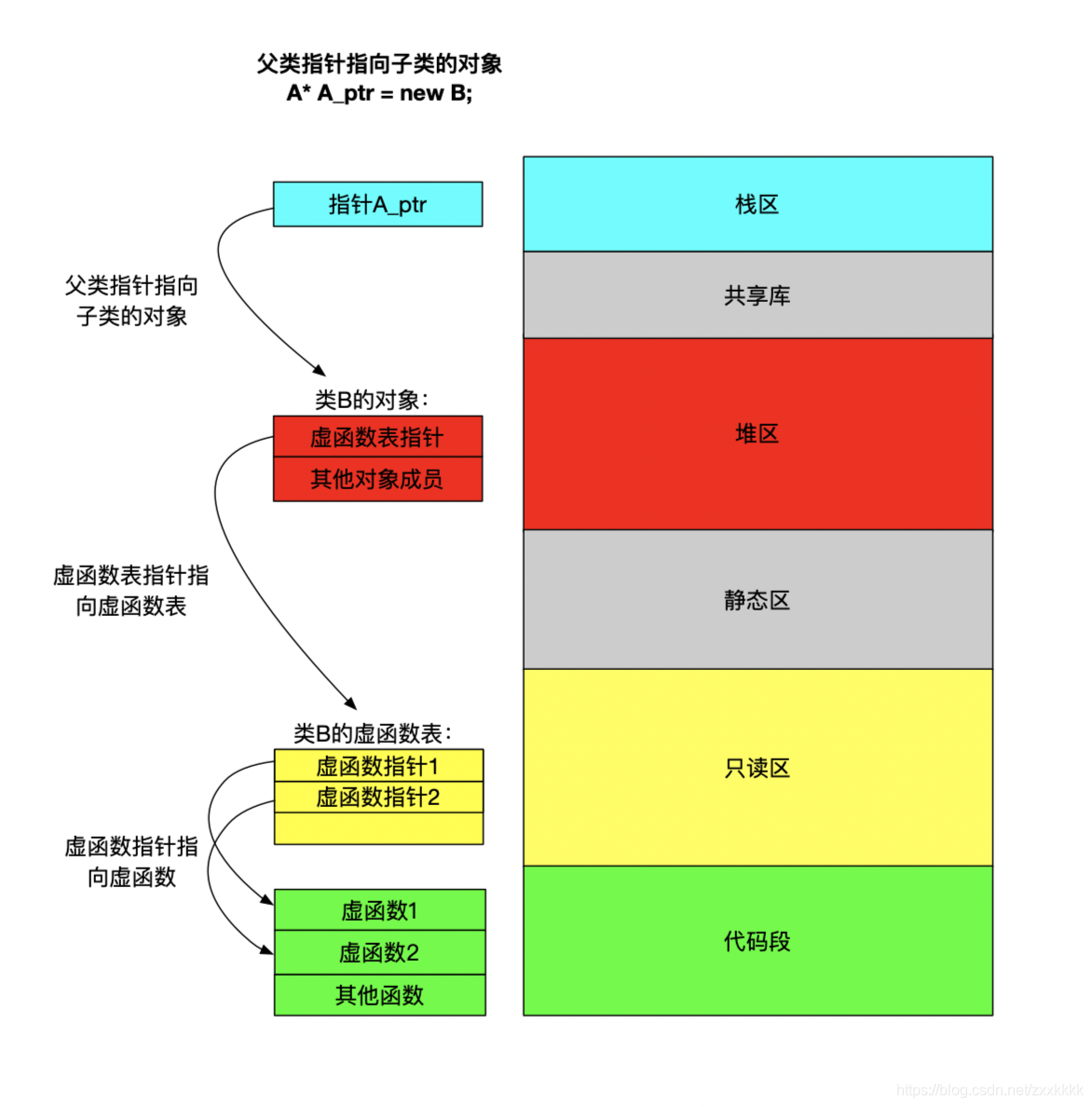
(1)打印虚函数表
#include <iostream>
#include <stdio.h>
using namespace std;

class Base
{
public:
	virtual void a() { cout << "Base a()" << endl; }
	virtual void b() { cout << "Base b()" << endl; }
	virtual void c() { cout << "Base c()" << endl; }
};

class Derive : public Base
{
public:
	virtual void b() { cout << "Derive b()" << endl; }
};

int main(int argc, char* argv[])
{
	cout << "-----------Base------------" << endl;
	Base* q = new Base;
	long* tmp1 = (long*)q;
	long* vptr1 = (long*)(*tmp1);
	for (int i = 0; i < 3; i++)
    {
		printf("vptr[%d] : %p\n", i, (void*)vptr1[i]);
	}

    cout << endl << "---------Derive------------" << endl;
	Derive* p = new Derive;
	long* tmp = (long*)p;
	long* vptr = (long*)(*tmp);
	for (int i = 0; i < 3; i++)
    {
		printf("vptr[%d] : %p\n", i, (void*)vptr[i]);
	}
	return 0;
}|
xuanmiao@linux:~/Test/C++$ ./test43 ---------Derive------------ |
(2)通过虚函数表中的指针调用函数
#include <iostream>
#include <stdio.h>
using namespace std;

class Base
{
public:
	virtual void a() { cout << "Base a()" << endl; }
	virtual void b() { cout << "Base b()" << endl; }
	virtual void c() { cout << "Base c()" << endl; }
};

class Derive : public Base
{
public:
	virtual void b() { cout << "Derive b()" << endl; }
};

int main(int argc, char* argv[])
{
	typedef void (*Func)();
	cout << "-----------Base------------" << endl;
	Base* q = new Base;
	long* tmp1 = (long*)q;
	long* vptr1 = (long*)(*tmp1);
	for (int i = 0; i < 3; i++)
    {
		printf("vptr[%d] : %p\n", i, (void*)vptr1[i]);
	}
	Func a = (Func)vptr1[0];
	Func b = (Func)vptr1[1];
	Func c = (Func)vptr1[2];
	a();
	b();
	c();

	Derive* p = new Derive;
	long* tmp = (long*)p;
	long* vptr = (long*)(*tmp);
	cout << "---------Derive------------" << endl;
	for (int i = 0; i < 3; i++)
    {
		printf("vptr[%d] : %p\n", i, (void*)vptr[i]);
	}
	Func d = (Func)vptr[0];
	Func e = (Func)vptr[1];
	Func f = (Func)vptr[2];
	d();
	e();
	f();


	return 0;
}| xuanmiao@linux:~/Test/C++$ ./test44 -----------Base------------ vptr[0] : 0x56451b1e740c vptr[1] : 0x56451b1e7448 vptr[2] : 0x56451b1e7484 Base a() Base b() Base c() ---------Derive------------ vptr[0] : 0x56451b1e740c vptr[1] : 0x56451b1e74c0 vptr[2] : 0x56451b1e7484 Base a() Derive b() Base c() |
参考博客:https://cloud.tencent.com/developer/article/1599283

 浙公网安备 33010602011771号