



字符串与STL整理
C风格表示的字符串,借助字符数组来存放,并在最后一位有'\0'标志字符串结束,因此字符数组声明时要开大一点。而string可以认为是元素为字符的容器,大小可变,并且结尾不需要以'\0'结束。
string和char数组都可以使用cin、cout。但是string不能直接使用scanf、printf、puts,需要转换形式。
char数组与string之间的转化:
//char数组转为string
char p[100];
cin>>p;
string str=p; //内存拷贝赋值

//string转为char数组
string str="abc";
char *p=(char *)str.data();

string str="gdfd";
char *p=str.c_str();

string str="hello";
char p[40];
str.copy(p,5,0); //这里5,代表复制几个字符,0代表复制的位置
*(p+5)='\0';
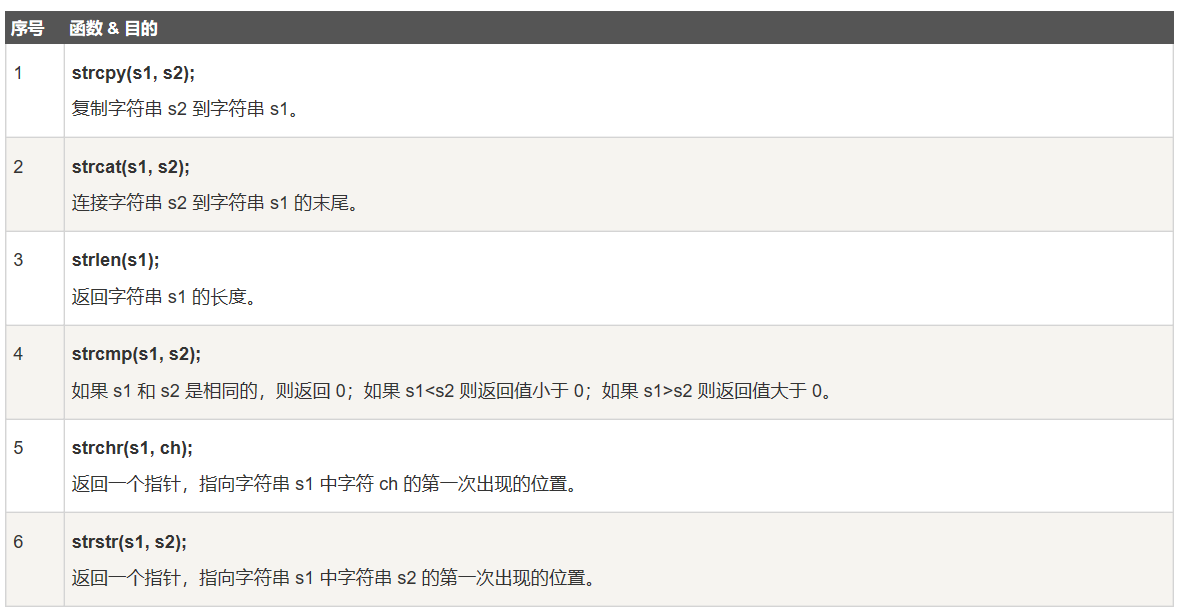
char数组字符串常见的函数操作:
string常见操作:
+,+=,append() //添加字符和字符串
==,<=,>=,<,> //判断大小
str.size(),s.length() //获取长度
printf("%s",str.c_str())
str.erase(10,8) //删除从str[10]开始,包括str[10]的8个元素
int pos=0;
str1.find(str2,pos) //从str1中找str2第一次出现位置,找不到返回string::npos
str1.insert(2,str2) //在下标为2的元素前插入str2
介绍一下STL各种容器,首先是队列
queue<int> q;
priority_queue<int> q; //大顶堆
priority_queue<int,vector<int>,greater<int>> q; //小顶堆
int a=q.front()/q.top();
q.pop();
q.push(i);
q.empty();
int b=q.size(); //无符号整数,编译错误时记得将其转化为int型
对于大顶堆小顶堆可以自定义结构体和排序方式,第一中办法是在结构体中重写大于小于符号;第二种是将比较运算符外置
struct fruit
{
string name;
double price;
} f1, f2, f3; //定义三个结构体变量

struct cmp
{
bool operator() (fruit f1, fruit f2) // 重载括号
{
return f1.price < f2.price; // 等同于less
}
};
priority_queue<fruit,vector<fruit> , cmp > q;
stack,操作和queue类似
s.push(x);
s.pop();
s.top();
s.empty();
lower_bound和upper_bound,利用二分方法在一个排好序的数组中进行查找
/*
从数组的begin位置到end-1位置二分查找第一个大于或等于num的数字,找到返回该数字的地
址,不存在则返回end。通过返回的地址减去起始地址begin,得到找到数字在数组中的下标。
*/
int loc=lower_bound(begin,end,num)-begin
//从数组的begin位置到end-1位置二分查找第一个大于num的数字
int loc=upper_bound( begin,end,num)-begin
//从数组的begin位置到end-1位置二分查找第一个小于或等于num的数字
int loc=lower_bound( begin,end,num,greater<type>() )-begin
//从数组的begin位置到end-1位置二分查找第一个小于num的数字
int loc=upper_bound( begin,end,num,greater<type>() )-begin
map容器,可以快速地查找与更改。
m.begin() m.end() //开始结尾的正向迭代器
m.rbegin() m.rend() //开始结尾的逆向迭代器
m.size()
m.empty()

m.insert(map<int, string>::value_type (1,"student_one")) //insert插入,若key值已经存在,则该语句无效
m.insert(make_pair(1,"student_one")); //可以直接以pair类型插入
m[key]=value //数组方式可以插入、查询、修改,若没有key值会自动插入

m.clear() //全部清空
m.erase(key) m.erase(m.begin(),m.end()) //erase删除部分数据,传入key值或迭代器指示范围
lower_bound(...) upper_bound(...)

m.count(key) //可以用来判断key值是否存在

map<int,string>::iterator ite;
ite=m.find(key) //返回指向指定键值的迭代器,没有找到返回m.end()

for(ite=map.begin();ite!=map.end();ite++){
printf("%d %s\n",ite->first,ite->second.c_str());
}
set容器,内部是二叉树结构,每个元素值都唯一,根据元素的值自动排列大小,无法直接修改元素,高效的插入删除。
s.insert(1);
s.erase(3);
set<int>::iterator ite;
ite=s.find(1);
if(ite==s.end()) printf("not found");
else printf("found");

s.count(1);
for(ite=s.begin();ite!=s.end();++ite){
printf("%d\n",*ite);
}
vector容器
vec.push_back(a);
vec[i]; vec.front(); vec.back();
vec.clear(); vec.erase(vec.begin(),vec.end());
vec.insert(p,x); //在p前插入x
list表示双向链表,不强调快速读取,而是强调快速更改。
lis.push_back(x); lis.pop_back();
lis.push_front(x); lis.pop_front();
lis.front(); lis.back();
lis.clear(); lis.erase();
lis.insert(p,x);
lis.remove(x); //删除全部x,线性时间
lis.reverse(); lis.unique(); //线性时间
lis.merge(newLis) //合并后的链表在lis中,x为空;lis和newLis必须提前排好序;线性时间
merge,将两个有序序列合并为一个有序序列,可以用于vector、list
merge(a.begin(),a.end(),b.begin(),b.end(),c.begin()); //用于vector
unique,将给定去重范围内的数据去重
unqiue(vec.begin(),vec.end());
next_permutation、prev_permutation取得全排列
do{
printf("%s\n",str);
}while(next_permutation(str,str+len));

 浙公网安备 33010602011771号