#pragma once
#include<iostream>
#include<math.h>
using namespace std;
class Complex
{
    friend Complex add(const Complex& obj1, const Complex& obj2);
    friend bool is_equal(const Complex& obj1, const Complex& obj2);
    friend double abs(const Complex& obj);
public:
    Complex(double q = 0, double p = 0) : real{q}, imag{p} {};
    Complex(const Complex& obj);
    double get_real()const;
    double get_imag()const;
    void show()const;
    void add(const Complex& obj);
private:
    double real;
    double imag;
};

double Complex::get_real() const
{
    return real;
}
double Complex::get_imag()const
{
    return imag;
}
void Complex::show()const
{
    if (imag)
        cout << real << imag << "i";
    else
        cout << real << imag;
}
void Complex::add(const Complex& obj)
{
    real += obj.real;
    imag += obj.imag;

}
Complex::Complex(const Complex& obj)
{
    real = obj.real;
    imag = obj.imag;
}
Complex add(const Complex& obj1, const Complex& obj2)
{
    Complex r;
    r.real = obj1.real + obj2.real;
    r.imag = obj1.imag + obj2.imag;
    return r;
}
bool is_equal(const Complex& obj1, const Complex& obj2)
{
    return obj1.real == obj2.real && obj2.imag == obj2.imag;
}
double abs(const Complex& obj)
{
    double _real = obj.real;
    double _imag = obj.imag;
    return sqrt(_real * _real + _imag * _imag);
}
#include<iostream>
#include"Complex.h"


void test() {
    using namespace std;

    Complex c1(1,-2);
    const Complex c2(3.0);
    Complex c3(c1);

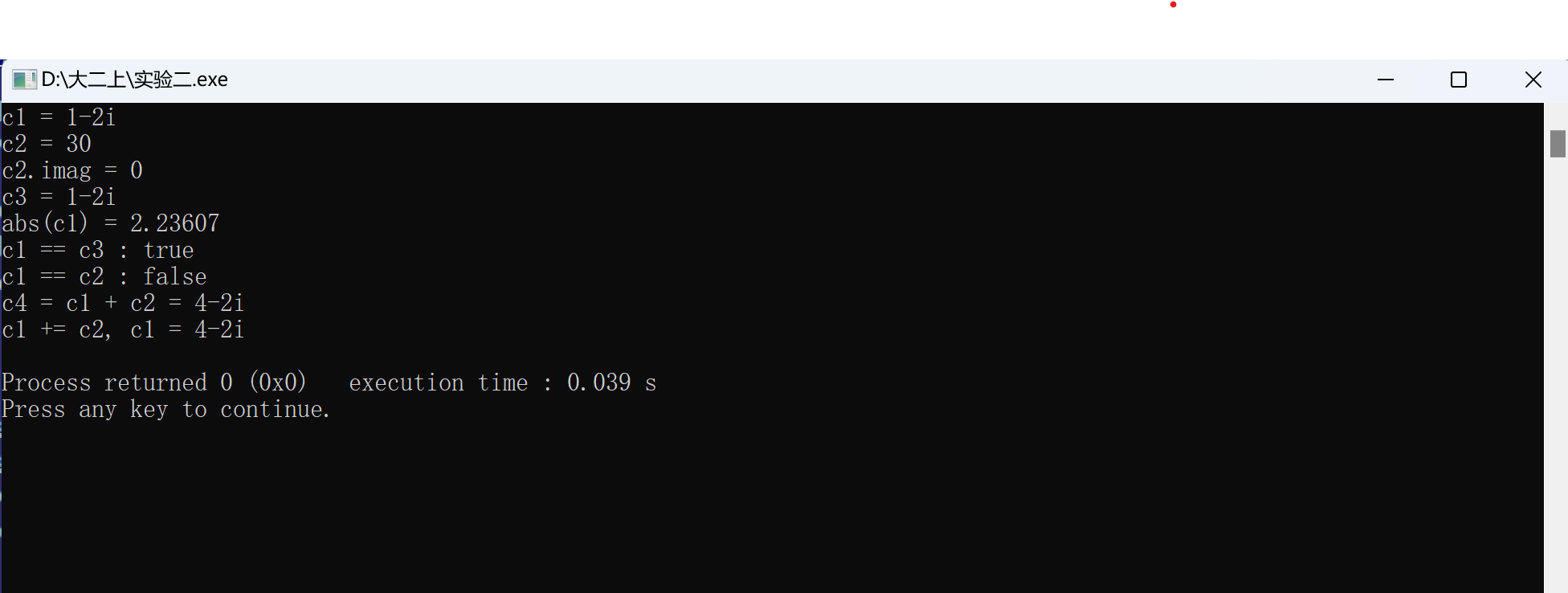
    cout << "c1 = ";
    c1.show();
    cout << endl;

    cout << "c2 = ";
    c2.show();
    cout << endl;
    cout << "c2.imag = " << c2.get_imag() << endl;

    cout << "c3 = ";
    c3.show();
    cout << endl;

    cout << "abs(c1) = ";
    cout << abs(c1) << endl;

    cout << boolalpha;
    cout << "c1 == c3 : " << is_equal(c1, c3) << endl;
    cout << "c1 == c2 : " << is_equal(c1, c2) << endl;

    Complex c4;
    c4 = add(c1, c2);
    cout << "c4 = c1 + c2 = ";
    c4.show();
    cout << endl;

    c1.add(c2);
    cout << "c1 += c2, " << "c1 = ";
    c1.show();
    cout << endl;
}

int main() {
    test();
}
![]()
#include<iostream>
#include<string>
using namespace std;

class User{

public:

    User (string n, string p = "111111", string e = ""): name{n},passwd{p},email{e}
    {
        n++;
    }

    void set_email(){
        cout << ("Enter email address: ");
        cin >> email;
        cout<<"email is set successfully..."<<endl;
    }

    void change_passwd(){

        string Passwd;

        cout << ("Enter old password: ");
        cin >> Passwd;

        for(int wrong = 1; wrong <= 2 && Passwd != passwd; wrong ++){
            cout <<("password input error. Please re-enter again: ");
            cin >> Passwd;
        }

        if(Passwd == passwd){
            cout << "Enter new passwd: ";
            cin >> passwd;
            cout <<"new passwd is set successfully..."<<endl;
        }
        else
            cout <<"password input error. Please try after a while."<<endl;

    }

    void print_info(){
        cout << "name:" << name <<endl;
        cout <<"passwd:";

        for(int i = 0; passwd[i]; i ++)
            cout << "*";
        cout << "\n";
        cout << "email:  " << email <<endl;
    }

    static void print_n(){
        cout << "there are " << n << " users."<<endl;
    }

private:
    string name, passwd, email;
    static int n;
};
int User::n=0;
#include<iostream>

void test(){

    using namespace std;

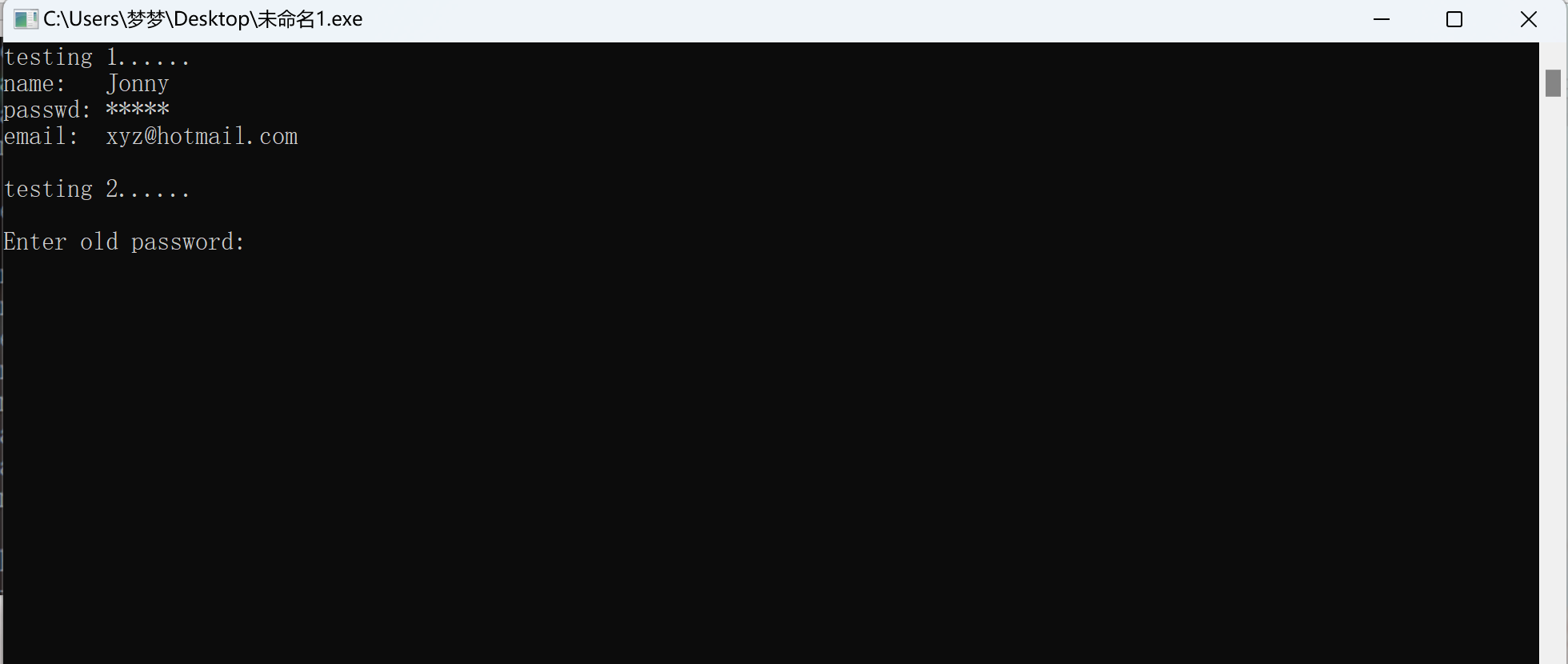
    cout << "testing 1......\n";

    User user1("Jonny", "92197", "xyz@hotmail.com");
    user1.print_info();

    cout << endl << "testing 2......\n\n";

    User user2("Leonard");
    user2.change_passwd();
    user2.set_email();
    user2.print_info();

    cout << endl;
    User::print_n();


}

int main(){
    test();
}
![]()


 浙公网安备 33010602011771号