
AbstractQueuedSynchronizer
一、概述
AQS的框架
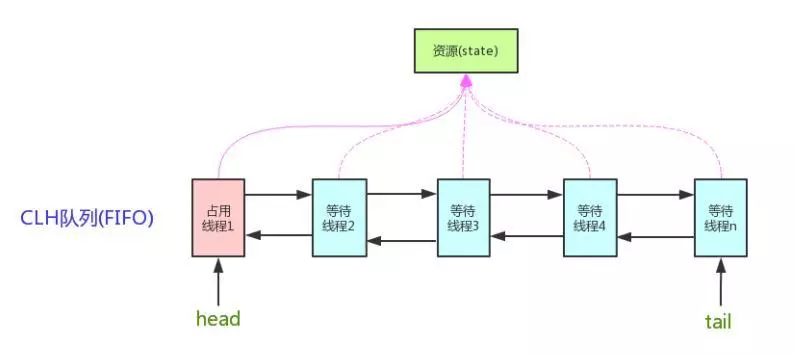
AQS维护了一个volatile的共享资源变量state和一个FIFO线程等待队列,双链表
资源的使用方式分为独占式和共享式2种
独占式:只有单个线程可以获取资源并执行,如ReentrantLock
共享式:多个线程可以获取资源并执行,如Semaphore、CountDownLatch
AQS将大部分的同步逻辑均已经实现好,继承的自定义同步器只需要实现state的获取(acquire)和释放(release)的逻辑代码就可以
核心方法:acquire()核心中的核心、addWaiter()、enq()、doReleaseShared()、doAcquireShared()、acquireQueued()
二、源码
1、父类
public abstract class AbstractOwnableSynchronizer implements java.io.Serializable {

    private static final long serialVersionUID = 3737899427754241961L;

    protected AbstractOwnableSynchronizer() { }

    //独占模式下的当前线程
    private transient Thread exclusiveOwnerThread;

    protected final void setExclusiveOwnerThread(Thread thread) {
        exclusiveOwnerThread = thread;
    }

    protected final Thread getExclusiveOwnerThread() {
        return exclusiveOwnerThread;
    }
}
2、内置Node
static final class Node {

    //表示一个节点在共享模式下等待
    static final Node SHARED = new Node();
    //表示一个节点在排他模式下等待
    static final Node EXCLUSIVE = null;
    //等待状态值,表示节点已取消调度,当timeout或中断后节点会变为此状态,之后状态不会再变化
    static final int CANCELLED =  1;
    //等待状态值,表示后继节点在等待当前节点唤醒,后继节点入队时会将前继节点更新为SIGNAL
    static final int SIGNAL    = -1;
    //等待状态值,表示节点等待在Condition上,当其他线程调用了Condition的signal()后,CONDITION状态的节点将从等待队列转移到同步队列中,等待获取同步锁
    static final int CONDITION = -2;
    //等待状态值,表示在共享模式下,前继结点不仅会唤醒其后继结点,同时也可能会唤醒后继的后继结点
    static final int PROPAGATE = -3;

    //状态字段,只可能是SIGNAL、CANCELLED、CONDITION、PROPAGATE、0(新节点入队时的默认状态)
    volatile int waitStatus;
    //上一个节点
    volatile Node prev;
    //下一个节点
    volatile Node next;
    //加入此节点的线程
    volatile Thread thread;
    //下一个等待的节点
    Node nextWaiter;
    //如果节点在共享模式下等待就返回true
    final boolean isShared() {
        return nextWaiter == SHARED;
    }
    //返回上一个节点
    final Node predecessor() throws NullPointerException {
        Node p = prev;
        if (p == null)
            throw new NullPointerException();
        else
            return p;
    }

    Node() {
    }
    //被addWaiter使用
    Node(Thread thread, Node mode) {
        this.nextWaiter = mode;
        this.thread = thread;
    }
    //被Condition使用
    Node(Thread thread, int waitStatus) {
        this.waitStatus = waitStatus;
        this.thread = thread;
    }
}
3、属性
//队列的节点头
private transient volatile Node head;
//队列的节点尾
private transient volatile Node tail;
//同步状态
private volatile int state;
protected final int getState() {
    return state;
}
protected final void setState(int newState) {
    state = newState;
}
3、方法
protected final boolean compareAndSetState(int expect, int update) {
    return unsafe.compareAndSwapInt(this, stateOffset, expect, update);
}
原子更新state的状态,类似于获得许可,如果成功就可以占有锁,如果失败说明锁已经被其他对象占用
unsafe.compareAndSwapInt是用CAS原理实现的,底层native的c代码是一个for循环,通过反射根据字段偏移去修改对象,之后会说Unsafe
static final long spinForTimeoutThreshold = 1000L;
作为自旋等待时间判断的忽略值,1000纳秒,当计算得出判断自旋等待还有不到1000纳秒就可以开始自旋的时候,直接进入自旋,因为1000纳秒已经非常小,非常短的时间等待无法做到十分精确,如果这时再进入等待反而会让自旋超时表现的不那么准确
private Node enq(final Node node) {
    for (;;) {
        Node t = tail;
        if (t == null) {
            if (compareAndSetHead(new Node()))
                tail = head;
        } else {
            node.prev = t;
            if (compareAndSetTail(t, node)) {
                t.next = node;
                return t;
            }
        }
    }
}
将节点插入队列的末尾,如果是空队列就先创建队头然后再次循环,主要给后面的addWaiter使用
这里当前节点是通过node.prev=t先接到前继节点的,如果compareAndSetTail争用成功,就通过t.next=node让前继节点接到当前节点,如果不成功说明并发竞争失败,就进入下一次循环接到新的tail节点后面
private Node addWaiter(Node mode) {
    Node node = new Node(Thread.currentThread(), mode);
    Node pred = tail;
    if (pred != null) {
        node.prev = pred;
        if (compareAndSetTail(pred, node)) {
            pred.next = node;
            return node;
        }
    }
    enq(node);
    return node;
}
用当前线程构建一个节点,节点类型是独占或者共享的,尝试加入队尾,如果非空队列添加失败说明有并发,再进入enq自旋修改
private void setHead(Node node) {
    head = node;
    node.thread = null;
    node.prev = null;
}
将节点设为队头,清空属性方便垃圾回收
private void unparkSuccessor(Node node) {

    int ws = node.waitStatus;
    if (ws < 0)
        compareAndSetWaitStatus(node, ws, 0);

    Node s = node.next;
    if (s == null || s.waitStatus > 0) {
        s = null;
        for (Node t = tail; t != null && t != node; t = t.prev)
            if (t.waitStatus <= 0)
                s = t;
    }
    if (s != null)
        LockSupport.unpark(s.thread);
}
唤醒后继节点的线程,将当前节点的状态置0,如果后继节点为空或者已取消,就从tail队尾开始遍历,找离当前节点最近的可唤醒节点
最后使用LockSupport唤醒线程,后面会说LockSupport
private void doReleaseShared() {

    for (;;) {
        Node h = head;
        if (h != null && h != tail) {
            int ws = h.waitStatus;
            if (ws == Node.SIGNAL) {
                if (!compareAndSetWaitStatus(h, Node.SIGNAL, 0))
                    continue;
                unparkSuccessor(h);
            }
            else if (ws == 0 && !compareAndSetWaitStatus(h, 0, Node.PROPAGATE))
                continue;
        }
        if (h == head)
            break;
    }
}
共享模式的核心唤醒函数,用来唤醒下个线程或者设置传播状态
主要给releaseShared使用,在最开始是直接使用unparkSuccessor的,存在问题,所以用这个doReleaseShared方法包了一层,也增加了PROPAGATE状态,以后细说
如果头结点的状态成功置0,就执行unparkSuccessor唤醒后继线程,如果头结点状态已经为0,就将头结点状态置为PROPAGATE,保证后继节点仍然可以被唤醒
private void setHeadAndPropagate(Node node, int propagate) {
    Node h = head;
    setHead(node);
    if (propagate > 0 || h == null || h.waitStatus < 0 ||
        (h = head) == null || h.waitStatus < 0) {
        Node s = node.next;
        if (s == null || s.isShared())
            doReleaseShared();
    }
}
这个类的作用是在共享锁获取成功后设置头节点,然后根据条件唤醒后继线程
private void cancelAcquire(Node node) {

    if (node == null)
        return;

    node.thread = null;

    Node pred = node.prev;
    while (pred.waitStatus > 0)
        node.prev = pred = pred.prev;

    Node predNext = pred.next;

    node.waitStatus = Node.CANCELLED;

    if (node == tail && compareAndSetTail(node, pred)) {
        compareAndSetNext(pred, predNext, null);
    } else {
        int ws;
        if (pred != head &&
            ((ws = pred.waitStatus) == Node.SIGNAL ||
             (ws <= 0 && compareAndSetWaitStatus(pred, ws, Node.SIGNAL))) &&
            pred.thread != null) {
            Node next = node.next;
            if (next != null && next.waitStatus <= 0)
                compareAndSetNext(pred, predNext, next);
        } else {
            unparkSuccessor(node);
        }

        node.next = node;
    }
}
取消某个节点获取锁,把当前节点状态置为CANCELLED,然后将节点移出队列,把后继和前继连接起来
private static boolean shouldParkAfterFailedAcquire(Node pred, Node node) {
    int ws = pred.waitStatus;
    if (ws == Node.SIGNAL)
        return true;
    if (ws > 0) {
        do {
            node.prev = pred = pred.prev;
        } while (pred.waitStatus > 0);
        pred.next = node;
    } else {
        compareAndSetWaitStatus(pred, ws, Node.SIGNAL);
    }
    return false;
}
根据前驱节点的状态判断是否要让当前线程进入waiting状态
static void selfInterrupt() {
    Thread.currentThread().interrupt();
}
让当前线程中断
private final boolean parkAndCheckInterrupt() {
    LockSupport.park(this);
    return Thread.interrupted();
}
让线程进入等待状态
final boolean acquireQueued(final Node node, int arg) {
    boolean failed = true;
    try {
        boolean interrupted = false;
        for (;;) {
            final Node p = node.predecessor();
            if (p == head && tryAcquire(arg)) {
                setHead(node);
                p.next = null; // help GC
                failed = false;
                return interrupted;
            }
            if (shouldParkAfterFailedAcquire(p, node) &&
                parkAndCheckInterrupt())
                interrupted = true;
        }
    } finally {
        if (failed)
            cancelAcquire(node);
    }
}
在队列中等待获取锁,核心方法
private void doAcquireInterruptibly(int arg) throws InterruptedException {
    final Node node = addWaiter(Node.EXCLUSIVE);
    boolean failed = true;
    try {
        for (;;) {
            final Node p = node.predecessor();
            if (p == head && tryAcquire(arg)) {
                setHead(node);
                p.next = null; // help GC
                failed = false;
                return;
            }
            if (shouldParkAfterFailedAcquire(p, node) &&
                parkAndCheckInterrupt())
                throw new InterruptedException();
        }
    } finally {
        if (failed)
            cancelAcquire(node);
    }
}
和acquireQueued基本一样,增加了对中断异常的抛出
private boolean doAcquireNanos(int arg, long nanosTimeout) throws InterruptedException {
    if (nanosTimeout <= 0L)
        return false;
    final long deadline = System.nanoTime() + nanosTimeout;
    final Node node = addWaiter(Node.EXCLUSIVE);
    boolean failed = true;
    try {
        for (;;) {
            final Node p = node.predecessor();
            if (p == head && tryAcquire(arg)) {
                setHead(node);
                p.next = null; // help GC
                failed = false;
                return true;
            }
            nanosTimeout = deadline - System.nanoTime();
            if (nanosTimeout <= 0L)
                return false;
            if (shouldParkAfterFailedAcquire(p, node) &&
                nanosTimeout > spinForTimeoutThreshold)
                LockSupport.parkNanos(this, nanosTimeout);
            if (Thread.interrupted())
                throw new InterruptedException();
        }
    } finally {
        if (failed)
            cancelAcquire(node);
    }
}
在doAcquireInterruptibly的基础上增加超时等待的功能
private void doAcquireShared(int arg) {
    final Node node = addWaiter(Node.SHARED);
    boolean failed = true;
    try {
        boolean interrupted = false;
        for (;;) {
            final Node p = node.predecessor();
            if (p == head) {
                int r = tryAcquireShared(arg);
                if (r >= 0) {
                    setHeadAndPropagate(node, r);
                    p.next = null; // help GC
                    if (interrupted)
                        selfInterrupt();
                    failed = false;
                    return;
                }
            }
            if (shouldParkAfterFailedAcquire(p, node) &&
                parkAndCheckInterrupt())
                interrupted = true;
        }
    } finally {
        if (failed)
            cancelAcquire(node);
    }
}
共享锁版在队列中等待获取锁
private void doAcquireSharedInterruptibly(int arg)
    throws InterruptedException {
    final Node node = addWaiter(Node.SHARED);
    boolean failed = true;
    try {
        for (;;) {
            final Node p = node.predecessor();
            if (p == head) {
                int r = tryAcquireShared(arg);
                if (r >= 0) {
                    setHeadAndPropagate(node, r);
                    p.next = null; // help GC
                    failed = false;
                    return;
                }
            }
            if (shouldParkAfterFailedAcquire(p, node) &&
                parkAndCheckInterrupt())
                throw new InterruptedException();
        }
    } finally {
        if (failed)
            cancelAcquire(node);
    }
}
增加了异常抛出
private boolean doAcquireSharedNanos(int arg, long nanosTimeout) throws InterruptedException {
    if (nanosTimeout <= 0L)
        return false;
    final long deadline = System.nanoTime() + nanosTimeout;
    final Node node = addWaiter(Node.SHARED);
    boolean failed = true;
    try {
        for (;;) {
            final Node p = node.predecessor();
            if (p == head) {
                int r = tryAcquireShared(arg);
                if (r >= 0) {
                    setHeadAndPropagate(node, r);
                    p.next = null; // help GC
                    failed = false;
                    return true;
                }
            }
            nanosTimeout = deadline - System.nanoTime();
            if (nanosTimeout <= 0L)
                return false;
            if (shouldParkAfterFailedAcquire(p, node) &&
                nanosTimeout > spinForTimeoutThreshold)
                LockSupport.parkNanos(this, nanosTimeout);
            if (Thread.interrupted())
                throw new InterruptedException();
        }
    } finally {
        if (failed)
            cancelAcquire(node);
    }
}
再增加超时等待
protected boolean tryAcquire(int arg) {
    throw new UnsupportedOperationException();
}
protected boolean tryRelease(int arg) {
    throw new UnsupportedOperationException();
}
protected int tryAcquireShared(int arg) {
    throw new UnsupportedOperationException();
}
protected boolean tryReleaseShared(int arg) {
    throw new UnsupportedOperationException();
}
protected boolean isHeldExclusively() {
    throw new UnsupportedOperationException();
}
分别是尝试获取独占锁、尝试释放独占锁、尝试获取共享锁、尝试释放共享锁、当前是否获得独占锁(只有用到condition才需要实现)
AQS实现了框架,并通过模板方法开放了以上方法,具体资源的获取释放方式需要自定义的同步器来重写完成,没有使用abstract是因为独占锁只需要实现tryAcquire和tryRelease,不用实现其它的,共享锁同理
如何实现之后看具体的同步器
public final void acquire(int arg) {
    if (!tryAcquire(arg) &&
        acquireQueued(addWaiter(Node.EXCLUSIVE), arg))
        selfInterrupt();
}
独占模式下获取锁的顶层入口,线程如果取到资源就直接返回,如果没有取到就进入等待队列,直到取到资源,这就是lock()的语义
先通过tryAcquire去尝试获取资源,如果成功就返回,如果失败就通过addWaiter将独占状态的自身节点加入队列尾部,然后acquireQueued进入等待队列,如果等待过程中中断了,会执行selfInterrupt将线程中断
public final void acquireInterruptibly(int arg) throws InterruptedException {
    if (Thread.interrupted())
        throw new InterruptedException();
    if (!tryAcquire(arg))
        doAcquireInterruptibly(arg);
}
public final boolean tryAcquireNanos(int arg, long nanosTimeout)
        throws InterruptedException {
    if (Thread.interrupted())
        throw new InterruptedException();
    return tryAcquire(arg) ||
        doAcquireNanos(arg, nanosTimeout);
}
相应中断和相应中断+超时的acquire版本
public final boolean release(int arg) {
    if (tryRelease(arg)) {
        Node h = head;
        if (h != null && h.waitStatus != 0)
            unparkSuccessor(h);
        return true;
    }
    return false;
}
释放资源的顶层入口,实现unlock的效果,当资源释放后会唤醒后继线程
public final void acquireShared(int arg) {
    if (tryAcquireShared(arg) < 0)
        doAcquireShared(arg);
}
public final void acquireSharedInterruptibly(int arg)
        throws InterruptedException {
    if (Thread.interrupted())
        throw new InterruptedException();
    if (tryAcquireShared(arg) < 0)
        doAcquireSharedInterruptibly(arg);
}
public final boolean tryAcquireSharedNanos(int arg, long nanosTimeout) throws InterruptedException {
    if (Thread.interrupted())
        throw new InterruptedException();
    return tryAcquireShared(arg) >= 0 || doAcquireSharedNanos(arg, nanosTimeout);
}
public final boolean releaseShared(int arg) {
    if (tryReleaseShared(arg)) {
        doReleaseShared();
        return true;
    }
    return false;
}
共享锁版本的一套
//是否有线程在等待锁
public final boolean hasQueuedThreads() {
    return head != tail;
}
//是否有节点
public final boolean hasContended() {
    return head != null;
}
//返回队列里第一个没有取到锁的线程
public final Thread getFirstQueuedThread() {
    return (head == tail) ? null : fullGetFirstQueuedThread();
}
private Thread fullGetFirstQueuedThread() {
    Node h, s;
    Thread st;
    if (((h = head) != null && (s = h.next) != null &&
         s.prev == head && (st = s.thread) != null) ||
        ((h = head) != null && (s = h.next) != null &&
         s.prev == head && (st = s.thread) != null))
        return st;

    Node t = tail;
    Thread firstThread = null;
    while (t != null && t != head) {
        Thread tt = t.thread;
        if (tt != null)
            firstThread = tt;
        t = t.prev;
    }
    return firstThread;
}
//判断线程是否在队列里
public final boolean isQueued(Thread thread) {
    if (thread == null)
        throw new NullPointerException();
    for (Node p = tail; p != null; p = p.prev)
        if (p.thread == thread)
            return true;
    return false;
}
final boolean apparentlyFirstQueuedIsExclusive() {
    Node h, s;
    return (h = head) != null &&
        (s = h.next)  != null &&
        !s.isShared()         &&
        s.thread != null;
}
//判断当前线程是否在队列的队首
public final boolean hasQueuedPredecessors() {
    Node t = tail;
    Node h = head;
    Node s;
    return h != t && ((s = h.next) == null || s.thread != Thread.currentThread());
}
//返回等待这个锁的线程数量
public final int getQueueLength() {
    int n = 0;
    for (Node p = tail; p != null; p = p.prev) {
        if (p.thread != null)
            ++n;
    }
    return n;
}
//返回队列里的线程
public final Collection<Thread> getQueuedThreads() {
    ArrayList<Thread> list = new ArrayList<Thread>();
    for (Node p = tail; p != null; p = p.prev) {
        Thread t = p.thread;
        if (t != null)
            list.add(t);
    }
    return list;
}
//返回队列里独占模式的线程
public final Collection<Thread> getExclusiveQueuedThreads() {
    ArrayList<Thread> list = new ArrayList<Thread>();
    for (Node p = tail; p != null; p = p.prev) {
        if (!p.isShared()) {
            Thread t = p.thread;
            if (t != null)
                list.add(t);
        }
    }
    return list;
}
//返回队列里共享模式的线程
public final Collection<Thread> getSharedQueuedThreads() {
    ArrayList<Thread> list = new ArrayList<Thread>();
    for (Node p = tail; p != null; p = p.prev) {
        if (p.isShared()) {
            Thread t = p.thread;
            if (t != null)
                list.add(t);
        }
    }
    return list;
}
public String toString() {
    int s = getState();
    String q  = hasQueuedThreads() ? "non" : "";
    return super.toString() +
        "[State = " + s + ", " + q + "empty queue]";
}
final boolean isOnSyncQueue(Node node) {
    if (node.waitStatus == Node.CONDITION || node.prev == null)
        return false;
    if (node.next != null) // If has successor, it must be on queue
        return true;
    return findNodeFromTail(node);
}
private boolean findNodeFromTail(Node node) {
    Node t = tail;
    for (;;) {
        if (t == node)
            return true;
        if (t == null)
            return false;
        t = t.prev;
    }
}
final boolean transferForSignal(Node node) {
    if (!compareAndSetWaitStatus(node, Node.CONDITION, 0))
        return false;

    Node p = enq(node);
    int ws = p.waitStatus;
    if (ws > 0 || !compareAndSetWaitStatus(p, ws, Node.SIGNAL))
        LockSupport.unpark(node.thread);
    return true;
}
final boolean transferAfterCancelledWait(Node node) {
    if (compareAndSetWaitStatus(node, Node.CONDITION, 0)) {
        enq(node);
        return true;
    }

    while (!isOnSyncQueue(node))
        Thread.yield();
    return false;
}
final int fullyRelease(Node node) {
    boolean failed = true;
    try {
        int savedState = getState();
        if (release(savedState)) {
            failed = false;
            return savedState;
        } else {
            throw new IllegalMonitorStateException();
        }
    } finally {
        if (failed)
            node.waitStatus = Node.CANCELLED;
    }
}
public final boolean owns(ConditionObject condition) {
    return condition.isOwnedBy(this);
}
public final boolean hasWaiters(ConditionObject condition) {
    if (!owns(condition))
        throw new IllegalArgumentException("Not owner");
    return condition.hasWaiters();
}
public final int getWaitQueueLength(ConditionObject condition) {
    if (!owns(condition))
        throw new IllegalArgumentException("Not owner");
    return condition.getWaitQueueLength();
}
public final Collection<Thread> getWaitingThreads(ConditionObject condition) {
    if (!owns(condition))
        throw new IllegalArgumentException("Not owner");
    return condition.getWaitingThreads();
}
AQS提供的一些辅助函数
5、内置ConditionObject
6、unsafe
private static final Unsafe unsafe = Unsafe.getUnsafe();
private static final long stateOffset;
private static final long headOffset;
private static final long tailOffset;
private static final long waitStatusOffset;
private static final long nextOffset;

static {
    try {
        stateOffset = unsafe.objectFieldOffset(AbstractQueuedSynchronizer.class.getDeclaredField("state"));
        headOffset = unsafe.objectFieldOffset(AbstractQueuedSynchronizer.class.getDeclaredField("head"));
        tailOffset = unsafe.objectFieldOffset(AbstractQueuedSynchronizer.class.getDeclaredField("tail"));
        waitStatusOffset = unsafe.objectFieldOffset(Node.class.getDeclaredField("waitStatus"));
        nextOffset = unsafe.objectFieldOffset(Node.class.getDeclaredField("next"));

    } catch (Exception ex) { throw new Error(ex); }
}

private final boolean compareAndSetHead(Node update) {
    return unsafe.compareAndSwapObject(this, headOffset, null, update);
}

private final boolean compareAndSetTail(Node expect, Node update) {
    return unsafe.compareAndSwapObject(this, tailOffset, expect, update);
}

private static final boolean compareAndSetWaitStatus(Node node, int expect, int update) {
    return unsafe.compareAndSwapInt(node, waitStatusOffset, expect, update);
}

private static final boolean compareAndSetNext(Node node, Node expect, Node update) {
    return unsafe.compareAndSwapObject(node, nextOffset, expect, update);
}
通过底层方法实现了对state、head、tail、waitStatus、next的原子操作方法,如果返回true则操作成功,如果返回false表示存在争用,操作失败

 浙公网安备 33010602011771号