
ES内存使用分析及熔断器设置
内存占用
https://www.elastic.co/guide/cn/elasticsearch/guide/current/_limiting_memory_usage.html
ES的JVM heap按使用场景分为可GC部分和常驻部分。 可GC部分内存会随着GC操作而被回收; 常驻部分不会被GC,通常使用LRU策略来进行淘汰; 内存占用情况如下图:
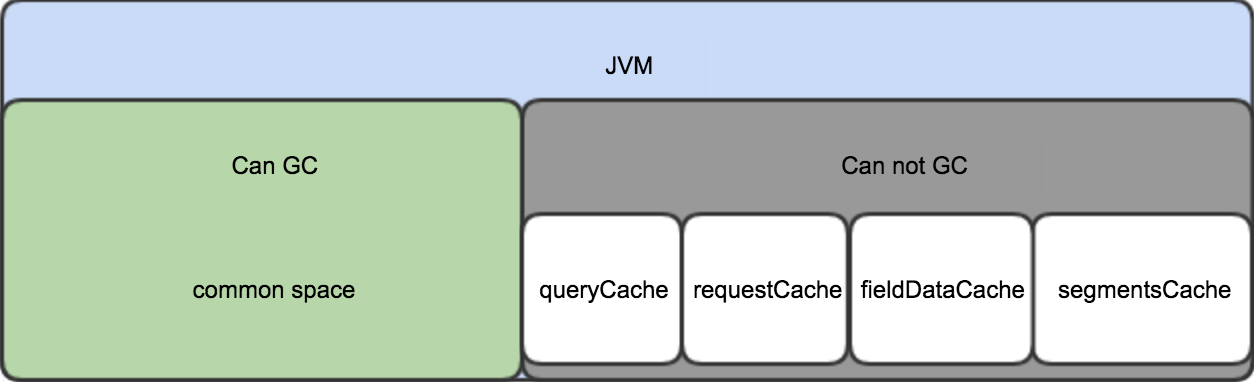
common space包括了indexing buffer和其他ES运行需要的class。indexing buffer由indices.memory.index_buffer_size参数控制, 默认最大占用10%,当full up后,该部分数据被刷入磁盘对应的Segments中。这部分空间是可以被回收反复利用的。
queryCache 是node级别的filter过滤器结果缓存,大小由indices.queries.cache.size 参数控制,默认10%。使用LRU淘汰策略。
requestCache是shard级别的query result缓存,通常 only requests of size 0 such as aggregations, counts and suggestions will be cached。使用LRU淘汰策略。通过indices.requests.cache.size参数控制,默认1%。设置后整个NODE都生效。
fieldDataCache,针对text字段,没有docValues属性(相当于列存储),当对text类型字段进行sort,agg时,需要将对应的字段内容全部加载到内存,这部分数据就放在fieldDataCache。通过indices.fielddata.cache.size 参数限制大小,默认不限制。这种情况下,占用内存会逐渐增多,直到触发熔断;新数据无法加载。
segmentsMemory ,缓存段信息,包括FST,Dimensional points for numeric range filters,Deleted documents bitset ,Doc values and stored fields codec formats等数据。这部分缓存是必须的,不能进行大小设置,通常跟index息息相关,close index、force merge均会释放部分空间。 可以通过命令
GET _cat/nodes?v&h=id,ip,port,r,ramPercent,ramCurrent,heapMax,heapCurrent,fielddataMemory,queryCacheMemory,requestCacheMemory,segmentsMemory
GET /_cat/nodes?v&h=name,port,sm
GET /_nodes/stats/breaker?pretty
查看当前各块的使用情况。
熔断器
Elasticsearch 有一系列的断路器,它们都能保证内存不会超出限制:
- indices.breaker.fielddata.limit fielddata 断路器默认设置堆的 60% 作为 fielddata 大小的上限。
- indices.breaker.request.limit request 断路器估算需要完成其他请求部分的结构大小,例如创建一个聚合桶,默认限制是堆内存的 60%。它实际上是node level的一个统计值,统计的是这个结点上,各类查询聚合操作,需要申请的Bigarray的空间大小总和。 所以如果有一个聚合需要很大的空间,同时在执行的聚合可能也会被break掉。
- indices.breaker.total.limit 父熔断,inflight、request(agg)和fielddata不会使用超过堆内存的 70%。
- network.breaker.inflight requests.limit 限制当前通过HTTP等进来的请求使用内存不能超过Node内存的指定值。这个内存主要是限制请求内容的长度。 默认100%。
- script.max_compilations_per_minute
- 限制script并发执行数,默认值为15。
参考文档 https://www.elastic.co/guide/en/elasticsearch/reference/5.3/circuit-breaker.html#fielddata-circuit-breaker https://www.elastic.co/guide/cn/elasticsearch/guide/cn/_limiting_memory_usage.html http://zhengjianglong.leanote.com/post/ES%E8%AE%BE%E7%BD%AE
ES默认配置下,heap是存在超卖情况的。
| 类目 | 默认占比 | 是否常驻 | 淘汰策略(在控制大小情况下) | 控制参数 |
|---|---|---|---|---|
| query cache | 10% | 是 | LRU | indices.queries.cache.size |
| request cache | 1% | 是 | LRU | indices.requests.cache.size |
| fielddata cache | 无限制 | 是 | LRU | indices.fielddata.cache.size |
| segment memory | 无限制 | 是 | 无 | 不能通过参数控制 |
| common space | 70% | 否 | GC | 通过熔断器 indices.breaker.total.limit 限制 |
common space(可GC)
| 子类目 | 默认占比 | 控制参数 |
|---|---|---|
| indexing buffer | 10% | indices.memory.index_buffer_size |
| request agg data | 60% | indices.breaker.request.limit |
| in-flight data | 100% | network.breaker.inflight_requests.limit |
通过上表可知,segment memory是非常重要,而且是不可通过参数干预的内存空间,而cache部分则可以提升性能,可以被清除。common space 是运行时的动态空间,可以被GC。
综上所述,需要保证segment memory+cache+common space不超过100%。由于熔断器是按整个heap大小来计算的,所以如果segment memory 过大,仍然可能会导致OOM。为了减少这种情况的发生,需要预留足够空间给segment。 优化
- 限制fielddata大小,fielddata是针对text类型进行排序、聚合才用到。正常应该避免这种情况发生。
- 限制request agg data大小,这个参数会影响聚合使用的内存,如果触发熔断,业务需要进行优化。
内存分配
|
segment memory
|
预留10%
|
|
|
fielddata cache
|
限制在20%
|
|
|
query cache
|
限制10%
|
|
|
request cache
|
限制1%
|
|
|
indexing buffer
|
限制10%
|
|
|
request agg data
|
限制1%
|
父熔断器配置30%,扣除fielddata,agg剩余的就是in-flight
|
|
in-flight data
|
限制9%
|
参数设置
indices.fielddata.cache.size:1%--需要重启节点

PUT _cluster/settings
{
  "persistent": {
    "indices.breaker.fielddata.limit":"20%",
    "indices.breaker.request.limit":"1%",
    "indices.breaker.total.limit":"70%"

  }
}
 浙公网安备 33010602011771号